Posts tagged games
A Q&A With PGA Professionals: Maximizing Tournament Sponsorships
 

This installment of GolfStatus’ PGA Q&A blog series dives into how your tournament’s host golf facility can help maximize sponsorships. Hear from in-house PGA Professionals Cash Dinkel, PGA, and Jason Meininger, PGA, about sponsorships based on their experiences running outside events at golf facilities.

A headshot of PGA Professional Cash Dinkel

Cash Dinkel, PGA

A headshot of PGA Professional Jason Meininger.

Jason Meininger, PGA


Q: How can the golf facility assist with providing sponsor exposure at our tournament?

Cash Dinkel: The facility can help a ton because they control the flow of the day and the “real estate” sponsors want. The biggest thing is allowing and coordinating sponsor touchpoints in the right places, like registration, practice areas, cart staging, on-course holes, and post-round space, so exposure points are high and everything still looks clean and professional.

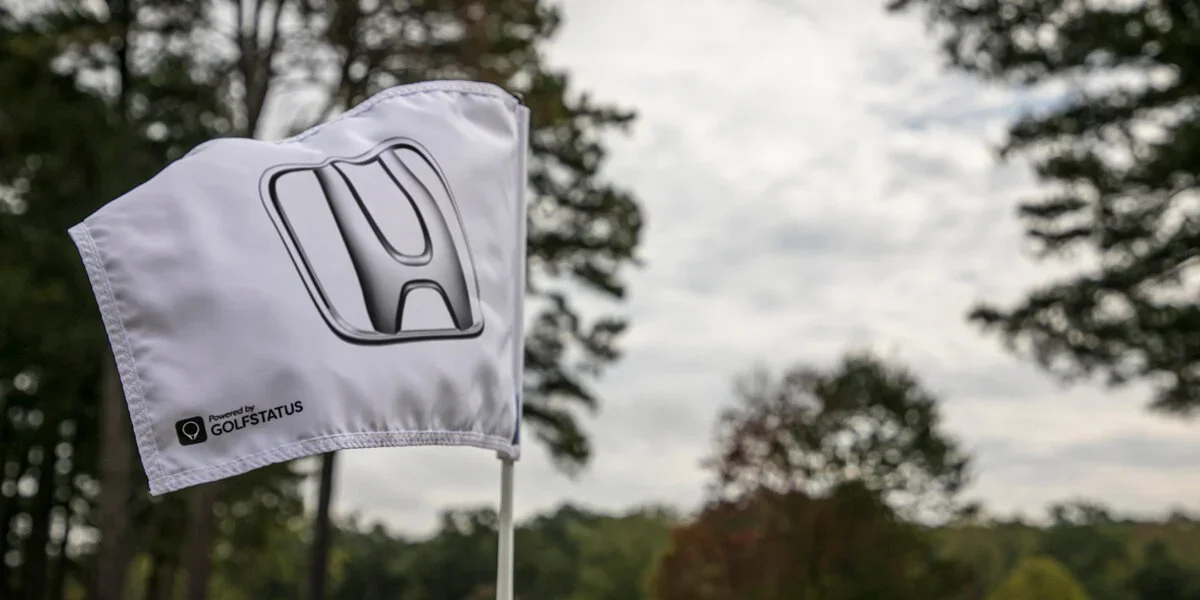
Jason Meininger: Most courses will help events give sponsors more exposure by adding logos to scorecards, cart signs, and the live leaderboard. Plus, you can put logos on pin flags on every hole, hole signs on tee boxes, and banners in high-traffic areas (which course staff can help identify).

Q: What are some ways we can work with the golf facility to get creative with sponsor exposure?

Cash Dinkel: Beyond standard tee signs, you can tie sponsors to moments golfers actually remember, for example, “Lunch Presented By,” “Range Presented By,” hydration stations, cart signs, contest holes, photo backdrops at awards, or a sponsor presence at the turn. The key is making it feel natural for the facility and not cluttered.

Jason Meininger: Ask course staff where the highest traffic areas are, so you know where to display materials for the most exposure. Also, be sure to ask about the ability to put logos on golf carts, beverage carts, the driving range, practice green, etc. These are all great spots on the course to sell sponsorships.

Q: Can the golf facility provide recommendations for the placement of signage or displays to maximize exposure?

Cash Dinkel: Yes, they should. The staff knows where golfers bottleneck, where they hang out, and what areas get repeated traffic. A quick walk-through with the tournament contact and a simple placement plan usually makes a big difference.

Jason Meininger: Yes, besides the tee boxes, the practice tee and practice green are excellent spots for signage. If they have a bag drop or snack bar area, these are also great locations.

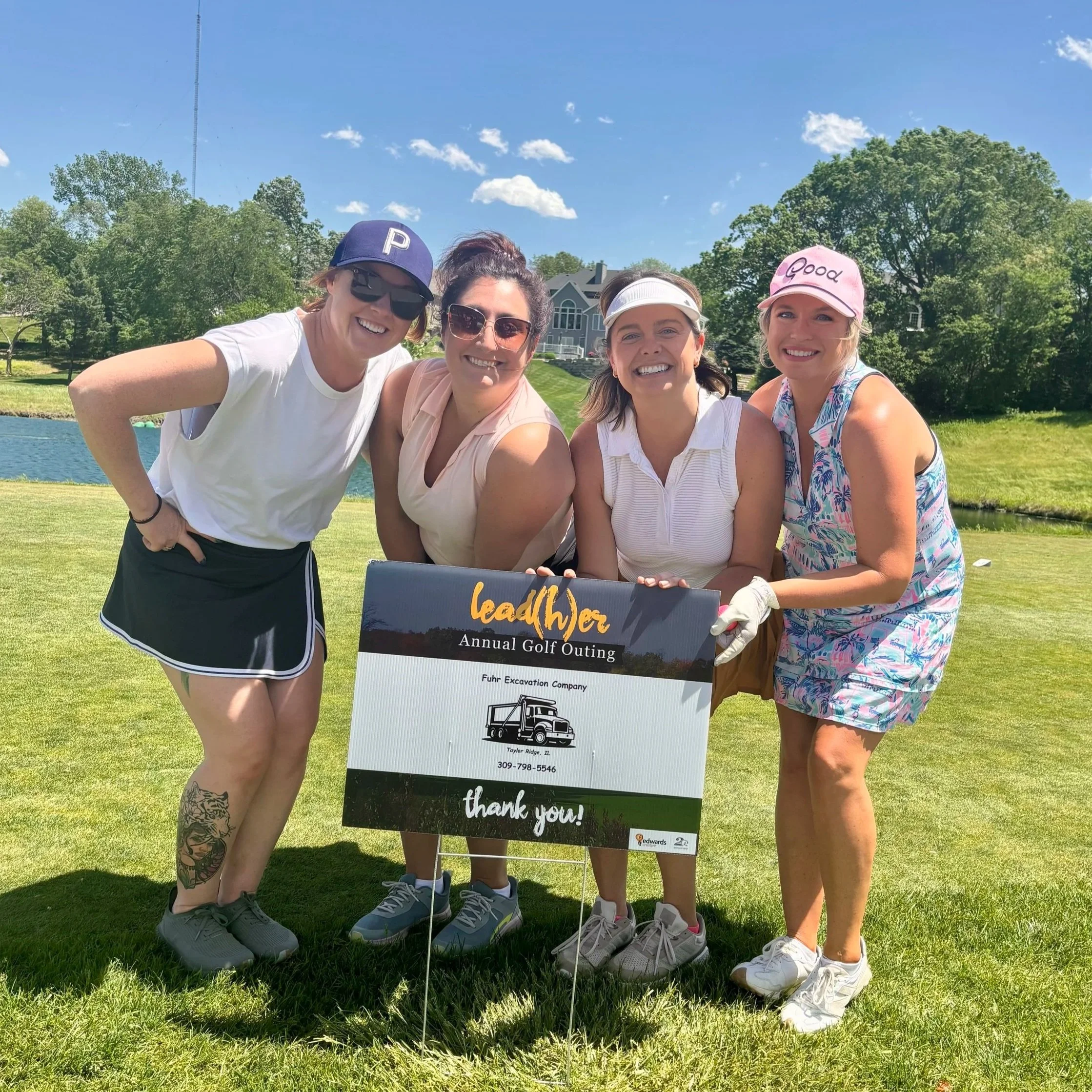
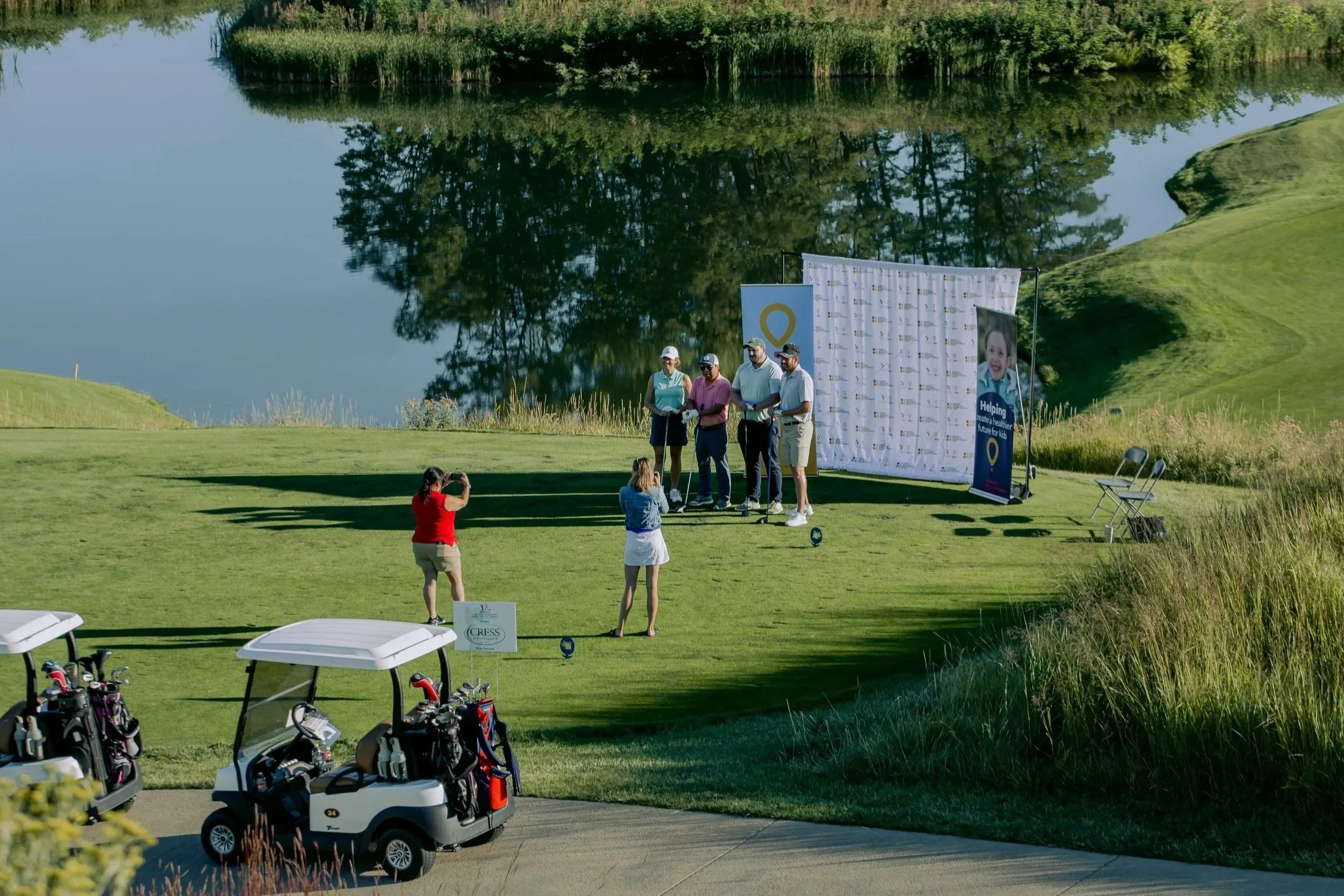
Four female golfers pose with a hole sponsor sign at a charity golf tournament.

The golf facility can provide suggestions for placing signs and banners in high-traffic areas.

Q: How does the caliber of the golf facility affect sponsorships?

Cash Dinkel: A higher-end facility can make sponsorships easier to sell because the event feels more premium, and sponsors like being associated with that brand. But I’ve also seen average courses crush it when the cause is strong and the tournament is well organized. Execution and a full field matter just as much as the name of the facility.

Jason Meininger: It really depends on the demographic you are targeting. You may be able to ask more for sponsorships at a higher-end or private facility, but it really depends more on the capacity of your event’s target audience and networks.

Q: How does the tournament management platform play into selling sponsorships?

Cash Dinkel: It helps a lot because sponsors want more than just a sign; they want visibility before and after tournament day, too. A solid platform gives you digital placements (website, registration, emails, pairings, scorecards, cart signs, and leaderboards), makes the event look polished, and makes it easier to sell and deliver on sponsor promises confidently.

Jason Meininger: It gives sponsors a digital presence on the event registration site as well as in-app during live scoring. GolfStatus also offers no-risk sponsorship opportunities (we only assess a fee if they sell), which can help organizations raise more money. Plus, events can use the platform at no cost, which helps to increase their overall sponsorship income.

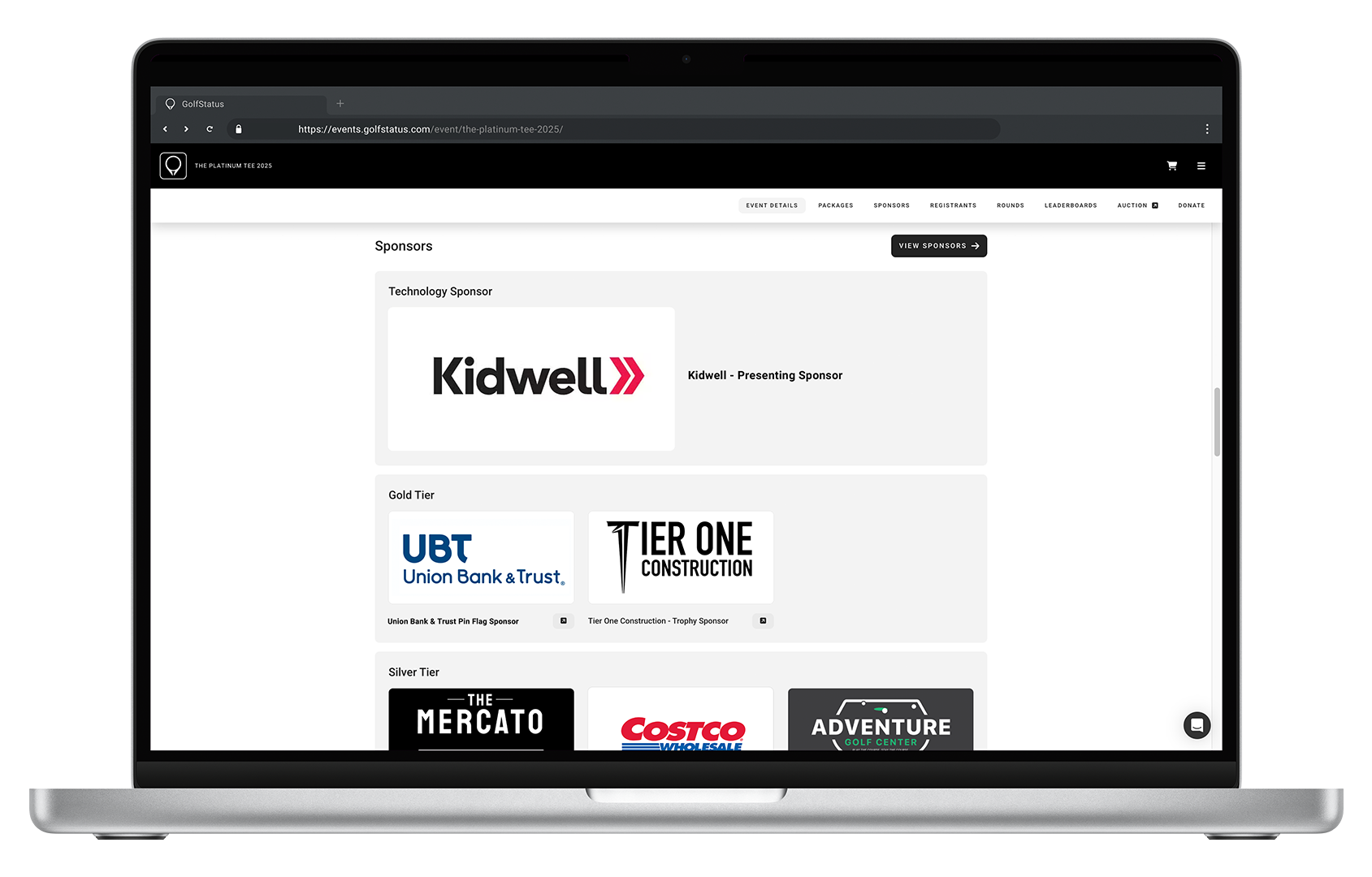
The sponsors listing page of a golf tournament website is shown on a laptop computer.

A dedicated event website simplifies sponsor onboarding and provides digital exposure before, during, and after the tournament.

Q: If a sponsor is interested in engaging with golfers on tournament day, what or where are some good opportunities to do so?

Cash Dinkel: The best engagement happens where golfers naturally gather, and it doesn’t slow play, so places like check-in, the range/putting green, the first tee, the turn/halfway house, a contest hole, and the awards reception. If they want real interaction, pair them with a contest, on-course game, giveaway, or food/beverage moment.

Jason Meininger: A good option is to set up a table and/or tent at a hole or near the clubhouse to interact with players, or on a designated hole. It’s also a good idea to give higher-dollar sponsors time to speak during the welcome or any post-round meal and the awards presentation.

Q: What have you seen work well for sponsor exposure—signage, digital exposure, or a combination of the two?

Cash Dinkel: The best results come from a combo. Signage gives strong day-of visibility, and digital gives repeated impressions before and after tournament day.

Jason Meininger: The more exposure, the better, so definitely both. Having sponsor logos in both places ensures that golfers see their brand in more than one place.


Ask the Pros!

Do you have a question for GolfStatus’ PGA Professionals? Email it to [email protected] with “PGA Pro Question” in the subject line, and it might be featured in a future blog post or an upcoming GolfStatus webinar!

Planning a golf tournament? You can get started with GolfStatus at no upfront cost—get an event website, online registration, communication tools, premium digital sponsor exposure, revenue-boosting add-ons, and more, plus access to GolfStatus’ responsive in-house client success team (including knowledgeable PGA Professionals and Fundraising Specialists). Click the button to book a meeting and learn more.


Putt Putt Fore Puppies Mini Golf Event Returns for Maximum Impact in Year 4
 

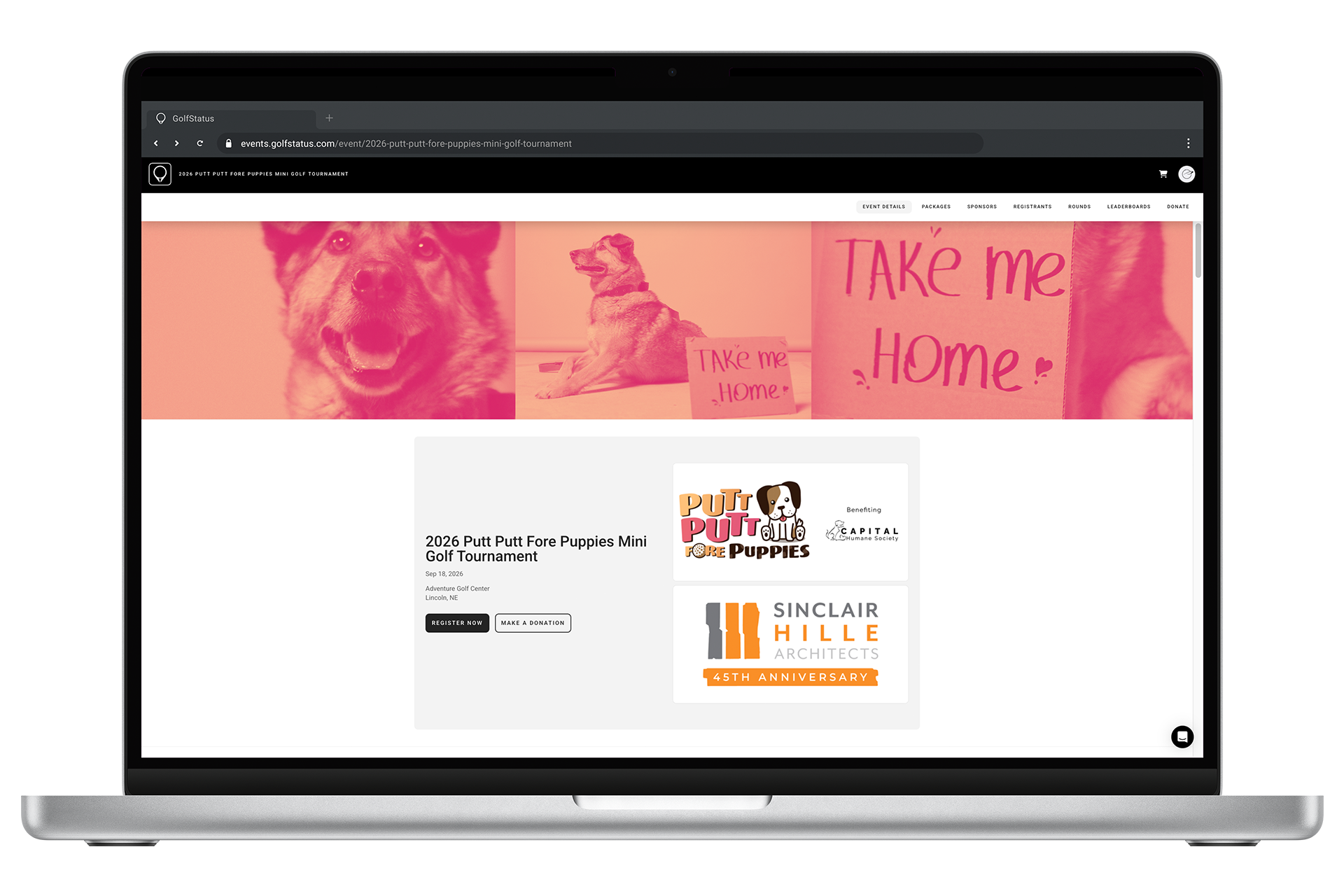
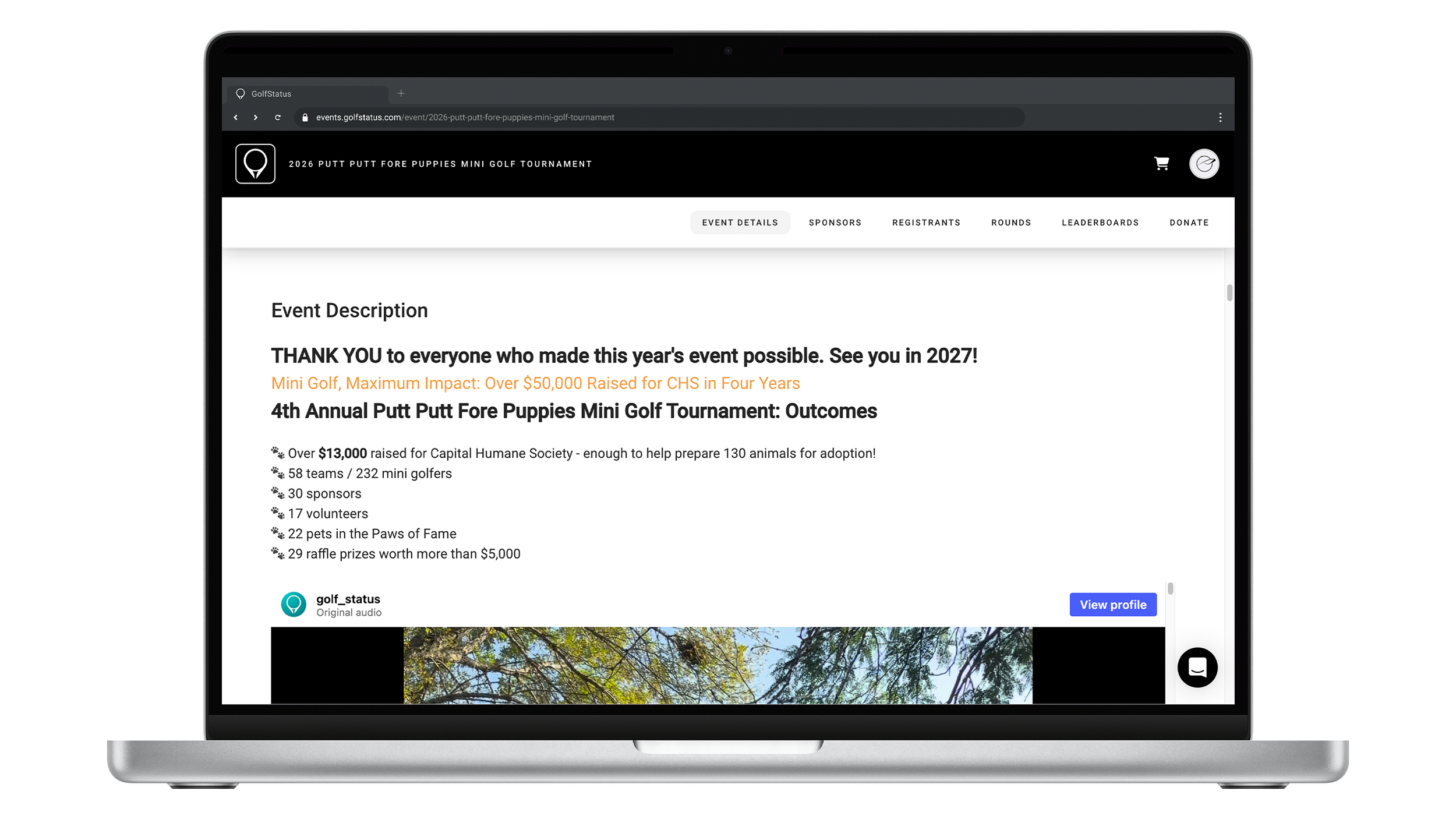
Putt Putt Fore Puppies has kicked off planning for year four of the mini golf fundraiser for Capital Humane Society (CHS). The event is planned by the GolfStatus team to bring the Lincoln community together to raise operating funds for CHS and help more pets find families.
2026 Event Details & Goals

📅 Friday, September 18, 2026

🕞 3:30 - 6:30 p.m. (shotgun start at 4:30)

📍 Adventure Golf, Lincoln, Nebraska

🔗 Event website

Goals for 2026 are similar to years past:

🎯 Donate $13,000 to CHS

🎯 Cover tournament costs with sponsorships and in-kind donations

🎯 Sell out all three courses at Adventure Golf (54 teams / 216 golfers)

🎯 Provide a fun community event and a great experience for participants

What’s New in 2026

  • Sponsor outreach. We’re leveraging a newly developed GolfStatus resource, the Golf Tournament Sponsorship Pitch Deck Template, to facilitate sponsor outreach with a customized deck with Putt Putt’s brand colors and content. It’s already paid dividends, as Sinclaire Hille Architects renewed their support as presenting sponsor for the fourth year!

  • New package names. Because we didn’t need to make any fundamental changes to team or sponsorship packages, we decided to have some fun with package names that leaned into the tournament beneficiary: animals. Say hello to the Best in Show Presenting Sponsor, Fetch Champion Golf Ball Sponsor, Hydration Station Sponsor, Tail Wagger Pet Toy Sponsor, and Paw-ty Break Sponsor (and many more). Golfers can choose from an All-Star Pack or Paw Print Team Registrations.

  • Paws of Fame Pet Spotlight. Every pet deserves to be in the “Paws of Fame,” so this package also got an upgraded name. The pet spotlights were a huge hit with golfers last year, with many oohs and aahs over the adorable pets, and the team is excited about featuring even more furry friends on signage.
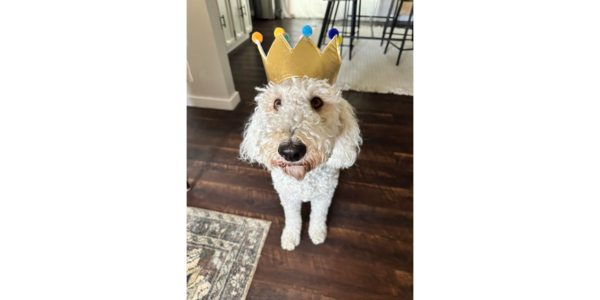
  • 50/50 ball drop + sponsor. The ball drop (attendees purchased numbered balls for $10 each, giving them the chance to win half of the total dollars raised from the ball drop) was a late addition to the tournament in 2025, with the planning team deciding to include it just a couple of weeks before event day. It was incredibly popular, but having more time to market it to golfers will be helpful. A sponsorship was added to this fun tournament add-on, and it sold within a few days of registration being opened. Thanks, Belmont Veterinary Center!

  • New golfer gifts and raffle prizes. To keep things fresh for returning supporters, the planning team is exploring new golfer gifts and finding sponsors to underwrite costs, like t-shirts and a Frisbee pet toy. We’re also connecting with organizational partners and business owners in our personal networks to secure high-value raffle prizes to provide even more value to participants.

  • Refreshed on-course games. On-course games have been popular with golfers, so this year we’re giving them a refresh and working with sponsors to build a game around their business. For example, the presenting sponsor is Sinclaire Hille Architects, so the team is exploring games that incorporate building.
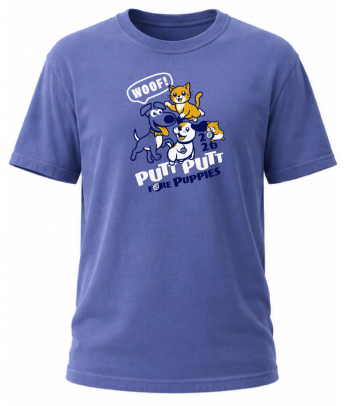
  • Merch is back! Ball markers and magnets featuring Pete, the Putt Putt Puppy; stickers with the event logo and likeness of several of the pet spotlight animals; and additional event t-shirts will all be on sale to boost revenue.

Planning for year four of Putt Putt Fore Puppies is much different than year one. Instead of building the tournament’s infrastructure as we go, we can simply draw upon what we’ve already established and find ways to improve the experience and fundraising outcomes. We reworked and streamlined our tournament planning project based on the recently revised Golf Tournament Fundraising Checklist and Planning Timeline and lessons learned from the event’s previous years, which has helped clearly define team members’ roles and responsibilities.

The planning team felt like we hit our stride in 2025 and didn’t make any significant changes to the tournament’s core components—time, location, format, main sponsorships, and team packages—for 2026, which made it easier than ever to copy the event and have our event website launched sooner than in previous years.

Learn more about Putt Putt Fore Puppies, register a team, make a donation, or become a sponsor on our event website.

Thank you 2026 sponsors!


Best in Show Presenting Sponsor

Paws & Prizes Swag Sponsor

Lucky Dog Ball Drop Sponsor


Tournament Results

Three-year Totals

💰 $37,000 raised for CHS

🏌️ 576 golfers

🤝 87 sponsors

♥️ 56 volunteers

Year 3: 2025

  • Golfers / Teams: 200 / 50

  • Courses: 3 of 3

  • Sponsors: 28 (plus 9 Pet Spotlights)

  • Outcomes: $13,000 donated to CHS

    • $2,000 raised on tournament day

Year 2: 2024

  • Golfers / Teams: 216 / 54

  • Courses: 3 of 3

  • Sponsors: 31

  • Outcome: $15,000 donated to CHS

    • $5,500 raised on tournament day

Year 1: 2023

  • Golfers / Teams: 164 / 41

  • Courses: 2 of 3

  • Sponsors: 21

  • Outcomes: $9,200 donated to CHS

    • $1,100 raised on tournament day

 
4 Strategies to Set & Reach Realistic Golf Event Fundraising Goals
 

by Andrew Herbert, CMO / Professional Golf Entertainer & Fundraiser at Charity Golf International

Planning a charity golf event can get overwhelming fast—especially when you’re trying to set fundraising goals that are ambitious, but achievable. Ensuring your goals are realistic and pricing teams and sponsorships accordingly sets your tournament up for success from the get-go.

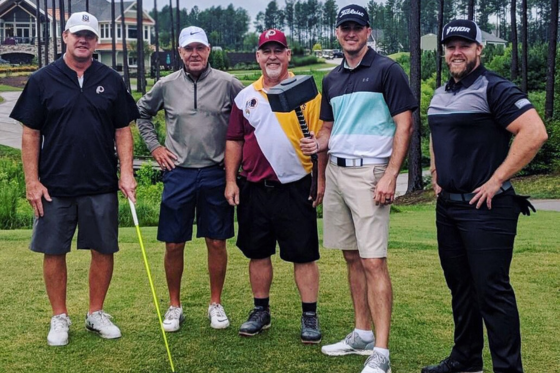
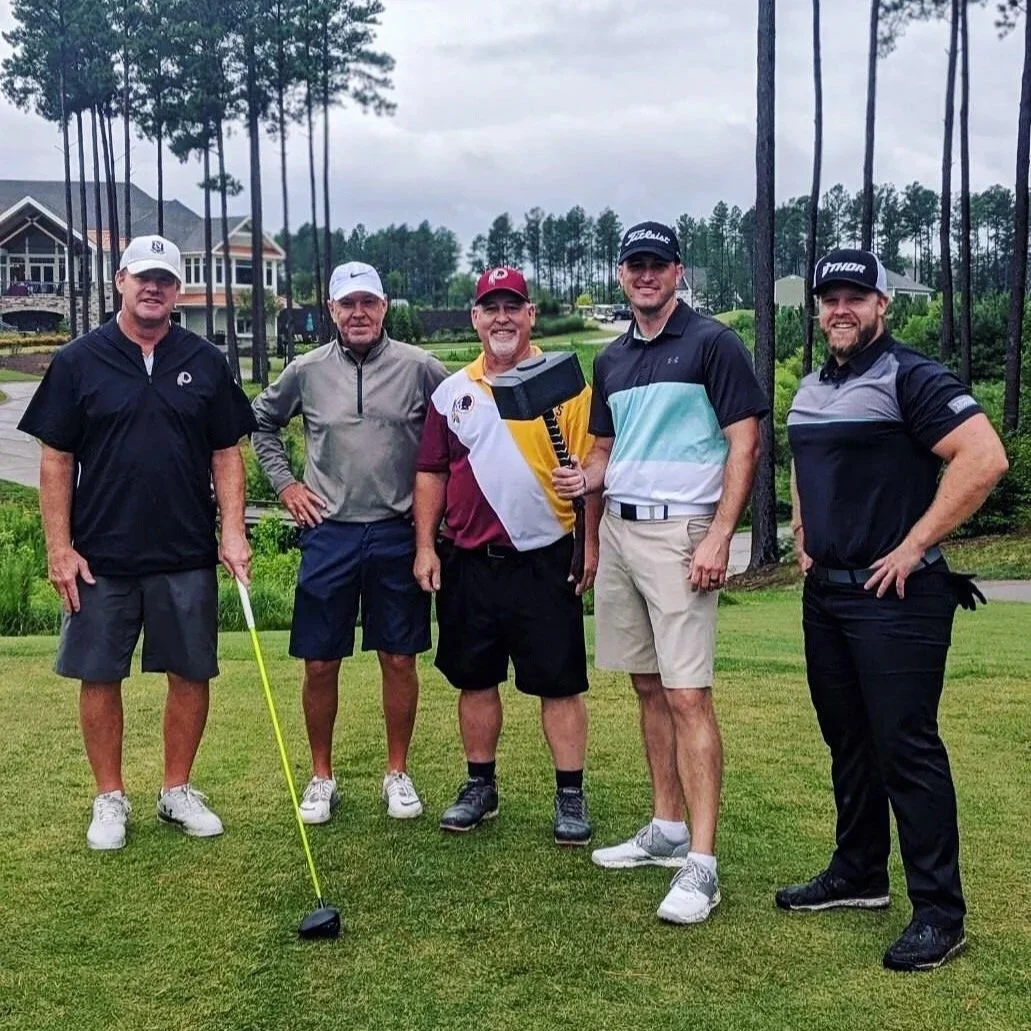
Four golfers and a long-drive professional pose at a charity golf event.

Andrew Herbert, far right, provides professional on-course entertainment and fundraising at a charity golf tournament.

The best approach to setting your tournament’s fundraising goals is simple: start with your baseline information and costs, then layer in proven revenue multipliers that increase giving without slowing play or creating donor fatigue. Here are five strategies to help you set realistic fundraising goals—and actually reach them.

1. Start with the baseline: player count + entry fee

It’s important to start with the basics. The most reliable place to start is to determine:

  • How many golfers you’ll have

  • What each golfer pays to play

So if you’re expecting a full field of 144 golfers for an 18-hole event, the entry fee for a foursome to play is $1,000, and the facility cost per foursome is $600 ($150 per golfer), you can realistically set a goal of $14,400 from golfer entries.

  • 144 golfers / 36 teams X $1,000 entry fee per team = $36,000

  • 144 golfers / 36 teams X $600 facility cost per team = $21,600

  • Net of $400 per team X 36 teams = $14,400

It’s important to remember that higher entry-fee events typically have an audience that’s already bought into the mission, meaning they’re more inclined to give on the course, too.

2. Add Revenue Multipliers That Reliably Increase Giving

Once you’ve established your baseline, you can multiply your revenue by:

Adding Professional On-course Contests + Entertainment

When contests are professionally run and fun, giving feels natural rather than forced. Always keep the on-course donation requests to no more than three (two is the sweet spot), as doing more will create “donor fatigue” with your guests. It’s important to note that this does NOT include the games you host on your own that are included with event registration.

Accepting Credit Cards

Events that make donating or purchasing upsells easy tend to raise significantly more. Cash-only giving leaves money on the table and can complicate post-tournament accounting.

Choosing the Right Venue + Day

The right golf facility and tournament timing can influence turnout, sponsor interest, and overall spend. Consider your audience and networks when choosing the host golf facility, date, and day of the week.

A female long-drive professional prepares to hit a tee shot at a golf event.

Male and female long-drive professionals from Charity Golf International can help boost on-course fundraising and guest satisfaction.

3. Use Resources to Help Set Goals You Can Justify to Your Board & Sponsors

Your organization’s board is likely looking for tournament goals that are as close to reality as possible. Those goals also help you set appropriate pricing for sponsorship packages.

Instead of blindly guessing, use your baseline information in a planning tool to provide models for:

  • Conservative outcomes

  • Realistic outcomes

  • Stretch outcomes

Charity Golf International has developed a golf tournament donation calculator to help tournament organizers map out goals and the path to get there. Input your baseline information to get an estimate on outcomes.

A Practical Goal-Setting Framework

Use this practical framework to help you set your goals and targets.

  • Conservative: Entry-fee revenue + ~50% more from on-course + raffle/auction

    • Example: $14,400 + $7,200 (50%) = $14,400

  • Realistic: Entry-fee revenue + ~75–100% more

    • Example: $14,400 + $12,240 (80%) = $26,640

  • Stretch: Entry-fee revenue + 125%+ more with strong execution

    • Example: $14,400 + $18,000 (125%) = $32,400

Using a golf event management tool like GolfStatus supports this effort, making it easier to create targets, track progress, and meet your tournament’s goals.

4. Think Beyond One Year

The strongest events build momentum. When you retain golfers and sponsors year over year, fundraising becomes easier—and grows faster. As you set your targets for this year, think about how they will impact future golf events’ potential revenue.

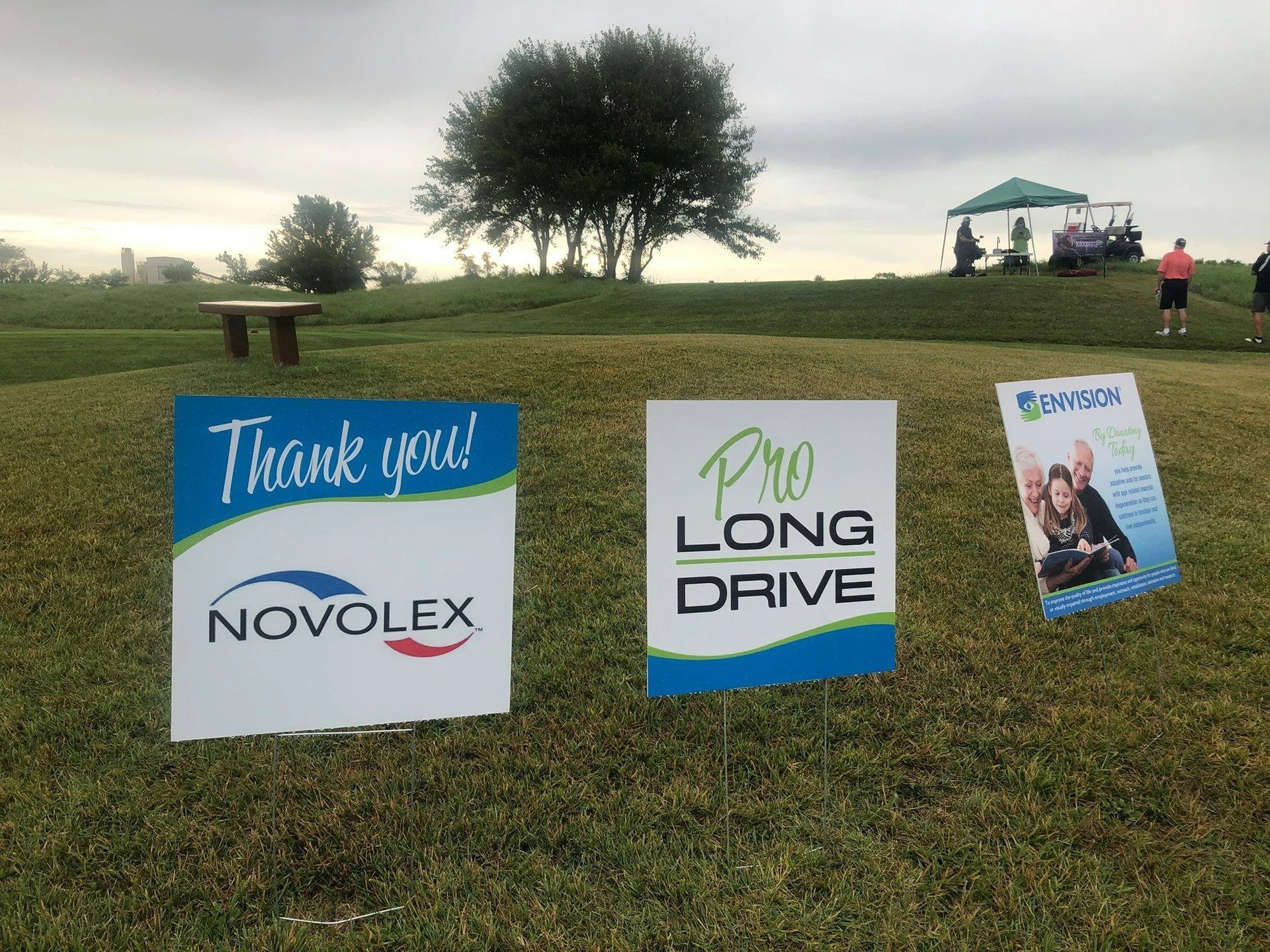
Signs recognizing the sponsors of a long-drive entertainer at a golf fundraiser.

Selling a sponsorship for long-drive entertainers is another way to help drive additional revenue from your golf event.

Maximize Fundraising With Charity Golf International & GolfStatus

CGI isn’t just “another contest vendor.” We help golf events increase revenue and maximize your fundraising goals by delivering:

  • Professional-led Par 3 + Par 5 experiences that create high-energy giving moments

  • Smoother operations, with less burden on volunteers and planning committees

  • A premium guest experience that supports bigger donations

  • Zero upfront cost to the charity (CGI is performance-based)

Why GolfStatus Matters for Your Goal

GolfStatus helps event organizers run a tighter tournament—from registration to sponsor management—so the fundraising plan you set is actually executable. In other words:

  • Better organization = better sponsor experience

  • Better sponsor experience = more renewals + higher dollars

  • Smoother logistics = more time/attention on fundraising moments

If your goal is to raise more without adding chaos or gimmicks, CGI can help. Get in touch to find out more about CGI.


Book a Meeting with GolfStatus

Get started with GolfStatus’ golf tournament management software at no upfront cost!


A Q&A With PGA Professionals: Choosing a Date & Format
 

Our PGA Q&A blog series leverages the knowledge, experience, and expertise of GolfStatus’ in-house PGA Professionals: Cash Dinkel, PGA and Jason Meininger, PGA. This series installment dives into two topics that play a critical role in a tournament’s success: choosing a date and tournament format.

A headshot of PGA Professional Cash Dinkel

Cash Dinkel, PGA

A headshot of PGA Professional Jason Meininger.

Jason Meininger, PGA


Q: What are some things tournament organizers should think about when choosing a time of year for an event?

Cash Dinkel: Big things are weather, daylight, and what else is happening in your community. You want a window where people can actually commit, the course is in good shape, and you’re not fighting holidays, school schedules, or peak vacation weeks. And if you’re trying to maximize sponsorships and attendance, avoid dates where every other nonprofit in town is doing the same thing.

Jason Meininger: I would avoid holidays, like the Fourth of July and Labor Day. I would also probably stay away from the warmest month in your area (July is usually the warmest month where we are in Nebraska) to avoid the heat, unless you play early in the day.

Q: How about choosing a day of the week?

Cash Dinkel: It really comes down to your audience. If it’s corporate-heavy, weekdays are usually easier because people can justify it as a work/networking event. If it’s more community/family-driven, Fridays and weekends can work, but weekends are harder for courses and sometimes harder for golfers who already have plans. Price and course availability are also factors. Weekends are premium times for the courses, which could lead to a higher per-player cost. Private courses may only be available on Mondays, when they are typically closed to their members.

Jason Meininger: In my opinion, it really boils down to cost. It’s more than likely going to be cheaper to have your event on a weekday versus a weekend.

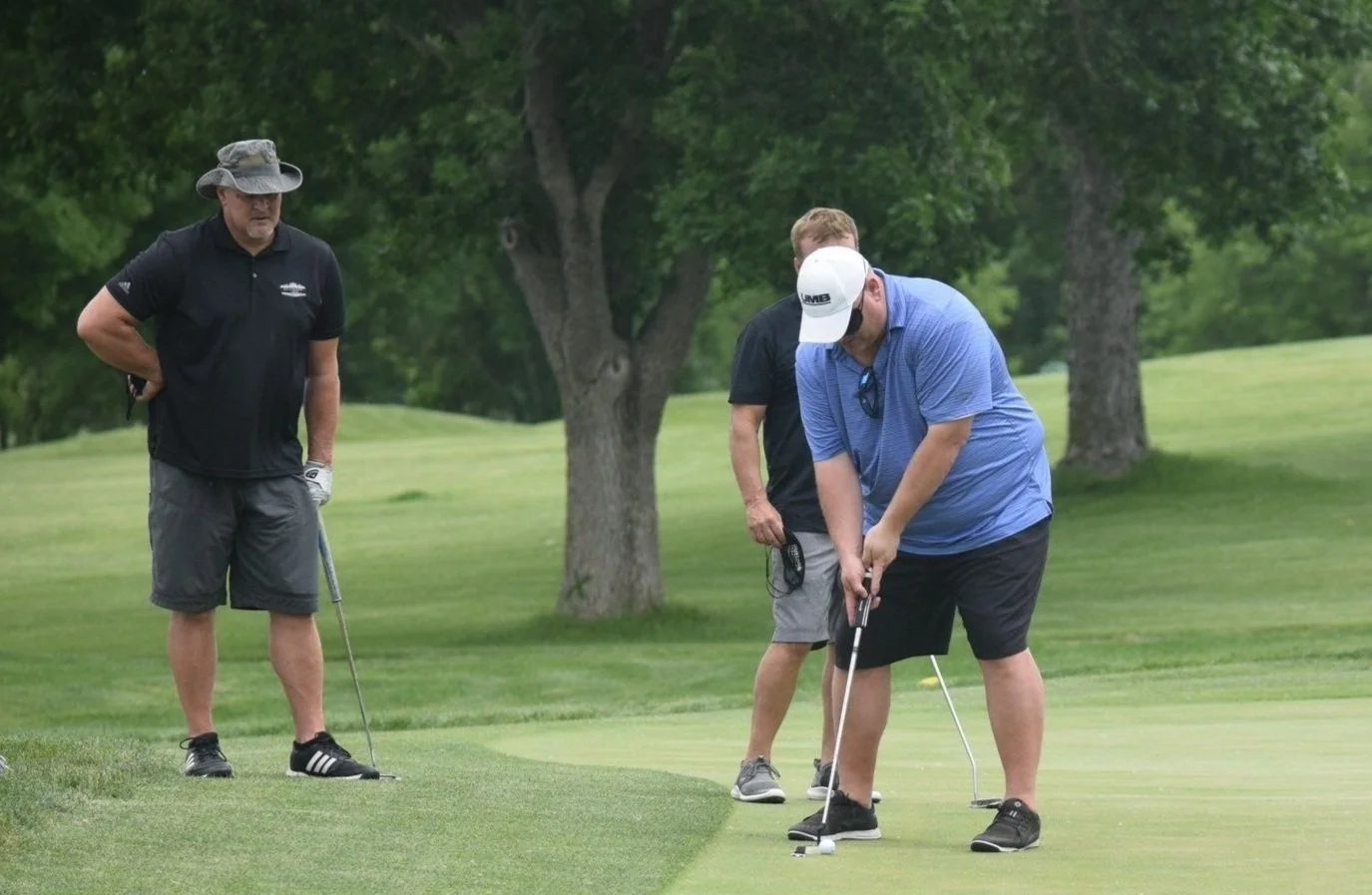
One golfer putts while three watch at a charity golf tournament.

Tournament organizers should consider their audience, price, and course availability when choosing a date for their golf event.

Q: What’s your favorite day of the week to play in a charity golf tournament?

Cash Dinkel: I personally love a Friday or Monday event. It’s an easy excuse to take a long three-day weekend, and then it doesn’t typically interfere with any weekend plans or activities that my family may have.

Jason Meininger: I prefer a Friday afternoon tournament, if the course allows it. That way, golfers can work a half day before leaving to play in the event.

Q: What was your favorite day of the week to hold an outside outing at your golf facility?

Cash Dinkel: My favorite day to hold outside outings at my facility was Monday. Monday was perfect because we were closed for normal play, so the event wasn’t interfering with our day-to-day golfers at all. We also usually saw strong participation on Mondays, which gave the whole day a really high-end vibe. And since everyone has to work the next day, those Monday outings typically start early and wrap up earlier, too. The day moves well, keeps the pace in check, and makes sure the golfers are having fun… but not get out of hand!

Jason Meininger: When I was at golf facilities, I preferred to have them on Mondays. That was usually the slowest day of the week, so it was an opportunity for the course to generate additional revenue.

Q: What are generally some of the busiest times of year at a golf facility?

Jason Meininger: Specifically in northern states, you’ll see things start to pick up in April and go through October to November; it’s similar in Canada. In the southern states, March to June are busy, things taper off in the hot summer months, and peak again in the fall through early to mid-December. Places like Florida, California, and Arizona see golf events year-round due to their warm climates.

Cash Dinkel: In most places, it’s late spring through early fall, basically when the weather is consistent, and the course is in really good shape. For most of the U.S., late May through September is usually the sweet spot, and then you’ll also see random spikes around holiday weekends and peak summer travel windows.

Golfers pose for a photo at a charity golf tournament.

Late May through September are prime times of year for charity golf fundraisers.

Q: In your experience, what is the most popular day of the week for charity golf tournaments?

Cash Dinkel: Friday is usually the busiest for charity outings. A lot of groups like the “play golf and roll into the weekend” vibe, and it’s an easy sell for teams and sponsors.

Jason Meininger: It really varies, but I would say Friday or Saturday are the most popular, then Monday (especially at private facilities).


Q: What are the most common tournament formats for golf fundraisers?

Cash Dinkel: The most common ones I see are a four-person scramble, shamble, and best ball/four-ball. Scrambles are the go-to because they keep the pace moving, they’re fun for every skill level, and they help you sell teams and fill a field without scaring off the casual golfers.

Jason Meininger: I would say over 90% of the events we work with at GolfStatus are a four-person scramble format. It really works well to attract casual and avid golfers.

Q: What are some other tournament formats you’ve run into?

Jason Meininger:

  • Best ball: Each player on a team plays their own ball throughout the hole. After the hole is completed, the lowest score or scores are recorded for the team total.

  • Individual: Each golfer plays their own ball, and each player records a score.

Cash Dinkel:

  • Chapman/Pinehurst: Both players hit, swap balls, then alternate shots.

  • Alternate shot: Each team has one ball, and golfers take turns taking shots. It’s definitely harder, but fun for competitive groups.

  • Stableford: This format has points-based scoring and encourages aggressive play.

  • Skins game: Each hole is its own prize, and ties carry over. There’s usually a cash prize for winning each hole.

  • Ryder Cup-style: Teams compete across multiple formats like best ball and alternate shot.

Three golfers on a green at a golf course in the foreground, with four golfers in the background.

Scrambles are a great choice for charity golf events because they appeal to golfers of all skill levels and keep play moving.

Q: What format do you typically recommend for charity golf tournaments, and why?

Jason Meininger: Hands-down, a four-person scramble. A scramble allows people of all skill levels to participate a little or a lot based on their skill level.

Cash Dinkel: By far the best option is a four-person scramble. It’s the easiest format to understand, it keeps golfers in a good mood, it helps pace of play, and it’s the best setup for fundraising add-ons like mulligans, string, throw-a-ball, and all the fun stuff that helps drive more dollars.

Q: Does live scoring work for any tournament format?

Jason Meininger: GolfStatus’ live scoring app works for about 90% of formats, including scrambles. We can create a live leaderboard for almost any format. There are a few more complicated formats that it isn’t able to live score.

Cash Dinkel: Most of the time, yes. Live scoring works great for scrambles, shambles, best ball, and even Stableford if you’ve got it set up correctly. It gets a little trickier with complex formats like Ryder Cups, member-guest, and round robin style formats, but for the typical charity event formats, it works super smoothly.


Ask the Pros!

Do you have a question for GolfStatus’ PGA Professionals? Email it to [email protected] with “PGA Pro Question” in the subject line, and it might be featured in a future blog post or an upcoming GolfStatus webinar!

Planning a golf tournament? You can get started with GolfStatus at no upfront cost—get an event website, online registration, communication tools, premium digital sponsor exposure, revenue-boosting add-ons, and more, plus access to GolfStatus’ responsive in-house client success team (including knowledgeable PGA Professionals and Fundraising Specialists). Click the button to book a meeting and learn more.


Why Golf Events Work for Associations & How to Succeed
 

Few fundraising events check as many boxes as a charity golf tournament. Golf is unique in that it serves as a powerful business connector, built around relationship-building and strategic networking. Unlike traditional networking events or mixers that last 60 to 90 minutes, golf tournaments provide five-plus hours of uninterrupted face time and engagement, making them one of the most valuable formats in professional member programming. Plus, golf events have the potential to raise significant dollars.

Members love golf tournaments for the opportunity to connect with association decision-makers and industry partners, vendors, and suppliers in an informal setting like the golf course. It removes the stiffness of meeting-room introductions and replaces them with shared experiences, friendly competition, and hours of interaction throughout the tournament.


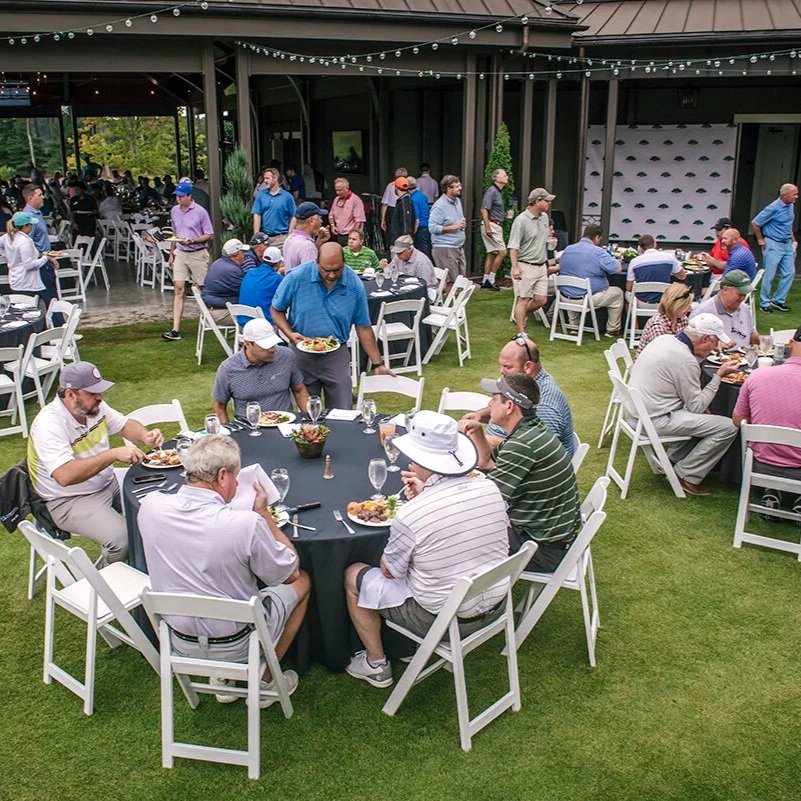
Association members enjoy lunch as part of a golf event hosted by the association.

Start planning!

Download a free golf tournament planning timeline and checklist for a roadmap to a successful golf event. Plug in your tournament date and get a detailed list of to-dos based on your time to plan.


What it is: A golf tournament presents a chance for your members, people from their networks, and member prospects to build connections over a round of golf. Charge a registration fee for teams to participate and sell sponsorships that cover the event’s hard costs, provide in-kind support, and support your association’s mission.

Why it works: Golf’s popularity continues to surge, and golf tournaments provide great engagement and brand visibility for sponsors. Plus, tech makes planning a successful golf tournament easier than ever, making it an all-around great fundraising idea for associations.

Here are four reasons golf events work so well for associations.

1. Generate Non-Dues Revenue

A golf outing is an ideal way to generate non-dues revenue. Whether your outing channels its fundraising dollars solely back into the association or parts them with a nonprofit beneficiary or beneficiaries, fundraising dollars can be collected from registrations, sponsorships, add-ons like mulligans and raffle tickets, on-course games, and other donation asks. The golf event can also be paired with a luncheon, dinner, a more formal gala, or an auction.

2. Improve Association Member Recruiting & Retention Efforts

Golf outings require participants to field a team, which encourages them to reach out to their networks and naturally leads to new member prospects. If membership growth is a primary goal for your organization, let golf event participants know so they can build their teams accordingly. You can also make the event a member-guest-style outing, so teams include both members of your association and non-members (i.e., prospects). Because of the inherent networking value golf events offer, and the fact that attendees tend to genuinely enjoy them, they’re a great way to keep members engaged and invested in supporting your organization year after year.

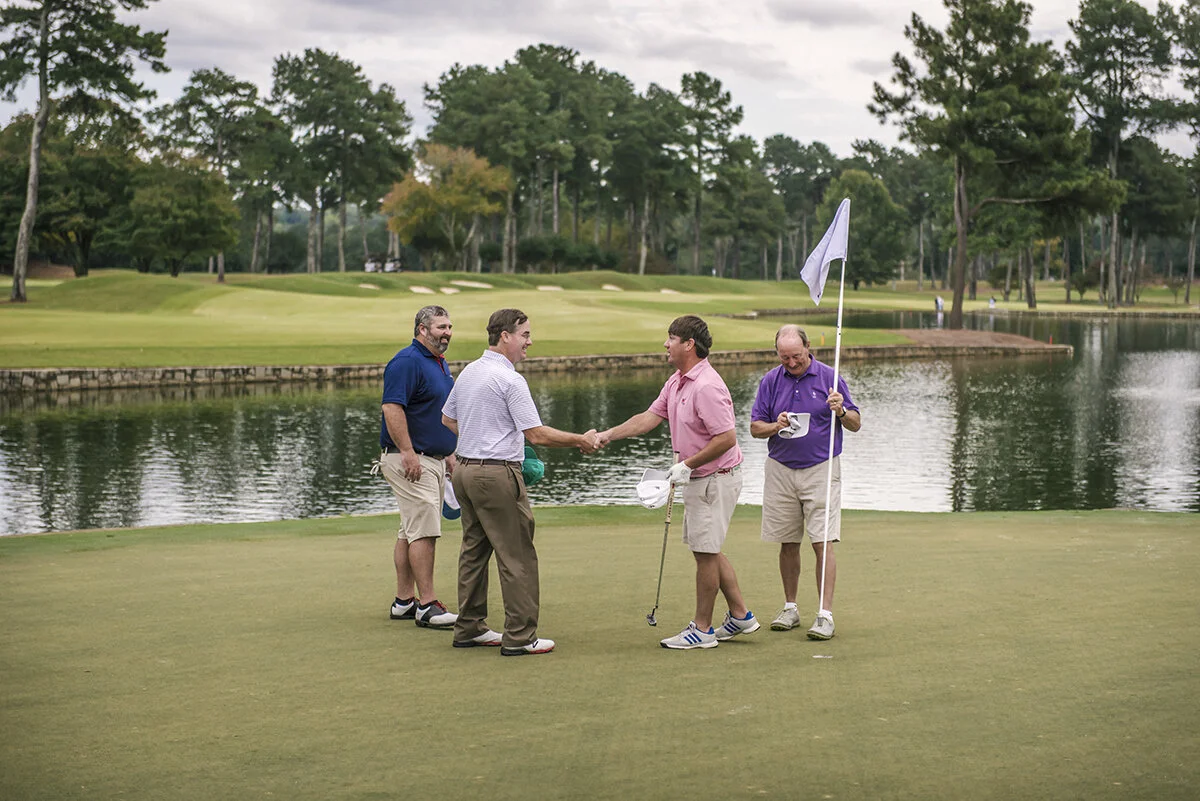
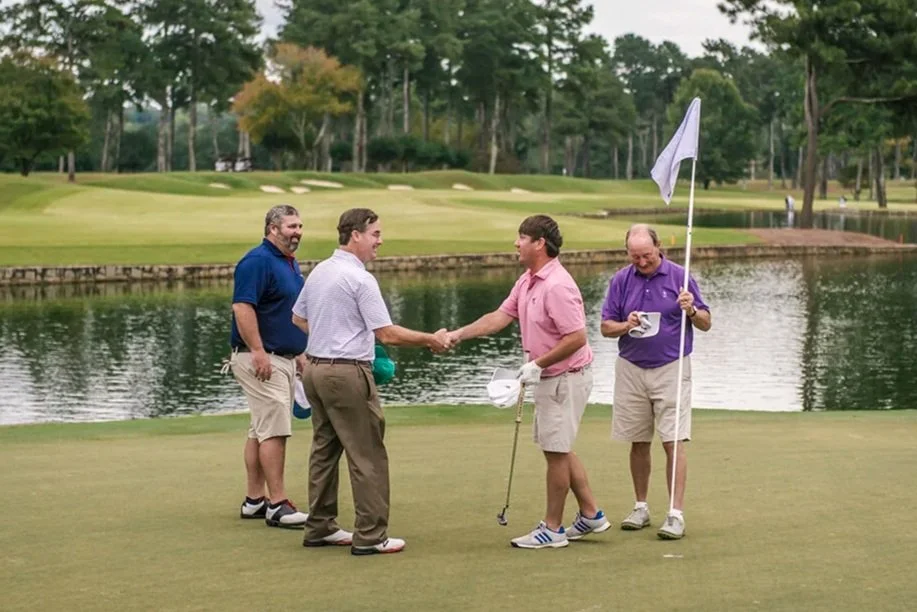
Golfers shake hands at the conclusion of an association golf event.

Golf events hosted by an association are a great opportunity to engage with members and prospects.

3. Forge & Steward Corporate Partnerships

Golf events are great opportunities to secure corporate support and further existing relationships. Golf’s inherent connection to business keeps it on the radars of business professionals and in the sponsorship and marketing budgets of corporate entities large and small. The event itself provides focused exposure to your members, which is a great value to corporate partners looking to sponsor and participate.

4. Build Goodwill & Spotlight Community Efforts

Golf is a fun community event that brings people together to enjoy a great day outdoors. It’s also inextricably linked to charity. As an association, your goals are to align interests and support causes that matter to your members, and you can leverage a golf outing to do both while also building goodwill for your organization and advancing its positive reputation in the community.

If your event benefits a specific cause or nonprofit organization, let players and sponsors know how much of their investments will go to this cause and what kind of impact those dollars make. Not only are you raising mission-critical funds for a great organization, you’re also building your association’s reputation and brand as a whole.


Case Study: Louisville Chapter of ASHRAE

The Louisville Chapter of ASHRAE (American Society of Heating, Refrigerating and Air-Conditioning Engineers) provides education to members, promotes students' interest in HVAC&R engineering and technical fields, raises funds for research, and supports the establishment of engineering standards.

ASHRAE has held a golf tournament for several years as a fundraising event, but also to engage existing members and attract new ones. Sponsors from the HVAC industry have jumped at the chance to sponsor the event each year, thgaanks to the valuable exposure they get to their very specific target audience. Tournament organizers leverage the digital sponsorships provided by the event management platform that offered each sponsor much more visibility. Plus, the fundraiser is centered around an event that both the association’s members and sponsors truly enjoy.


Tips for a Successful Association Golf Event

Reduce staff workload with technology. Association teams are often lean, so manually managing registration, team pairings, sponsorship sales, and coordination can quickly overwhelm staff capacity. Event management tech can automate and streamline prep and planning, freeing staff to focus on member engagement and building relationships with sponsors. Be sure your event has a dedicated website and offers online registration. Association members are busy and expect a simple, sleek way to register for any event. They don’t have time to fuss with forms, checks, and mail-in registrations. Plus, everyone’s online these days; it’s the fastest and easiest way to reach both existing and future members and supporters.

Match your goals with the event’s caliber. Consider the venue, price points, sponsorship options, and other key items as you start planning, and be sure they align with your goals. If your association has the opportunity to attract high-capacity members and big-time sponsors, be sure the caliber of the event is aligned with that opportunity. Be aware that positioning your outing as a high-end corporate entertainment event ensures that members gain substantial value from attending, making them willing to invest in supporting and participating in the event.

Make it inclusive and low-pressure. Choose a scramble format to appeal to golfers of all skill levels. Scrambles remove the intimidation factor for first-timers and ensure healthy competition for seasoned golfers. You might even add a fun theme to the tournament to drive excitement and make it memorable.

Turn up the fun. Incorporate on-course contests like longest drive, closest to the pin, hole-in-one, best-dressed team, or games to boost the fun factor. Add prizes for tournament and contest winners to help increase engagement and give members plenty of shareworthy moments for post-event conversation.

Boost revenue: Build on-course games, challenges, and contests into the tournament. These additional tournament components add more fun, draw additional attendees, offer more sponsorship opportunities, and boost revenue. A hole-in-one contest is a great example—a high-end prize is most certainly a draw for golfers, and you can sell a sponsorship to cover the cost of the hole-in-one insurance in case someone hits the lucky shot.

Offer sponsorships that businesses can’t resist. Your association’s membership is premium access for industry suppliers—and they know it. Corporate partners want visibility with your membership base, making golf tournaments ripe for high-dollar sponsorships. Offer high-end sponsorship opportunities like branded pin flags, hole-in-one contests, hole sponsorships, and tech-based exposure. Provide exposure through physical and digital channels so sponsors get quality, cross-channel impressions that drive tangible results like web traffic and genuine inquiries.

A branded pin flag at an association golf event.

Branded pin flags are a high-end sponsorship that offers unique visibility at your association’s golf event.

Tailor sponsorships to meet business goals. Businesses likely have specific goals or outcomes in mind when it comes to sponsoring events. You can help them meet those goals by working directly with them to create a tailored sponsorship opportunity that’s mutually beneficial and features options for their involvement. For instance, you might offer the chance to mingle with golfers before, during, or after the event. It’s essential to keep lines of communication open and not take a one-size-fits-all approach. Be willing to be flexible and design sponsorships that fit everyone’s needs.


Work With the Golf Fundraising Pros—At No Upfront Cost

The right tech makes golf events easier and more lucrative than ever. GolfStatus’ golf event management platform seamlessly handles everything from registration, payment processing, sponsor onboarding, and digital exposure to team pairings and hole assignments, golfer communication, and promotion. Get started with GolfStatus at no upfront cost and get a free event website, access to Fundraising Specialists, live support seven days a week, and much more. Book a meeting to learn more!


Putt Putt Fore Puppies Mini Golf Fundraiser Goes Bigger for Year 3
 

After two years of success, the Putt Putt Fore Puppies mini golf tournament came back for an even bigger and better year three! Planned by GolfStatus staff, Putt Putt Fore Puppies brings the community together to raise funds for Capital Humane Society (CHS), which cares for homeless pets in Lincoln, Nebraska, and helps them find their forever homes.


2025 Recap

  • Golfers / Teams: 200 / 50 

  • Courses: 3 of 3

  • Sponsors: 28 (plus 9 Pet Spotlights)

  • Outcomes: Nearly $13,000 donated to CHS

    • $2,000 raised on tournament day

The 2025 Putt Putt Fore Puppies Mini Golf Tournament was another resounding success! While the final amount donated to Capital Humane Society was less than in 2024 (2024’s event benefited from a very generous day-of donation that skewed the final numbers), the tournament actually raised more than in previous years. Here’s how we boosted overall revenue:

  • Sponsorships. New packages were added (Tennis Ball Pet Toy Sponsor, Doggie Bandana Sponsor, Drink Ticket Sponsor, Trophy Sponsor), and prices were slightly increased to drive income. 

  • Team packages. Two team packages were offered—an “all-in” package and a standard package. Both included t-shirts, dinner, gifts, a drink ticket, and a round of mini golf for each golfer, but the all-in package includes entry into on-course games and 12 raffle tickets. Pricing was increased to cover costs and better reflect the experience.

  • Pet showcase. Pet owners had the opportunity to purchase a “sponsorship” to show off their beloved pets on the event website and signage at the tournament. Pet owners got to take their pet’s sign home at the end of the day!

  • 50/50 ball drop. Attendees purchased numbered balls for $10 each, giving them the chance to win half of the total dollars raised from the ball drop. Over 50 balls (out of 100 possible) were sold, and all 100 were dropped on one of the holes before the shotgun start. Two balls made it in the hole, and the winners split the pot with CHS. One winner donated half of his winnings back to CHS! This was a relatively late addition to the tournament, with limited time to promote it ahead of event day. Because it was well-received, the planning team will continue it in 2026 and start selling balls when registration opens.

  • Merch. A merch sales table was another new addition to the tournament, including ball markers and magnets featuring Pete, the Putt Putt Puppy; stickers with the event logo and likeness of several of the pet spotlight animals; and additional event t-shirts. 

  • Additional raffle prizes. This year’s raffle was extremely successful due to the quality and quantity of prizes. Attendees purchased more raffle tickets for the chance to win high-dollar prizes, including an espresso machine, photography packages, gift cards, attraction tickets, and more. And since all prizes were donated, there were no overhead costs.

2025 Changes

Based on feedback from last year’s participants, the planning team implemented a few changes for the 2025 tournament. 

  • New planning team. Planning team members included: Ashley Stahr, Chief Marketing Officer; Payton Prall, Digital Media Manager; Jen Wemhoff, Communications Manager; David Li, Graphic Designer; Dane Stahr, Product Designer; Ty Perkins, Account Manager; Paul Sanger, Account Manager; Alex White, Fundraising Specialist; Brenden Holling, Client Success Specialist; Jack Burmeister, Client Success Specialist; Cash Dinkel, Director of Client Success; 

  • New schedule. Additional time was built into the schedule to accommodate the extra time required to complete the Backwoods Course and the raffle drawing.

  • New tournament day layout. To better facilitate golfer check-in and avoid bottlenecks around the registration area, the layout was revamped. We leveraged some additional green space at Adventure Golf for a smoother flow from check-in and add-ons to dinner, sponsors, and raffle tables.

  • New on-course games. New game options were added to each course, including a pet putter (golfers putted with a dog toy, tennis ball launcher, or pooper scooper), alternative ball (putting with the tennis ball dog toy instead of their golf ball), and animal trivia.

Past Tournament Recaps

Here’s a quick rundown of what the tournament accomplished in its first two years:

Year 1: 2023

  • Golfers / Teams: 164 / 41 

  • Courses: 2 of 3

  • Sponsors: 21

  • Fundraising Goal: $3,000

  • Outcomes: $9,200 donated to CHS

    • $1,100 raised on tournament day

Year 2: 2024

  • Golfers / Teams: 216 / 54

  • Courses: 3 of 3

  • Sponsors: 31

  • Fundraising Goal: $12,000

  • Outcome: $15,000 donated to CHS

    • $5,500 raised on tournament day


Thank you sponsors!


Presenting Sponsor

Flag Sponsor

Golf Ball Sponsor

Doggie Bandana Sponsor

Tennis Ball Pet Toy Sponsor

Flag Sponsor

Dinner Sponsor

Music Sponsor

19th Hole Sponsor

Swag Sponsor

Trophy Sponsor

Batting Cage Sponsor


Hole Sponsors:

Signage Sponsor


A Q&A With PGA Professionals: On-Course Games
 

GolfStatus’ on-staff PGA Professionals—Cash Dinkel, PGA; Jason Meininger, PGA; and Paul Murcek, PGA—continue to share their insights and experiences in this ongoing PGA Q&A blog series. They’re back for another installment, this time talking about a popular revenue enhancer at charity golf tournaments—on-course games.

Headshots of the three PGA professionals on staff at GolfStatus.

Q: We want to have games on some of the tournament holes. How many is too many? How many do you recommend?

Cash Dinkel: I would say keep it to six or fewer. Four is a great sweet spot. You don’t want to have too many games that it impacts the pace of play too much, but games can be a great way to earn some extra money from golfers.

Paul Murcek: I wouldn’t recommend doing more than six, especially if the games will slow down the tournament’s pace of play.

Jason Meininger: I would say between three and six games is about right. If you have too many, it will slow down the pace of play, and no one likes getting stuck waiting at a hole.

Q: What are some of the best on-course games you’ve seen at charity golf tournaments? What made them great?

Jason Meininger: A few I’ve seen work well at charity tournaments:

  • Beat the Pro. On a par three hole, a Pro (could be the course’s golf pro, a professional golf entertainer, or other person) hits a shot and golfers pay to hit the same shot. They win a prize if their shot is closer to the hole. Golfers feel great if they can beat the pro!

  • Air cannon. Golfers pay $20 (or other amount) to shoot the air cannon as their tee shot. This is really popular—it’s fun to shoot the cannon.

  • Chip into a small pool. Golfers pay to hit a chip shot to land in the pool to win a prize.

Cash Dinkel:

  • Use the Pro’s shot. Each team pays $20 or so and gets to hit their next shot from where the Pro hits their shot. This is very popular on par threes and par fives if the Pro hits the ball a long way.

  • Closest to the pin, long drive, or longest putt contests. Sell a sponsorship to pay for the cost of the prize (and a little extra revenue), and the winners get golf shop credit or another prize.

  • Beat the Pro. Another variation on what Jason mentioned is that each team pays $100 to go against the pro. If the team is closer than the pro on the tee shot, the team gets a one on that hole; if not, the hole is played normally. Another option is to give additional raffle tickets to teams who win.

  • 50/50 putting contest. Set up a medium difficulty putt, maybe 20 to 30 feet. Golfers pay $20 per attempt with unlimited attempts. Everyone who makes the medium difficulty putt then gets to attempt a very difficult putt of 40 to 50 feet. If a golfer makes the difficult putt, they split half the entry fees with the host organization.

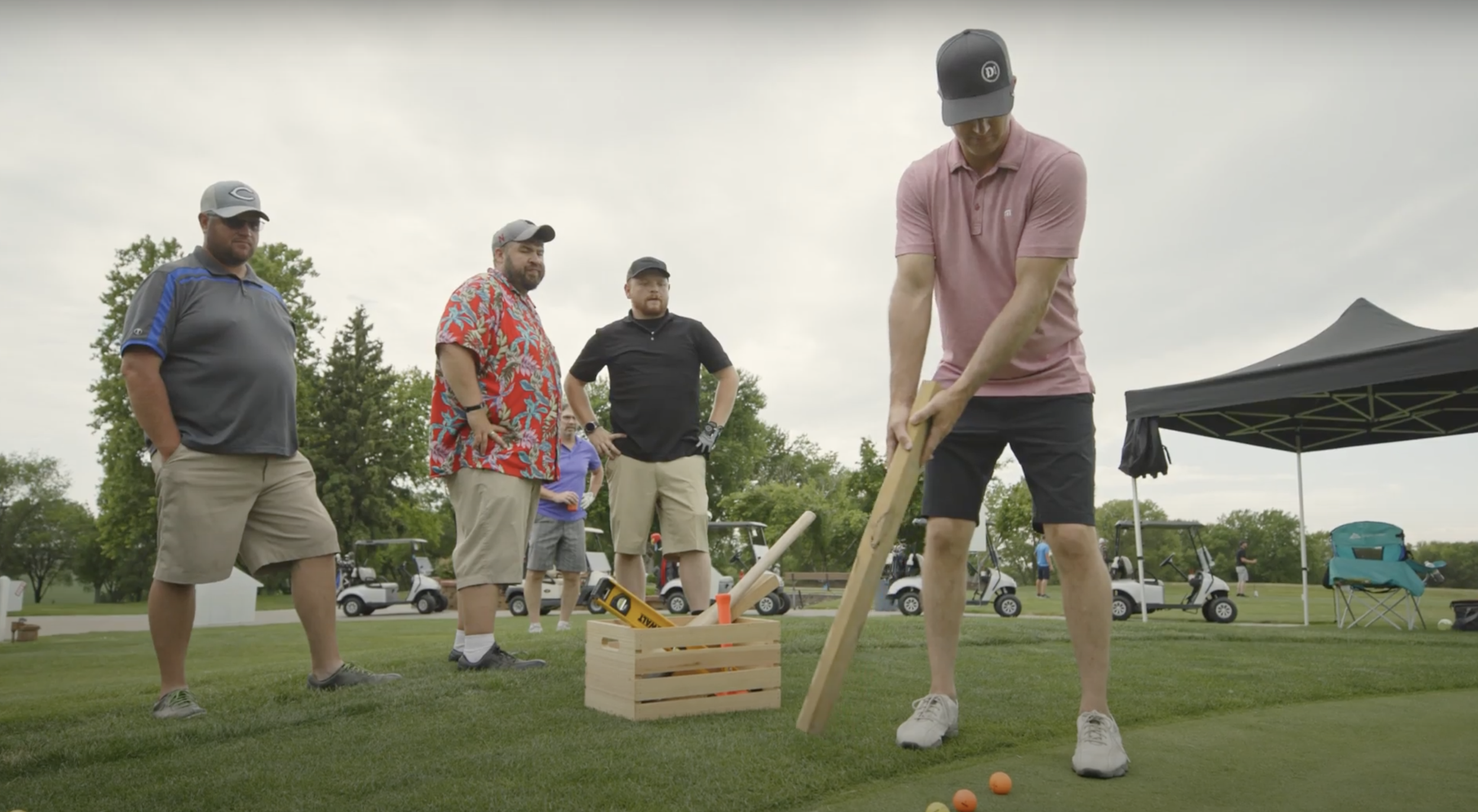
A man uses a to by four to putt during an on-course game at a charity golf tournament.

Habitat for Humanity of Columbus, Nebraska features a putting contest at their annual golf fundraiser, in which golfers use various building tools (two by fours, levels, sledgehammers, etc.) to putt.

Q: How about the worst on-course games? Why were they the worst?

Paul Murcek: Any game games where there’s too much time between golf shots. An example is where a golfer has to spin around and make themselves dizzy before hitting a golf shot. Although it is funny, it slows down play, and in the end, slow play is the biggest killer of repeat golfers and sponsors at a golf event.

Cash Dinkel: The String Game. No one wants to hold onto and cut a string throughout the day. Most people don’t grasp the game, and a lot of teams use it differently, making it not ideal.

Q: How do we maintain the pace of play with on-course games?

Jason Meininger: Bottom line—don’t overdo the games, or it will slow down the pace of play.

Cash Dinkel: Make them simple and easy to understand, and don’t do more than six. Games that are a part of normal play (like tee shots or putts) mean it won’t take more time than needed to play the hole.

Paul Murcek: I echo what Cash said about having games or contests that are part of normal play, like closest to the pin, beat the pro on a par three, or longest drive, to not affect the pace of play. Utilize volunteers who understand golf and suggest a window of no more than 15 minutes for a team to play a hole to keep a brisk pace of play (15 minutes per hole on an 18-hole golf course means a round of about four hours and 30 minutes).

Three golf carts are lined up next to a hole at a charity golf tournament.

When done properly, on-course games won’t slow down the tournament’s pace of play.

Q: Will golf course staff help run on-course games, or do I need volunteers?

Cash Dinkel: More often than not, your team will be tasked with staffing those contests. It’s a question to ask the golf facility, but I wouldn’t expect them to do that. They can usually assist you with setup.

Paul Murcek: You will definitely need volunteers or staff members from your organization. In my experience, golf course staff won’t help with on-course games in most cases.

Jason Meininger: Course staff will usually not run the games for you, so getting volunteers is the best option.

Q: Do golf facilities generally have any restrictions on the on-course games allowed? If so, what are they, and how can we work with the facility to make everyone happy?

Cash Dinkel: I’ve never heard of a golf course limiting on-course games. If there are concerns about pace of play or the need to protect the integrity of the course, they may say no to some on-course games. So make a point to communicate with the course what your plans are for games and contests, so there are no surprises on the day of the event.

Paul Murcek: Not to my knowledge, but every golf facility is different and may have different rules. Ask the pro if they have games that are not allowed.

Jason Meininger: I have never heard of a course restricting the number of on-course games, but like the other two said, be sure to talk with the golf staff to be sure.


Ask & Work With the Golf Fundraising Pros!

If you have a question for GolfStatus’ PGA Professionals, send it in an email to [email protected] with “PGA Pro Question” in the subject line!

Nonprofits, charities, and third parties holding golf events to benefit one can qualify to use GolfStatus’ tournament management software at no upfront cost. Our in-house team of golf fundraising experts, including PGA Professionals and Fundraising Specialists, is here to help save you time and raise the most money possible. Get started with GolfStatus by booking a meeting with our team—click below!


30 High-Impact Corporate Fundraising Ideas + Best Practices
 

by Jen Wemhoff, Communications Manager at GolfStatus

Corporate fundraising presents a valuable opportunity for nonprofits and businesses to make a meaningful impact on their communities. For nonprofits, it means additional funding, resources, and greater visibility. For businesses, raising money for charity as a third party boosts brand reputation, engages employees, and fosters connections with new audiences.

Whether you’re a nonprofit looking to secure corporate support or a company looking to give back, these key strategies and fundraising ideas will help you maximize your impact.

A man and  woman shake hands.
 

Corporate Fundraising FAQ

What Are the Benefits of Corporate Fundraising for Nonprofits?

  • Increased funding and financial stability. Corporate sponsorships and donations create a reliable funding source for nonprofits.

  • Expanded audience and brand awareness. Corporate partnerships introduce nonprofit causes to new audiences and raise awareness about important issues.

  • Access to valuable resources and expertise. Corporate partners may provide helpful resources like in-kind donations or skilled volunteers, along with industry expertise.

  • Long-term strategic partnerships. These collaborations provide ongoing support for sustained impact.

  • Increased credibility and public trust. Aligning with respectable brands or well-known businesses helps build trust among the community and with donors.

Why Should Businesses Invest in Corporate Fundraising?

  • Reputation boost. Corporate giving enhances your social responsibility profile, enhancing and strengthening your brand and reputation.

  • Introduction to new audiences and customers. Supporting a nonprofit can help businesses engage with new customers. For instance, fundraising events that attract higher net-worth individuals—like charity golf tournaments—help businesses attract valuable clientele.

  • Improved employee engagement. Giving back can boost employee satisfaction and engagement, foster connection between teams, and improve team-building.

  • Diverse giving opportunities. There are multiple ways companies can support charitable causes, including in-kind donations, monetary sponsorships, cause marketing campaigns, and more.

A corporate team poses with a big check.

Corporate partnerships have a number of benefits for businesses and noprofits.


What Are Some Best Practices for Organizing Corporate Fundraising Events?

For all parties to maximize the impact of charitable partnerships, the following best practices should be considered:

Nonprofits

  • Educate partners on any other corporate giving opportunities that may exist to further maximize their charitable efforts, such as matching gifts, volunteer grants, or payroll giving.

  • Mobilize your donor network to spread the word about your corporate partner’s contributions, share information about the upcoming fundraising event, and encourage participation.

  • Set goals that are both ambitious and realistic, based on past fundraising efforts, successes, and lessons learned.

Businesses & Third-Party Fundraisers

  • Be transparent about the scope of your support and involvement in the fundraising event.

  • Align fundraising events with your company’s mission, brand, and audience.

  • Collaborate with the nonprofit to create compelling event promotional materials, such as a compelling event website with storytelling, visuals, and many opportunities and tiers for involvement.

Both Parties

  • Work with partners that share your goals and values for the best possible outcomes for everyone involved.

  • Choose the right event that will appeal to each organization’s audiences.

  • Follow up after the event to reflect on its success, demonstrate its impact, and express gratitude.

  • Create an event plan that details event tasks, assignments, and timelines.

  • Outline a budget so both parties are on the same page.

  • Use purpose-built tech to effectively and efficiently streamline planning and event management. For example, if you choose a charity golf tournament, choose a solution built specifically for golf, like GolfStatus.

The Top Corporate Fundraising Idea: Charity Golf Tournament

What Is a Charity Golf Tournament?

A charity golf tournament is a premier fundraising event that offers numerous benefits for the host company and benefiting nonprofit. Golf events bring people together like no other event can, combining philanthropy with networking, camaraderie, and an activity people genuinely enjoy. Golfers pay a registration fee to participate as an individual or a team and businesses purchase sponsorships to support the cause.

A group poses in front of a banner at a charity golf tournament.

Charity golf tournaments bring people together to raise money, make connections, and strengthen relationships.


Why Is a Charity Golf Tournament the Best Corporate Fundraising Idea?

  • Golf events have high revenue potential. Player registrations, sponsorships, and add-ons such as contests, on-course games, mulligan sales, auctions, and raffles drive revenue.

  • Golf tournaments appeal to sponsors. Golf events provide excellent branding and exposure opportunities for businesses of all types, plus access to an audience that can’t be found with any other event.

  • Golf events attract decision-makers. Golf attracts corporate executives and higher-than-average net-worth individuals. 90% of Fortune 500 CEOs are golfers, and one in three golfers are in top-level management.

  • Golf is more popular and inclusive than ever. Golf continues to see record popularity, attracting new audiences of beginners, women, and young adults.

  • Golf builds relationships. Because the focus of the event is on an enjoyable activity, it’s easy for donors and sponsors to build relationships and positive memories that keep them coming back year after year.

  • Golf events strengthen community engagement. Golf events planned by a third-party corporate partner deepen community ties and engagement.

  • Golf tournaments are customizable. Choose the golf facility, format, and competition level that best suits your combined audiences.

  • There are multiple opportunities for support. Golf tournaments offer a plethora of opportunities to support a nonprofit partner—monetary sponsorships, employee volunteering, in-kind donations, and more.

Tips for Launching a Charity Golf Tournament

With the right strategy and tools in place, it’s easier than ever to plan and execute a successful charity golf tournament. Follow these tips:

  • Use an event website. A dedicated golf tournament website with online registration makes promotion, registration, sponsor onboarding and exposure, sharing information about your cause, and communication with supporters simple and efficient.

  • Offer sponsorship packages at varying price points. This best practice allows businesses with different budget capabilities to support your tournament. High-end exposure, like a pin flag sponsorship, should be sold at a premium,

  • Maximize additional fundraising. Incorporate tournament components such as mulligan sales, raffle tickets, auctions, on-course games, and hole-in-one contests to boost fundraising outcomes.

  • Enlist volunteer help. Work to engage volunteers from both the corporate partner and nonprofit to help in tournament prep and day-of execution.

Most importantly, use a golf-specific event management platform. Golf tournaments come with a unique set of details that must be handled, including handicaps, hole assignments, team pairings, flighting, and scoring. Standard ticketing software and nonprofit CRMs simply aren’t built to handle this level of specificity without requiring time-consuming workarounds.

GolfStatus’ golf event management software addresses the golf specifics and has baked-in tools to save organizers time and opportunities to raise more money:

  • Event websites with online registration, secure payment processing, broad digital sponsor exposure, the ability to collect donations, and more.

  • Robust reporting and data management in one easily-accessible web-based platform.

  • A user-friendly back end where team members can collaborate, manage payments, track team and sponsorship sales, make hole assignments, and more.

  • Reliable live scoring that engages golfers throughout the tournament and makes the tournament more fun.

  • Exclusive sponsorships and add-ons to raise thousands more dollars.

  • A responsive, in-house client success team comprised of PGA Professionals and fundraising specialists.

For third party fundraisers like corporate entities, GolfStatus can essentially be the bank for the golf event. GolfStatus makes it simple to collect and hold funds that can be paid out directly to the nonprofit after the tournament concludes.


Get started with golfstatus


Other Event-Based Corporate Fundraising Ideas

1. Corporate gala or charity ball

2. Trivia night

3. Charity game night

4. Wine and dine fundraiser

5. Benefit concert (could also accompany your charity golf tournament)

6. Networking event or conference

7. Executive challenges (like dunk tanks or pie-in-the-face challenges)

8. Giving days

9. Corporate field day

Workplace Giving & Employee Engagement Fundraising Ideas

10. Donation matching

11. Payroll giving

12. Company-wide donation challenge

13. Internal company charity raffle

14. Company silent auction

15. Cause-related product sales

16. Peer-to-peer company-wide fundraising competition

17. Office bake sale

A donation page of a golf tournament website is shown on a laptop.

Companies can further the impact of their charity golf tournament by holding an accompanying donation drive.

Community-Focused Fundraising Ideas

18. Charity car wash

19. Restaurant fundraising night

20. Food or in-kind item drive

21. Charity run

22. Community festival for charity

Virtual Fundraising Ideas

23. Online fundraising gamification or rewards-based campaigns

24. Social media challenges

25. Crowdfunding campaigns

26. Livestream fundraising event

Seasonal Corporate Fundraising Ideas

27. Halloween costume contest

28. Valentine's candy-gram fundraiser

29. Holiday gift drive


Final Thoughts

Corporate fundraising strengthens communities, builds partnerships, and makes a lasting impact. Whether you’re hosting a charity golf tournament or launching another fundraising campaign, the right tools and strategies help ensure success.

GolfStatus simplifies golf event planning and management while maximizing fundraising potential. Click below to learn more!

Make Your Golf Event a Swinging Success!

Click Here to Get Started With GolfStatus!

About the Author

Jen Wemhoff - Communications Manager at GolfStatus

Jen Wemhoff accidentally discovered her passion for nonprofits in college. An internship while earning a degree in Communications from Doane University led to a 20 year career in the nonprofit sector, where she found a strong desire to be part of something bigger than herself. Her vast nonprofit experience includes roles in marketing, fundraising, and direct programming. When Jen came to GolfStatus as Communications Manager in 2020, she was struck by the power of the sport to raise money to power nonprofit missions. She tells GolfStatus’s story across platforms and channels and develops educational tools and resources to help nonprofits tap into golf’s giving power. Jen, her husband, and two daughters call Lincoln, Nebraska home.


31 Golf Tournament Games to Make Your Fundraiser a Hit
 

by Logan Foote, Sales and Education Director at GolfStatus

If you’re looking for a way to bring fun and fundraising to your charity golf tournament, on-course games are a great option for events of all types and sizes. An on-course game is an addition to your tournament that involves an activity on one or more holes on the golf course that golfers pay to participate in. The games can have a variety of outcomes, like improving the team’s score, providing a better tee off location, removing an obstacle, winning a prize, or just to add an element of fun.

Games can be added to your tournament at any time, well in advance or right before the event. You can opt to have golfers pay to play when they register or pay the day of the tournament. Make sure you have an easy way to collect credit card payments in case golfers don’t carry cash (your GolfStatus event website is a great option for this). An all-in games package is the easiest option—folks pay one flat fee to participate in all the games. Use wristbands or something similar to signal to the volunteers working the games on the course that those golfers have already paid.

On-course games come with a ton of benefit for your event, including:

  • Fun, fun, and more fun! Golfers of all skill levels can participate in on-course games and enjoy the extra entertainment.

  • You’ll raise more money. Games bring in additional revenue, whether you sell one or more game sponsorships or just rely on golfers paying to play.

  • They’re memorable. Golfers are guaranteed to remember the tournament where they shot the ball down the course with an air cannon or had to tee off or putt wearing Mickey Mouse gloves. Games add to a more enjoyable overall tournament experience.

  • Cause connection. Tying a game to your cause in some way helps golfers better understand and connect with what they’re helping raise money for.

 
A golfer kicks a ball toward a target as part of a golf tournament game.

The Credit Unions for Kids Golf Classic adds extra fun to its tournament with on-course games, like kicking soccer balls onto an inflatable dartboard.


31 Ideas for Golf Tournament Games

The possibilities are endless, so gather your planning team to brainstorm ideas. Reach out to the Pro at the host golf facility, who might also have ideas for games that have been popular at other tournaments. These ideas can help get you started.

1. Golf Ball Cannon

Give golfers the chance to shoot their ball down the fairway using an air gun or golf ball cannon, instead of hitting a tee shot.

2. hole of fortune

Choose one hole that’s dubbed the “hole of fortune.” Golfers pick a card, play Plinko, or spin a wheel to determine the club they’ll use to tee off or play the entire hole with or the tee boxes they’ll start from. Prizes could also include an extra mulligan, an automatic hole-in-one, or a free drink. Alternatively, some slots or cards could result in something not as rewarding, such as teeing off while blindfolded or getting a penalty stroke.

Pro Tip: Some slots or cards could result in something not as rewarding, such as teeing off while blindfolded or getting a penalty stroke to give it a true “wheel of fortune” feel.

3. marshmallow drive

Have golfers tee off with a marshmallow. The golfer with the longest “drive” wins a prize. You could change this up to have golfers chip with a marshmallow, and the golfer with the closest chip to the hole gets the prize.

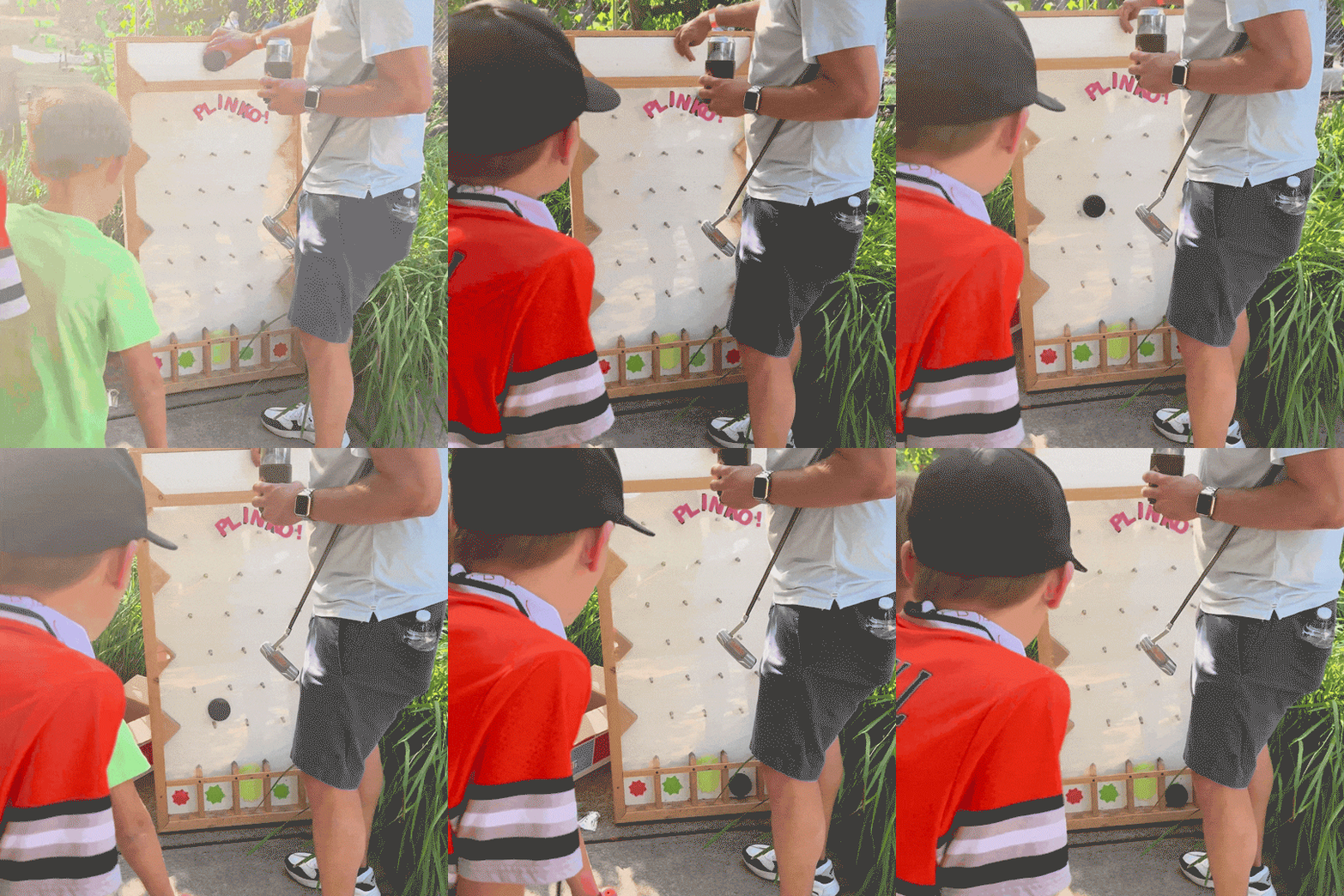
4. Plinko

Give golfers the chance to drop a puck on a Plinko board to win a prize, earn a drink or raffle ticket, or improve their score.

A man plays plinko, a golf tournament game, at a charity putt putt event.

Plinko is fun for all ages and can be used with a variety of golf tournament formats, including traditional nine or 18-hole events or putt putt tournaments.

5. Roll-a-score

Have golfers roll a set of dice and give them the option to replace any score from the event with whatever they rolled.

6. Single Club hole

Participants play with the same club for the entire hole. They could choose a card, spin a wheel, roll dice, or other method to determine which club they play with. 

Pro Tip: Consider limiting clubs to those that would present the most challenge across the hole, such as the driver, wedge, or putter.

7. Wrong Hand Challenge

Participants play the entire hole “wrong-handed”, i.e. with their non-dominant hand. You may need to have clubs available in case no one in a group has left-handed or right-handed clubs. 
Pro Tip: Give teams the option to pay a fee to play the hole normally.

8. Scavenger Hunt

Place items around the course (these could be related to your mission in some way or just for fun). Participating teams get a list of the items to hunt for and take a picture of them once found. Teams that find every item could earn a prize or the chance to better their score.


Get Started With GolfStatus at no upfront cost


9. Club Game

Teams are given the chance to purchase a certain number of club lengths to move their ball closer to the hole without taking an additional stroke.
Pro Tip: Have a volunteer stationed on the tee box and another one near the green to sell club lengths. Choose an especially challenging hole to make the purchase more appealing.

10. Poker Hand

Teams draw a card on each of five designated holes to make up a poker hand. The team with the best hand at the end of the round wins a prize or you can offer prizes for specific hands (i.e. three of a kind wins a gift card to the pro shop).

11. Speed Hole

See which team can play the entire hole—from tee shot to sinking a putt—the fastest. You’ll need a volunteer to serve as the timer. The team that logs the fastest time wins a prize.


Free Download

The Complete Event Day Guide for Charity Golf Tournaments

Download this free guide to get tips and strategies for ensuring everything—including your golf tournament games—is prepped and ready to go for a flawlessly executed golf event.


12. Trivia hole

Station a volunteer on the tee box to ask golfers trivia questions before they tee off to win a prize or move to closer tees.
Pro Tip: Relate the questions to your nonprofit’s mission to help connect golfers to your cause.

13. Shot Clock Hole

The entire team must tee off within a certain amount of time or must take a penalty stroke. Set up a large countdown timer or have a volunteer count out loud.
Pro Tip: Sell extra increments of time to take the time pressure off.

14. Ball Toss or Kick

Great for a booster club or team! Instead of hitting a golf ball off of a tee for their tee shot, golfers throw a football, baseball, softball, tennis ball, or other ball and play from there. Alternatively, they could kick a football or soccer ball for their drive.
Pro Tip: Have a local sports figure (high school, college, or even professional) run the game. For an extra fee, they can make the throw or kick.

A man kicks a ball to use for his tee shot as part of a golf tournament game.

American soccer legend Clint Dempsey kicks a soccer ball for his tee shot at a golf event benefiting Team Red, White & Blue.

15. Closest to the…

A spin on the classic closest to the pin contest, this game can be customized to your event. Determine an object either placed or naturally occurring—anything from a prize like a Yeti Cooler or golf bag, distinct tree (or other feature on the course), or an item related to a sponsor (one GolfStatus client places a rubber chicken on a hole, and the game is sponsored by a chicken company). The team that gets the closest to the object wins a prize (or wins the prize they were hitting at).

16. Speed Putting

Golfers try to make as many putts from one location in a certain amount of time as possible to win a prize. 
Pro Tip: Run multiple rounds of the contest, moving the ball further away from the hole.

17. Sitting Drive Challenge

Golfers take their tee shot while sitting on a chair. Offer the choice to pay a fee to opt out of the challenge.

18. Ball Swap

Golfers play the hole like normal until they reach the green, where they mark their spot and play the rest of the hole with a racquet ball or ping pong ball.

19. Blind Putt

Golfers wear sleep shades or blindfolds when they putt and have to rely on verbal cues from their team to try to make the shot.

20. Alternative Putter

Golfers putt using objects other than their putter, like a croquet mallet, hockey stick, or baseball bat. This could be on the practice green as a separate contest or as part of a specific hole. 
Pro Tip: Pick putting objects that help golfers understand what your nonprofit does. For example, Habitat for Humanity of Columbus, which helps provide affordable housing and homeowner education, had a game on the practice green where golfers putted with building tools, like sledgehammers and levels, instead of their putters.

A golfer putts his golf ball with a two by four as part of a golf tournament game.

Golfers at Habitat for Humanity of Columbus’s golf tournament used building tools to putt as part of a golf tournament game.

21. Caddie Auction

Teams bid on volunteer caddies to join their team. Recruit well-known locals, such as your nonprofit’s Executive Director, the mayor, coach, local news anchor or weathercaster, or influencer as caddies. 
Pro Tip: Use an online bidding software and allow teams to bid over the week leading up to the tournament so the caddies are set when event day arrives.

22. hit it & Get it

Set varying prizes up on the practice green. Golfers get the chance to putt and win a prize if they hit it.
Pro Tip: Place high-value prizes further away to up the challenge.

23. Skins Games

Skins games create mini-competitions where teams (or individuals, depending on the event’s format) compete against each other based on their score on a given hole, in addition to their overall score. Event organizers can use skins games to fundraise by setting a dollar amount for participants to buy in to compete. 
Pro Tip: Display skins results on real-time digital leaderboards to keep golfers engaged and make the skins games more competitive.

24. Dizzy Bat

Golfers take turns putting their forehead on the end of a baseball bat and spin around multiple times, making them dizzy, and then attempt to tee off.

25. Goggle Putt

Golfers wear goggles that impair their vision in some way—such as being impaired by alcohol or make everything appear upside down—and attempt to putt.

26. Bingo Bango Bongo

Players earn points for being the first on the green (bingo), closest to the pin once all balls are on the green (bango), and sinking the first putt (bongo). 
Pro Tip: Raise extra funds by selling a Bingo Bango Bongo sponsorship or encouraging donations for each point earned.


Book a GolfStatus Demo


Golf Tournament Contests

27. Hole-In-One Contest

Players take their best shot at acing a designated par-three hole (or several holes) for the chance to win an exciting prize, like cash or a golf getaway.
Pro Tip: Be sure your contest is covered by hole-in-one insurance so your nonprofit isn’t stuck footing the bill for the prize if someone gets an ace. Sell a contest sponsorship to cover the cost of the insurance to boost revenue.

28. Longest Drive Contest

Participants compete to see who can hit the ball the farthest off the tee while keeping it within the fairway on a selected hole.

A woman hits her tee shot as others look on during a contest at a charity golf tournament.

Contests are easy ways to improve the overall experience at a charity golf tournament.

29. Closest to the Pin Contest

Golfers test their accuracy and compete to see whose tee shot lands closest to the hole on a designated par-three hole.

30. Chipping Contest

Players demonstrate their short-game skills by chipping the ball as close to a target as possible, often set up near the practice green. 
Pro Tip: Boost revenue by selling mulligans specifically for shots in longest drive, closest to the pin, and chipping contests.

31. Beat the Pro Contest

Players take on a pro in a head-to-head challenge to see if they can hit their tee shot closer to the hole on a specific hole.

Best Practices for Running Golf Tournament Games

  • Sell a games sponsorship! There are a few ways to structure a games sponsorship for your golf fundraiser:

    • Individual games sponsorships. Sell a sponsorship for each individual game on the course and encourage the purchasing business to run the game the day of the event. This gives them great brand exposure and ample opportunity to connect with golfers.
    • Overall games sponsorship. An overall games sponsorship encompasses every game on the course. This sponsorship should sell for more than the individual game sponsorships and provide premium exposure for the sponsoring business.

    • Front and back nine games sponsorships. Offer two separate games sponsorships, one for the front nine and one for the back nine.

  • Connect golfers to your mission. Games that connect golfers to your mission in some way have double the impact—they get a deeper appreciation for your cause and are more likely to chip in additional money. For example, Outlook Enrichment, a nonprofit that serves the visually-impaired, uses the blind putt game to help golfers better understand the struggles of vision loss.
A golfer wears a sleep shade to simulate blindness as part of a golf tournament game.

Outlook Enrichment uses sleep shades for a blind putt hole to help golfers better understand vision loss.

  • Leverage social media. Go live from one of the games, create a specific hashtag for a new game, and assign someone to share photos from each game throughout the tournament to get more people excited about participating in the games.

  • Hype it up. Ask a volunteer, a staff or board member, or recruit a local celebrity to announce or emcee a game to hype golfers up to participate (and make extra donations!). 

  • Keep pace of play in mind. You don’t want teams piling up on a hole with a time-consuming game. Keep games easy to explain and quick to play to keep the round moving and golfers happy. 

  • Recruit volunteers. These can be staff or board members, other volunteers, or even sponsors. Depending on the length of the round, you might want to have two shifts of volunteers. They need to be comfortable explaining the rules and procedures, how to pay online via your event website, or collect cash payments.

  • Incorporate team-based challenges. Create ways for teams to compete against each other in the games. For example, if you use the marshmallow drive game, you can keep track of distance across all teams and award a prize to the overall winner.

  • Use real-time leaderboards. When you use a software solution that provides hassle-free live-scoring, you can use real-time standings as part of your games. Perhaps teams that are under par at a certain game hole get a free extra wheel spin or Plinko drop, or teams that are more than a few strokes over par get an additional try at the marshmallow drive.

  • Take online payments. Whether you’re selling supertickets, wristbands, or individual game entries or collecting donations, the ability to collect payments online via your event website helps bring in more dollars and makes post-tournament accounting easier. Post a sign with a QR code that links directly to the packages page to make it super simple for golfers and your planning team, and you won’t have to deal with keeping track of cash payments.


Golf for Good

Nonprofits, charities, and third parties planning charity golf tournaments can get started with GolfStatus at no upfront cost through the Golf for Good program! Get access to GolfStatus’ golf event management platform—with a robust event website, time-saving automations and built-in fundraising tools, premium sponsorships, trusted partners, and an A+ in-house support team—to make your next golf event the best one yet. Click below to connect with our team!

Make Your Golf Event a Swinging Success!

Click Here to Get Started With GolfStatus!

About the Author

Jen Wemhoff - Communications Manager at GolfStatus

Jen Wemhoff accidentally discovered her passion for nonprofits in college. An internship while earning a degree in Communications from Doane University led to a 20 year career in the nonprofit sector, where she found a strong desire to be part of something bigger than herself. Her vast nonprofit experience includes roles in marketing, fundraising, and direct programming. When Jen came to GolfStatus as Communications Manager in 2020, she was struck by the power of the sport to raise money to power nonprofit missions. She tells GolfStatus’s story across platforms and channels and develops educational tools and resources to help nonprofits tap into golf’s giving power. Jen, her husband, and two daughters call Lincoln, Nebraska home.