by Jen Wemhoff, Communications Manager at GolfStatus
Keeping your annual golf tournament fresh and exciting can be a challenge for longstanding events. Returning golfers always look forward to seeing familiar faces and supporting your mission, but offering them a new experience helps keep them engaged year after year.
Trying different golf tournament formats is an easy way to shake things up without completely reinventing the event. A new format can help differentiate your tournament from others in your community and encourage past participants to return. Different formats can also help you attract beginners, who might be playing in an organized event for the first time. The National Golf Foundation reports that more than three million beginners take up golf every year, so choosing the right format ensures they have a great experience.

The right golf tournament format keeps golfers engaged from start to finish. The key is understanding your audience.
Organizers have plenty of golf tournament format ideas to choose from. Some emphasize teamwork, others create more competition, and several invite golfers of all skills.
In this guide, we’ll break down the most popular alternative golf tournament formats, explain the benefits of each one, answer common questions, and share tips for using tech to make implementation and scoring simple.
Top Golf Tournament Formats
Every golf tournament format creates a different player experience and comes with its own strengths. As you explore the different options for your next golf outing, consider which format best fits your audience, fundraising goals, and golfer mix.
1. Scramble
The scramble is by far the most popular format for charity golf tournaments. It encourages teamwork, keeps play moving, and makes the event accessible for golfers of all abilities.
How it works: Every golfer hits a tee shot, the group selects the best one, and all players hit their next shot from that location. The process continues until the ball is holed, with the team recording a single score for each hole.
Benefits: A scramble is one of the most beginner-friendly tournament formats because higher-handicap players don’t have to worry about a single bad shot hurting the team’s overall score. It creates a fun, low-pressure atmosphere that keeps the round moving.
Best practice: Consider setting a minimum number of shots used for every player, helping everyone contribute more equally to the team.
2. Shamble
The shamble format offers a great combination of team and individual play, and is a strong choice for charity tournaments,
How it works: Every golfer tees off, and the group selects the best shot—just like in a scramble. But from that point on, each golfer plays their own ball through the hole. Team scores are typically calculated by combining one or more of the lowest individual scores on each hole.
Benefits: A shamble gives golfers the advantage of starting each hole from a favorable position, while still allowing them to play their own game. Beginners benefit from the team’s best drive, while stronger golfers have opportunities to showcase their abilities. Shambles move at a good pace and create a balance between teamwork and competition.
Best practice: Before the round begins, clearly explain how team scores will be calculated—whether you’re counting the lowest score, combining the two lowest scores, or another variation.
3. Match Play
If you’re looking to bring a little friendly rivalry to your event, match play is a great way to create head-to-head competition and engagement.
How it works: Golfers compete hole by hole rather than counting total strokes for the entire round. The player or team that has the lowest score on a hole earns a point, and the player or team with the most points at the end of the round is the winner.
Benefits: Because the score is based on holes won instead of cumulative strokes, one bad hole won’t ruin an otherwise great round. That keeps players in the moment and focused on the next shot, maintaining enthusiasm on each hole.
Best practice: Consider organizing your event with a bracket-style draw. Head-to-head matchups and advancing rounds can build anticipation and heighten the excitement and competitiveness of the event.
4. Best Ball
The best ball format is a nice middle ground between individual competition and team play, making it a popular choice for events with a mix of skill levels.
How it works: Every golfer plays their own ball on each hole, and the team records the lowest individual score as the team’s score.
Benefits: This format lets strong golfers excel while still allowing every participant to play their own game. It strikes a nice balance between personal performance and teamwork.
Best practice: When assigning groups for a best ball tournament, aim for a mix of skill levels to create a more balanced, inclusive competition.
5. Alternate Shot
Alternate shot is all about collaboration. It challenges pairs to work together and make strategic decisions throughout the round.
How it works: Teams of two play a single ball, alternating shots until the ball is holed. One golfer tees off on odd-numbered holes, the other on even-numbered holes.
Benefits: Since every shot affects your partner, the alternate shot format naturally builds trust and stresses communication. It’s a great fit for corporate golf outings or sponsor-driven team-building events that want to emphasize collaboration.
Best practice: Pair golfers with complementary strengths to create a more competitive and enjoyable round. For instance, match a great long driver with someone who excels at the short game.

Organizers can choose from a number of golf tournament format ideas to keep the event fun and competitive.
6. Stableford
Stableford encourages bold play while also keeping golfers from getting discouraged after a bad hole, making it an attractive alternative to traditional scoring.
How it works: Rather than counting the fewest strokes, Stableford awards points based on a golfer’s score relative to par. A common scoring system gives players no points for a double bogey or worse, one point for a bogey, two points for par, three points for a birdie, four points for an eagle, and five points for a double eagle.
Benefits: Stableford shifts a golfer’s mindset from avoiding mistakes to chasing opportunities. Golfers are often more willing to take risks to hit birdies and eagles to maximize their scores.
Best practice: Make the scoring system easy to reference by printing a simple point chart on score cards, displaying it on golf carts, or including it in your golf tournament management app.
7. Bingo Bango Bongo
If you’re looking to surprise returning golfers with something completely different, Bingo Bango Bongo is one of the most entertaining golf tournament format ideas out there.
How it works: Players have three opportunities to earn points on every hole. One point goes to the first golfer to hit the green (bingo), another goes to the player closest to the pin once everyone is on the green (bango), and the final point goes to the first golfer to hole (bongo).
Benefits: This format rewards several aspects of the game, giving golfers of varying skill levels a chance to succeed. Skilled drivers, precise iron players, and strong putters all have opportunities to contribute, and it works well for both team and individual events.
Best practice: If you’re running a team Bingo Bango Bongo event, designate one golfer in each group as the official scorekeeper.
8. Chapman (Pinehurst)
The Chapman, or Pinehurst, format combines elements of scramble and alternate shot to create a unique tournament experience that rewards strategy and teamwork.
How it works: Both partners tee off and then select the best drive. From that point forward, they alternate shots using a single ball until the hole is completed.
Benefits: Chapman offers more variety without being overly complicated. It’s a fun option for intermediate and experienced golfers who want something a little different from a traditional charity outing.
Best practice: Walk through the rules before the tournament begins to prevent confusion, and have volunteers available on tee boxes to answer questions once play gets underway.
9. Skins
A skins game introduces a little extra drama by turning every hole into its own competition and creating memorable moments throughout the round.
How it works: Each hole is assigned a “skin,” and the player or team with the lowest score wins the skin. If two or more golfers tie, the skin carries over to the next hole and increases the value of the next opportunity to win.
Benefits: The carryover element keeps golfers engaged, even if they have a slow start. A string of tied holes can build anticipation and create high-stakes moments when golfers compete for multiple skins at once.
Best practice: Keep participants updated by announcing or displaying carryover skins throughout the event to add another layer of excitement.
10. Money Ball (Lone Ranger)
Money ball, sometimes called lone ranger, is a creative team format that gives every golfer the chance to make a meaningful contribution.
How it works: One player on each team is designated as the “money ball” golfer for a hole, and that player’s score counts as the team’s score for that hole. The money ball rotates from player to player throughout the round.
Benefits: Because every golfer takes a turn carrying the team score, stronger players don’t dominate the competition, and higher-handicap players still have the chance to shine.
Best practice: Determine the money ball rotation before the tournament begins and print the order on scorecards or include it in the event website, helping to avoid confusion and keep play moving smoothly.

Make sure every player understands the golf tournament format by reviewing the rules during opening announcements.
Golf Tournament Format FAQs
What should I consider when choosing a golf tournament format?
The best format for your specific tournament depends on key factors like:
The skill level of your audience
The size of your field
The overall goals of your event
For example, a scramble works well for a broad audience because it’s accessible and collaborative. On the other hand, skins and match play can be better suited for experienced golfers who are looking for a more competitive atmosphere.
What’s the most popular alternative tournament type?
For charity events, scramble remains the clear favorite. It accommodates golfers of all skill levels, keeps pace of play moving along, and encourages teamwork.
That said, if you host an annual fundraiser with many returning participants, experimenting with other golf tournament formats can help keep the event fresh. You might even try rotating formats from year to year to create a new experience without changing the overall structure of your event. A good practice is to survey participants to gather valuable feedback about what formats they’d like to see incorporated.
Can you mix different formats within a single tournament?
Absolutely! In fact, some of the most memorable professional events do exactly that. The Ryder Cup is a well-known example, using multiple formats throughout the event. If you’re holding a multi-day or multi-round event, you can borrow from that concept by combining formats like match play and best ball or creating separate challenges that use different scoring systems.
The key here is communication. Provide participants with written rules before the event and review the format during opening announcements to keep everyone on the same page.
Do different formats affect the rate of play?
Yes. Team-focused formats like scramble often move more quickly, while those that involve more individual scoring or point calculations (like Stableford) may require more time.
As you plan your event schedule, don’t forget to factor in the pace of play associated with your chosen format and communicate expectations to players in advance.
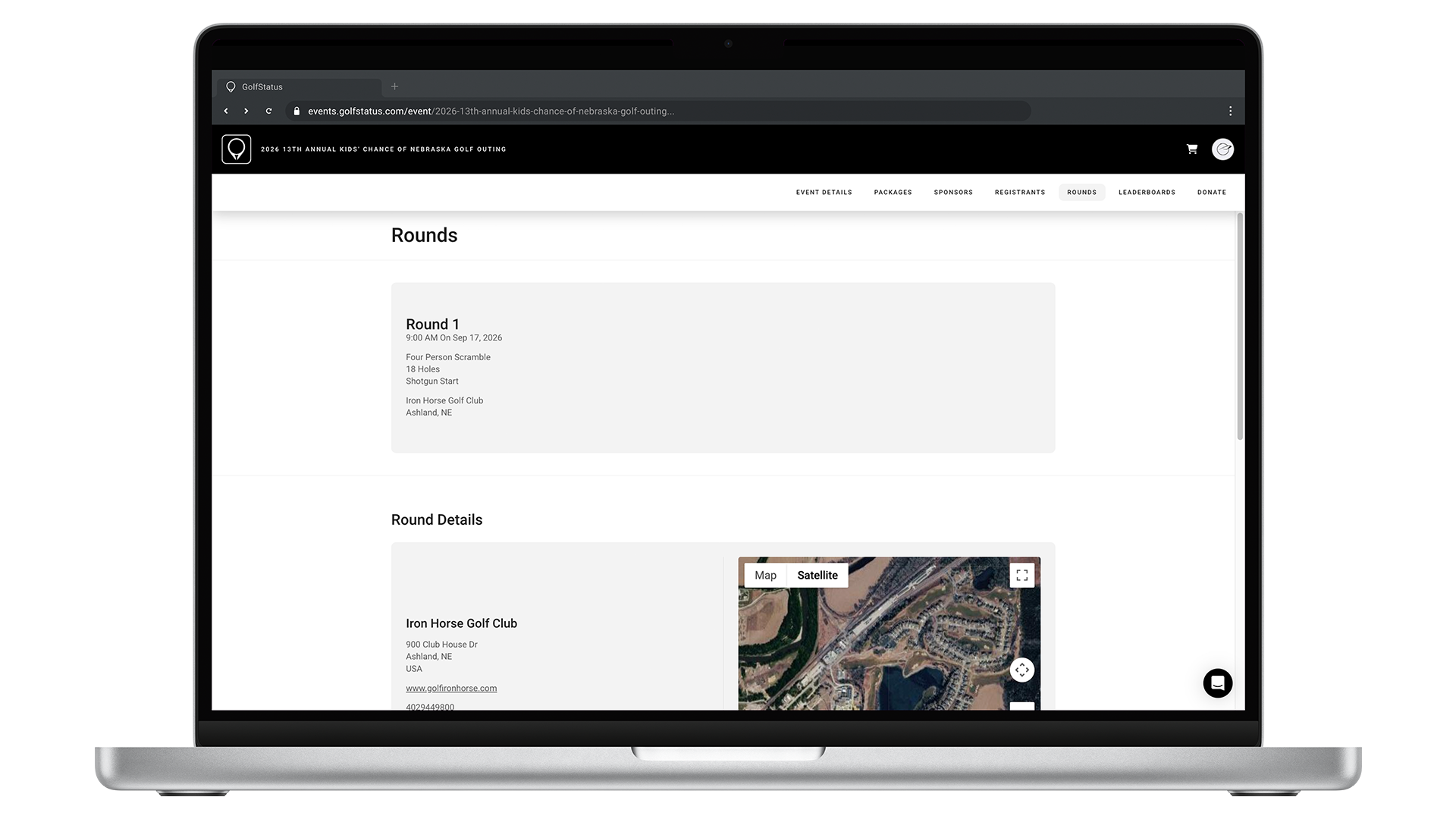
Your event website should clearly state the golf tournament format.
Pro Tips for Managing Different Golf Tournament Formats
Once you’ve chosen your format, the next step is making sure everything runs smoothly. Preparation and the right tech can eliminate confusion, reduce your team’s administrative workload, and improve the golfer experience.
#1 Tip: Use Golf Tournament Management Software
Alternative formats can create a lot of manual scoring complexity. Keeping track of points and carryovers and calculating scores with paper scorecards can quickly become a headache.
Purpose-built golf tournament management software like GolfStatus helps simplify this process by handling scores and tracking calculations automatically, while updating results in real time. These features are especially valuable when using alternative formats:
Live leaderboards: Digital leaderboards let golfers check standings throughout the round from their phones, keeping everyone up-to-date from the first drive to the last putt.
Handicap integration: Formats like best ball and match play often work best when teams and pairings include players with varying abilities. Software that automatically collects and applies handicaps saves time and eliminates disputes.
Sponsor visibility: Leaderboards, event websites, and mobile apps create additional opportunities for sponsor recognition across multiple digital touchpoints.
Other Best Practices
No matter which format you choose, a little preparation goes a long way. Helping participants understand the rules before the tournament and gathering feedback after the event will make it easier to offer an even better experience next year. Keep these best practices in mind:
Communicate the format in advance: Include an overview of the rules in registration confirmation emails and pre-event communications so golfers can familiarize themselves with the format’s rules before tournament day. Consider posting hole signage across the course that clearly outlines the rules.
Run a practice hole: If you’re using a less familiar format, consider running a practice hole or demonstration before play officially begins. A quick trial run will help golfers feel more confident when their score counts.
Collect feedback after the event: Send a post-tournament survey to golfers asking what they enjoyed and whether they’d like to see the same format or something different in the future. Their feedback can help guide future decisions and reassure them that their experience matters to your organization.
Try a New Format for Your Next Tournament
The format you choose shapes nearly every aspect of the golfer experience, from competitive and pace of play to teamwork and fun. While the traditional scramble remains a proven, popular option for charity events, exploring new golf tournament format ideas can help your fundraiser stand out, bring new golfers to the table, and keep longtime supporters coming back.
The right choice ultimately depends on your audience. A beginner-friendly scramble may be perfect for introducing golfers to your mission, while Stableford or match play could appeal to a more experienced crowd. You may find that mixing formats or rotating them each year keeps your event feeling fresh.
Whatever you choose, don’t be afraid to experiment. A creative format can be a memorable part of your fundraiser, and with the right planning tools and technology, implementing something new is easier than ever.
About the Author
Jen Wemhoff accidentally discovered her passion for nonprofits in college. An internship while earning a degree in Communications from Doane University led to a 20 year career in the nonprofit sector, where she found a strong desire to be part of something bigger than herself. Her vast nonprofit experience includes roles in marketing, fundraising, and direct programming. When Jen came to GolfStatus as Communications Manager in 2020, she was struck by the power of the sport to raise money to power nonprofit missions. She tells GolfStatus’s story across platforms and channels and develops educational tools and resources to help nonprofits tap into golf’s giving power. Jen, her husband, and two daughters call Lincoln, Nebraska home.