Posts tagged golf for good
6 Reasons Why Golf Events Work for Chaptered Nonprofits
 

By Logan Foote, Sales and Education Director at GolfStatus

For chaptered and affiliate-based nonprofits, fundraising is more than simply raising money. It’s empowering local teams to build relationships, engage their communities, and advance a shared mission, all while maintaining consistency across the broader organization.

This can be challenging, as local chapters often have different staff capacity, volunteer support, budgets, and fundraising experience. What works for one chapter may not be practical for another, and national offices have to ensure local activities reflect the overall brand and mission.
Golf tournaments offer a flexible, repeatable fundraising model that can bridge these gaps. They bring together local businesses, volunteers, sponsors, donors, and community members to raise funds and build relationships. With the right planning, support, and technology, a golf event can work for chapters of all types—a small chapter holding its first golf fundraiser or an established affiliate looking to grow an annual tournament.

Here are six reasons why golf is a strong fit for chaptered nonprofits, and how your organization can make the most of it.

1. Flexible & Scalable Fundraisers

One of golf’s biggest advantages is that it can be adapted to fit chapters’ resources and goals.

For example, a large chapter with an established donor base might host a traditional 18-hole tournament with corporate sponsorships, a field of 144 golfers, on-course games, and additional fundraising activities. A smaller chapter with fewer volunteers and a more limited budget could start with a nine-hole event, an 18-hole scramble with a smaller field, or even a mini golf tournament with a handful of sponsors. Both can support the same mission, even if the event itself looks different.

Golf events also offer multiple revenue streams, generating income through:

  • Team or golfer registrations. Charge a registration fee for individuals or teams to play in the event.

  • Sponsorships. Offer businesses exposure, visibility, and engagement through sponsorship options like pin flags, hole-in-one contests, hole sponsor signs, and more.

  • Additional fundraising activities. Incorporate add-ons like mulligan sales, raffle drawings, auctions, on-course games, or putting contests when appropriate.

  • Donations. Give supporters who don’t want to golf or can’t attend a way to support the cause.

This flexibility lets chapters build an event around their capacity, rather than feeling pressured to replicate a large-scale tournament before they’re ready.

2. Build Local Relationships

National nonprofits have broad missions, but local chapters are often the ones connecting that mission with the communities they serve. Golf tournaments create a natural setting for those connections to happen.

Local businesses can support an event through sponsorships, employees can play in the event, and community members can volunteer their time. Board members and existing supporters can invite their personal and professional contacts, introducing the organization to people who may otherwise not know about its work.

The best part is that these relationships can extend well beyond tournament day. A business that sponsors a hole this year might become a recurring event partner, a corporate volunteer group, or a regular donor. A golfer who learns about the organization through a tournament might become a passionate supporter.

Golf events also create opportunities for meaningful conversations. Because players and sponsors spend several hours together, chapter representatives have ample time to talk about the mission, explain local needs, and demonstrate how fundraising events support its work.

For chaptered nonprofits in particular, the local connection is extremely valuable. Each chapter builds community support in ways that reflect its unique market, while contributing to the goals of the broader organization.
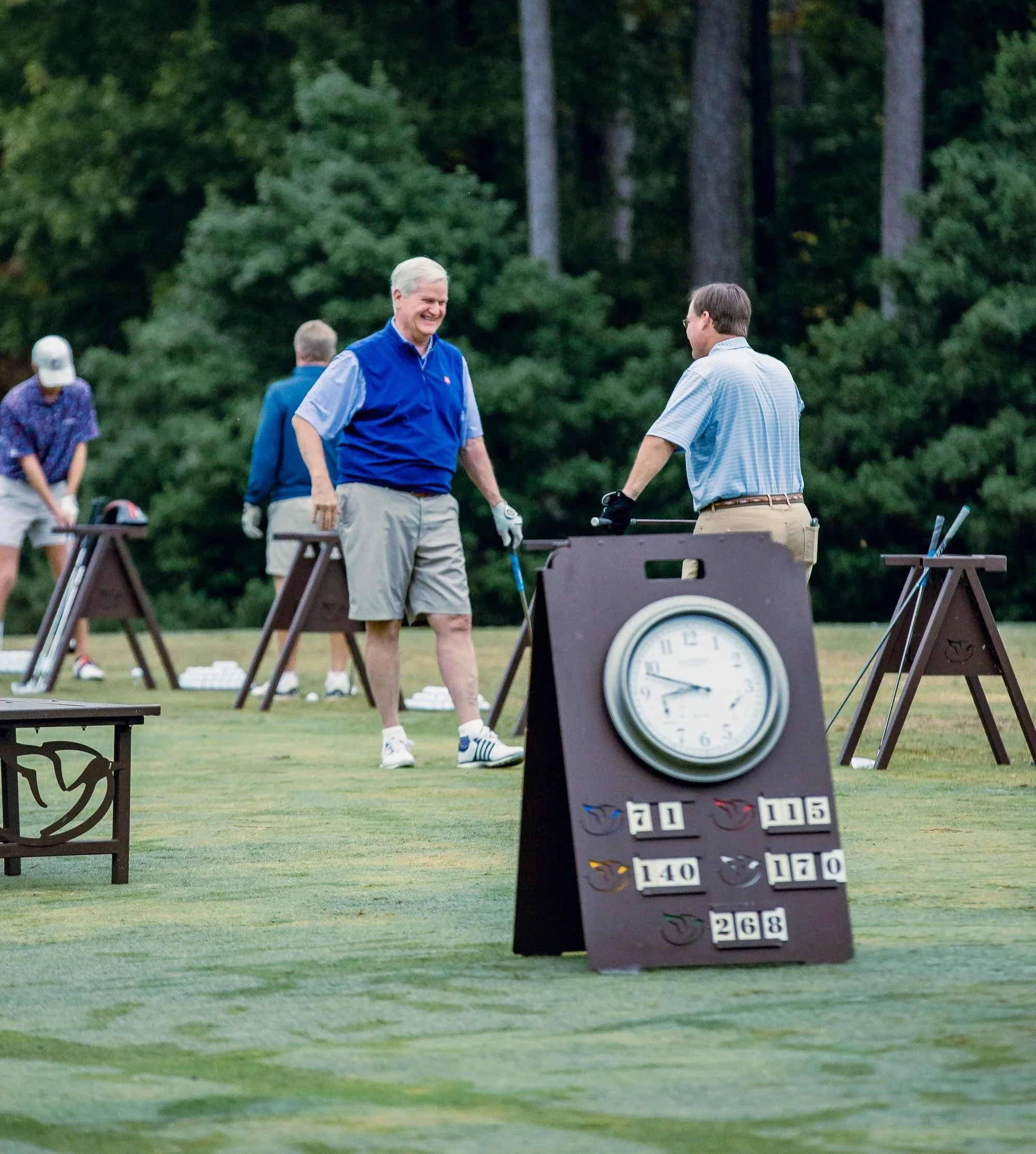
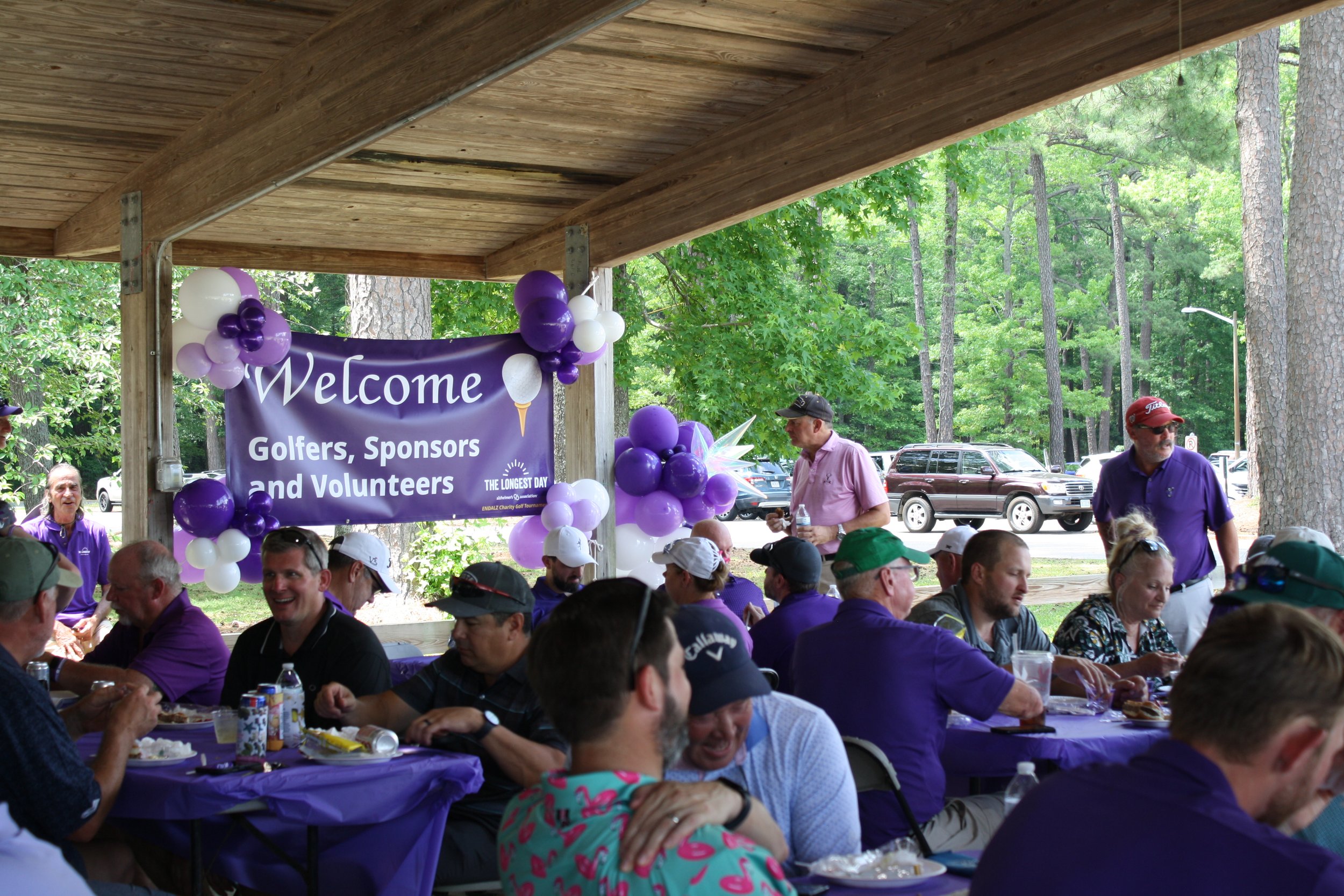
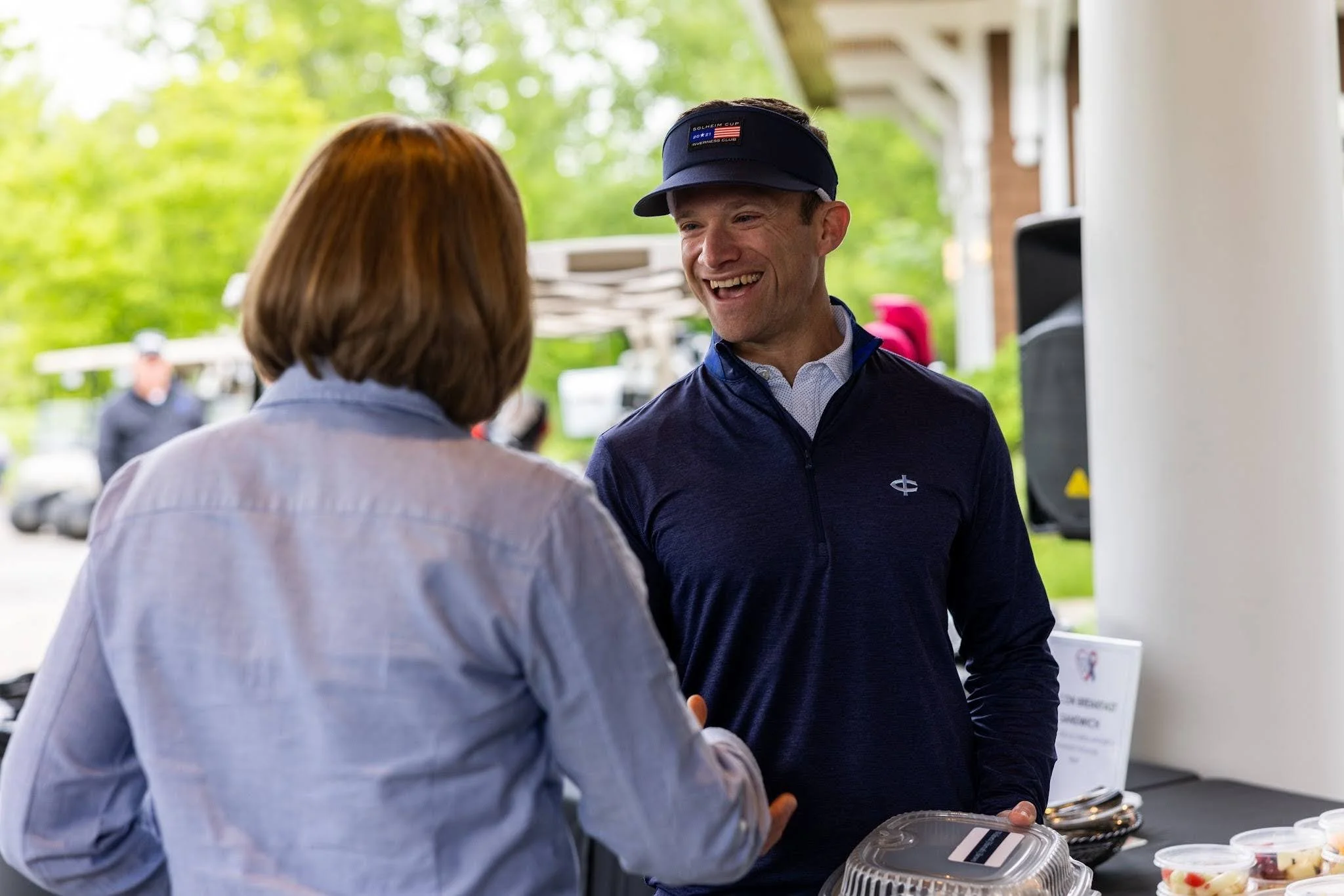
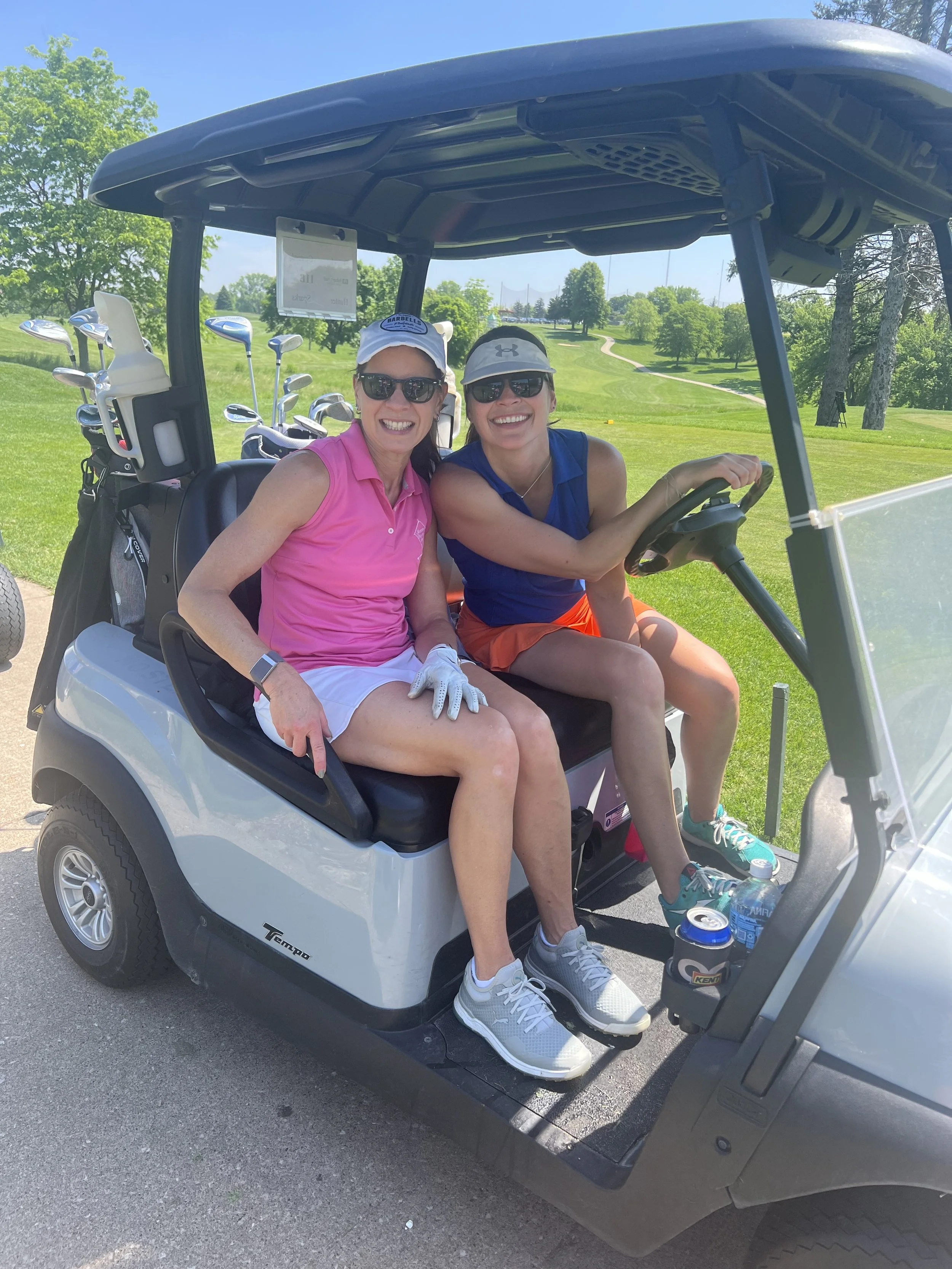
Two golfers chat on the driving range at a charity golf tournament organized by a chaptered nonprofit.

3. Strengthen Brand Awareness & Mission Alignment

One unique challenge for chaptered nonprofits is maintaining a recognizable brand while allowing local teams enough flexibility to effectively engage their communities.

Golf tournaments can support both goals—the national office establishes core brand standards, messaging, and fundraising standards, while chapters can tailor their events to local audiences and opportunities.

For example, a national organization might provide approved logos, event messaging, sponsorship templates, and guidance for communicating how funds are used. Local chapters can then customize sponsor packages, recruit community partners, and develop tournament-day activities that make sense for their local audience. The result is an event that both feels local and doesn’t lose sight of the broader mission.

This alignment matters—every chapter event is an opportunity to build trust in the organization. Consistent messaging ensures participants understand what the nonprofit does, while local stories and examples demonstrate why its work matters in the community.

Before launching a tournament, clarify which decisions chapters can make independently and which require national approval, such as branding, fundraising language, sponsor benefits, vendor selection, and technology providers.

4. Opportunities to Engage Volunteers & Stakeholders

Chapter fundraising depends in large part on people who are willing to contribute their time, expertise, and connections. Golf tournaments provide a variety of ways for people to do so, even if they can’t make a financial contribution.

Volunteers can help recruit sponsors, secure auction items, manage registration, coordinate on-course activities, and help execute on tournament day. Board members can introduce the chapter to potential sponsors or use their networks to recruit teams. And existing supporters can form teams and invite friends or colleagues to play in the event.

This variety of roles makes golf a natural way to engage supporters with different interests and abilities. Someone who isn’t comfortable soliciting donations might be an excellent event-day volunteer, while a board member with strong business connections can help secure sponsorships.

Golf events also function to strengthen the relationship between local chapters and the national office. Shared planning resources, fundraising ideas, and lessons learned create opportunities for chapters to learn from one another, instead of reinventing the wheel or having to face the same problems independently.
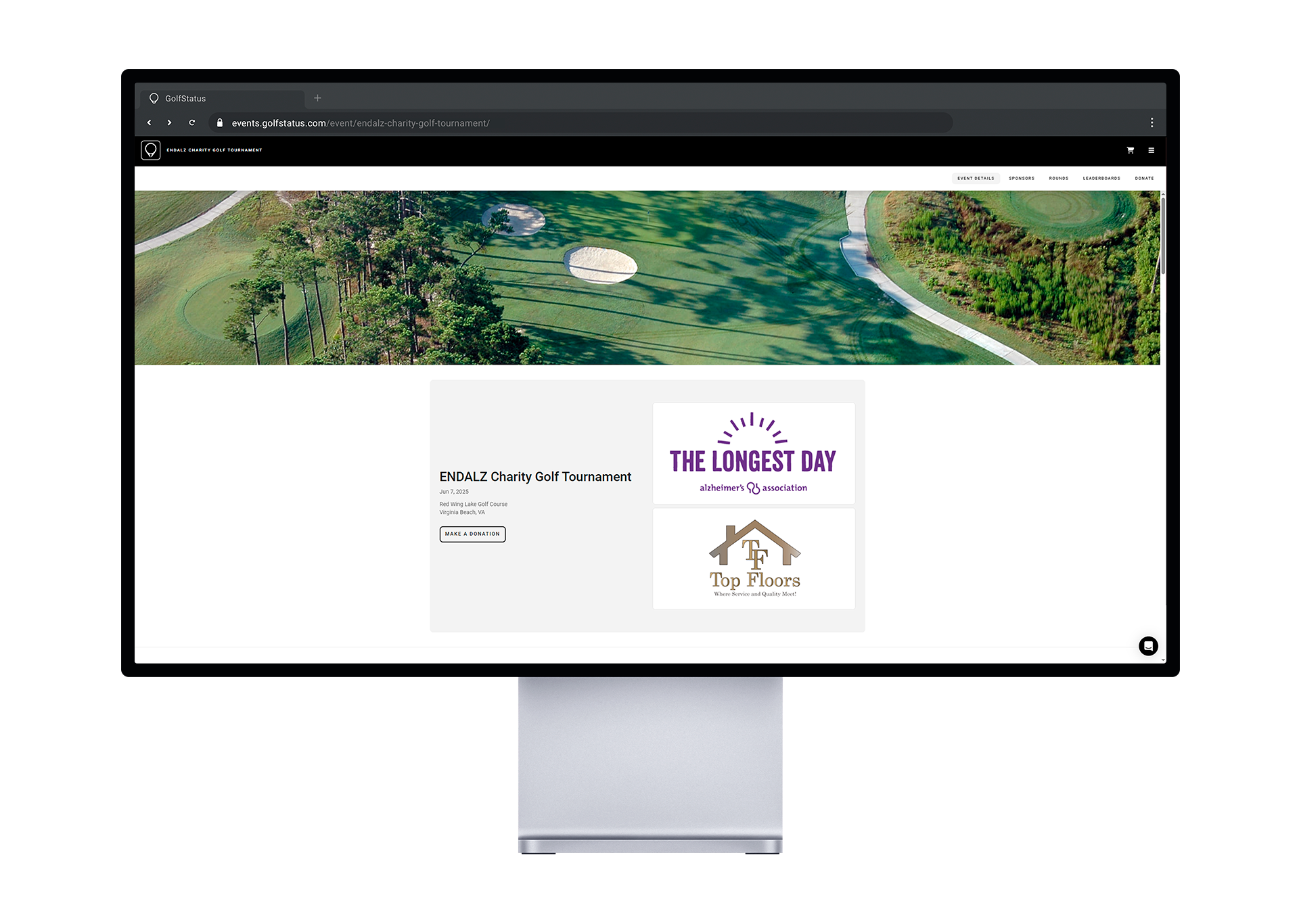
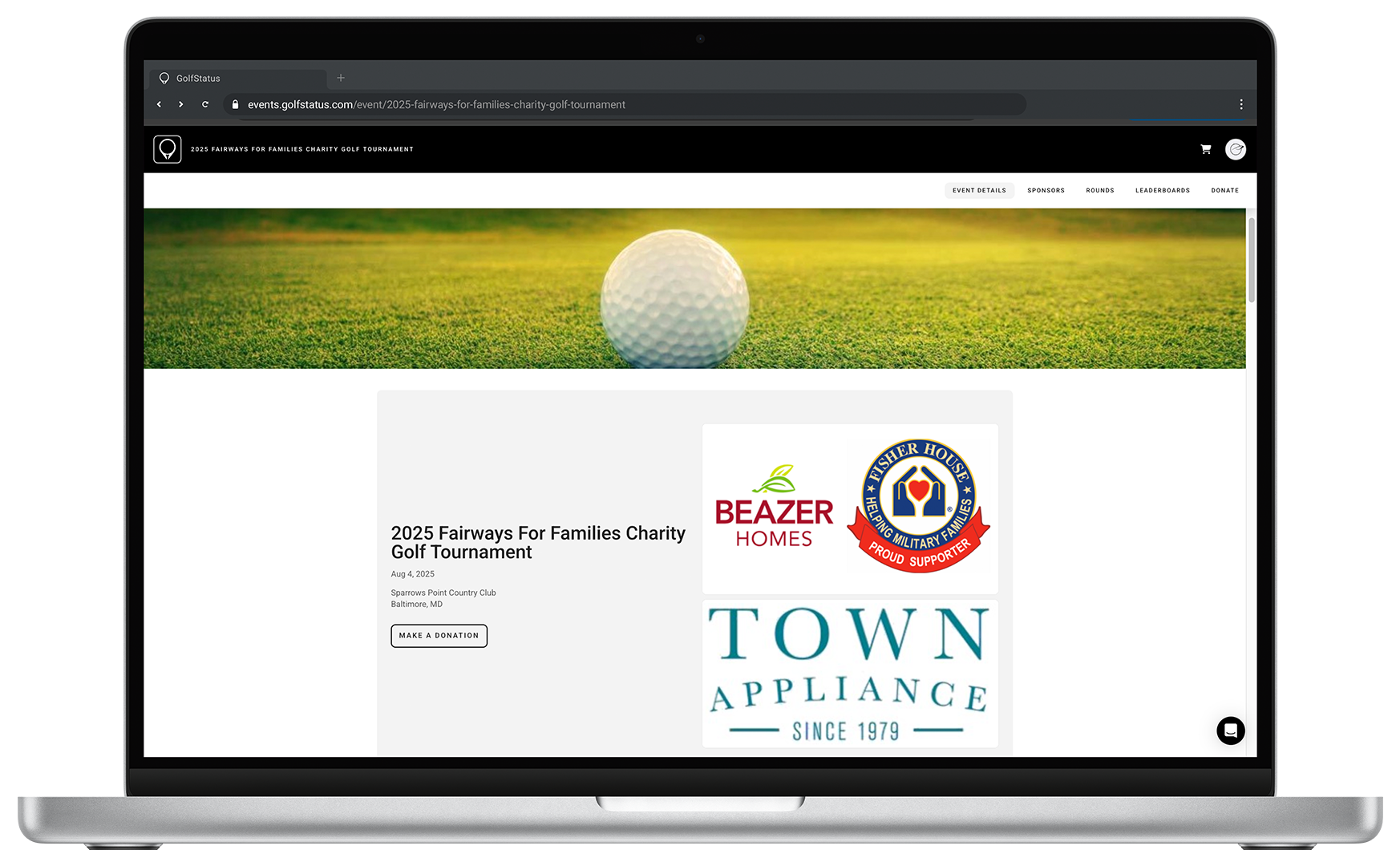
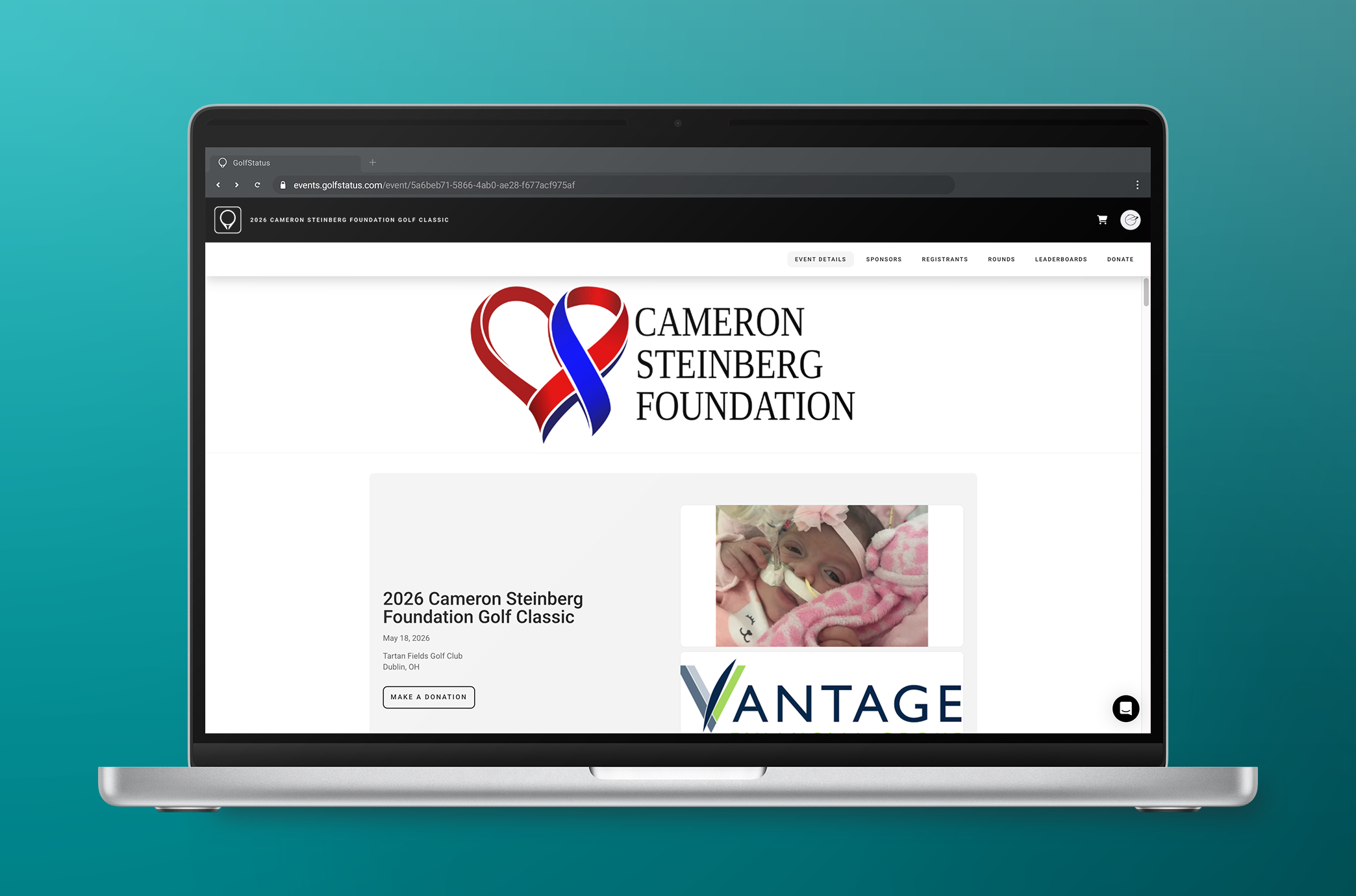
The homepage of a golf tournament website for a golf fundraiser hosted by a chapter of the Alzheimer's Association.

An event website provides a central location for tournament details, registrations, sponsorships, and donations.

5. The Right Technology Makes Replication Easier

For chaptered nonprofits, a successful fundraising model is most valuable when it's repeatable without creating an unsustainable workload for local teams.

Technology makes that possible. Managing registrations, collecting payments, tracking sponsorships, communicating with participants, and coordinating tournament-day logistics can quickly become overwhelming when handled through disconnected tools and platforms.

Golf-specific event management tech brings these processes together in one place, helping chapters save time and create a more consistent and memorable participant experience.

Useful platform features include:

  • Custom event websites. Provide a central location for tournament details, registrations, sponsorships, and donations.

  • Online registration and payments. Make it easy and seamless for golfers and sponsors to register and pay.

  • Sponsor management. Track commitments, collect assets, and provide digital exposure.

  • Golf-specific tools. Simplify player assignments, team pairings, handicaps, flighting, live scoring, leaderboards, and results.

  • Communication. Keep participants informed before, during, and even after the event.

  • Reporting. Give organizers a clearer picture of revenue, expenses, participation, and results.

These tools are especially valuable when a national organization wants visibility into how its chapters are performing. Standardized event processes and reporting make it easier to compare results, identify successful strategies, and share best practices.

Technology selection should be part of the conversation between local chapters and national leadership. If the organization has an established approval process for vendors, clarify those requirements before committing to a platform. Providing a shared list of approved tools helps chapters move forward confidently while meeting organizational standards.


6. Overcome Fundraising Challenges

Limited staffing, inconsistent resources, and uncertainty about where to begin can make it difficult for chapters to launch new fundraising initiatives. And while golf doesn’t eliminate these challenges, its flexibility and repeatability help organizations address them.

  • For chapters with limited experience, a proven tournament framework gives them a place to start. Organizers can use established planning timelines, sponsorship templates, and event formats instead of building from scratch.

  • For chapters with small teams, volunteers and committee members help share the workload, while event management tech reduces administrative time and tasks.

  • For organizations concerned about consistency, national guidelines and shared resources can help local events align with brand standards without dictating every detail.

  • For chapters that struggle to attract new supporters, golf creates an opportunity to engage local businesses and community members who may be interested in supporting the mission, but haven’t previously connected with the organization.

The key? Treat the tournament as a repeatable fundraising program rather than a one-time event. Documenting processes and evaluating results after each tournament helps chapters retain institutional knowledge, even when staff or volunteers change.

The cover of the Golf Tournament Fundraiser Checklist & Planning Timeline downloadable resource.

Download a Free Golf Tournament Planning Timeline & Checklist


Getting Started: Practical Advice for Your Chapter’s First Golf Tournament

If your chapter has never hosted a golf fundraiser, the prospect of getting one started can feel intimidating. But—you don’t have to have every detail figured out before diving in.

Start by identifying your goals. Determine how much you hope to raise, who you want to engage, and how the event will support your mission. Next, build a realistic budget and identify potential golf courses, sponsors, and volunteers.

Have conversations with the national office early so you understand any approval requirements and determine what resources are at your disposal. Connect with any other chapters that have hosted tournaments and what they have learned. Their experience may help you avoid common mistakes and identify opportunities you hadn’t considered.

Choose a format and event size that match your chapter’s resources and prioritize the fundamentals: a clear goal, a manageable plan, strong sponsor relationships, and a positive participant experience. You can add more activities as the event grows.

Finally, make it easy for people to get involved and support your cause. A straightforward registration process, clear sponsorship options, and compelling messaging go a long way toward building a successful event.


Fundraising & Tech That Grows With Your Organization

Golf tournaments give chaptered nonprofits a way to not only raise money, but build community relationships, engage volunteers, increase mission awareness, and create fundraising opportunities that grow alongside the organization.

With shared resources, clear guidelines, local ownership, and the right tech, chapters can hold tournaments that reflect their communities and advance the goals of the national organization.

Whether your chapter is planning your first event or wants to improve an established tournament, GolfStatus can help. Easy-to-use tech, expert support available seven days a week, free planning resources, golf-specific solutions, and exclusive Fundraising Enhancers combine to help tournaments of all types and sizes save time and raise more money. Get started with GolfStatus at no upfront cost! Click below to learn more and get started.
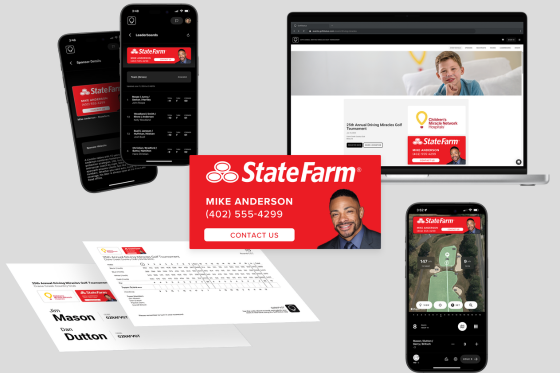
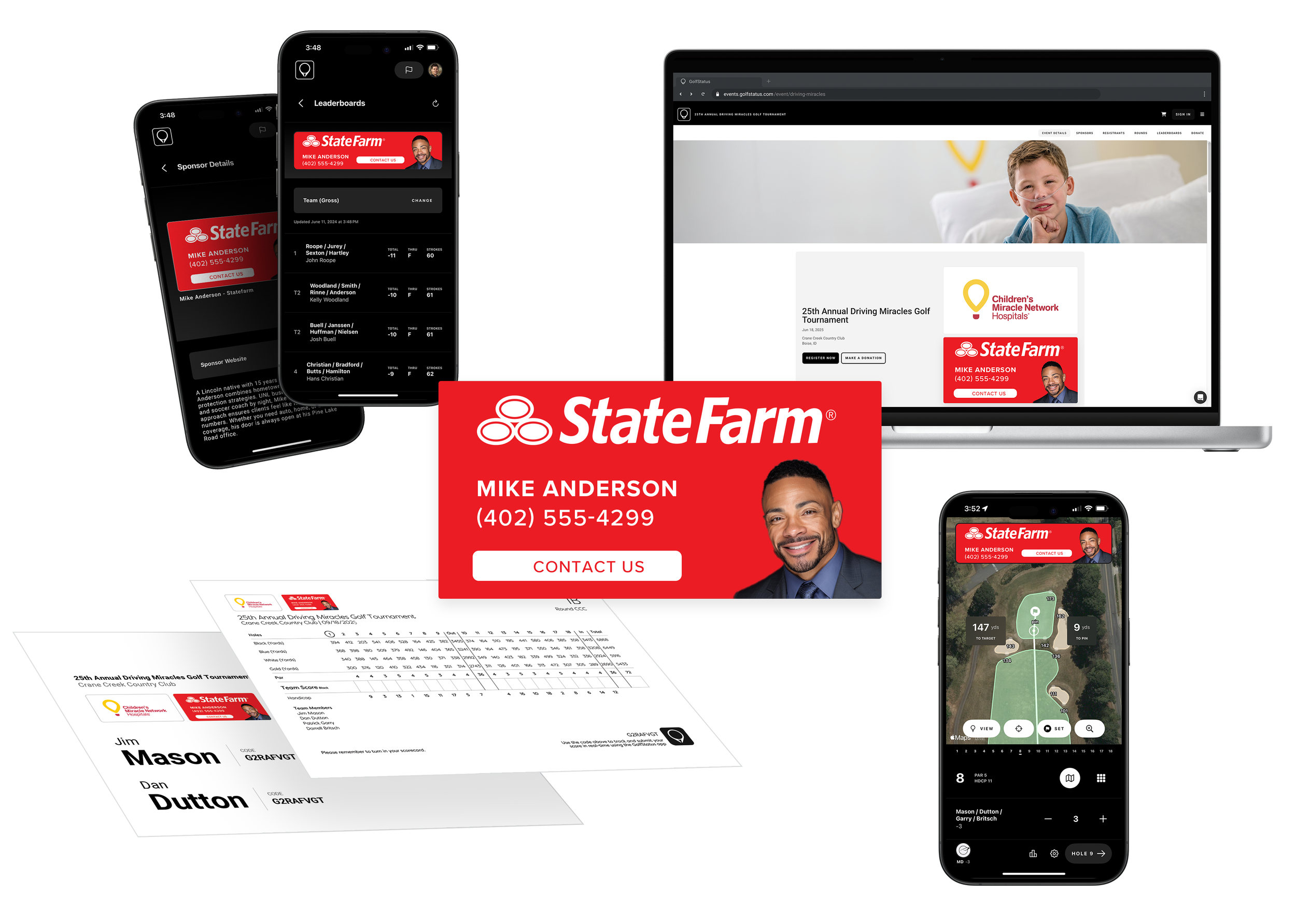
Get Started—At No Upfront Cost


4 Golf Tournament Sponsorships That Drive More Revenue
 

by Jen Wemhoff, Communications Manager at GolfStatus

Sponsorships are one of the biggest revenue drivers at a charity golf tournament. The key is to give sponsors something they value, and there are plenty of sponsorship options that go beyond the traditional logo-on-a-sign approach. That might be prominent branding, digital exposure, an opportunity to interact with golfers, or a sponsorship tied to a memorable part of the tournament.

When you offer sponsors more than basic logo placements, you create additional opportunities to boost sponsorship revenue and fundraising outcomes—while giving businesses more reasons to participate year after year.

Here are four sponsorships that help drive significant revenue for golf fundraisers.

1. Technology Sponsorship

Your golf tournament tech can do more than just simplify registration, payments, and scoring. It can also offer a valuable sponsorship opportunity.

A Technology Sponsorship gives a business prominent visibility across the digital tools golfers use before and during your event. Depending on the golf event management platform you use, that could include your golf tournament website, mobile scoring app, live leaderboard, digital communications, and more.

Consider these ideas and examples:

  • Bundle the Technology Sponsorship with your title or presenting sponsorship. If you’re looking for ways to add value to a top-tier sponsorship, the Technology Sponsorship can provide additional visibility without adding another physical activation to the event.

  • Sell a standalone Technology Sponsorship. Give one business prominent recognition across the tournament’s digital experience, including your event website, live scoring, leaderboard, and other digital touchpoints. Physical pieces like cart signs, scorecards, and check-in lists can also feature this sponsor’s branding.

  • Offer a leaderboard sponsorship. A live leaderboard gets plenty of attention during the tournament. Put your sponsor’s name and logo where golfers and spectators are already checking for scores and standings.

  • Include sponsor branding in mobile scoring. When golfers check scores, view the leaderboard, or access other tournament information in the live scoring app, the sponsor earns impressions.

The combination of physical and digital exposure can be especially valuable to sponsors. GolfStatus’ on-staff PGA Professionals have noted that the strongest sponsor exposure often combines signage with digital visibility, giving sponsors impressions before, during, and after tournament day.

Graphics showing the Technology Sponsorship exposure in the GolfStatus platform, with logos on the event website, mobile app, and cart signs.

GolfStatus’ Technology Sponsorship offers brand touchpoints across the platform and on printed materials.

2. Pin Flag Sponsorship

Sometimes the most effective sponsorships are also some of the simplest. Throughout a golf tournament, golfers are looking at the pin, making pin flags a unique, highly visible way to showcase a sponsor on the course—and give your tournament a more polished, professional look.

There are several ways to package and use pin flags for your tournament:

  • Sell all 18 flags as one sponsorship. This gives one business visibility across the entire course and creates a strong premium sponsorship option.

  • Offer front-nine or back-nine packages. If an 18-hole sponsorship is outside of a business’ budget, breaking it into smaller packages can make it more accessible.

  • Sell individual hole sponsorships. Individual flags can be another way to offer businesses a more affordable sponsorship option while still providing meaningful visibility.

  • Give sponsors a keepsake. After the tournament, consider giving a custom pin flag to the sponsor as a thank you. It serves as a tangible reminder of their support long after the event. They can also be used as an auction item, volunteer thank-you, raffle prize, or other commemorative keepsake.

  • Add digital exposure. Feature the sponsor on your event website, in promotional emails, social media, and other tournament communications to increase the overall value and ROI of the sponsorship.

Pin flags are a good example of how a relatively simple tournament element can become a revenue-generating, premium sponsorship. It’s important to use high-quality custom flags to make sure your sponsor’s brand looks great across the course.

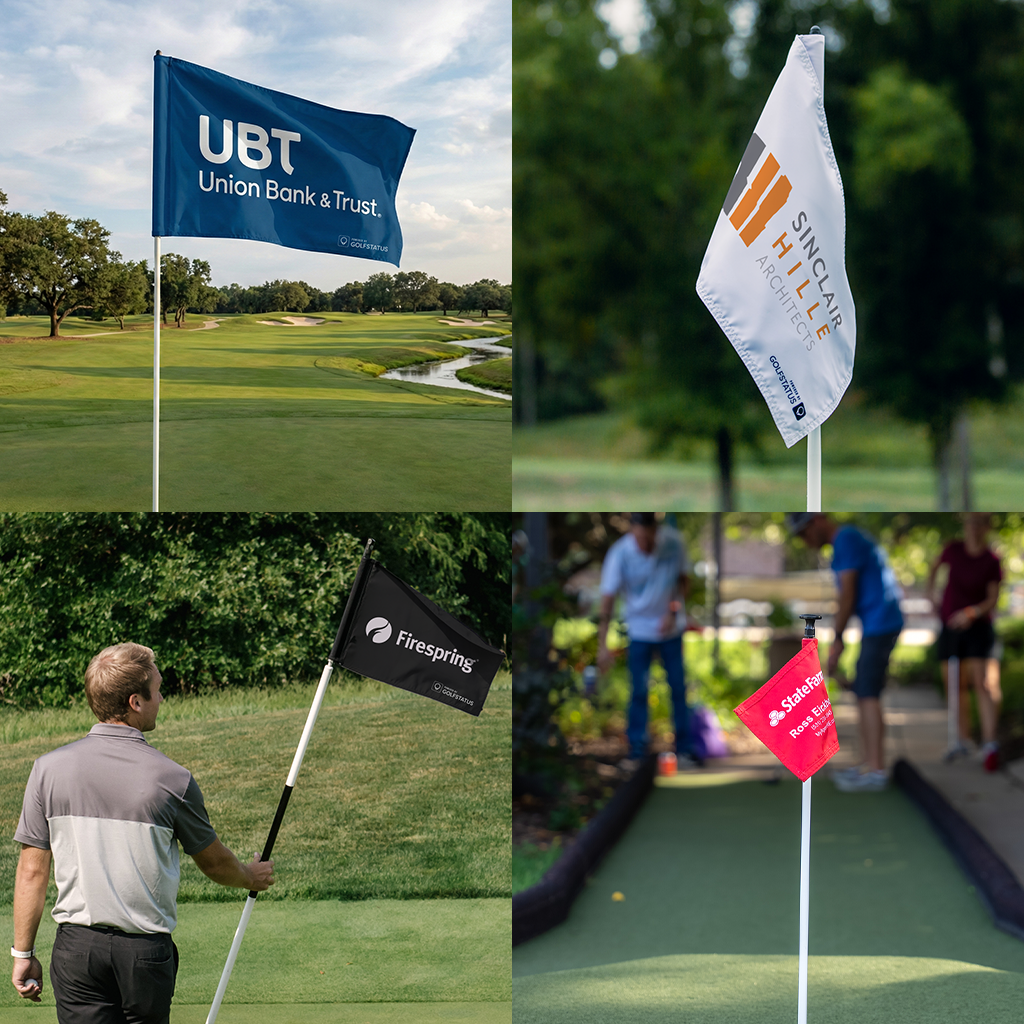
Four photos showing pin flag sponsorships at charity golf tournaments.

Custom-branded pin flags elevate the look and feel of charity golf tournaments.

3. Elevated Hole Sponsorships

Hole sponsorships are a staple of charity golf tournaments, and for good reason. They’re easy for businesses to understand, provide a physical on-course presence, and can work for sponsors with a range of budgets.

But a hole sponsorship doesn’t have to stop with a sign. With a little creativity, you can turn a basic hole sponsorship into a chance for businesses to engage and connect with golfers.

Try these ideas:

  • Invest in professional signage. Golf hole sponsor signs should be clean, professional, and easy to say. High-quality signage ensures your sponsors are presented in the best possible light.

  • Encourage golfer engagement. Give sponsors the option to set up at their hole with a game, giveaway, product demonstration, samples, or other interactive experience.

  • Build around a theme. A themed hole can be especially memorable for golfers and sponsors. For example, you could incorporate a sports theme, tailgate, beach theme, or another concept that fits your audience or sponsor.

  • Add digital exposure. Don’t limit hole sponsorships to a sign on tournament day. Include sponsor recognition on your event website, in emails, on social media, or within the live scoring experience. Sponsors will appreciate the combination of the physical and digital exposure.

  • Create different price points. Not every business will be able to purchase your largest sponsorships, so offering different levels of hole sponsorship can bring more businesses into the fold—and preserve premium opportunities for larger investments. Consider offering hole sponsorships with and without teams at different prices.

On-course engagement can be particularly valuable for businesses that want to connect directly with potential customers. GolfStatus’ PGA Professionals recommend placing sponsors who want an on-course presence where golfers naturally gather—the first tee, holes that tend to get backed up, contest holes, or comfort stations.

4. Hole-In-One Contest Sponsorship

A hole-in-one contest is one of the most exciting parts of a golf tournament, as well as a chance to create a sponsorship that gets golfers’ attention.

The first step is making sure your organization isn’t taking on any unnecessary financial risk. Hole-in-one insurance covers the cost of a high-value prize if someone makes an ace. From there, turn the contest into a sponsorship opportunity:

  • Give the sponsor prominent visibility. Feature the sponsor’s logo on signage on the contest hole and across the tournament’s digital channels.

  • Create an opportunity for golfer engagement. Invite the sponsor to have representatives at the hole to greet golfers, host a small game or giveaway, distribute promotional items, or cheer on players as they take their shots.

  • Include it as part of your tournament promotion. Mention the hole-in-one contest sponsor when promoting the contest before the event and include the sponsor in social media posts, emails, and other communications.

  • Capture the moment. Photos and videos from the contest can provide additional exposure after the event, especially if someone makes a hole-in-one.

The goal isn’t just to put a sponsor’s name on a contest. It’s to make that sponsor part of an experience golfers are already excited about.

A sign on a tee box promoting the hole-in-one contest sponsor at a charity golf tournament.

Contest signage is important, but combine it with other benefits to give hole-in-one contest sponsors more than logo placements.

Think Beyond the Logo

The best sponsorship programs aren’t necessarily the ones with the most logos. They’re the ones that give businesses a clear reason to invest.

Before creating your sponsorship packages, think about what your sponsors are trying to accomplish and build sponsorship benefits around those goals. Are they looking for brand visibility? To meet potential customers? Support your mission? Get exposure in the local community?

A Technology Sponsorship, pin flag sponsorship, elevated hole sponsorships, or hole-in-one contest sponsorship can give businesses something more valuable than a logo on a banner. They create opportunities for visibility, engagement, and connection, while also giving your organization more ways to raise funds.

Don’t be afraid to customize packages. Some sponsors may want more golfer spots while others care more about logo placement or digital exposure. Some may want to interact with golfers, while others simply want to support the mission. Asking potential sponsors what they value and tailoring your packages accordingly creates stronger relationships and more valuable sponsorship.

Most importantly, start selling early. Premium sponsorships are often the first pieces that should be secured. Once those are sold, you can better tailor the rest of your packages around what’s still available.

A little creativity can turn the elements you’re already using to run your golf tournament into some of your most valuable fundraising opportunities.


Raise More Money With GolfStatus

GolfStatus helps nonprofits and organizations streamline golf tournament planning while providing tools and resources to raise more money. From event websites and online registration to live scoring, digital sponsor exposure, Fundraising Enhancers, and support from golf fundraising experts, GolfStatus gives organizers the tools they need to be successful—all at no upfront cost.

Click below to book a meeting with GolfStatus to learn how you can save time and raise more money or get started in the software on your own.

Save Time & Raise More Money

Click Here to Get Started With GolfStatus

About the Author

Jen Wemhoff accidentally discovered her passion for nonprofits in college. An internship while earning a degree in Communications from Doane University led to a 20-year career in the nonprofit sector, where she found a strong desire to be part of something bigger than herself. Her vast nonprofit experience includes roles in marketing, fundraising, and direct programming. When Jen came to GolfStatus as Communications Manager in 2020, she was struck by the power of the sport to raise money to power nonprofit missions. She tells GolfStatus’s story across platforms and channels and develops educational tools and resources to help nonprofits tap into golf’s giving power. Jen, her husband, and two daughters call Lincoln, Nebraska home.


31 Golf Tournament Games to Make Your Fundraiser a Hit
 

by Jen Wemhoff, Communications Manager at GolfStatus

If you’re looking for a way to bring fun and fundraising to your charity golf tournament, on-course games are a great option for events of all types and sizes. An on-course game is an addition to your tournament that involves an activity on one or more holes on the golf course that golfers pay to participate in. The games can have a variety of outcomes, like improving the team’s score, providing a better tee off location, removing an obstacle, winning a prize, or just to add an element of fun.

On-course games come with a ton of benefits for your event, including:

  • Fun, fun, and more fun! Golfers of all skill levels can participate in on-course games and enjoy the extra entertainment.

  • You’ll raise more money. Games bring in additional revenue, whether you sell one or more game sponsorships or just rely on golfers paying to play.

  • They’re memorable. Golfers are guaranteed to remember the tournament where they shot the ball down the course with an air cannon or had to tee off or putt wearing Mickey Mouse gloves. Games add to a more enjoyable overall tournament experience.

  • Cause connection. Tying a game to your cause in some way helps golfers better understand and connect with what they’re helping raise money for.

In this article, we’ll explore:

 
A golfer kicks a ball toward a target as part of a golf tournament game.

The Credit Unions for Kids Golf Classic adds extra fun to its tournament with on-course games, like kicking soccer balls onto an inflatable dartboard.

Fun Ideas for Golf Tournament Games

The possibilities are endless, so gather your planning team to brainstorm ideas. Reach out to the Pro at the host golf facility, who might also have ideas for games that have been popular at other tournaments. These ideas can help get you started.
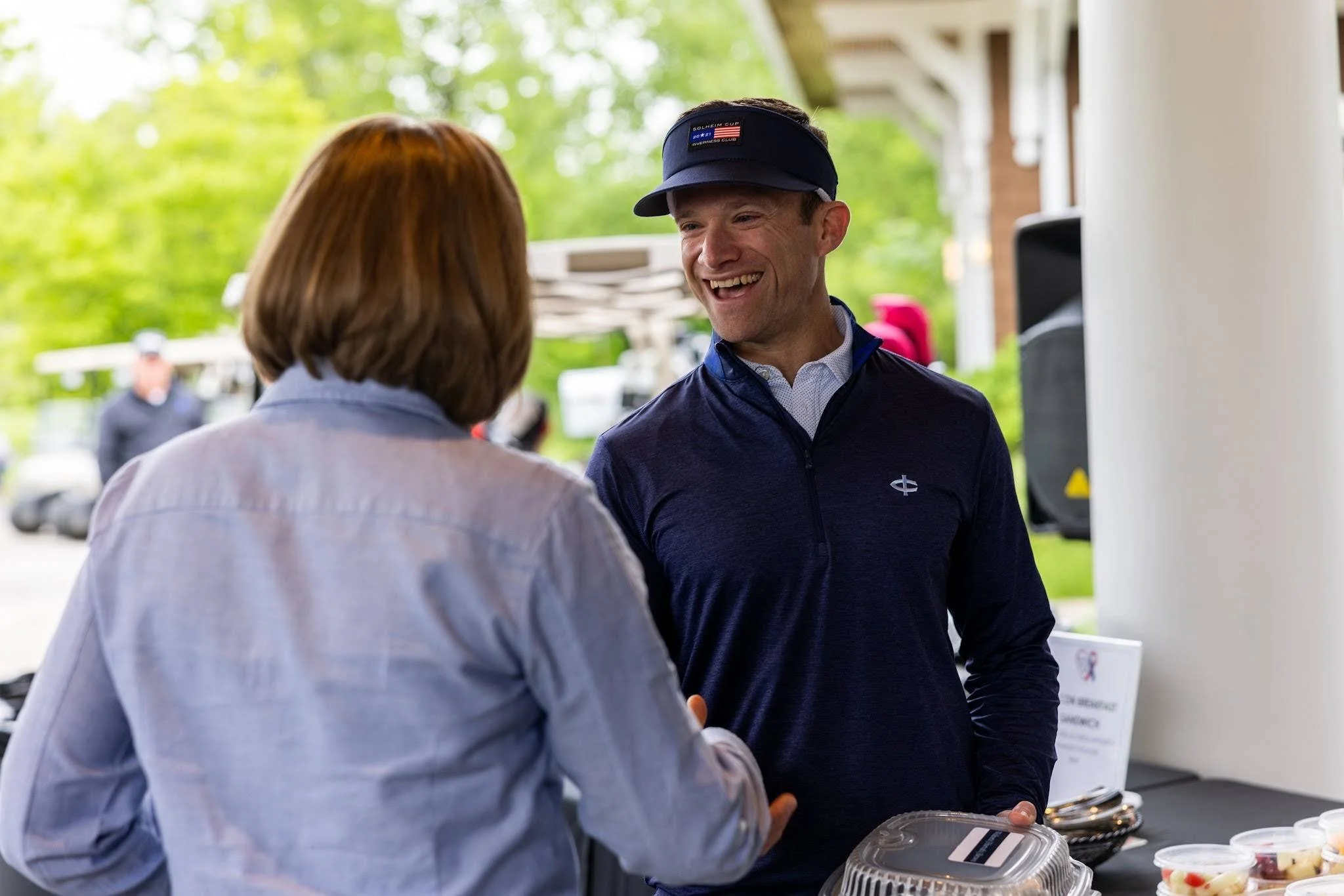
1. Golf Ball Cannon

Give golfers the chance to shoot their ball down the fairway using an air gun or golf ball cannon, instead of hitting a tee shot.

2. hole of fortune

Choose one hole that’s dubbed the “hole of fortune.” Golfers pick a card, play Plinko, or spin a wheel to determine the club they’ll use to tee off or play the entire hole with or the tee boxes they’ll start from. Prizes could also include an extra mulligan, an automatic hole-in-one, or a free drink. Alternatively, some slots or cards could result in something not as rewarding, such as teeing off while blindfolded or getting a penalty stroke.

Pro Tip: Some slots or cards could result in something not as rewarding, such as teeing off while blindfolded or getting a penalty stroke to give it a true “wheel of fortune” feel.

3. marshmallow drive

Have golfers tee off with a marshmallow. The golfer with the longest “drive” wins a prize. You could change this up to have golfers chip with a marshmallow, and the golfer with the closest chip to the hole gets the prize.

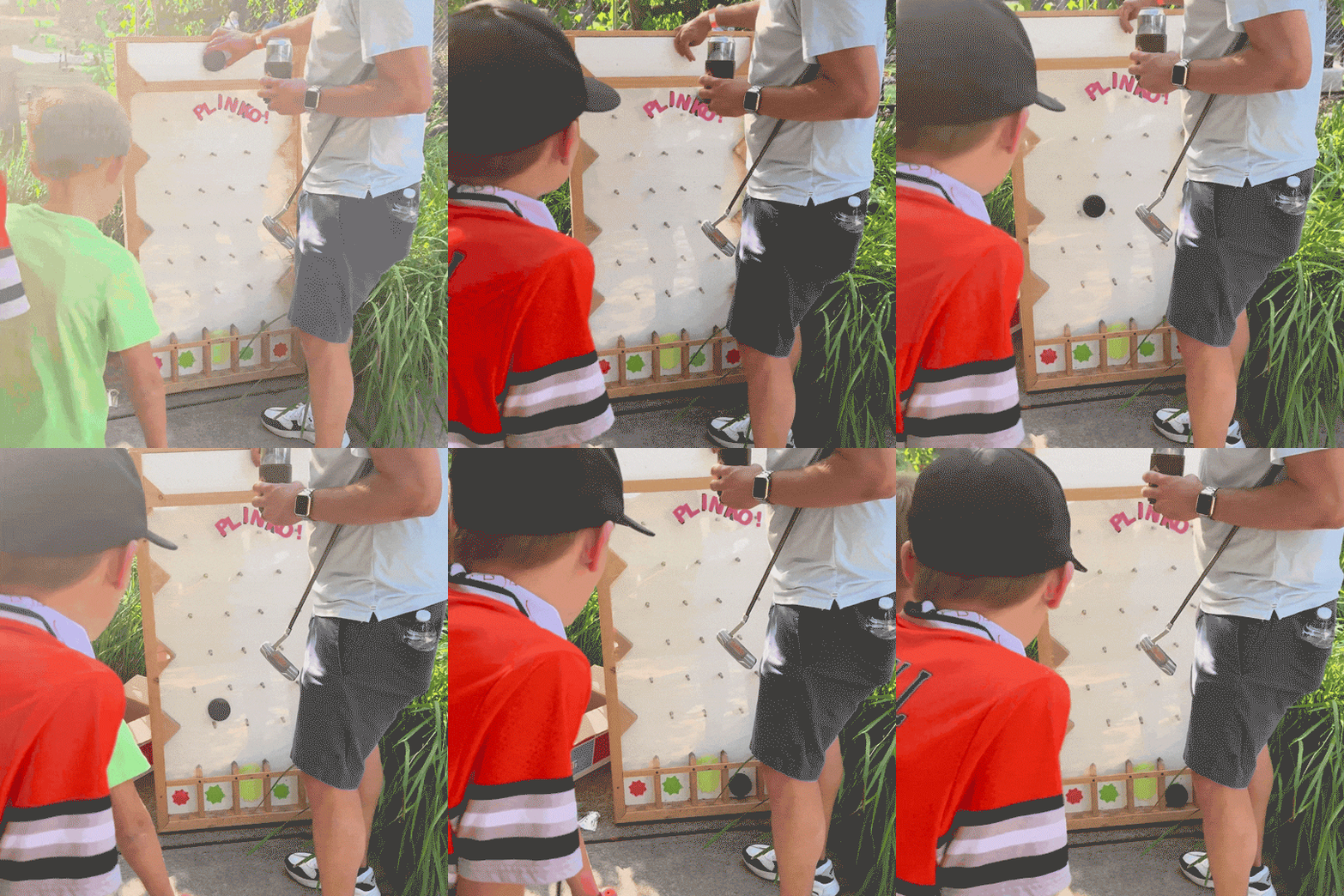
4. Plinko

Give golfers the chance to drop a puck on a Plinko board to win a prize, earn a drink or raffle ticket, or improve their score.

A man plays plinko, a golf tournament game, at a charity putt putt event.

Plinko is fun for all ages and can be used with a variety of golf tournament formats, including traditional nine or 18-hole events or putt putt tournaments.

5. Roll-a-score

Have golfers roll a set of dice and give them the option to replace any score from the event with whatever they rolled.

6. Single Club hole

Participants play with the same club for the entire hole. They could choose a card, spin a wheel, roll dice, or other method to determine which club they play with. 

Pro Tip: Consider limiting clubs to those that would present the most challenge across the hole, such as the driver, wedge, or putter.

7. Wrong Hand Challenge

Participants play the entire hole “wrong-handed”, i.e. with their non-dominant hand. You may need to have clubs available in case no one in a group has left-handed or right-handed clubs. 
Pro Tip: Give teams the option to pay a fee to play the hole normally.

8. Scavenger Hunt

Place items around the course (these could be related to your mission in some way or just for fun). Participating teams get a list of the items to hunt for and take a picture of them once found. Teams that find every item could earn a prize or the chance to better their score.


Get Started With GolfStatus at no upfront cost


9. Club Game

Teams are given the chance to purchase a certain number of club lengths to move their ball closer to the hole without taking an additional stroke.
Pro Tip: Have a volunteer stationed on the tee box and another one near the green to sell club lengths. Choose an especially challenging hole to make the purchase more appealing.

10. Poker Hand

Teams draw a card on each of five designated holes to make up a poker hand. The team with the best hand at the end of the round wins a prize or you can offer prizes for specific hands (i.e. three of a kind wins a gift card to the pro shop).

11. Speed Hole

See which team can play the entire hole—from tee shot to sinking a putt—the fastest. You’ll need a volunteer to serve as the timer. The team that logs the fastest time wins a prize.


Free Download

The Complete Event Day Guide for Charity Golf Tournaments

Download this free guide to get tips and strategies for ensuring everything—including your golf tournament games—is prepped and ready to go for a flawlessly executed golf event.


12. Trivia hole

Station a volunteer on the tee box to ask golfers trivia questions before they tee off to win a prize or move to closer tees.
Pro Tip: Relate the questions to your nonprofit’s mission to help connect golfers to your cause.

13. Shot Clock Hole

The entire team must tee off within a certain amount of time or must take a penalty stroke. Set up a large countdown timer or have a volunteer count out loud.
Pro Tip: Sell extra increments of time to take the time pressure off.

14. Ball Toss or Kick

Great for a booster club or team! Instead of hitting a golf ball off of a tee for their tee shot, golfers throw a football, baseball, softball, tennis ball, or other ball and play from there. Alternatively, they could kick a football or soccer ball for their drive.
Pro Tip: Have a local sports figure (high school, college, or even professional) run the game. For an extra fee, they can make the throw or kick.

A man kicks a ball to use for his tee shot as part of a golf tournament game.

American soccer legend Clint Dempsey kicks a soccer ball for his tee shot at a golf event benefiting Team Red, White & Blue.

15. Closest to the…

A spin on the classic closest to the pin contest, this game can be customized to your event. Determine an object either placed or naturally occurring—anything from a prize like a Yeti Cooler or golf bag, distinct tree (or other feature on the course), or an item related to a sponsor (one GolfStatus client places a rubber chicken on a hole, and the game is sponsored by a chicken company). The team that gets the closest to the object wins a prize (or wins the prize they were hitting at).

16. Speed Putting

Golfers try to make as many putts from one location in a certain amount of time as possible to win a prize. 
Pro Tip: Run multiple rounds of the contest, moving the ball further away from the hole.

17. Sitting Drive Challenge

Golfers take their tee shot while sitting on a chair. Offer the choice to pay a fee to opt out of the challenge.

18. Ball Swap

Golfers play the hole like normal until they reach the green, where they mark their spot and play the rest of the hole with a racquet ball or ping pong ball.

19. Blind Putt

Golfers wear sleep shades or blindfolds when they putt and have to rely on verbal cues from their team to try to make the shot.

20. Alternative Putter

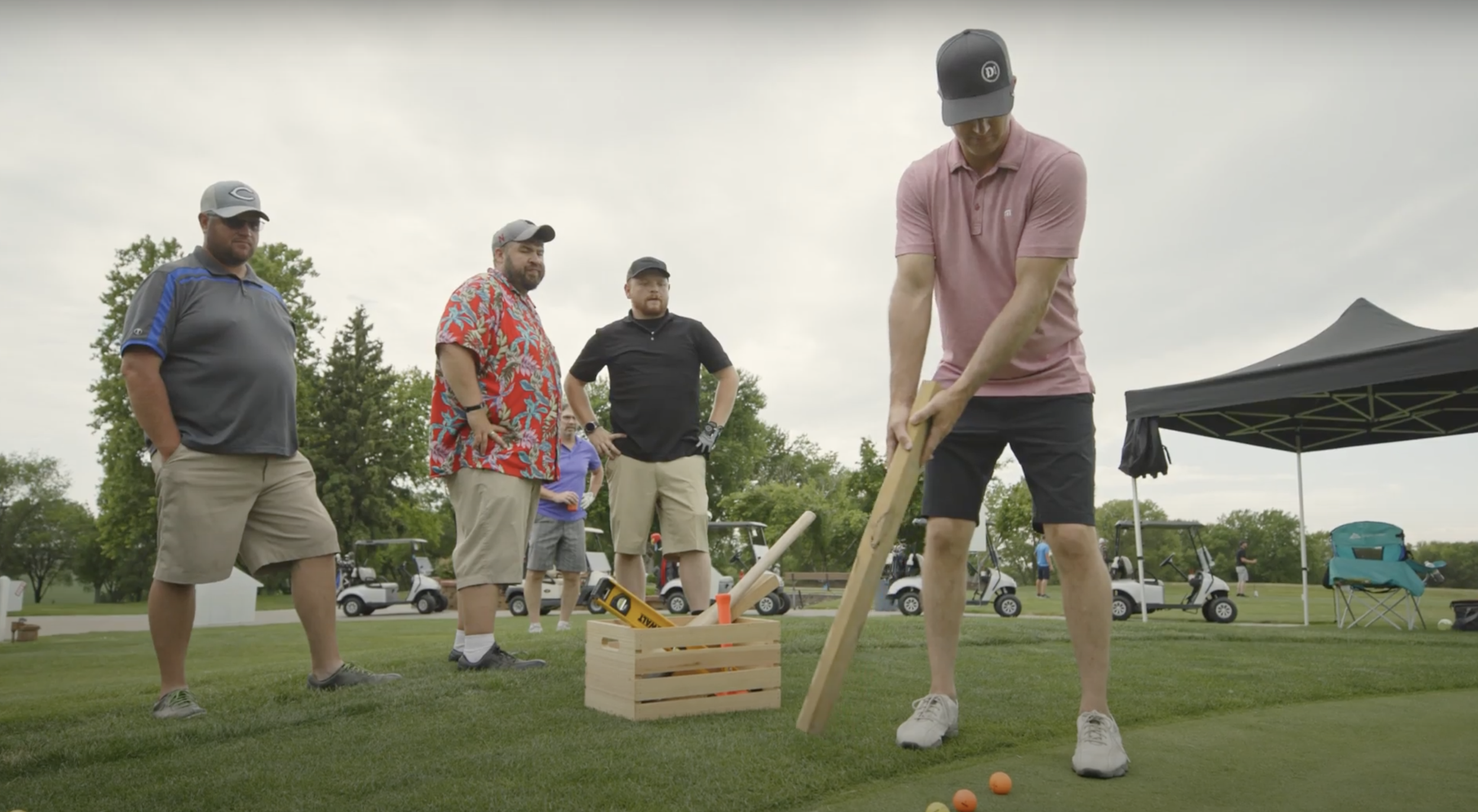
Golfers putt using objects other than their putter, like a croquet mallet, hockey stick, or baseball bat. This could be on the practice green as a separate contest or as part of a specific hole. 
Pro Tip: Pick putting objects that help golfers understand what your nonprofit does. For example, Habitat for Humanity of Columbus, which helps provide affordable housing and homeowner education, had a game on the practice green where golfers putted with building tools, like sledgehammers and levels, instead of their putters.

A golfer putts his golf ball with a two by four as part of a golf tournament game.

Golfers at Habitat for Humanity of Columbus’s golf tournament used building tools to putt as part of a golf tournament game.

21. Caddie Auction

Teams bid on volunteer caddies to join their team. Recruit well-known locals, such as your nonprofit’s Executive Director, the mayor, coach, local news anchor or weathercaster, or influencer as caddies. 
Pro Tip: Use an online bidding software and allow teams to bid over the week leading up to the tournament so the caddies are set when event day arrives.

22. hit it & Get it

Set varying prizes up on the practice green. Golfers get the chance to putt and win a prize if they hit it.
Pro Tip: Place high-value prizes further away to up the challenge.

23. Skins Games

Skins games create mini-competitions where teams (or individuals, depending on the event’s format) compete against each other based on their score on a given hole, in addition to their overall score. Event organizers can use skins games to fundraise by setting a dollar amount for participants to buy in to compete. 
Pro Tip: Display skins results on real-time digital leaderboards to keep golfers engaged and make the skins games more competitive.

24. Dizzy Bat

Golfers take turns putting their forehead on the end of a baseball bat and spin around multiple times, making them dizzy, and then attempt to tee off.

25. Goggle Putt

Golfers wear goggles that impair their vision in some way—such as being impaired by alcohol or make everything appear upside down—and attempt to putt.

26. Bingo Bango Bongo

Players earn points for being the first on the green (bingo), closest to the pin once all balls are on the green (bango), and sinking the first putt (bongo). 
Pro Tip: Raise extra funds by selling a Bingo Bango Bongo sponsorship or encouraging donations for each point earned.


Book a GolfStatus Demo

Engaging Golf Tournament Contests

27. Hole-In-One Contest

Players take their best shot at acing a designated par-three hole (or several holes) for the chance to win an exciting prize, like cash or a golf getaway.
Pro Tip: Be sure your contest is covered by hole-in-one insurance so your nonprofit isn’t stuck footing the bill for the prize if someone gets an ace. Sell a contest sponsorship to cover the cost of the insurance to boost revenue.

28. Longest Drive Contest

Participants compete to see who can hit the ball the farthest off the tee while keeping it within the fairway on a selected hole.

29. Closest to the Pin Contest

Golfers test their accuracy and compete to see whose tee shot lands closest to the hole on a designated par-three hole.

30. Chipping Contest

Players demonstrate their short-game skills by chipping the ball as close to a target as possible, often set up near the practice green. 
Pro Tip: Boost revenue by selling mulligans specifically for shots in longest drive, closest to the pin, and chipping contests.

31. Beat the Pro Contest

Players take on a pro in a head-to-head challenge to see if they can hit their tee shot closer to the hole on a specific hole.

Golf Tournament Game Selector

Discover a fun, engaging on-course game for your next charity golf tournament.

Ready to roll?

How to Choose a Golf Tournament Game for Your Event

You have endless choices when choosing games for your event, but not every game will be a hit for every tournament. It’s important to consider your tournament’s specifics when deciding which games will work best for your organization and golf tournament. Keep these factors in mind:

  • Your audience. A corporate outing for employees or a more casual crowd might love a funny game like marshmallow drive or dizzy bat, but a competitive field of serious golfers might be more receptive to a skill-based challenge. You know your tournament’s audience best, so choose what fits their interests.

  • Your cause. When you align games with your cause, you get double the impact—golfers get a deeper appreciation for your work and are more likely to chip in additional money. For instance, a trivia hole could include questions about your cause area or impact to help golfers better understand and connect with your work. Outlook Enrichment, a nonprofit that serves the visually impaired, uses the Blind Putt game to help golfers better understand the struggles of vision loss.

A golfer wears a sleep shade to simulate blindness as part of a golf tournament game.

Outlook Enrichment uses sleep shades for a blind putt hole to help golfers better understand vision loss.

  • Your golf facility. The host golf facility plays a role in choosing golf tournament games. An 18-hole facility is more equipped to comfortably accommodate multiple on-course games, while a smaller nine-hole or par three course might be more suitable for one or two. Check in with the golf pro to help you determine what works best.

  • Your sponsors. Sponsors’ interests and business focus can also help guide your game choices. For example, if a local restaurant is sponsoring your event with the goal of attracting new diners, a Hole of Fortune with gift cards as prizes might work well. If a sponsor is up for running a game, consider giving them the freedom to choose or create a game that’s specific to their business.

Still unsure of which game best fits your golf tournament? Use the spinner below for inspiration.

Best Practices for Running Golf Tournament Games

  • Leverage social media. Go live from a game, create a specific hashtag for a new game, and assign someone to share photos from each game throughout the tournament to get more people excited about participating. Use photos and videos from this year’s games to promote next year’s tournament!

  • Hype it up. Ask a volunteer, a staff or board member, or recruit a local celebrity to announce or emcee a game to hype golfers up to participate (and make extra donations!). 

  • Keep pace of play in mind. You don’t want teams piling up on a hole with a time-consuming game. Keep games easy to explain and quick to play to keep the round moving and golfers happy. 

  • Recruit volunteers. These can be staff or board members, other volunteers, or even sponsors. Depending on the length of the round, you might want two shifts of volunteers. They need to be comfortable explaining the rules and procedures and collecting payments.

  • Communicate clearly. Games can be added to your tournament at any time, well in advance or right before the event, and you can opt to have golfers pay to play when they register or on tournament day. Whichever you decide, be sure to keep golfers updated.
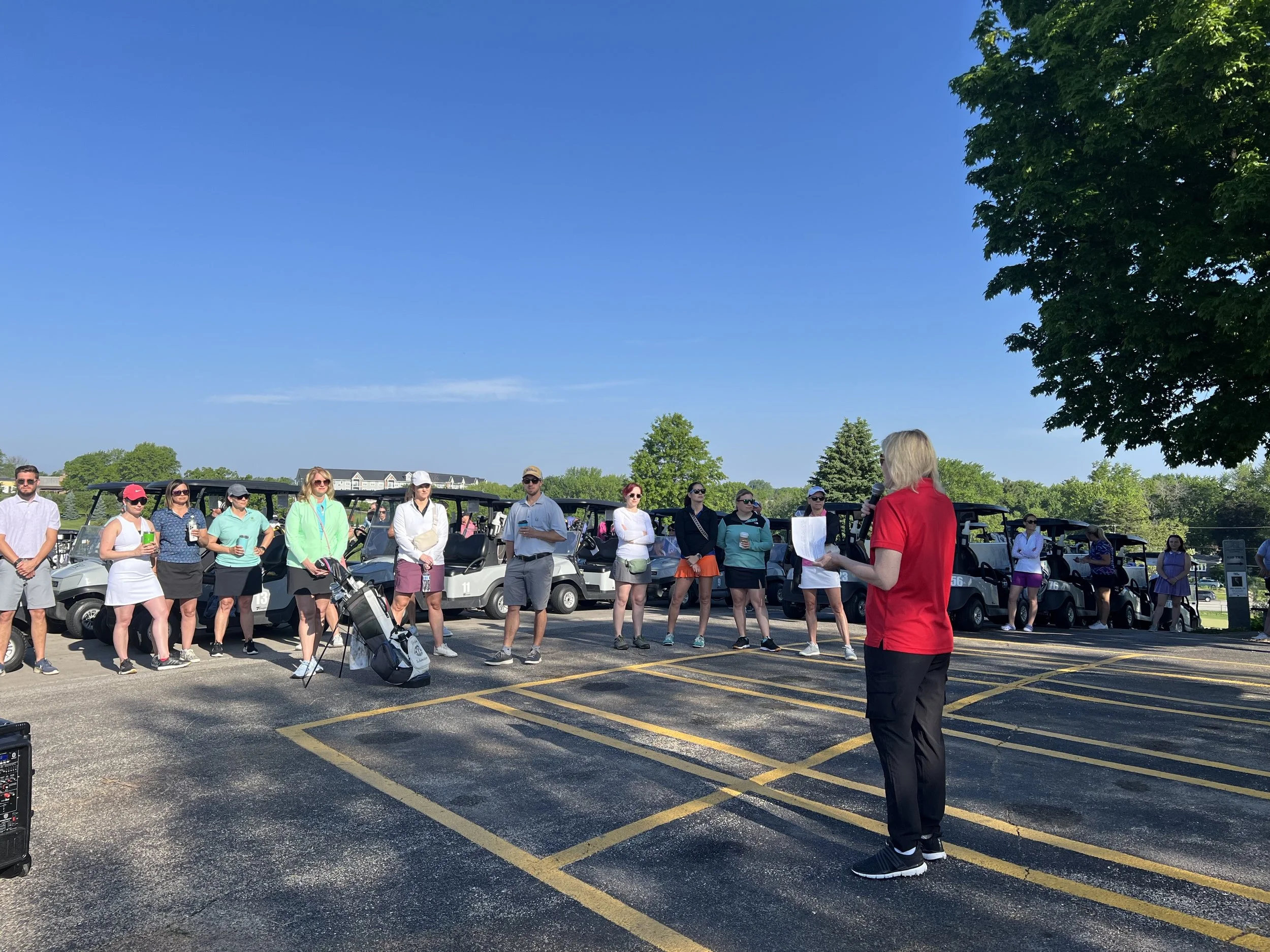
  • Incorporate team-based challenges. Create ways for teams to compete against each other in the games. For example, if you use the marshmallow drive game, you can keep track of distance across all teams and award a prize to the overall winner.

  • Use real-time leaderboards. A software solution that provides hassle-free live scoring lets you use real-time standings in your games. For example, teams that are under par at a certain game hole get a free extra wheel spin or Plinko drop, or teams that are more than a few strokes over par get an additional try at the marshmallow drive.

  • Take online payments. Whether you’re selling supertickets, an all-in games package, wristbands, individual game entries, or collecting donations, collecting payments online via your event website brings in more dollars and makes post-tournament accounting easier. Post a sign with a QR code that links directly to the packages page to make it simple for golfers and your planning team, and you won’t have to keep track of cash payments.

  • Keep track of who’s participating. Use wristbands or something similar to signal to the volunteers working the games on the course that those golfers have already paid to participate.

  • Sell a sponsorship. There are a few ways to structure a games sponsorship for your event:

    • Individual games sponsorships. Sell a sponsorship for each individual game on the course and encourage the purchasing business to run the game the day of the event. This gives them great brand exposure and ample opportunity to connect with golfers.

    • Overall games sponsorship. An overall games sponsorship encompasses every game on the course. This sponsorship should sell for more than the individual game sponsorships and provide premium exposure for the sponsoring business.

    • Front and back nine games sponsorships. Offer two separate games sponsorships, one for the front nine and one for the back nine.

Frequently Asked Questions about Golf Tournament Games

  • What should I consider when choosing a golf game for my tournament? Think about the audience’s size and skill level, alignment with your mission, the golf facility where you’re holding the tournament, and which options give sponsors the best chance to shine.

  • Can I use multiple games within a single tournament? Yes, although it’s important to understand how many games the golf course and your volunteers can reasonably accommodate.

  • Do I need hole-in-one insurance for my golf tournament contest? Hole-in-one insurance is a must-have for a hole-in-one contest so your organization isn’t on the hook for the cost of any high-value prizes.

  • What can I do to keep my golf course game organized while running the rest of my tournament? Use golf tournament management software to keep things organized and running smoothly, and ensure you have enough volunteers to run each game.


Golf for Good

Nonprofits, charities, and third parties planning charity golf tournaments can get started with GolfStatus at no upfront cost through the Golf for Good program! Get access to GolfStatus’ golf event management platform—with a robust event website, time-saving automations and built-in fundraising tools, premium sponsorships, trusted partners, and an A+ in-house support team—to make your next golf event the best one yet. Click below to connect with our team!

Make Your Golf Event a Swinging Success!

Click Here to Get Started With GolfStatus!

About the Author

Jen Wemhoff - Communications Manager at GolfStatus

Jen Wemhoff accidentally discovered her passion for nonprofits in college. An internship while earning a degree in Communications from Doane University led to a 20 year career in the nonprofit sector, where she found a strong desire to be part of something bigger than herself. Her vast nonprofit experience includes roles in marketing, fundraising, and direct programming. When Jen came to GolfStatus as Communications Manager in 2020, she was struck by the power of the sport to raise money to power nonprofit missions. She tells GolfStatus’s story across platforms and channels and develops educational tools and resources to help nonprofits tap into golf’s giving power. Jen, her husband, and two daughters call Lincoln, Nebraska home.


The Ultimate Guide to Running a Charity Golf Auction
 

by Jen Wemhoff, Communications Manager at GolfStatus

A popular—and lucrative—complementary activity to your charity golf tournament is an auction. With the right strategy, auctions deliver strong ROI and can generate significant additional revenue for your organization. This guide will explore how to seamlessly add an auction to your golf event and maximize income.


Frequently Asked Questions about Charity Golf Auctions

Why should my nonprofit run a golf charity auction?

Auctions and golf tournaments go hand-in-hand. Both combine high-net-worth networking with a popular, engaging activity that, when done well, can result in meaningful revenue for organizations of all types and sizes.

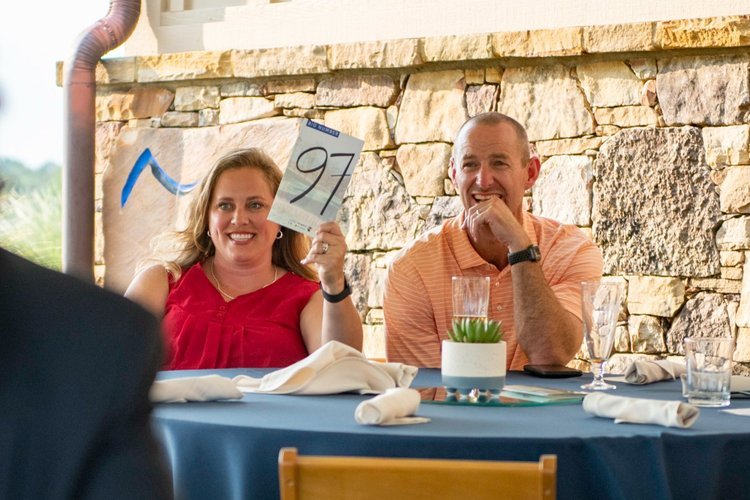
A women bids on an item at a golf charity auction.

What types of auctions complement golf tournaments?

  • Silent auction. The vast majority of golf tournaments incorporate a silent auction. In a silent auction, participants write their bids on a piece of paper or, more commonly, submit their bids using an online bidding platform. Silent auctions work well with golf tournaments because of their flexibility, and thanks to mobile bidding platforms, golfers can place bids from anywhere on the course.

  • Live auction. Live auctions utilize a professional auctioneer who leads the bidding process, encouraging competition amongst attendees. One item is auctioned off at a time, in front of the entire group. Live auctions are particularly effective for high-value items or experiences, but can be time-consuming at the end of a long day on the golf course.

  • Online auction. An online auction extends the auction beyond the golf tournament itself, reaching a larger audience and broader participation.

When is the best time to hold the auction during a tournament?

An online auction or silent auction that utilizes bidding software can be launched before the tournament to maximize reach and bids. In fact, golfers can bid from their phones during the round! Bidding can start a few days or a few weeks before the event and usually concludes following the awards ceremony or banquet, so golfers or guests take their winning items home. Live auctions are often held during the post-round cocktail hour or dinner, and often coincide with the announcement of the tournament’s winners.

How do we handle bidding while golfers are out on the course?

Paper bid sheets are outdated and create more work for you and your team. Instead, use an auction platform that offers a mobile-friendly interface to:

  • Keep the auction running smoothly and professionally

  • Allow golfers to browse auction items and place bids during the round, without needing to return to the clubhouse to check bid status

  • Automate finalizing bids

  • Quickly collect payments and send receipts

How many items should we have for our charity golf auction?

The number of items you offer in your auction is dependent on the number of participants and guests at your tournament. You want to ensure every item is sold, while also creating scarcity that drives higher bids. A good rule of thumb for silent auctions is to have one silent auction item for every five to 10 guests.

Are charity golf auction purchases tax-deductible?

Yes. According to the IRS, “Donors who purchase items at a charity auction may claim a charitable contribution deduction for the excess of the purchase price paid for an item over its fair market value.” For the deduction to be valid, the Fair Market Value (FMV) must be displayed on the auction site.

How do we prevent “auction fatigue” at the end of a long day?

Keep the energy high for your golf event’s auction by:

  • Encouraging bidders to save payment information to streamline purchases and receive digital receipts.

  • Limiting the live auction to just a handful of big-ticket items to keep golfers engaged, and using an experienced, entertaining auctioneer.

  • Opening bidding for a silent golf charity auction before the tournament, so golfers (and guests!) can browse items before they tee off.

  • Ensuring there is plenty of time and there are plenty of volunteers to facilitate item pickup and payment when the auction closes.

How should we set starting bids and bid increments?

  • Establish a clear FMV. Determine and clearly display the FMV for every auction item, which is the foundation for your pricing strategy.

  • Set starting bids in the "Sweet Spot." A good practice is to start bidding at 30% to 50% of the item's FMV. This range is low enough to attract early bids and generate excitement, but high enough to ensure a meaningful return.

  • Calculate standard bid increments. Set bid increments at approximately 10% of the starting bid (e.g., if the starting bid is $50, the increment should be $5).

  • Minimize bidding friction. The 10% rule keeps the math simple and ensures the item's price steadily increases without drastic jumps.

  • Create exceptions for "Priceless" items. For exclusive experiences or unique items (like a round of golf with a celebrity) where FMV is subjective, you may want to set a higher baseline starting bid based on your audience's perceived value.

What legalities do I need to worry about?

  • Local liquor laws. Alcohol is heavily regulated. Before auctioning off any liquor items, verify local, county, and state laws. Many jurisdictions require charities to obtain a temporary liquor license or special permit to legally auction alcohol.
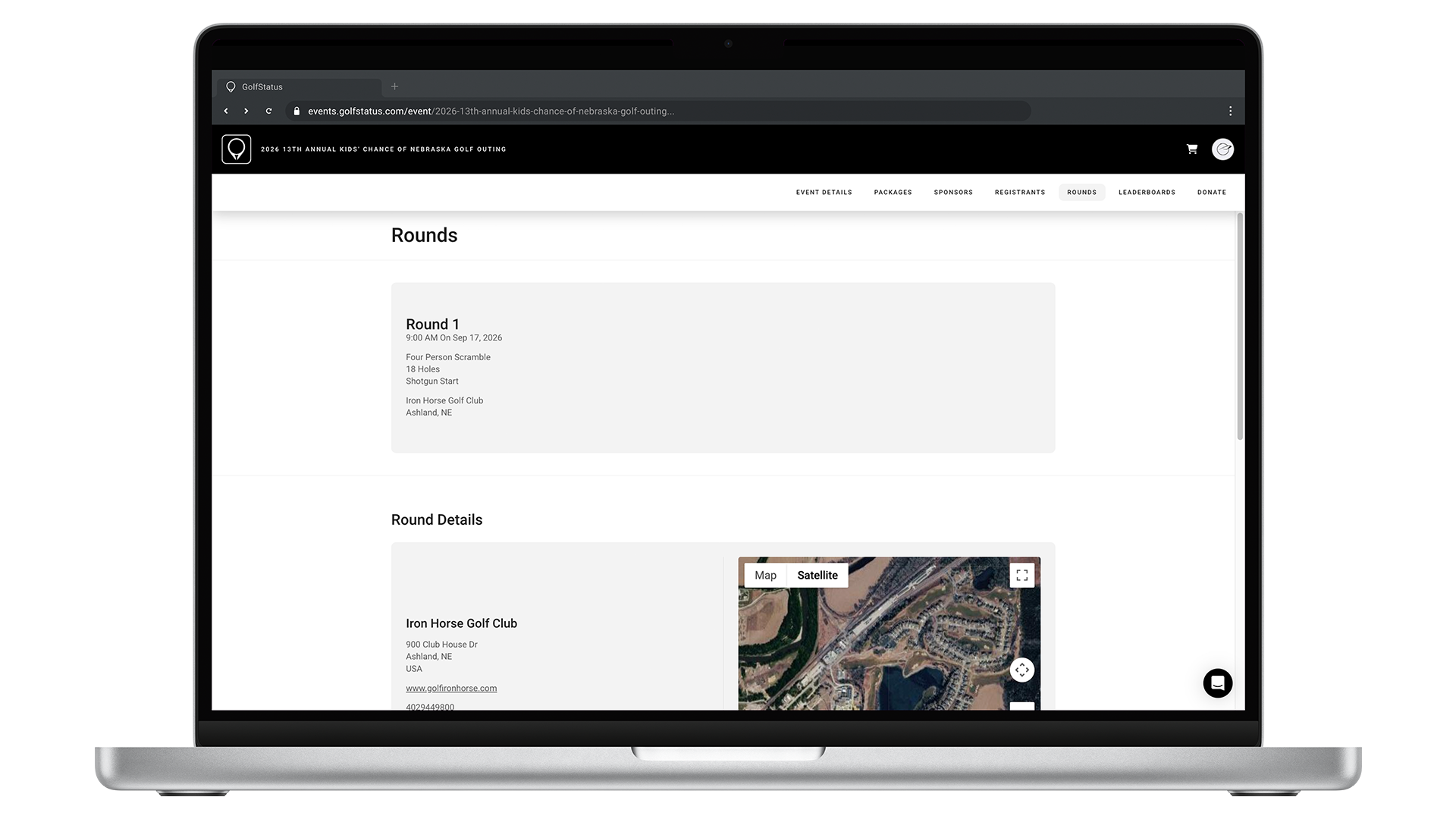
  • Auction and raffle differences: It’s critical to distinguish between these two formats. An auction is a direct sale where the item goes to the highest bidder based on value, and a raffle (or lottery) is a game of chance where participants buy tickets for a random draw.

  • Gaming and gambling issues. Raffles and lotteries are regulated under state gaming and gambling laws, which are stricter than auction laws. Using the terms interchangeably or improperly running a raffle can lead to legal or compliance issues.

  • Tax deductions. Clearly state the FMV to keep everything transparent. Bidders can only claim a tax deduction on the amount they pay that exceeds the item's FMV.

How much revenue can your tournament raise?

Use this auction ROI calculator to help determine your charity golf auction’s potential net revenue!

Auction ROI Calculator

Estimate your charity auction's return on investment and maximize fundraising impact.

Gross Revenue
$0
Net Profit
$0
ROI
0%
Items Sold
0

Revenue Breakdown
Total Inventory Value $0
Auction Revenue $0
Costs $0

The Benefits of Running a Golf Charity Auction

An auction can significantly increase your golf event’s overall revenue and further your nonprofit’s impact. Here’s why you should add an auction:

  • Drive significant revenue from your event. Add another income stream to your tournament to supplement teams, sponsorships, contests, mulligan sales, raffles, on-course games, and other add-ons. Competitive bidding, especially in a live auction, can drive up the final sale price of items, leading to better fundraising outcomes.

  • Attract new supporters and engage non-golfers. An auction—particularly an online auction with an easily shareable link—can draw a wider audience, including non-golfers or spouses or guests of golfers and sponsors. High-end items can also draw new teams to play in your tournament, so be sure to publicize the auction in your event marketing.

  • Add excitement and engagement. Auctions add fun and excitement to your tournament, encouraging golfers, sponsors, and guests to stay longer—and spend more.

  • Low-cost, high ROI. Keep your auction’s overhead costs low by securing as many donated items as possible. Items purchased outright or on consignment eat away at your overall take from the auction, so engage your donor base, partners, vendors, and sponsors to solicit item donations that boost ROI.

  • Opportunities to connect with local businesses. An auction is another opportunity to engage with area companies and businesses. If a business can’t financially sponsor your tournament, invite them to donate an auction item, opening doors for future sponsorships.

  • Turn bidders into donors. Capturing bidder data with an online auction platform makes it simple to include them in your CRM for year-round donor stewardship and giving campaigns.

How to Add an Auction to a Golf Event

An auction can easily be added to your tournament at any time, but planning early can help ensure a smooth experience that encourages higher bids. Here’s how to add an auction to your golf tournament:

  • Determine the type of auction that best suits your tournament, either live, silent, or online.

  • Procure auction items. Work with sponsors, local businesses, your planning team, board members, and corporate partners to secure donated goods, services, and experiences that appeal to your audience. Another option is working with consignment providers who offer big-ticket items without upfront risk.

  • Choose an auction platform. Much like your golf tournament, using tech will help it run smoothly and save you time and hassle. The most important feature is a mobile-friendly interface, so golfers and others can browse auction items during the round and place bids right from their phones.

  • Promote the auction on all your communication channels and as part of your tournament’s marketing campaigns. Use your GolfStatus event website to promote your golf tournament’s auction and include information about top-tier items, donors, and the bidding link in your pre-event email to participants.

  • Establish bidding processes. Determine the starting bid for each item—30% to 50% of the FMV is a good place to start—and the bidding increments. If you’re planning a live auction, secure a high-energy auctioneer experienced in engaging guests.

  • Secure volunteers to help set up the auction, answer questions, and finalize payment and item pickup.

  • Finalize the details. Add items to your auction platform (making sure to include who donated each item and FMV), create baskets or groupings, and touch base with volunteers and the auctioneer.

ADD AN AUCTION TO YOUR GOLFSTATUS EVENT WEBSITE

Find out more!

Best Practices for Running a Charity Golf Auction

  • Plan early. Start organizing your auction well in advance of the tournament so you have ample time to secure high-quality items that appeal to your audience. Sample timeline:

    • 6 months out: Assign an auction lead

    • 3 to 4 months out: Solicit donations and/or contact a consignment provider

    • 1 month out: Finalize lineup and open bidding link

  • Set clear guidelines. Clearly outline the rules and communicate these before bidding begins, including bidding increments, payment methods, and pick-up procedures, to avoid confusion and ensure a seamless process.

  • Utilize technology. Online platforms for silent or virtual auctions streamline bidding, help reach a broader audience, and make checkout and payments quick and easy. Include a link to the auction on your golf tournament’s website.

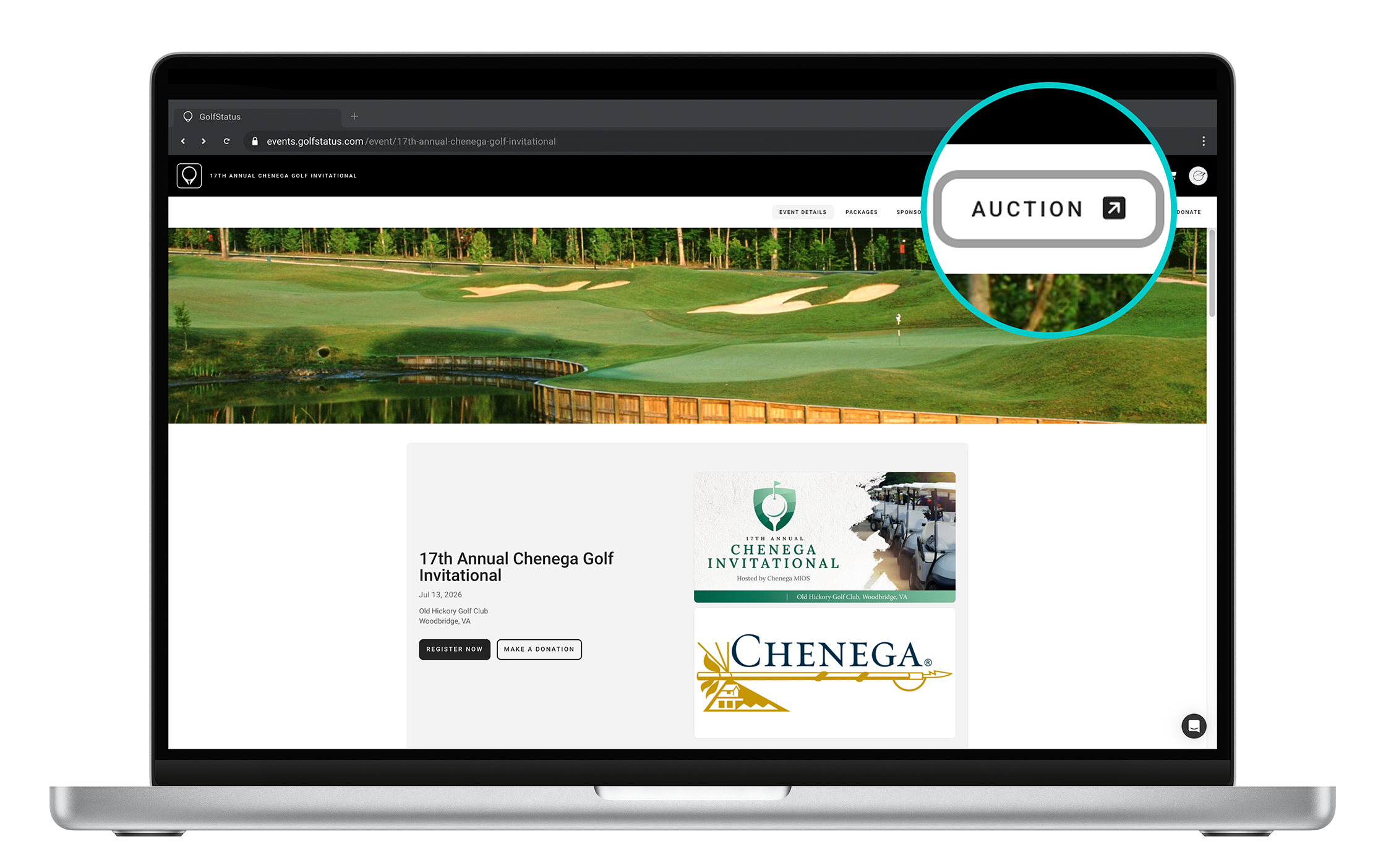
The homepage of a golf tournament website highlights a golf charity auction.

GolfStatus’ event website include an auction integration to easily link to your online auction.

  • Secure donated items. Partner with local businesses for donated items or experiences, reducing costs, fostering community involvement, and improving fundraising outcomes.

  • Engage attendees. Provide frequent updates and reminders about the auction during the tournament, highlighting selected items to keep attendees engaged.
  • Follow up with bidders. Promptly reach out to winning bidders to confirm payment and item delivery, and thank them for their support. You should also send a personalized thank-you email to all attendees within 48 hours, and invite everyone to next year’s golf fundraiser.
  • Evolve the auction based on feedback. Look for ways to improve your auction strategy based on the feedback you get from your supporters and golf event participants.

The Best Golf Charity Auction Items

One key to a successful auction is offering items that are appealing, attractive, and valuable to your audience. When procuring items:

  • Ask your supporters ahead of time what type of auction items they would like to see.

  • Have three to five “big” items in the mix that guests would splurge on, plus small to mid-sized items to round out the slate and attract more bidders.

  • Include golf-related items to appeal to golfers, and consider items that match the tournament's theme.

  • Invite sponsors to contribute in-kind gifts for auction items. If a prospective sponsor says no to a monetary sponsorship, ask for an in-kind donation.

Our Favorite Golf Charity Auction Items

  • Experiences. VIP tickets to sporting events, concert passes, exclusive golf packages, vacations or travel packages, dining experiences.

  • Memorabilia. Autographed sports gear, collectibles, pieces of art, branded merchandise, golf equipment.

  • Luxury items. Designer goods, handmade jewelry, high-end electronics, gourmet food baskets, high-end spirits or wine baskets.

  • Local business services. Spa packages, local dining experiences, home improvement services, golf lessons, local boutique packages.

An auctioneer collects bids during a live golf charity auction.

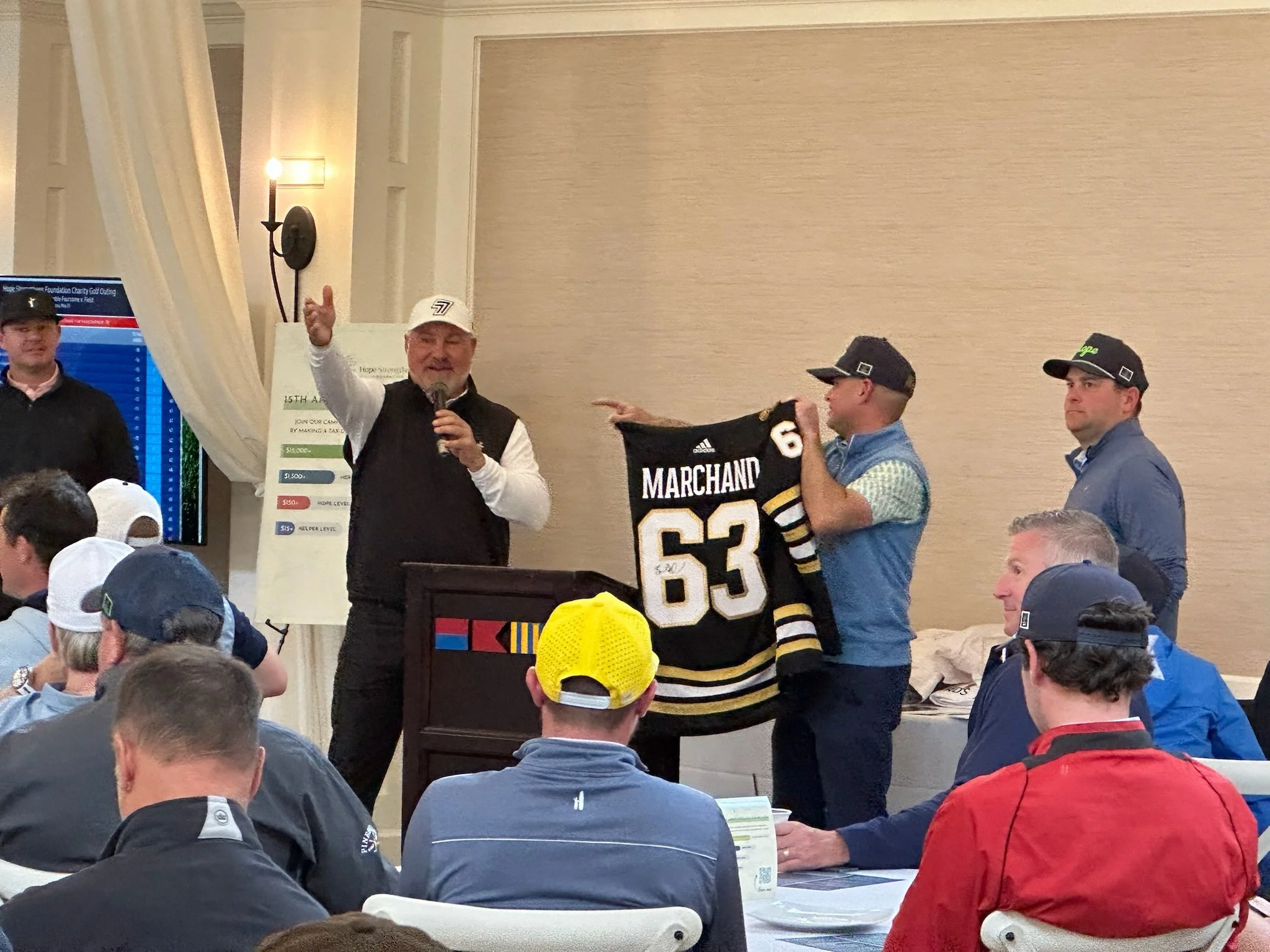
Hope Strengthens Foundation partners with NHL Hall-of-Famer Ray Bourque as the auctioneer at their golf charity auction.

Golf-Related Auction Items

  • Custom golf club set

  • Golf rangefinder

  • Personalized golf bag

  • Exclusive lessons with a golf pro

  • Golf apparel (hat, shoes, gloves, shirts, pants)

  • Golf cart 

  • Golf course membership package

  • Golf weekend getaway

  • Play with a club pro

  • Play with a local celebrity 


Pro Tip:

GolfStatus’ giving partners at Dormie Network Foundation offer in-kind donations that level up nonprofits’ fundraising efforts.


Physical Auction Items

  • Custom artwork

  • Standing desk/walking pad

  • Chef set (knives, kitchen supplies, etc.)

  • Gourmet gift basket (luxury chocolates, wine, snacks, and other gourmet foods)

  • Coffee lover gift basket (coffee mugs, French press, beans, etc.)

Experiential Auction Items

  • Sporting events tickets

  • Concert tickets

  • “Night on the Town” (dinner and a show)

  • Ultimate city experience (tickets to all the fun things to do in a certain city)

Consignment Travel & Risk-Free Big Ticket Items

  • Vacation packages

  • Golf-related packages, like tickets to The Masters, a trip to Pebble Beach, or a trip to play St. Andrews

Third-party providers offer risk-free travel packages. Your organization only pays the base cost of the item if it sells, and you keep all the profit above the reserve price.

Run a Golf Auction with GolfStatus

In addition to industry-leading software for charity golf tournaments and fundraisers, GolfStatus offers an auction add-on. The GolfStatus in-house team will work closely with you to set the auction up on the platform and activate the “Auction” tab on your golf tournament website so you can start collecting bids alongside golfer and sponsor registrations. Curious about how GolfStatus can help save time, raise more money, and streamline your auction? Click below to get in touch with our team.


70+ High-Impact Corporate Fundraising Ideas + Best Practices
 

by Jen Wemhoff, Communications Manager at GolfStatus

Corporate fundraising presents a valuable opportunity for nonprofits and businesses to make a meaningful impact on their communities. For nonprofits, it means additional funding, resources, and greater visibility. For businesses, raising money for charity as a third party boosts brand reputation, engages employees, and fosters connections with new audiences.

Whether you’re a nonprofit looking to secure corporate support or a company looking to give back, these key strategies and fundraising ideas will help you maximize your impact.

A man and  woman shake hands.
 

Corporate Fundraising FAQ

What is Corporate Fundraising?

Corporate fundraising is any effort where a business raises money or resources to support a nonprofit or charitable cause. It can take many forms, and the right approach depends on the company’s size, culture, budget, priorities, and goals. Some companies focus their corporate fundraising efforts on increasing employee engagement and strengthening community relationships, while others prioritize charitable impact and enhancing brand visibility.

What Are the Benefits of Corporate Fundraising?

For Corporate Entities

  • Reputation boost. Corporate giving enhances your social responsibility profile, enhancing and strengthening your brand and reputation.

  • Introduction to new audiences and customers. Supporting a nonprofit can help businesses engage with new customers. For instance, fundraising events that attract higher-net-worth individuals—like charity golf tournaments—help businesses attract valuable clientele.

  • Improved employee engagement. Giving back can boost employee satisfaction and engagement, foster connections between teams, and improve team building.

  • Diverse giving opportunities. There are multiple ways companies can support charitable causes, including in-kind donations, monetary sponsorships, cause marketing campaigns, and more.

For Nonprofits

  • Increased funding and financial stability. Corporate sponsorships and donations create a reliable funding source for nonprofits.

  • Expanded audience and brand awareness. Corporate partnerships introduce nonprofit causes to new audiences and raise awareness about important issues.

  • Access to valuable resources and expertise. Corporate partners may provide helpful resources like in-kind donations or skilled volunteers, along with industry expertise.

  • Long-term strategic partnerships. These collaborations provide ongoing support for sustained impact.

  • Increased credibility and public trust. Aligning with respectable brands or well-known businesses helps build trust among the community and with donors.

A corporate team poses with a big check from a corporate fundraising idea.

Corporate partnerships have a number of benefits for businesses and noprofits.


What Are the Top Corporate Fundraising Best Practices?

For all parties to maximize the impact of charitable partnerships, the following best practices should be considered:

Nonprofits

  • Educate partners on any other corporate giving opportunities that may exist to further maximize their charitable efforts, such as matching gifts, volunteer grants, or payroll giving.

  • Mobilize your donor network to spread the word about your corporate partner’s contributions, share information about the upcoming fundraising event, and encourage participation.

  • Set goals that are both ambitious and realistic, based on past fundraising efforts, successes, and lessons learned.

Businesses & Third-Party Fundraisers

  • Be transparent about the scope of your support and involvement in the fundraising event.

  • Align fundraising events with your company’s mission, brand, and audience.

  • Collaborate with the nonprofit to create compelling event promotional materials, such as a compelling event website with storytelling, visuals, and many opportunities and tiers for involvement.

Both Parties

  • Work with partners that share your goals and values for the best possible outcomes for everyone involved.

  • Choose the right event that will appeal to each organization’s audiences.

  • Follow up after the event to reflect on its success, demonstrate its impact, and express gratitude.

  • Create an event plan that details event tasks, assignments, and timelines.

  • Outline a budget so both parties are on the same page.

  • Use purpose-built tech to effectively and efficiently streamline planning and event management. For example, if you choose a charity golf tournament, choose a solution built specifically for golf, like GolfStatus.

The Top Corporate Fundraising Idea: Charity Golf Tournament

What Is a Charity Golf Tournament?

A charity golf tournament is a premier fundraising event that offers numerous benefits for the host company and benefiting nonprofit. Golf events bring people together like no other event can, combining philanthropy with networking, camaraderie, and an activity people genuinely enjoy. Golfers pay a registration fee to participate as an individual or a team and businesses purchase sponsorships to support the cause.

A group poses in front of a banner at a charity golf tournament.

Charity golf tournaments bring people together to raise money, make connections, and strengthen relationships.


Why Is a Charity Golf Tournament the Best Corporate Fundraising Idea?

  • Golf events have high revenue potential. Player registrations, sponsorships, and add-ons such as contests, on-course games, mulligan sales, auctions, and raffles drive revenue.

  • Golf tournaments appeal to sponsors. Golf events provide excellent branding and exposure opportunities for businesses of all types, plus access to an audience that can’t be found with any other event.

  • Golf events attract decision-makers. Golf attracts corporate executives and higher-than-average net-worth individuals. 90% of Fortune 500 CEOs are golfers, and one in three golfers are in top-level management.

  • Golf is more popular and inclusive than ever. Golf continues to see record popularity, attracting new audiences of beginners, women, and young adults.

  • Golf builds relationships. Because the focus of the event is on an enjoyable activity, it’s easy for donors and sponsors to build relationships and positive memories that keep them coming back year after year.

  • Golf events strengthen community engagement. Golf events planned by a third-party corporate partner deepen community ties and engagement.

  • Golf tournaments are customizable. Choose the golf facility, format, and competition level that best suits your combined audiences.

  • There are multiple opportunities for support. Golf tournaments offer a plethora of opportunities to support a nonprofit partner—monetary sponsorships, employee volunteering, in-kind donations, and more.

Tips for Launching a Charity Golf Tournament

With the right strategy and tools in place, it’s easier than ever to plan and execute a successful charity golf tournament. Follow these tips:

  • Use an event website. A dedicated golf tournament website with online registration makes promotion, registration, sponsor onboarding and exposure, sharing information about your cause, and communication with supporters simple and efficient.

  • Offer sponsorship packages at varying price points. This best practice allows businesses with different budget capabilities to support your tournament. High-end exposure, like a pin flag sponsorship, should be sold at a premium,

  • Maximize additional fundraising. Incorporate tournament components such as mulligan sales, raffle tickets, auctions, on-course games, and hole-in-one contests to boost fundraising outcomes.

  • Enlist volunteer help. Work to engage volunteers from both the corporate partner and nonprofit to help in tournament prep and day-of execution.

Most importantly, use a golf-specific event management platform. Golf tournaments come with a unique set of details that must be handled, including handicaps, hole assignments, team pairings, flighting, and scoring. Standard ticketing software and nonprofit CRMs simply aren’t built to handle this level of specificity without requiring time-consuming workarounds.

GolfStatus’ golf event management software addresses the golf specifics and has baked-in tools to save organizers time and opportunities to raise more money:

  • Event websites with online registration, secure payment processing, broad digital sponsor exposure, the ability to collect donations, and more.

  • Robust reporting and data management in one easily-accessible web-based platform.

  • A user-friendly back end where team members can collaborate, manage payments, track team and sponsorship sales, make hole assignments, and more.

  • Reliable live scoring that engages golfers throughout the tournament and makes the tournament more fun.

  • Exclusive sponsorships and add-ons to raise thousands more dollars.

  • A responsive, in-house client success team comprised of PGA Professionals and fundraising specialists.

For third party fundraisers like corporate entities, GolfStatus can essentially be the bank for the golf event. GolfStatus makes it simple to collect and hold funds that can be paid out directly to the nonprofit after the tournament concludes.


The home page of a corporate golf fundraiser website is displayed on a laptop computer.

Get started with golfstatus


Other Event-Based Corporate Fundraising Ideas

2. Corporate gala or charity ball

3. Trivia night

4. Charity game night

5. Wine and dine fundraiser

6. Benefit concert (could also accompany your charity golf tournament)

7. Networking event or conference

8. Executive challenges (like dunk tanks or pie-in-the-face challenges)

9. Giving days

10. Corporate field day

11. Charity bowling tournament

12. Corporate cook-off

13. Art auction featuring employee or local artist works

14. Charity fashion show highlighting local boutiques

15. Escape room challenge

16. Corporate talent show and dinner

17. Pancake breakfast fundraiser before the workday begins

18. Charity poker or casino night

19. Community outdoor movie night

20. Murder mystery dinner party

21. Charity cornhole tournament

22. Paint and sip fundraising event

23. Mini-golf tournament

24. Charity obstacle course race/field day

25. Bingo night fundraiser

Workplace Giving & Employee Engagement Fundraising Ideas

26. Donation matching

27. Payroll giving

28. Company-wide donation challenge

29. Internal company charity raffle

30. Company silent auction

31. Cause-related product sales

32. Peer-to-peer company-wide fundraising competition

33. Office bake sale

34. "Dress down" or casual dress days in exchange for a donation

35. Paid volunteer time off (VTO) campaigns tied to a financial match

36. CEO/Executive "jail" (employees donate to bail them out)

37. Lunch and learn sessions with a nonprofit guest speaker (catered lunch with suggested donation)

38. Office pet photo contest with voting via entry fees

39. Parking spot auction

40. Employee skill auction (e.g., bid on lessons for employees with niche skills, like guitar lessons or baking)

41. Spare change collection jars in the breakroom

42. Department vs. department penny wars

43. Used book or media sale at the office

44. Coffee cart sale (all coffee purchases are used as donations to a charity)

45. Company recipe book sales featuring employee submissions

A donation page of a corporate golf tournament fundraiser website is shown on a laptop.

Companies can further the impact of their charity golf tournament by holding an accompanying donation drive.

Community-Focused Fundraising Ideas

46. Charity car wash

47. Restaurant fundraising night

48. Food or in-kind item drive

49. Charity run

50. Community festival for charity

51. Charity dog wash or pet grooming event

52. Company-wide garage/yard sale

53. Community tree planting or park clean-up sponsorship

54. Local artisan craft fair with a portion of proceeds donated

55. Charity bike ride or cyclathon

56. Community scavenger hunt with local business sponsors

57. E-waste recycling drive (partnering with a local recycling firm)

58. Local business coupon book sales

59. Bottle and can recycling drive

Virtual Fundraising Ideas

60. Online fundraising gamification or rewards-based campaigns

61. Social media challenges

62. Crowdfunding campaigns

63. Livestream fundraising event

64. Virtual 5K or step challenge

65. Online cooking class hosted by a local chef

66. Virtual trivia or bingo hosted via Zoom

67. E-sports or video game tournament

68. Online peer-to-peer walkathon

69. Corporate branded merch sale

Seasonal Corporate Fundraising Ideas

70. Halloween costume contest

71. Valentine's candy-gram fundraiser

72. Holiday gift drive

73. Summer corporate BBQ fundraiser

74. Ugly holiday sweater contest with entry fees

75. Spring cleaning office garage sale

76. Pumpkin carving or decorating contest

77. Holiday wrapping paper service (executives wrap gifts for staff donations)


Final Thoughts

Corporate fundraising strengthens communities, builds partnerships, and makes a lasting impact. Whether you’re hosting a charity golf tournament or launching another fundraising campaign, the right tools and strategies help ensure success.

GolfStatus simplifies golf event planning and management while maximizing fundraising potential. Click below to learn more!

Start Planning a Corporate Golf Event With GolfStatus!

Click Here to Get Started With a Free Event Website

About the Author

Jen Wemhoff - Communications Manager at GolfStatus

Jen Wemhoff accidentally discovered her passion for nonprofits in college. An internship while earning a degree in Communications from Doane University led to a 20 year career in the nonprofit sector, where she found a strong desire to be part of something bigger than herself. Her vast nonprofit experience includes roles in marketing, fundraising, and direct programming. When Jen came to GolfStatus as Communications Manager in 2020, she was struck by the power of the sport to raise money to power nonprofit missions. She tells GolfStatus’s story across platforms and channels and develops educational tools and resources to help nonprofits tap into golf’s giving power. Jen, her husband, and two daughters call Lincoln, Nebraska home.


How to Price, Package & Sell Mulligans for Your Golf Event
 

by Jen Wemhoff, Communications Manager at GolfStatus

Mulligans are a low-lift option to add real revenue to your charity golf tournament. They cost you nothing to offer, golfers of all skill levels love them, and they’re one of the easiest add-ons to any golf tournament.

Many golf tournament organizers leave money on the table by either not offering mulligans at all or not pricing, packaging, and selling them effectively. Learn how to leverage mulligans for your next tournament.

What is a Mulligan?

A mulligan is simply a “do-over” or a chance for a golfer to retake a shot without it counting against their score.

Mulligans aren’t allowed in professional or official competitions, but are a staple of charity tournaments. They’re less about strict rules and more about fun and raising money for your cause. Golfers who shank a tee or approach shot are usually more than happy to pay a few dollars to erase it and keep the round moving.

A golfer prepares to hit a tee shot at a golf tournament. Mulligans are commonly used on tee shots.

Golfers who hit a poor tee shot are happy for the chance for a “do-over” by using a mulligan.

How to Price Mulligans

There’s no single “right” price—it depends on your tournament, format, competitiveness, and what golfers are used to paying. Here are a few general suggestions:

  • Casual charity tournaments: $5-$10 per mulligan. A reasonable price point keeps sales volume high.

  • Competitive or higher-end tournaments: $15-$25 per mulligan. Golfers at higher-end events tend to have more discretionary income to spend and can justify the higher cost.

  • Bundles: Selling mulligans as a set—for example, three mulligans for $20 instead of $10 each—encourages golfers to buy more than they might as a single.

Whatever price point you decide, think about it the way you think about sponsorship and registration packages. Even though most golfers at a charity event already know they’re there to support a cause, you still want to offer value, and they’re generally willing to spend accordingly.


Pro Tip: Ask for feedback on mulligan pricing in your post-tournament communications with golfers to help you lock in options for next year.


Building Mulligan Packages That Sell

Pricing is only half the equation. How you package mulligans can have a big impact on whether or not golfers decide to buy them. Consider these mulligan package options:

  • Bundle them into team registration. Consider an upgraded registration tier that includes a set number of mulligans per golfer or team, so those who want the cushion of a mulligan don’t have to make a separate purchase decision later.

  • Sell them as a standalone add-on. Not everyone wants mulligans bundled in—and some golfers may want additional mulligans than what’s included with a package. Give them the option to add mulligans à la carte during registration and at check-in.

  • Fold them into VIP or premium packages. Another option is to pair mulligans with other perks, like premium parking, extra raffle tickets, or contest entries, to make an upgrade package feel like a deal rather than an upsell.

  • Offer tiered mulligan bundles. Offer a “basic” bundle of two or three mulligans at a lower price, and an “upgraded” bundle of four or five at a better price per mulligan to give golfers options without overcomplicating the package.

  • Pair mulligans with raffle tickets. Golfers who buy one of these are often receptive to the other, so consider offering a combo package that includes both mulligans and raffle tickets.

An event website screenshot showing a package to buy mulligans is display on a laptop computer.

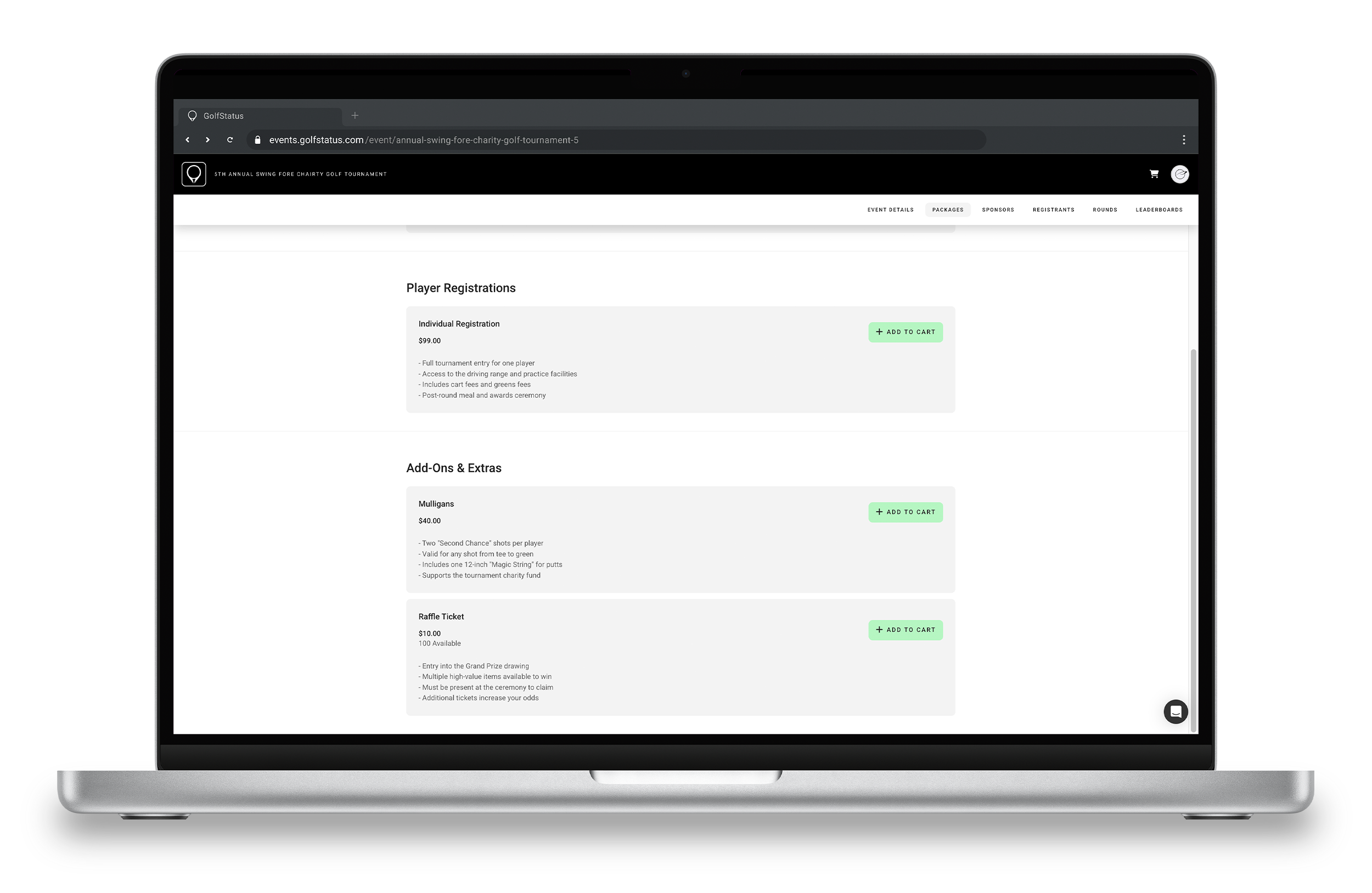
List a mulligan package on your event website to make it as easy as possible for golfers to buy them.

The goal with any package for mulligans is to make the decision easy. Keep your menu of options simple and clearly priced on your event website so golfers can make their selection without having to think through a ton of choices.

Where & How to Sell Mulligans

Mulligans sell best when they’re easy to buy in the moment someone’s already thinking about them, so it’s a best practice to offer them before the tournament and at the course.

  • At registration. Include mulligan options in the online registration flow so golfers can add and pay for them without a separate transaction. This is the prime converting moment, since golfers already have their credit card out and are ready to buy.

  • At check-in. Some golfers wait until tournament day to decide, and others may want to add additional do-overs, so make sure mulligans are just as easy to purchase when they arrive at the golf facility.

  • On the course. Consider setting up a mulligan station or two near the tee box of notoriously tough holes. A well-timed mulligan offer right before a challenging hole can be one of your highest-converting moments of the day.

Across all three touchpoints, the common thread is removing as much friction as possible. If buying a mulligan means finding cash, hunting down a volunteer, or filling out a form, you’ll lose sales. A mobile-friendly event website lets golfers buy mulligans (or anything else) right from their phones, wherever they are in the course, keeping the process quick and easy and eliminating the headache of tracking and reconciling cash payments.


Pro Tip: Post QR codes that link directly to the mulligans package on your event website at the check-in table and any mulligan stations for easy access.


A golfer uses his mobile phone to purchase mulligans at a charity golf tournament.

Direct golfers to your mobile-friendly event website to purchase mulligans at the event, eliminating the need to hassle with and reconcile cash payments.

Communicate Rules to Keep It Fun & Fair

Mulligans work so well because they’re lighthearted, not because they let anyone buy their way to winning a tournament. It’s crucial to set clear limits and expectations up front. A common approach is limiting mulligan purchases to two to four per golfer and specifying where they can be used, such as for tee shots only. Communicate the rules on your event website and again at check-in so there’s no confusion, frustration, or push-back mid-tournament. You might even post signage that explains mulligan usage.

Physical mulligan cards, tickets, or wristbands can help volunteers and other golfers see at a glance who has purchased them and how many they have left, which cuts down on disputes and keeps the pace of play moving.


Mulligan FAQs

Why should we offer mulligans at our tournament?

For nonprofits, golfers’ willingness to pay is a golden opportunity. Mulligans require no inventory, vendors, or setup, beyond deciding your pricing and how you’ll sell them, which means every dollar collected goes straight toward your mission.

Are mulligans allowed at all golf tournaments?

Mulligans aren’t utilized in official or professional competitive tournaments, but they’re standard practice at charity events and other casual formats where the focus is fun and fundraising. As the organizer, you get to set the rules for your own event.

How many mulligans should we let golfers buy?

Most tournaments cap purchases somewhere between two and five per player. Capping the number keeps the format fair and prevents mulligans from feeling like a way to buy a win rather than the fun add-on they’re intended to be.

Where on the course can golfers use mulligans?

Many tournaments limit mulligans to tee shots only to keep play moving and avoid disputes over lies in the fairway or on the green. That being said, you can allow them for any shot—the key is to communicate the expectations clearly before the round starts so there’s no confusion. Mulligans can’t typically be used on hole-in-one contest holes and in putting contests.

Do we need physical mulligan cards?

Physical cards or wristbands give volunteers an easy way to verify purchases and their use on the course. Selling them through your event website ahead of time (or from a phone on tournament day) cuts down on the need to handle cash and makes reporting easier post-tournament. If golfers buy them ahead of time, have them ready for pick-up at check-in.

Should mulligans be included in registration or sold separately?

Both approaches work, and offering them both ways helps you capture the most revenue possible. Bundle a set number into an upgraded registration or VIP package for golfers who want the cushion built in, and offer them as a standalone add-on for everyone else.

What’s a reasonable price to charge for mulligans?

It depends on your event, goals, and field, but $5-$10 per mulligan is typical for charity golf tournaments. Higher-end events may be able to charge $15-$25 per mulligan. Bundling mulligans together at a slight discount usually outperforms selling them individually.

Turn a Small Add-On Into Real Revenue With Mulligans

Mulligans won’t replace sponsorships or registrations in terms of revenue, but they’re an easy win to fold into your tournament. With thoughtful pricing, a simple package structure, and a frictionless way to buy, mulligans can add meaningful dollars to your tournament’s fundraising outcomes, all from something golfers already want.

Mulligans are a great way to build in easy, low-cost revenue drivers to charity golf tournaments. Make it easy to package, list, and sell with a free event website from GolfStatus. Websites are powered by GolfStatus’ golf event management platform, which streamlines and simplifies tournaments to save organizers time and help raise more money for your cause, and backed by a team of golf fundraising pros. Book a meeting to find out more and get started at no upfront cost!

Get Started With GolfStatus at No Upfront Cost

Book a Quick Meeting

About the Author

Jen Wemhoff - Communications Manager at GolfStatus

Jen Wemhoff accidentally discovered her passion for nonprofits in college. An internship while earning a degree in Communications from Doane University led to a 20 year career in the nonprofit sector, where she found a strong desire to be part of something bigger than herself. Her vast nonprofit experience includes roles in marketing, fundraising, and direct programming. When Jen came to GolfStatus as Communications Manager in 2020, she was struck by the power of the sport to raise money to power nonprofit missions. She tells GolfStatus’s story across platforms and channels and develops educational tools and resources to help nonprofits tap into golf’s giving power. Jen, her husband, and two daughters call Lincoln, Nebraska home.


10 Mission Moments to Add to Your Charity Golf Tournament
 

Most people register for a charity golf tournament because someone invited them to play. They may know someone who has a connection to your organization, but don’t know a thing about your mission or work.

Tournament day is the first meaningful interaction many participants have with your organization, presenting a huge opportunity for nonprofits to raise awareness and connect with potential donors. Thoughtfully planned mission moments help transform a fun day on the course into an experience with purpose.

Mission moments don’t have to be lengthy presentations or emotional speeches. They can be small, intentional touchpoints that remind golfers why they’re there and how they’re making a difference. While they’ll certainly remember the golf, food, contests, and prizes, they’ll also remember how the day made them feel. Mission moments create stronger emotional connections, inspire generosity, and even help turn first-time participants into long-term supporters.

Here are 10 mission moments to incorporate into your next charity golf tournament.


1. Let Your Mission Shine on Your Event Website

Your golf tournament’s website often serves as a golfer’s first introduction to your organization, so don’t make it all about registration. Instead of just listing the event’s details, answer the question every participant is asking: What difference will my registration make?

Use the site to introduce your mission with compelling photos, videos, impact statistics, and beneficiary stories. Help visitors understand what you do, who you serve, why your work matters, and what tournament proceeds will do. Even a short impact video or photo gallery can create an emotional connection before golfers ever arrive at the golf course.

The homepage of the Cameron Steinberg Foundation’s charity golf tournament website is displayed on a laptop computer.

Your event website is often the first interaction a new supporter has with your organization, so help them understand what your tournament is raising money for.


2. Open the Tournament with an Impact Story

Few mission moments are as memorable as hearing directly from someone whose life has been changed by your organization. Invite a beneficiary, volunteer, family member, client, or community partner to share a brief story during the welcome remarks. Alternatively, or in addition, invite a speaker to share their story at the luncheon, awards ceremony, or banquet.

For example, Riverside Ranch, a therapeutic horse riding program, invites parents of riders to speak at their golf tournament’s luncheon and share what the Ranch meant to their family.

Personal stories like this help golfers connect faces to fundraising dollars, and remind participants that the event is about much more than birdies and mulligans. Keep it conversational and authentic rather than overly scripted, and aim for five minutes or less—long enough to inspire, but short enough to keep the energy high.


3. Put Your Mission on Display on the Course

The golf course itself offers dozens of opportunities to reinforce your mission. Place mission-focused signage in high-traffic areas like registration, driving range, putting green, and inside the clubhouse (near the bar or front door are good choices). Share:

  • Impact statistics

  • Success stories

  • Photos of the people or communities you serve

  • Quotes or testimonials from beneficiaries

  • Milestones your organization has achieved

Rather than using every sign for sponsorship recognition, dedicate a few to reminding golfers what they’re helping make possible. Add QR codes that link to your event website’s donation page, volunteer opportunities, or a short impact video as a call to action.

A hole sign with information about an adoptable dog is displayed at a charity golf tournament as a mission moment.

Putt Putt Fore Puppies adds information about adoptable pets to its hole signs to add a connection to the event’s mission and beneficiary.


4. Include a Mission-Focused Gift Bag Item

Player gift bags don’t have to be filled exclusively with sponsor swag. Include one meaningful piece in swag bags or on golf carts that tells your organization’s story. This could be anything from a one-page flyer or brochure with photos and outcomes to an annual report summary or beneficiary success story. If your golf facility has carts with video capabilities, inquire about showing a video or photo slideshow on the screens.

The goal isn’t to overwhelm golfers with information, but to provide a memorable takeaway they can read during downtime or take home after the event. Be sure to include a QR code on any printed materials with a direct link to the donation page of your event website, where golfers can donate right from their phones.


5. Introduce Golfers to the People Behind the Mission

Whenever possible and appropriate, invite the people connected to your mission to participate in the event. Personal connections are incredibly powerful, so provide opportunities for them to engage with golfers and sponsors throughout the day.

For example, if your golf tournament benefits a school, teachers, or administrators could greet golfers as they arrive or even be added to teams. A pet rescue organization could have adoptable pets at the golf course and hold an accompanying adoption drive. Or, your nonprofit’s staff members could run an on-course game or contest to interact with golfers throughout the round.

These types of simple interactions often leave lasting impressions and create authentic conversations that no brochure can replicate.


6. Make Downtime Meaningful

Every golf tournament includes natural pauses and waiting—to check in, on the tee box, for a turn on the driving range, for meals, or for final results to be announced. Rather than viewing these as empty moments, use them to deepen engagement with a captive audience.

  • Ask your organization’s staff, board members, beneficiaries, or volunteers to mingle with golfers and chat about your mission while they wait.

  • Strategically station people on various tee boxes throughout the golf course (perhaps on a par five that typically gets backed up) to talk with golfers and answer questions.

  • Display a looping impact video in the clubhouse that golfers can watch while they wait for a drink or dinner.

  • Intersperse photo displays that showcase your programs throughout the year among silent auction items or raffle prizes.

These quieter moments during the golf event can lead to meaningful conversations that build new and lasting donor relationships.

A man and a woman shake hands sharing a mission moment at a charity golf tournament.

Ask staff, board members, beneficiaries, or volunteers to interact with golfers during the golf tournament’s downtime. Chat about your mission, invite them to ask questions, and share stories while they wait.


7. Create an Interactive Mission Experience

Whenever possible and practical, give golfers the chance to experience or see your mission in action instead of simply hearing about it. Interactive experiences create memorable moments that drive home what your organization does and why you do it. These experiences are also good opportunities to involve non-golfers in the event.

Some examples:

  • An animal rescue hosts an adoption event alongside the golf tournament.

  • A food bank organizes a mini-meal packing activity before play.

  • A nonprofit arts organization showcases artwork created by local artists or teaches a painting class.

  • A corporate tournament hosts a blanket-tying activity for non-golfers and guests during the round.


8. Share Digital Mission Moments Throughout the Day

If your golf tournament management platform includes a mobile app, use push notifications to share timely mission moments throughout the event. These notifications should be brief, positive, action-oriented, and strategically timed not to interrupt the golfer’s experience. For instance:

  • “So far, we’ve raised enough money to provide 500 meals to local families.”

  • “Meet today’s featured beneficiary, Name, during lunch!”

  • “Help us get to our goal to raise $25,000—we only need $5,000 more! Donate here.”

  • “Adoptable pets are in the clubhouse! Meet your new family member after your round.”

Include a link back to your event website, particularly if the message includes a call to action to donate.


9. Honor the People Behind the Cause

Many charity golf tournaments exist because someone wanted to honor a loved one, celebrate survivors, or remember an individual whose story inspired the event. Connect golfers to your mission by creating a dedicated space that recognizes those people.

Display photos, handwritten notes, memorial boards, or tribute signs that explain why the tournament matters. Invite participants to write messages of encouragement or remembrance. These types of displays become natural gathering places and often spark meaningful conversations among golfers who may have personal connections to your cause.

For instance, the Pat Neal Memorial Golf Tournament raises money for brain cancer research in honor of the tournament’s namesake, Pat Neal. A photo of Pat was placed on the course, and golfers were encouraged to sign the photo as a keepsake for Pat’s family. Another example is Project Purple, which includes a hall of fame induction at the tournament’s post-round dinner as a special moment of honor and recognition for individuals who have battled pancreatic cancer. Inductees or their families receive a purple jacket, and their picture hangs in the organization’s offices as a reminder of their fight against the disease.

People dressed in purple jackets pose at a ceremony following a charity golf tournament.

Project Purple includes a hall of fame induction its golf fundraiser’s banquet to honor individuals who have battled pancreatic cancer.


10. End with a Clear Call to Continue the Mission

The end of the tournament is just the beginning of your relationship with participants. Before they leave, provide them with easy next steps to stay involved and support your mission:

  • Set up a donation station where golfers can make a gift before they walk out the door

  • Offer the chance to volunteer at an upcoming event or other opportunity

  • Have a pop-up shop that sells branded merchandise or products

  • Share links to sign up for your newsletter and follow you on social media

  • Offer an early-bird rate for golfers to register for next year’s golf tournament

Missions moments are the most effective when they don’t simply inspire people, but encourage action while enthusiasm is still high.


Final Thoughts

Creating memorable mission moments doesn’t make your tournament longer or more complicated. Effective moments intentionally weave your organization’s impact throughout the participant experience.

Technology makes this easier than ever. Your event website, mobile app, signage, online donation tools, email communications, and fundraising platform all work together to help tell your story before, during, and after tournament day.

Golfers that understand the impact of the tournament are more likely to become repeat players, loyal donors, enthusiastic volunteers, and passionate advocates for your organization. The golf tournament may only last a day, but the relationships it creates can help support your mission for years to come.

Your Best Golf Event Starts With the Best Tech—at No Upfront Cost!

Book a Meeting with GolfStatus to Get Started


10 Golf Tournament Formats for Your Next Fundraiser
 

by Jen Wemhoff, Communications Manager at GolfStatus

Keeping your annual golf tournament fresh and exciting can be a challenge for longstanding events. Returning golfers always look forward to seeing familiar faces and supporting your mission, but offering them a new experience helps keep them engaged year after year.

Trying different golf tournament formats is an easy way to shake things up without completely reinventing the event. A new format can help differentiate your tournament from others in your community and encourage past participants to return. Different formats can also help you attract beginners, who might be playing in an organized event for the first time. The National Golf Foundation reports that more than three million beginners take up golf every year, so choosing the right format ensures they have a great experience.

Two female golfers smile as they sit in a golf cart during a charity scramble.

The right golf tournament format keeps golfers engaged from start to finish. The key is understanding your audience.

Organizers have plenty of golf tournament format ideas to choose from. Some emphasize teamwork, others create more competition, and several invite golfers of all skills.

In this guide, we’ll break down the most popular alternative golf tournament formats, explain the benefits of each one, answer common questions, and share tips for using tech to make implementation and scoring simple.


Top Golf Tournament Formats

Every golf tournament format creates a different player experience and comes with its own strengths. As you explore the different options for your next golf outing, consider which format best fits your audience, fundraising goals, and golfer mix.

1. Scramble

The scramble is by far the most popular format for charity golf tournaments. It encourages teamwork, keeps play moving, and makes the event accessible for golfers of all abilities.

  • How it works: Every golfer hits a tee shot, the group selects the best one, and all players hit their next shot from that location. The process continues until the ball is holed, with the team recording a single score for each hole.

  • Benefits: A scramble is one of the most beginner-friendly tournament formats because higher-handicap players don’t have to worry about a single bad shot hurting the team’s overall score. It creates a fun, low-pressure atmosphere that keeps the round moving.

  • Best practice: Consider setting a minimum number of shots used for every player, helping everyone contribute more equally to the team.

2. Shamble

The shamble format offers a great combination of team and individual play, and is a strong choice for charity tournaments,

  • How it works: Every golfer tees off, and the group selects the best shot—just like in a scramble. But from that point on, each golfer plays their own ball through the hole. Team scores are typically calculated by combining one or more of the lowest individual scores on each hole.

  • Benefits: A shamble gives golfers the advantage of starting each hole from a favorable position, while still allowing them to play their own game. Beginners benefit from the team’s best drive, while stronger golfers have opportunities to showcase their abilities. Shambles move at a good pace and create a balance between teamwork and competition.

  • Best practice: Before the round begins, clearly explain how team scores will be calculated—whether you’re counting the lowest score, combining the two lowest scores, or another variation.

3. Match Play

If you’re looking to bring a little friendly rivalry to your event, match play is a great way to create head-to-head competition and engagement.

  • How it works: Golfers compete hole by hole rather than counting total strokes for the entire round. The player or team that has the lowest score on a hole earns a point, and the player or team with the most points at the end of the round is the winner.

  • Benefits: Because the score is based on holes won instead of cumulative strokes, one bad hole won’t ruin an otherwise great round. That keeps players in the moment and focused on the next shot, maintaining enthusiasm on each hole.

  • Best practice: Consider organizing your event with a bracket-style draw. Head-to-head matchups and advancing rounds can build anticipation and heighten the excitement and competitiveness of the event.

4. Best Ball

The best ball format is a nice middle ground between individual competition and team play, making it a popular choice for events with a mix of skill levels.

  • How it works: Every golfer plays their own ball on each hole, and the team records the lowest individual score as the team’s score.

  • Benefits: This format lets strong golfers excel while still allowing every participant to play their own game. It strikes a nice balance between personal performance and teamwork.

  • Best practice: When assigning groups for a best ball tournament, aim for a mix of skill levels to create a more balanced, inclusive competition.

5. Alternate Shot

Alternate shot is all about collaboration. It challenges pairs to work together and make strategic decisions throughout the round.

  • How it works: Teams of two play a single ball, alternating shots until the ball is holed. One golfer tees off on odd-numbered holes, the other on even-numbered holes.

  • Benefits: Since every shot affects your partner, the alternate shot format naturally builds trust and stresses communication. It’s a great fit for corporate golf outings or sponsor-driven team-building events that want to emphasize collaboration.

  • Best practice: Pair golfers with complementary strengths to create a more competitive and enjoyable round. For instance, match a great long driver with someone who excels at the short game.

Two male golfers stand on the golf course during an alternate shot golf tournament format event.

Organizers can choose from a number of golf tournament format ideas to keep the event fun and competitive.

6. Stableford

Stableford encourages bold play while also keeping golfers from getting discouraged after a bad hole, making it an attractive alternative to traditional scoring.

  • How it works: Rather than counting the fewest strokes, Stableford awards points based on a golfer’s score relative to par. A common scoring system gives players no points for a double bogey or worse, one point for a bogey, two points for par, three points for a birdie, four points for an eagle, and five points for a double eagle.

  • Benefits: Stableford shifts a golfer’s mindset from avoiding mistakes to chasing opportunities. Golfers are often more willing to take risks to hit birdies and eagles to maximize their scores.

  • Best practice: Make the scoring system easy to reference by printing a simple point chart on score cards, displaying it on golf carts, or including it in your golf tournament management app.

7. Bingo Bango Bongo

If you’re looking to surprise returning golfers with something completely different, Bingo Bango Bongo is one of the most entertaining golf tournament format ideas out there.

  • How it works: Players have three opportunities to earn points on every hole. One point goes to the first golfer to hit the green (bingo), another goes to the player closest to the pin once everyone is on the green (bango), and the final point goes to the first golfer to hole (bongo).

  • Benefits: This format rewards several aspects of the game, giving golfers of varying skill levels a chance to succeed. Skilled drivers, precise iron players, and strong putters all have opportunities to contribute, and it works well for both team and individual events.

  • Best practice: If you’re running a team Bingo Bango Bongo event, designate one golfer in each group as the official scorekeeper.

8. Chapman (Pinehurst)

The Chapman, or Pinehurst, format combines elements of scramble and alternate shot to create a unique tournament experience that rewards strategy and teamwork.

  • How it works: Both partners tee off and then select the best drive. From that point forward, they alternate shots using a single ball until the hole is completed.

  • Benefits: Chapman offers more variety without being overly complicated. It’s a fun option for intermediate and experienced golfers who want something a little different from a traditional charity outing.

  • Best practice: Walk through the rules before the tournament begins to prevent confusion, and have volunteers available on tee boxes to answer questions once play gets underway.

9. Skins

A skins game introduces a little extra drama by turning every hole into its own competition and creating memorable moments throughout the round.

  • How it works: Each hole is assigned a “skin,” and the player or team with the lowest score wins the skin. If two or more golfers tie, the skin carries over to the next hole and increases the value of the next opportunity to win.

  • Benefits: The carryover element keeps golfers engaged, even if they have a slow start. A string of tied holes can build anticipation and create high-stakes moments when golfers compete for multiple skins at once.

  • Best practice: Keep participants updated by announcing or displaying carryover skins throughout the event to add another layer of excitement.

10. Money Ball (Lone Ranger)

Money ball, sometimes called lone ranger, is a creative team format that gives every golfer the chance to make a meaningful contribution.

  • How it works: One player on each team is designated as the “money ball” golfer for a hole, and that player’s score counts as the team’s score for that hole. The money ball rotates from player to player throughout the round.

  • Benefits: Because every golfer takes a turn carrying the team score, stronger players don’t dominate the competition, and higher-handicap players still have the chance to shine.

  • Best practice: Determine the money ball rotation before the tournament begins and print the order on scorecards or include it in the event website, helping to avoid confusion and keep play moving smoothly.

An organizer reviews the golf tournament format with players before the start of the event.

Make sure every player understands the golf tournament format by reviewing the rules during opening announcements.

Golf Tournament Format FAQs

What should I consider when choosing a golf tournament format?

The best format for your specific tournament depends on key factors like:

  • The skill level of your audience

  • The size of your field

  • The overall goals of your event

For example, a scramble works well for a broad audience because it’s accessible and collaborative. On the other hand, skins and match play can be better suited for experienced golfers who are looking for a more competitive atmosphere.

What’s the most popular alternative tournament type?

For charity events, scramble remains the clear favorite. It accommodates golfers of all skill levels, keeps pace of play moving along, and encourages teamwork.

That said, if you host an annual fundraiser with many returning participants, experimenting with other golf tournament formats can help keep the event fresh. You might even try rotating formats from year to year to create a new experience without changing the overall structure of your event. A good practice is to survey participants to gather valuable feedback about what formats they’d like to see incorporated.

Can you mix different formats within a single tournament?

Absolutely! In fact, some of the most memorable professional events do exactly that. The Ryder Cup is a well-known example, using multiple formats throughout the event. If you’re holding a multi-day or multi-round event, you can borrow from that concept by combining formats like match play and best ball or creating separate challenges that use different scoring systems.

The key here is communication. Provide participants with written rules before the event and review the format during opening announcements to keep everyone on the same page.

Do different formats affect the rate of play?

Yes. Team-focused formats like scramble often move more quickly, while those that involve more individual scoring or point calculations (like Stableford) may require more time.

As you plan your event schedule, don’t forget to factor in the pace of play associated with your chosen format and communicate expectations to players in advance.

A screenshot of an event website showing the golf tournament format is shown on a laptop computer.

Your event website should clearly state the golf tournament format.

Pro Tips for Managing Different Golf Tournament Formats

Once you’ve chosen your format, the next step is making sure everything runs smoothly. Preparation and the right tech can eliminate confusion, reduce your team’s administrative workload, and improve the golfer experience.

#1 Tip: Use Golf Tournament Management Software

Alternative formats can create a lot of manual scoring complexity. Keeping track of points and carryovers and calculating scores with paper scorecards can quickly become a headache.

Purpose-built golf tournament management software like GolfStatus helps simplify this process by handling scores and tracking calculations automatically, while updating results in real time. These features are especially valuable when using alternative formats:

  • Live leaderboards: Digital leaderboards let golfers check standings throughout the round from their phones, keeping everyone up-to-date from the first drive to the last putt.

  • Handicap integration: Formats like best ball and match play often work best when teams and pairings include players with varying abilities. Software that automatically collects and applies handicaps saves time and eliminates disputes.

  • Sponsor visibility: Leaderboards, event websites, and mobile apps create additional opportunities for sponsor recognition across multiple digital touchpoints.

Other Best Practices

No matter which format you choose, a little preparation goes a long way. Helping participants understand the rules before the tournament and gathering feedback after the event will make it easier to offer an even better experience next year. Keep these best practices in mind:

  • Communicate the format in advance: Include an overview of the rules in registration confirmation emails and pre-event communications so golfers can familiarize themselves with the format’s rules before tournament day. Consider posting hole signage across the course that clearly outlines the rules.

  • Run a practice hole: If you’re using a less familiar format, consider running a practice hole or demonstration before play officially begins. A quick trial run will help golfers feel more confident when their score counts.

  • Collect feedback after the event: Send a post-tournament survey to golfers asking what they enjoyed and whether they’d like to see the same format or something different in the future. Their feedback can help guide future decisions and reassure them that their experience matters to your organization.

Try a New Format for Your Next Tournament

The format you choose shapes nearly every aspect of the golfer experience, from competitive and pace of play to teamwork and fun. While the traditional scramble remains a proven, popular option for charity events, exploring new golf tournament format ideas can help your fundraiser stand out, bring new golfers to the table, and keep longtime supporters coming back.

The right choice ultimately depends on your audience. A beginner-friendly scramble may be perfect for introducing golfers to your mission, while Stableford or match play could appeal to a more experienced crowd. You may find that mixing formats or rotating them each year keeps your event feeling fresh.

Whatever you choose, don’t be afraid to experiment. A creative format can be a memorable part of your fundraiser, and with the right planning tools and technology, implementing something new is easier than ever.

Work With the Golf Fundraising Pros

Book a Meeting to Get Started

About the Author

Jen Wemhoff accidentally discovered her passion for nonprofits in college. An internship while earning a degree in Communications from Doane University led to a 20 year career in the nonprofit sector, where she found a strong desire to be part of something bigger than herself. Her vast nonprofit experience includes roles in marketing, fundraising, and direct programming. When Jen came to GolfStatus as Communications Manager in 2020, she was struck by the power of the sport to raise money to power nonprofit missions. She tells GolfStatus’s story across platforms and channels and develops educational tools and resources to help nonprofits tap into golf’s giving power. Jen, her husband, and two daughters call Lincoln, Nebraska home.


Product Alert: Improved Tool for Golf Event Communication
 

Communicating with golfers, sponsors, and other tournament participants is one of the most important parts of running a successful golf event. That’s why we’re excited to share a major update to GolfStatus’ golf tournament management software: a brand new messaging tool.

The messaging feature now gives organizers a more streamlined way to create, schedule, send, and track communications from within the tournament’s dashboard.

A screenshot of an email sent with GolfStatus' new messaging feature.

GolfStatus’ new messaging tool comes with new capabilities and features to give tournament organizers more flexibility with communication.

Easy Message Management

Messaging is now fully integrated into the platform and is no longer a separate application. Organizers can access everything from the dedicated “Messages” tab inside their tournament in the software, without toggling between screens or systems, where they can:

  • Quickly create new messages

  • View sent, scheduled, and draft messages

  • Search past communications

  • Monitor delivery results

Message Types

When creating messages, organizers can choose between:

  • Emails, which are delivered to individual golfers, donors, and sponsors' inboxes. Emails are great for pre-tournament updates, announcements, player instructions, or post-event stewardship.

  • App notifications, which appear in the GolfStatus live scoring mobile app. These messages are intentionally streamlined for quick updates and reminders, with a simple subject line.

The message types are now managed independently, giving organizers much more flexibility and removing limitations that existed in the previous version.

A screenshot of the GolfStatus software's messaging interface, showing how to choose recipients.

Choose desired message recipients with just a few clicks.

Reach the Right Audience

Recipients are automatically organized into predefined groups based on your tournament. Available groups may include:

  • Sponsors

  • Players

  • Teams

  • Waitlist contacts

  • Customers

  • Donors

Because every tournament is different, the messaging tool dynamically displays the groups that exist within each event.

Organizers can send messages across multiple tournaments (including past years’ tournaments), to entire recipient groups, or manually select specific individuals. When scheduling future sends, recipient groups remain dynamic, meaning newly registered participants will automatically be included. Current tournament participants can also be excluded from promotional sends.

Another helpful improvement is deduplication. If an individual belongs to multiple recipient groups, they will only receive one copy of the message.

Better Emails With More Flexibility

The updated email experience gives organizers significantly more control over message content and formatting, with these new capabilities:

  • Subject lines and rich email content

  • A full WYSIWYG (what you see is what you get) editor

  • Expanded formatting options

  • Attachments up to 25 MB

  • No character limits

A screenshot of the GolfStatus software's messaging interface, showing how to draft a message.

Tournament organizers now have more control over message content, format, and send date.

Message Creation

Creating a message follows a simple, intuitive workflow that’s designed to help organizers quickly communicate with their audience:

  1. Open the “Messages” tab.

  2. Click “New Message”

  3. Choose “Email” or “App Notification”

  4. Select recipients

  5. Compose your message

  6. Choose “Send Now” to send immediately or “Send Later” to schedule delivery

Schedule Ahead and Stay Organized

Tournament organizers often plan their communications weeks or even months in advance. With the new messaging tool, every message begins as a draft until it’s sent or scheduled. Once your message is ready to go, you can send it immediately or schedule it for a future date and time.

Drafts and scheduled messages can be edited or deleted as needed. Sent messages remain permanent, showing who sent the message and when, providing transparency and accountability for teams collaborating on communications.

A screenshot of the GolfStatus software's messaging interface, showing if a recipient opened the message.

See who opened your message, who clicked it, and if any messages bounced or were reported as spam.

Know Whether Your Messages Are Working

One of the most requested messaging improvements was greater visibility into delivery and engagement. Now, after a message is sent, organizers can see the following by clicking into each audience group:

  • Who received it

  • Who opened it

  • Who clicked it

  • Bounce activity

  • Spam reports

These insights provide much-needed confidence that tournament communications are reaching the right people and generating engagement. Use this data to make data-driven decisions about participant communication and follow-up.


Easy Communication & Much More With GolfStatus

From registration reminders and sponsorship updates to fundraising campaigns and day-of logistics, communication plays a critical role in every successful golf tournament. The improved messaging tool is another way GolfStatus brings flexibility and efficiency to golf tournament planning, management, and execution.

Learn more about the messaging feature—as well as GolfStatus’ entire suite of tournament management solutions—and how you can get started with GolfStatus at no upfront cost by booking a meeting with our team.

already a golfstatus client?

Get in touch with your Client Success representative to learn more about using the new messaging tool for your next golf tournament.