Posts tagged golf tournament
22 Fun and Profitable Golf Tournament Fundraiser Ideas
 

by Jen Wemhoff, Communications Manager at GolfStatus

Golf tournaments are ripe with ways to build in revenue-generating components, both by leveraging the generosity of golfers and providing extras that make the tournament more fun and exciting. While sponsorships will likely make up the bulk of your tournament’s revenue, you can level up your fundraising power with these 22 add-ons that bring in more dollars and enhance the overall event experience for golfers and sponsors.

Jump to:

Top Golf Fundraiser Ideas

Golf Fundraiser Revenue Calculator

Golf Tournament Fundraiser Ideas FAQs

How to Make a Donation Appeal to Golfers

Final Thoughts

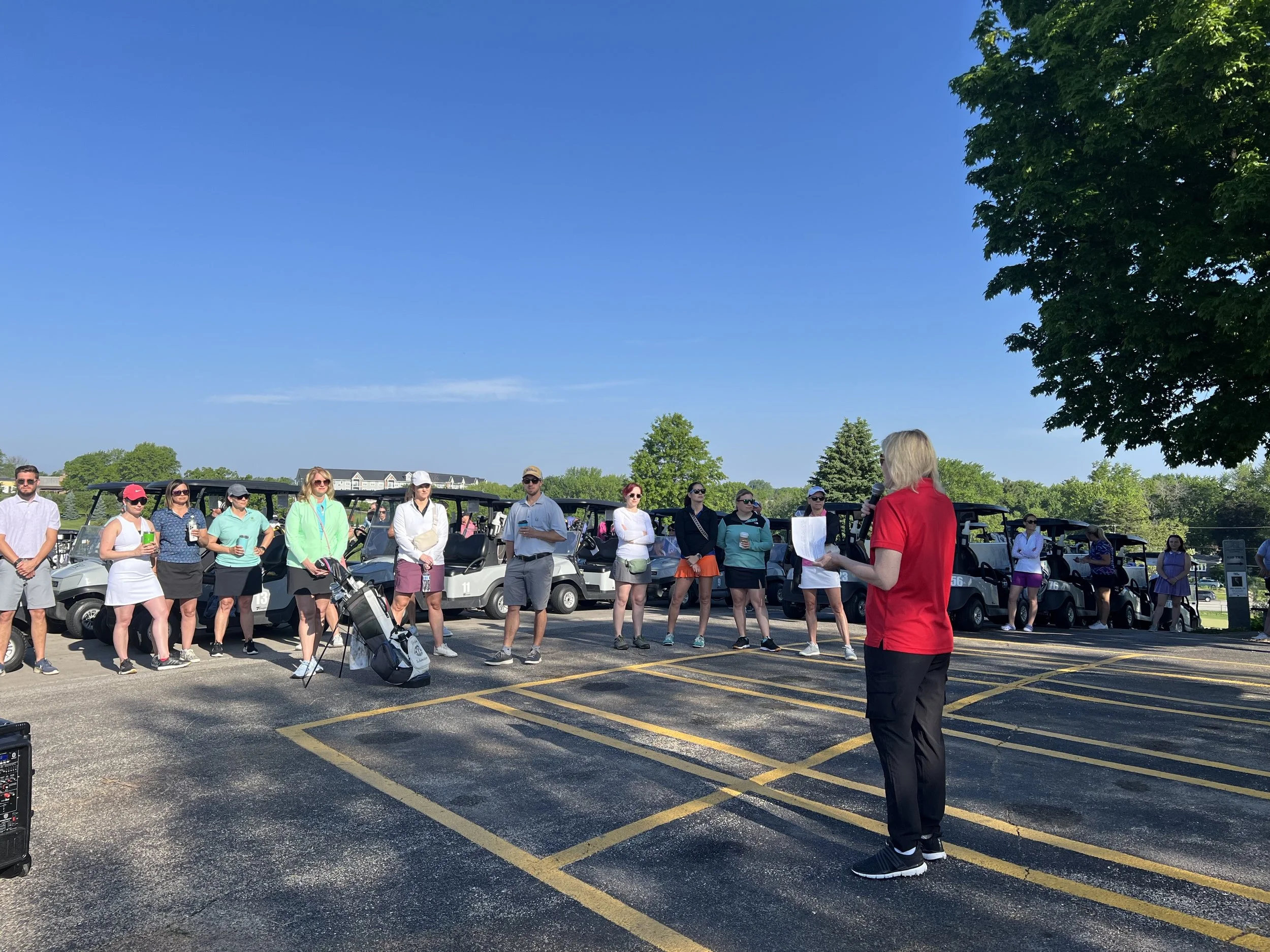
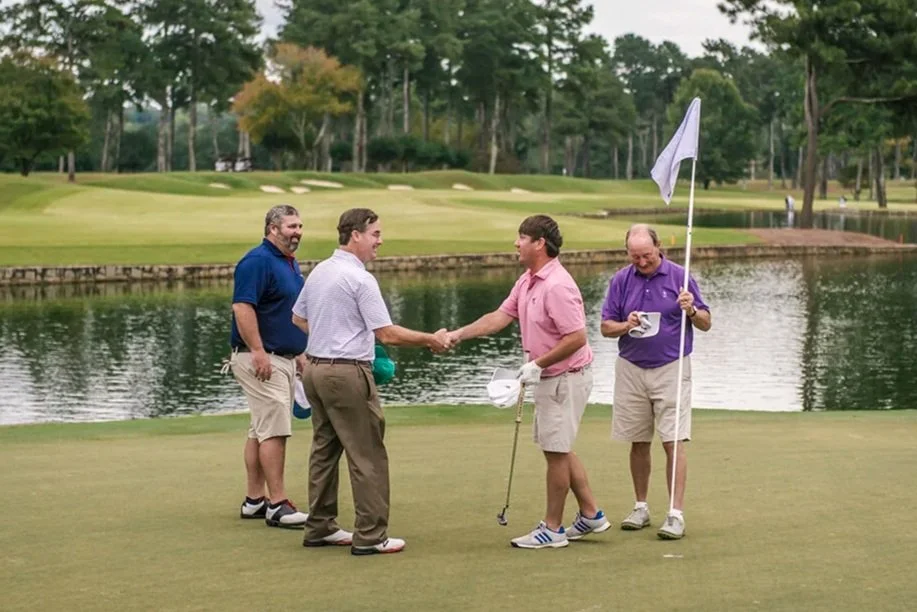
Golfers walk on a golf course on their way to participate in a putting contest, which is a classic golf tournament fundraiser idea.

Top Golf Tournament Fundraiser Ideas

1. Hole-In-One Contest

One of the most popular golf tournament fundraiser ideas is a hole-in-one contest. Golfers get the chance to ace a par-three hole or holes. Golfers love the excitement a hole-in-one contest brings to a tournament, and sponsors love the high visibility they earn for sponsoring the contest.

2. Longest Drive Contest

Work with the golf facility staff to identify a hole (or holes) that is long and straight, and have one contest for men and another for women. As the name implies, the winner is the person who hits the drive the farthest within the fairway. The golf course will provide a marker to mark the distance of drives. It’s a good idea to secure a sponsor for the contest. Make an ask to businesses to either provide an in-kind donation or underwrite the cost of the prize.

3. Closest to the Pin contest

This contest is held on a par three hole and can be run alongside your hole-in-one contest, if desired. The winner of the contest is the golfer who hits a tee shot the closest to the hole. Much like the longest drive contest, you’ll want to have separate contests for men and women. And much like the previously mentioned contests, it’s a great opportunity to sell a premium sponsorship.

4. Putting Contest

A putting contest is typically held before or after your golf tournament, though it can be held during the round if that’s what works best for your event. A putting contest has the potential to boost revenue, as participants pay to enter the contest and qualify for the grand prize. Plus, you can encourage anyone to try their hand at sinking a long put, even tournament spectators.

Pro Tip: Sell entries or tickets for golfers to participate in contests, both when they register and on event day, to drive revenue.

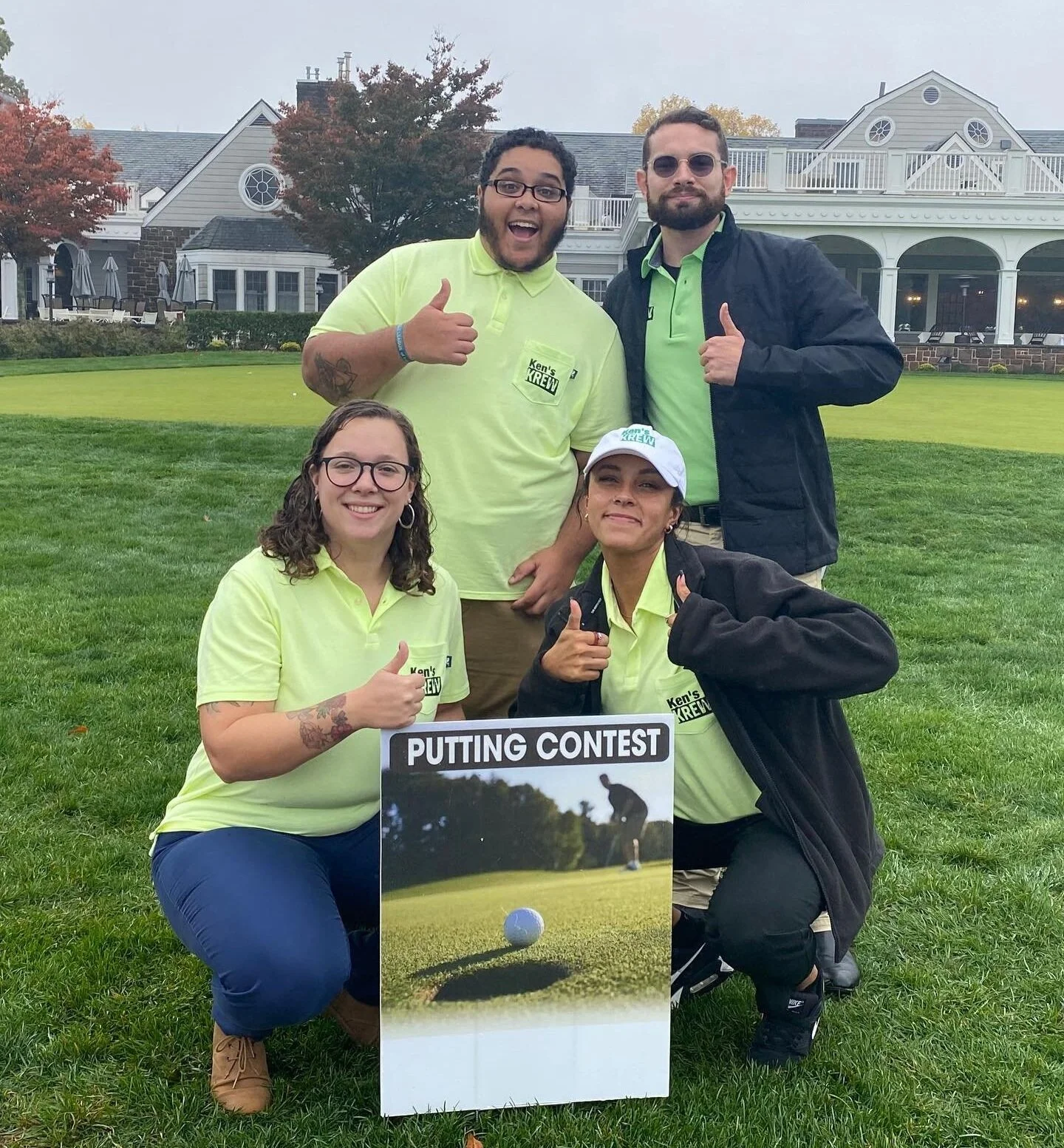
Four people stand on a golf course next to a sign for a putting contest, a classic golf tournament fundraiser ideas.

Ken’s Krew

Ken’s Krew, a nonprofit that serves adults with neurodevelopmental disabilities, raises additional dollars with a putting contest at their golf fundraiser.

5. Auctions

Silent and live auctions are popular components of golf tournaments—and for good reason. They leverage the generosity of golfers, the euphoria of spending a day on the golf course, and a friendly desire to beat out their friends or colleagues. Whether you choose an on-site auction following the golf tournament or an online silent auction, you’ll want to promote it and any special prizes on your event website.

Pro Tip: Donated items are key to raising the most money possible, so put out calls to your networks and challenge the planning committee and board members to secure auction items. Also, try offering in-kind donations to your auction as a sponsorship option.

6. Mulligans

Mulligans are essentially a “do-over” that lets golfers retake a shot they weren’t happy with. Mulligans are an easy add-on to any registration package and are popular among golfers of all skill levels. Include them with team packages or sell them as a standalone item ahead of time and on event day.

Pro Tip: Ensure you’re using a mobile-friendly event website to make it easy for golfers to purchase mulligans right from their phones on the day of the event and eliminate the need to handle cash payments.

7. Skins Games

Skins games encourage friendly competition between golfers while raising more dollars for your cause. They create mini-competitions where teams (or individuals, depending on the event’s format) opt to compete against each other based on their score on a given hole, in addition to their overall score. Event organizers can use skins games to fundraise by setting a dollar amount for participants to buy in to compete. 

To up the ante, display skins results on real-time digital leaderboards to keep golfers engaged and make it more competitive. Choose a software solution with reliable live scoring that automatically syncs with live leaderboards on your event website and mobile app.

8. Raffles

Approach businesses, sponsors, and the community for in-kind donations to use as prizes for a fundraising raffle or host a 50/50 cash drawing (in which the total prize money is split between the raffle winner or winners and the benefiting organization). Much like mulligans, raffle tickets can be built into team packages or offered as a standalone item. And also like mulligans, you can offer them for sale on the day of the tournament on the event website.

Pro Tip: Be sure to check for any legal requirements or restrictions on raffles in your state before incorporating one into your tournament. Laws and limitations vary by state.

Ready to plan your best charity golf tournament?

Click here to book a GolfStatus demo today!

9. Matching Donations

Matching donations can supercharge your golf tournament’s fundraising efforts. This can work a couple of ways:

  • Sell a “Matching Gift Sponsor” that pledges to match donations made to your event, likely capped at a certain dollar amount or number of donations. Recognize this sponsor the same way you would any other high-dollar sponsor, and consider sending a news release inviting the community to contribute to your event.

  • A generous donor who wishes to stay anonymous or just doesn’t want to be considered a sponsor. Work with the donor on how or if they would like to be mentioned or recognized for their support.

Either way, communicate this opportunity to golfers leading up to and throughout the day of the event:

  • Include it on your event website’s home page

  • Add a QR code with a direct link to your event website on any printed materials or signage

  • Mention the opportunity when golfers check in, during any kick-off address, or awards ceremony speeches

  • Send push notifications and emails to golfers through your tournament management software. 

Be sure to stress that their donation will go even further, thanks to the generosity of your sponsor or donor, and that donations must be made that day.

10. Virtual Round

Adding a virtual round lets golfers play in support of your cause from anywhere without being present at the actual tournament. Golfers register for the virtual event via your event website, choose the date and location where they want to play, and submit their scores via a live-scoring app. If yours is an event that typically sells out, a virtual round opens doors to additional participants playing for your organization without the risk and costs of adding a second day to the tournament.

One golfer hits a shot while three others wait their turn at a charity golf tournament.

11. Food and Drink Tickets

After a day of golfing for a good cause, your participants will likely be parched and hungry. Sell them food and drink tickets and put that money towards your campaign. Consider asking local restaurants and supermarkets for in-kind food and drink donations (check with the golf course on their policies for outside food and drink).

12. On-Course Games

The possibilities for games as golf tournament fundraiser ideas are endless. Golfers and sponsors alike will remember the fun they had shooting a golf ball cannon, putting blindfolded, or using a seven iron to play the entire hole. Golfers pay to participate, boosting tournament revenue and making people more likely to return year after year.

Pro Tip: An all-in games package is a simple option for entry—golfers pay one flat fee to participate in all the games. Use wristbands or something similar to signal to the volunteers working the games on the course that those golfers have already paid.

13. Technology Sponsorship

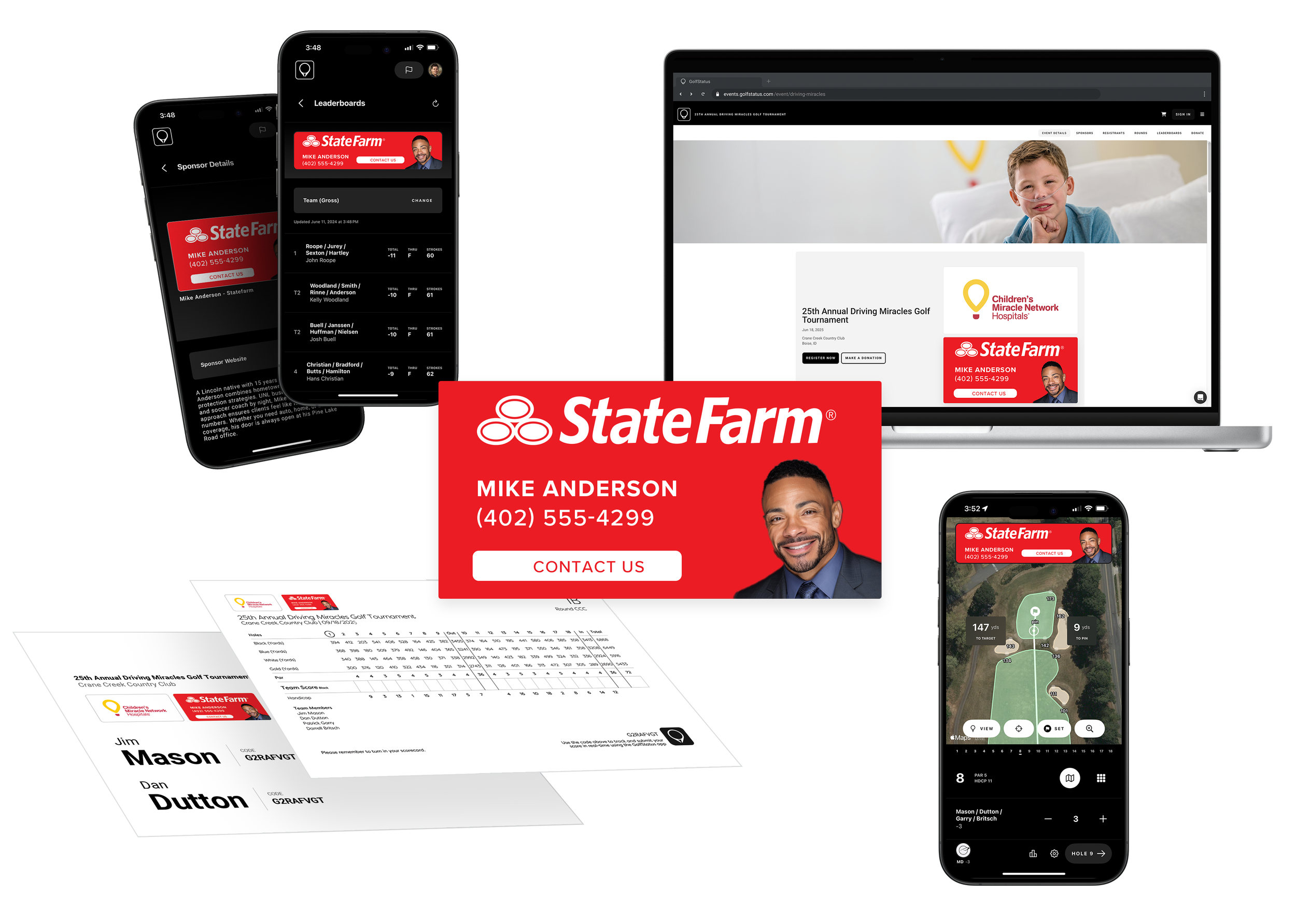
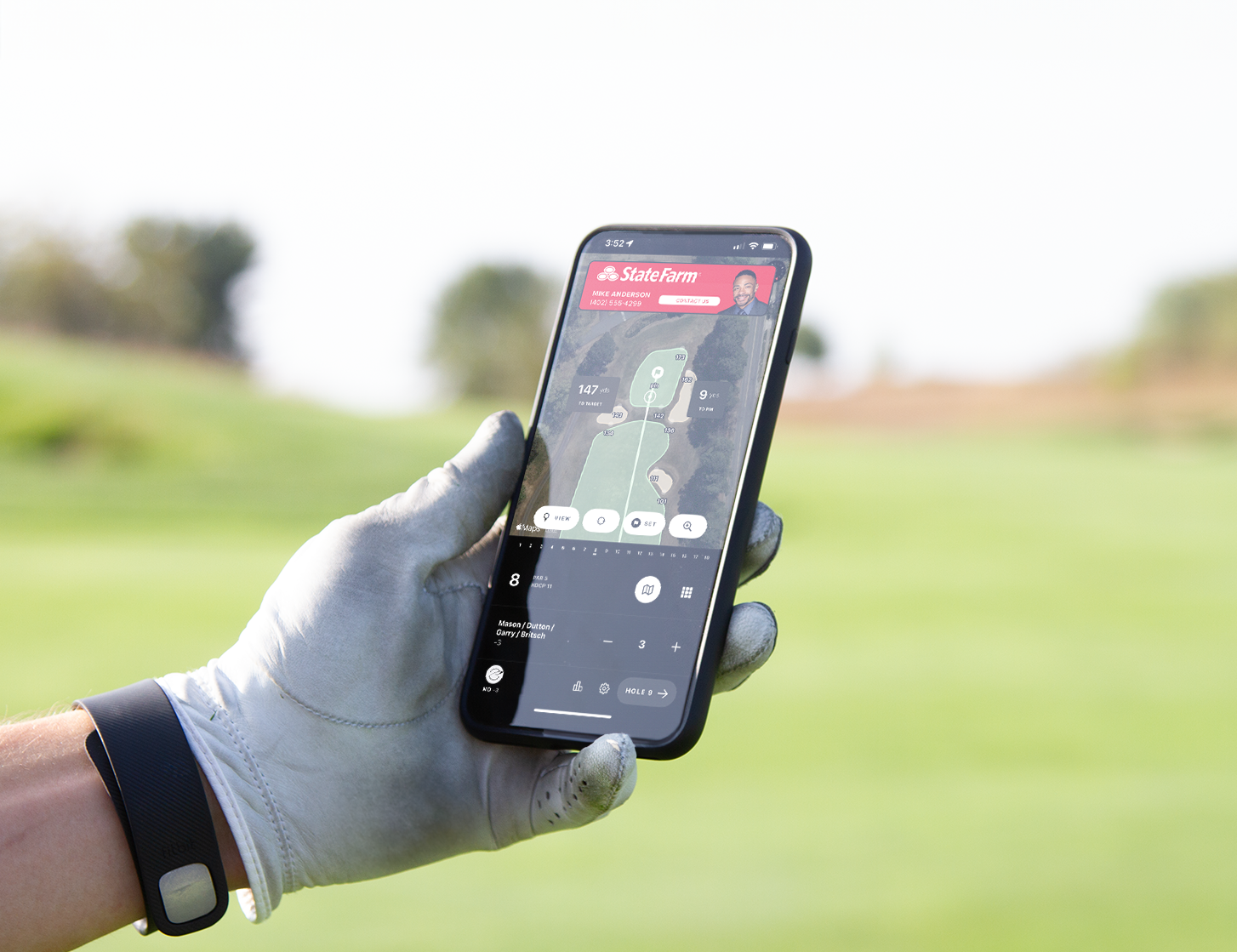
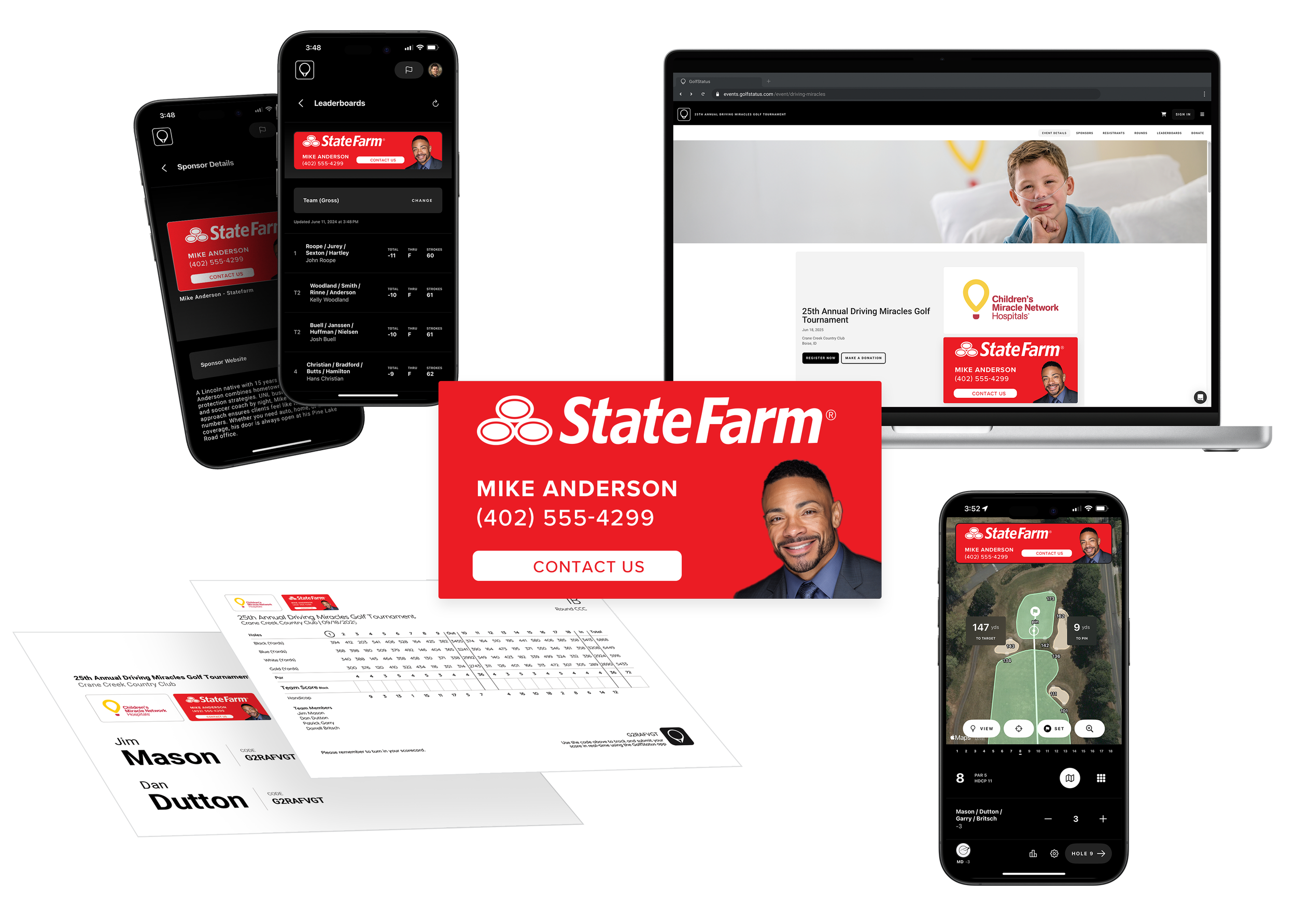
This unique sponsorship gives the sponsoring business unparalleled exposure across the tournament management platform and accompanying mobile app. The Technology Sponsorship is only available to GolfStatus clients and, on average, raises an additional $4,000 or more for your mission. Sell it as a standalone sponsorship or build it into your title or presenting sponsorship to provide even more value.

GolfStatus' Technology Sponsorship exposure is shown on a mobile phone, laptop computer, and printed cart signs.

GolfStatus’ Technology Sponsorship offers premium exposure and touchpoints across the platform.


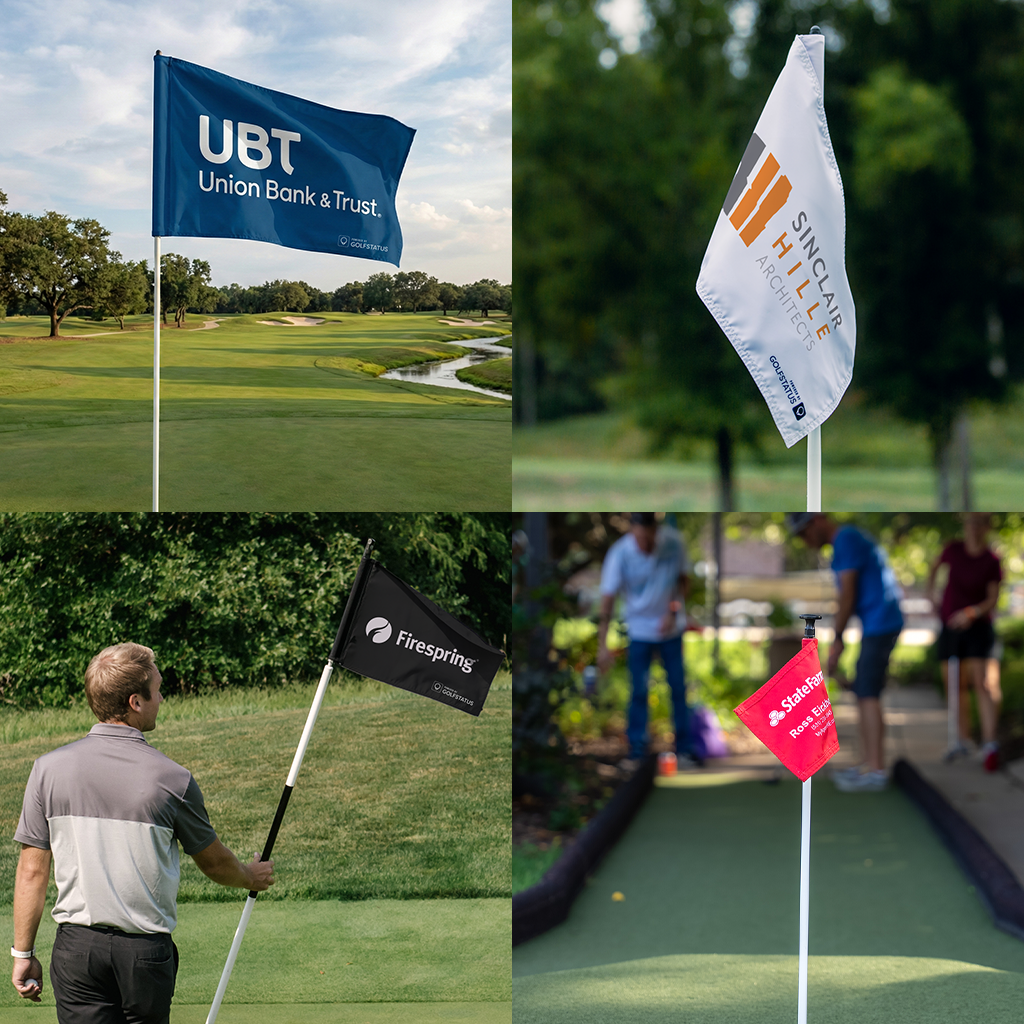
14. Pin Flag Sponsorship

This high-end sponsorship gives your tournament a professional feel. Sell one pin flag sponsorship for all 18 holes and premium exposure, split it into a front nine and back nine sponsorships, or sell them individually. No matter how you approach it, sponsors will appreciate seeing their logo on high-quality pin flags that make a great keepsake.

15. Celebrity Appearance

Celebrities raise visibility for your tournament and your cause. You’ll likely need a sponsor to cover the hard costs associated with bringing a celebrity to your tournament (unless you have direct connections with a celebrity), but it’s a great chance to raise the income potential for your golf tournament. You don’t necessarily need an A-lister to have an impact—consider local celebrities, such as the mayor, college athletes, local news anchors, or well-known business owners.

16. Ball Drop

This golf tournament fundraiser idea can be done in several ways. One easy way is to structure it like a raffle. Sell balls that have a unique number on them, like you would raffle tickets, using your golf tournament website to process payments to simplify post-tournament accounting. Balls are then dropped from something like a helicopter or crane, and the closest ball to the target wins the prize. Securing a sponsor is a great way to ensure you’ll come out ahead.

17. Golf Clinic 

Adding a clinic is a solid golf tournament fundraiser idea that grows the game and encourages those who aren’t golfers or are interested in improving their skills to participate. There are several ways to approach a clinic. You can work with the golf pro and the host golf facility to host a clinic the day before or the morning of your tournament, or work with local college teams to volunteer their time to run the clinic. Take it a step further and try to land a professional or semi-professional golfer to run the clinic, if it’s feasible.

18. VIP Package

Sell a specific VIP package as an add-on to regular team or sponsor registration packages. To make it appealing enough that folks want to upgrade, consider including things like:

  • Premium parking spots

  • Exclusive tournament merchandise or gift packages

  • Meet-and-greet with organizational beneficiaries or any celebrities in attendance

  • Discounted entries into the contests or games mentioned above

  • Complimentary raffle tickets, food and drink tickets, or mulligans

Three golfers chat before the start of a golf clinic at a charity golf tournament.

19. Event-Specific Merchandise

Offering exclusive tournament merchandise creates an element of scarcity among attendees to make a purchase. They won’t want to miss out on the chance to commemorate the event with special items. Pick merchandise that’s useful and likely to be popular among golfers and tie it to the event theme, such as golf shirts, t-shirts, head covers, golf balls, golf towels, water bottles, or hats. Incorporate your organization’s or tournament’s branding into the merchandise design, and work with a partner that can handle the logistics of producing the merchandise on time.

20. Pledge Drive

A pledge drive gets your donors and their broader networks involved, even if they can’t play in the tournament. Donors ask their friends, family, and colleagues to pledge to donate money based on their participation in the tournament. For example, someone would pledge $10 for every birdie or $5 for every par that the golfer achieves. 

Pledges could be tied to contests, such as pledging a donation of $50 if your golfer wins the longest drive or closest to the pin contest. Another idea is to base pledges on overall performance, perhaps $100 if the team finishes in first place or $25 if they finish in last place. Use the donate button or build a specific package on your golf tournament website to easily collect pledge payments.

21. Beat the Special Guest Challenge

Having a special guest play in the event and offering folks a chance to go head-to-head against that person is a great golf tournament fundraiser idea. Whether it’s a well-known golfer, local celebrity, executive director of the nonprofit, or president of the board of directors, the special guest can be stationed on a specific hole. Participants pay to compete against the guest on the entire hole, or see who can hit a longer drive or sink a longer putt to win a prize.

22. Golf Tournament Bracket

Before the event, give participants the chance to buy into a “fantasy golf” bracket to predict the tournament’s overall winners, specific scores, or winners of contests. If your tournament’s field is close-knit or well known to each other, you might offer a Calcutta pool, in which participants “bid” on a specific team. If that team wins, the winning bidder gets part of the overall prize money, with the rest going to your organization.


Golf Fundraiser Revenue Calculator

Get an idea of your golf tournament’s potential revenue by using this calculator!

Estimate Your Charity Golf Fundraiser Revenue

Revenue Estimates

General Event Expenses

Excludes specific GolfStatus pin flags & hole signs.
Excludes GolfStatus processing fees and HIO insurance.

GolfStatus Services & Processing

Minimum of 10 signs required if purchasing.
Calculates processing fees (Credit Cards: 5% | ACH: 2.5%).

Golf Tournament Fundraiser Ideas FAQs

What are the benefits of charity golf tournaments?

  • High revenue potential: Golfers tend to have a high net worth and give generously, especially when the experience is top-notch.

  • Easy to manage: The right event management tool, built specifically for golf, streamlines everything from registration to sponsorship management to logistics. 

  • Flexibility: From contests and games to sponsorships and auctions, there are opportunities to layer in multiple revenue streams.

  • Relationship-driven: Tournaments create meaningful face time with donors, sponsors, and supporters, which builds and strengthens relationships. 

  • Broad appeal: Golf is more popular than ever, and with the right mix of golf and non-golf activities, you can engage a wide audience.

  • Sponsor-friendly: Golf events provide natural, high-visibility branding and engagement opportunities, such as hole signage, pin flags, and your event website.

Do we need golf tournament software to run a successful event?

Using a dedicated platform significantly improves both efficiency and results. The right tech saves time for your team, creates a better experience for golfers and sponsors, and improves fundraising outcomes:

  • Streamline registration and payments

  • Centralized sponsor management

  • Mobile scoring and live leaderboards

  • Fundraising enhancers and add-ons

  • Real-time communication with participants

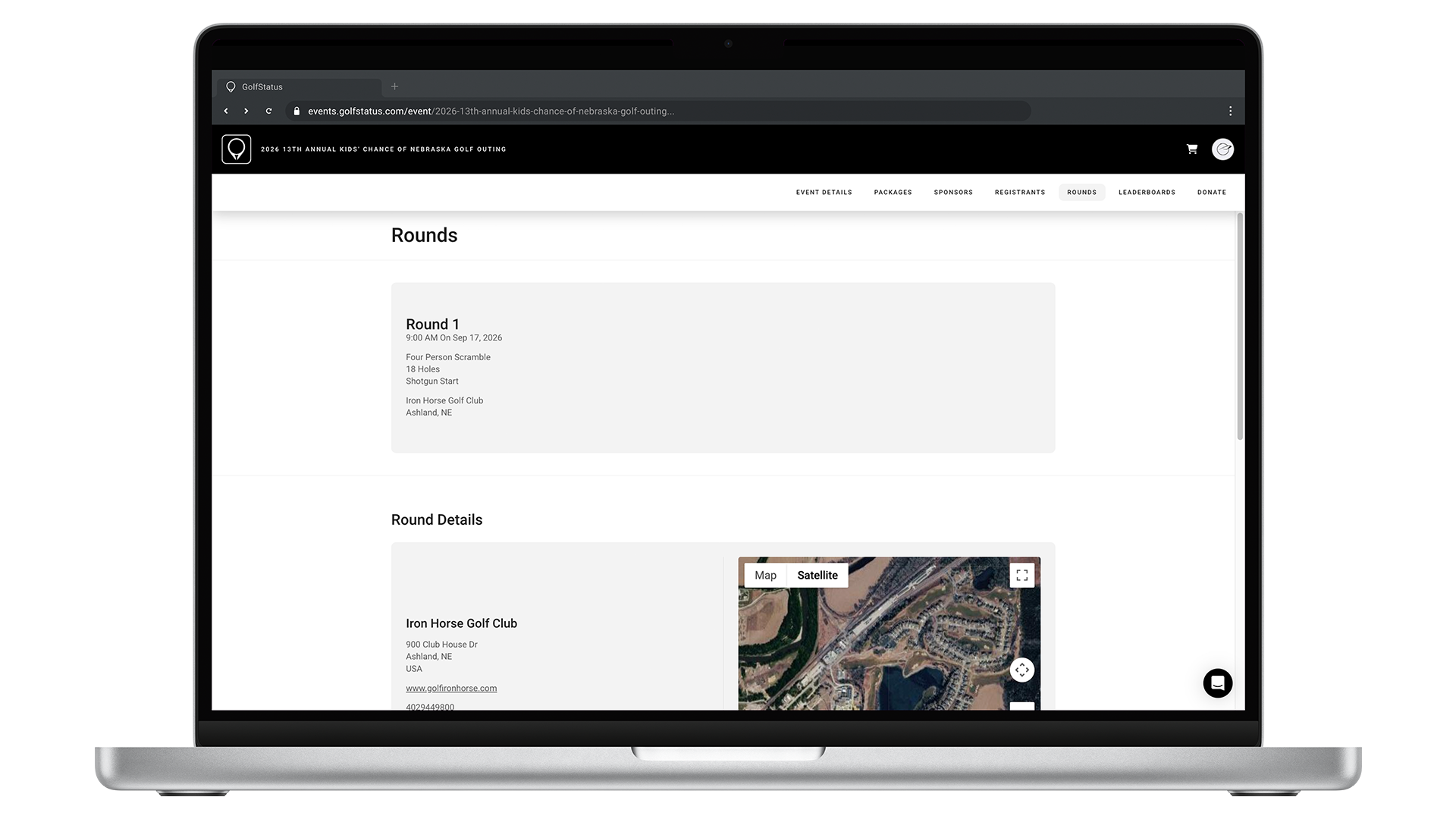
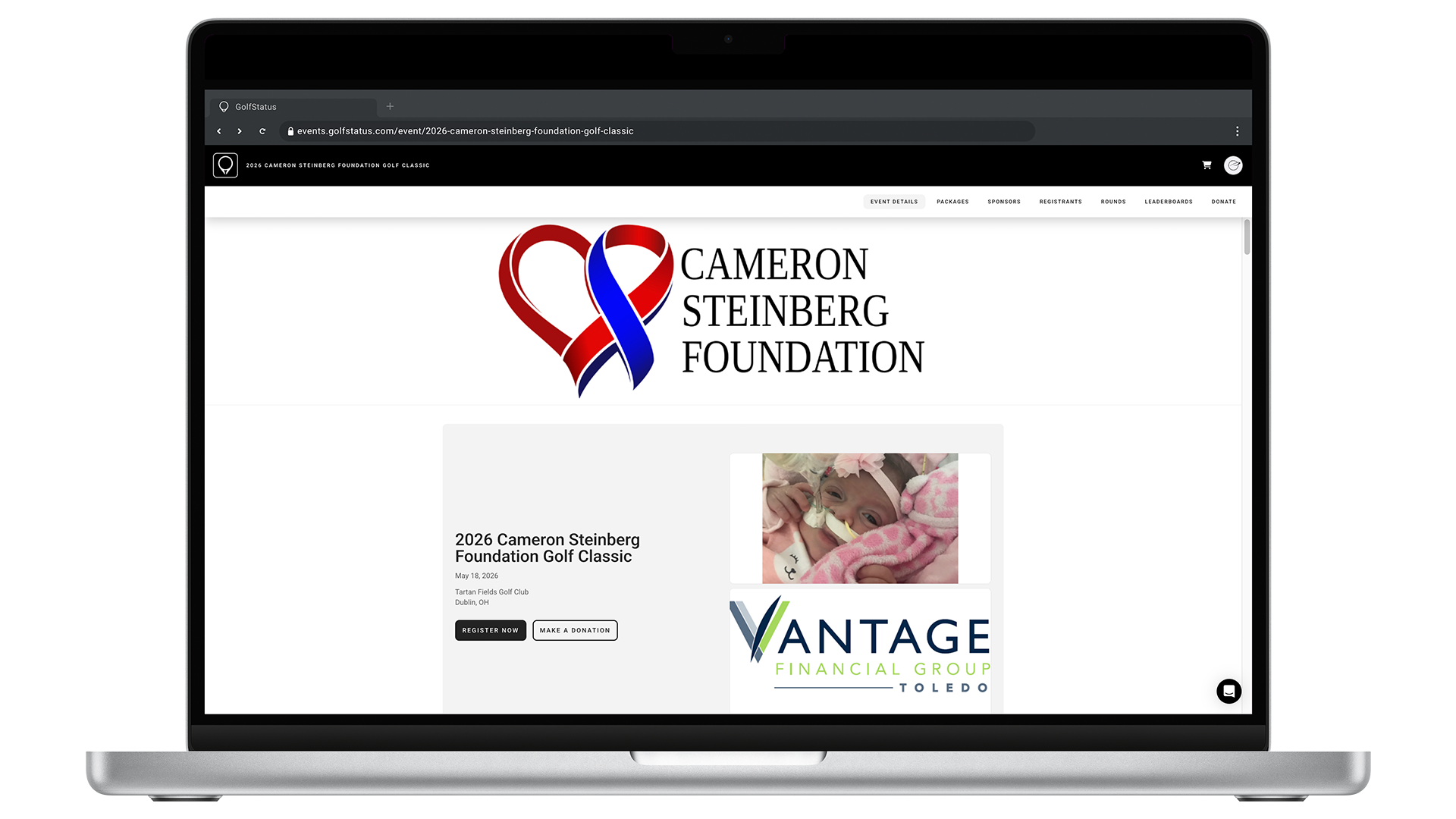
The homepage of a golf tournament website is displayed on a laptop computer.

What are the most common formats for charity golf tournaments?

For most nonprofit golf events, simplicity and fun should be the priority.

  • Scramble: By far the most popular option for charity tournaments. Each player hits from the best shot, making it fast-paced and beginner-friendly.

  • Best ball: Each player plays their own ball, and the best score on each hole counts for the team.

  • Alternate Shot: Golfers take turns hitting the same ball, making it more competitive and less common for fundraisers.

  • Shamble: A hybrid format that combines a scramble off the tee shot, then individual play afterwards.

Pro Tip: If your audience includes casual or first-time golfers, stick with a scramble format to keep things fun and inclusive.

How long does a typical golf tournament take?

Most charity tournaments take four to five hours to complete 18 holes, plus additional time for pre- and post-golf activities. Timing can vary based on:

  • Number of golfers and groups

  • Format

  • Course difficulty

  • Pace of play

  • Weather conditions

Pro Tip: Build buffer time into your schedule to account for delays, especially before dinner or your awards program. 

How much should we charge per golfer?

Pricing depends on your market, your audience, and your overall fundraising strategy. Consider these factors when establishing pricing:

  • Course quality and prestige

  • Included value (meals, gifts, contests, games, etc.)

  • Local market and audience expectations

  • Your fundraising goal

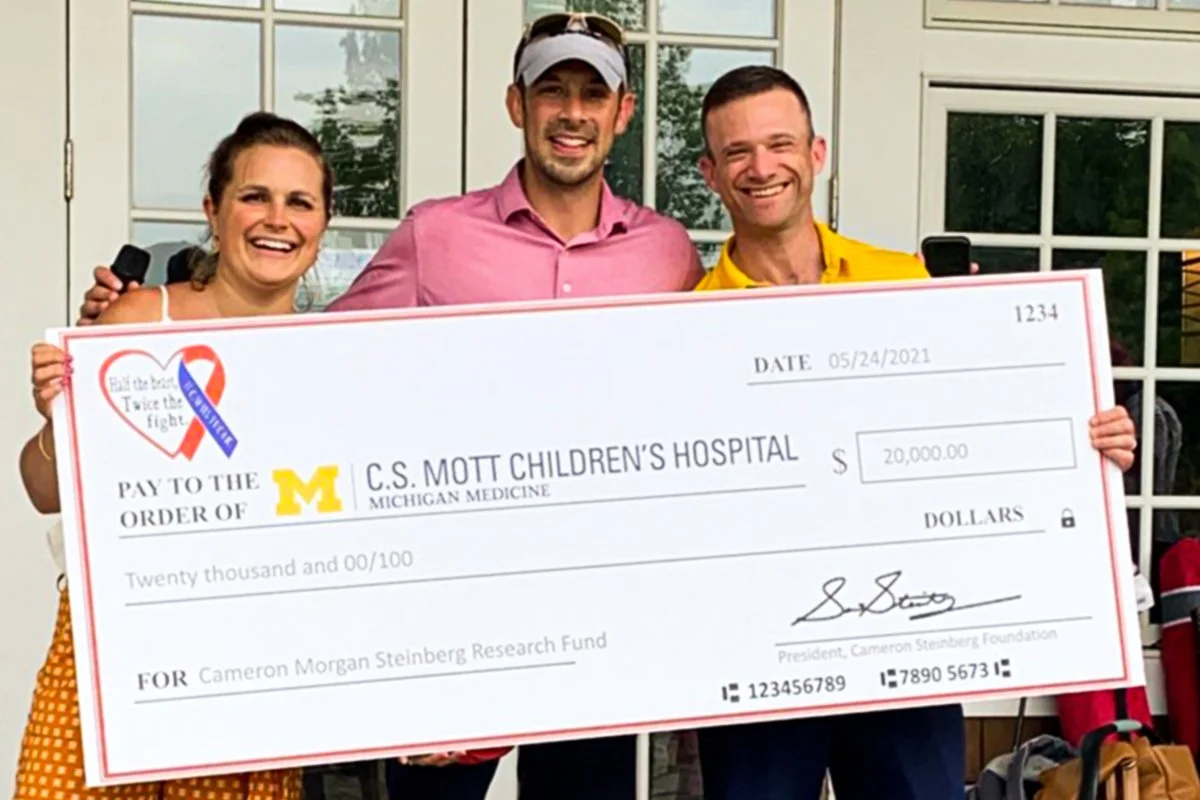
Three people hold a large check with money raised from a charity golf tournament.

How do we attract non-golfers to the event?

  • Promote non-golf options clearly on the event website so people not interested in playing understand that they’re welcome to attend.

  • Offer dinner-only or social tickets for networking and post-round activities

  • Include on-site experiences like putting contests, raffles, or auctions

  • Provide golf clinics for beginners or those wanting to learn more about the game

How far in advance should we start planning a charity golf tournament?

For best results, start planning at least six to nine months out, which gives you enough runway to secure sponsors, fill your field, and build momentum. 

  • 9 months out: Secure your course and date.

  • 6 months out: Launch your event website and begin outreach

  • 4 months out: Open registration and start promotional campaigns

  • 2 months out: Finalize sponsors, contests, and on-course details

  • Event month: Confirm logistics, communicate with participants, and drive last-minute engagement. 

It’s important to note that it is possible to plan a successful tournament in just three or four months with the right tools and an expedited planning timeline:

  • 3 - 4 months out: Secure your course and date.

  • 2 - 3 months out: Launch your event website and begin outreach, open registration, and start promotional campaigns

  • 1 - 2 months out: Finalize sponsors, contests, and on-course details

  • Event month: Confirm logistics, communicate with participants, and drive last-minute engagement. 


How to make a Donation Appeal to Golfers

Your golfers attend your fundraiser for a reason: they’re passionate about your mission and want to help your cause. Appeal to this generosity both on and off the green, and you’ll be surprised at how much more money you can raise. Here’s how:

  • Provide context about your mission, fundraising goal, and initiatives on your event website and invitations so new donors understand the purpose of the event. Ensure your content is emotional, impactful, and tangible by featuring stories, photos, testimonials, or videos of your work. 

  • Keep people updated on your progress during the event with email, in-app, or push notifications. This will up the urgency of your cause and encourage your donors to contribute to your goal.  

  • Set up a donation station near the registration area or somewhere on the course to remind donors why they’re there: to make a difference. Leverage this opportunity to encourage your golfers to give certain amounts of money, such as an amount equal to their final score or the winning team’s final score.

Pro Tip: If your event includes an awards ceremony, it’s a great time to make a donation ask, particularly the option to donate the final score. A platform with the ability to collect donations is key!


Final thoughts

Once your event ends, your work isn’t done yet! Immediately after the golf tournament, crunch some numbers and see which components of your golf event raised the most money. Factor in time spent by staff or volunteers on each part to determine the cost beyond its monetary face value. Then, look at ways to improve for next year, whether it’s raising the price of specific sponsorship packages, approaching new and/or different businesses to sponsor the event, or trying out different fundraising ideas.

Pro Tip: When you use GolfStatus for your golf event, you can simply copy this year’s event for next year, eliminating the need to set the event up from scratch. Update the date, time, and location and you can start promoting the event right away!

Whichever golf tournament fundraiser ideas you end up using, you need a powerful software solution on your side. GolfStatus offers solutions for charities and event organizers with its industry-leading golf event management and fundraising software. Its full-featured platform streamlines golf fundraisers to save time and raise more money, and its responsive support team is there to help every step of the way. Click below to get started with GolfStatus at no upfront cost.

Ready to plan your best charity golf tournament?

Click here to book a GolfStatus demo today!


Is Your Golf Tournament Raising More Than Money? A Mission-Centered Audit for Nonprofit Golf Fundraisers
 

by Samantha Swaim, Founder and Strategic Director at Swaim Strategies

Golf tournaments are one of the most popular fundraising formats in the nonprofit world and one of the most underutilized.

The numbers can look fine on paper: sponsorships, registration fees, a check at the end. But did anyone leave more connected to your mission than when they arrived?

If the answer is "probably not," you're not alone—and you're not out of options. Done well, golf tournaments can be genuine mission experiences that deepen relationships and invite people into your cause long after the final putt drops. The key is auditing your event honestly.

Three men practice their putts on the putting green, surrounded by sponsor signage at a golf fundraiser.

Golf tournaments offer nonprofits the chance to raise meaningful funds while raising awareness about their mission.

The Three Questions Every Golf Tournament Should Answer

Before you sell a single foursome, ask:

  1. Where are we including mission moments? Are there points before, during, and after the round where attendees genuinely encounter your mission, or does your cause only show up on the website?

  2. When are we making an invitation to give? Not a passive donation table. A real, human-centered invitation for people to become part of what you're building in a way that helps them to show their support, be recognized, and feel a true sense of belonging?

  3. Who are our key stakeholders, and are we deepening those relationships? Every tournament has people who are the real connective tissue: major donors, longtime sponsors, board champions. Is your event structured to honor those relationships, or are you too busy managing the scramble to find them in the crowd?

Mission Moments: Before, During & After

The SIRTA framework, drawn from neuroscientist Dr. Paul J. Zak's research and applied to fundraising events through our work, teaches us that people give most generously when they feel immersed in your story and the ask arrives at exactly the right moment. That means mission-building starts before anyone arrives on the first tee.

  • Before the round: A story at breakfast, a mission moment in the registration confirmation email, or a brief video at check-in begins the process of immersion that makes everything else more powerful.

  • During the round: A single signature hole where a volunteer shares a 60-second personal story with each foursome. Mission fact cards at tee boxes. Small design choices that compound across 18 holes and arrive at the clubhouse as a genuine emotional connection. How do you build your mission into the journey?

  • After the round where everything changes: When golfers gather for lunch or dinner, you have something rare: a relaxed, socially bonded group in peak relational openness. This is the moment your mission should step fully onto the stage, and where a well-designed paddle raise can transform a $50,000 golf day into a $150,000 mission experience.

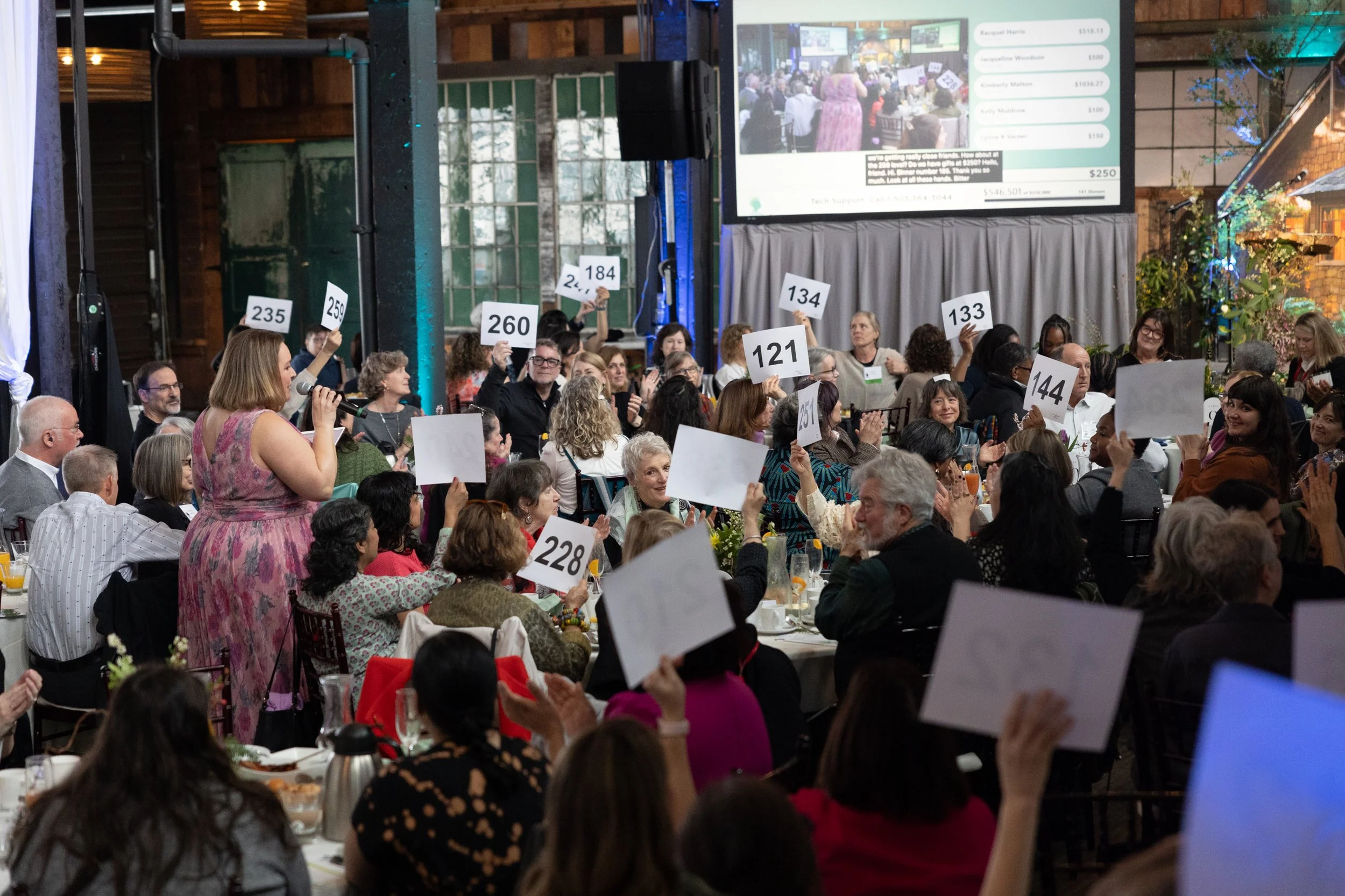
People seated at tables raise numbers as part of a fundraising event.

Take advantage of the relaxed, casual atmosphere following a golf event to further boost fundraising outcomes.

Sit People Down. Tell the Story. Make the Ask.

You cannot raise the most money while people are standing up and half-distracted. The post-round meal is not just an award ceremony; it's your single greatest fundraising opportunity of the day.

A strong post-round fundraising program includes:

  • A mission-first welcome. Put your organization on stage to welcome guests and speak to the mission

  • An impact story. First-person, specific, human, told by someone close to the impact

  • A clear ask. An invitation to belong, with specific dollar amounts tied to real impact

  • An authentic close. Connecting each gift back to the mission, not just expressing gratitude for attendance

Twenty-five minutes, designed well, can raise more than the rest of the day combined. But it requires intentional structure, a skilled facilitator, and a story that has been crafted, not improvised.


Annual Event Audit

Want to go deeper on special appeal strategy? Swaim Strategies’ Annual Event Audit evaluates exactly this moment and helps you build a program that converts goodwill into real revenue.


Protect Your Team’s Time for What Actually Works

Games and gimmicks are fun, easy to sell, and create surface-level energy. But when not done well, they can be labor-intensive, and every hour your team spends running a closest-to-the-keg contest is an hour not spent with the donors who will sustain your mission for years.

The highest ROI use of your team’s attention, every time, is relationship. The board member who sits with a major sponsor during cocktail hour. The executive director who walks the course and introduces herself to every foursome. The development director who has three conversations she came specifically to have.

Those moments don't happen by accident. They happen because you protected time for them.

When auditing your tournament, look at every item on your schedule and ask: Does this bring us closer to the people who matter most, or does it fill the day with noise? Fun is important. A few moments of chance and joy are valuable. But sometimes less is more. Focus your energy first on the relationships, then sprinkle in the little joy bombs along the course.

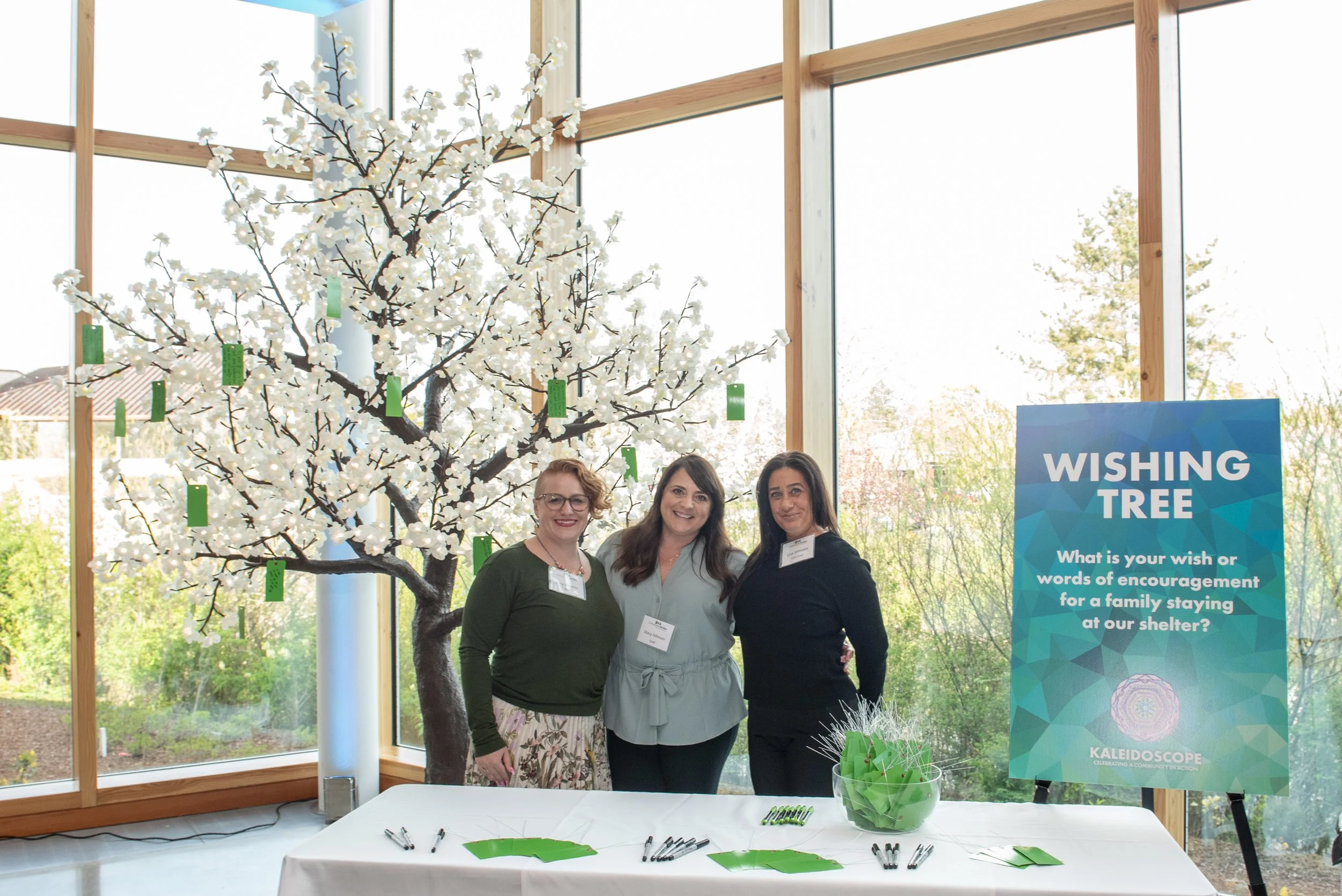
Three women pose behind a table at a fundraising event, inviting people to write words of encouragement.Three women pose behind a table at a fundraising event, inviting people to write words of encouragement.

Look for ways to bring people closer to your mission and build relationships throughout your fundraising event.


Your Golf Tournament SIRTA Audit Checklist

Use this checklist to evaluate your tournament through the SIRTA framework and find your greatest opportunities for growth.

🟢 S — STAGING

Have you set the conditions for connection before the first swing?

  • Registration confirmation email includes a mission story or impact statement
  • Welcome signage and arrival experience speak to mission, not just logistics
  • Pre-round gathering includes a brief mission moment in a story, video, or speaker
  • Volunteers and committee members welcome people and host them

🔵 I — IMMERSION

Are attendees being drawn into your story throughout the day?

  • At least one hole features a personal mission story shared by a volunteer or beneficiary
  • Tee box cards or hole signage include mission facts or impact data
  • The post-round program is designed as a fundraising experience, not just a celebration
  • Connection is intentional with key stakeholders positioned for relationship and mission exposure

🟡 R — RELEVANCE

Are you connecting your mission to what this audience cares about?

  • Your mission story features someone your audience can personally connect with
  • Your ask is framed around the impact a gift makes, not your organization's needs
  • You know why your key sponsors are here and have tailored their experience accordingly
  • Your post-round speaker reflects the lived experience of your mission community

🟠 T — TARGETING

Are you reaching the right people with the right message at the right moment?

  • You have identified your top three to five stakeholders in advance and have a relationship plan for each
  • Board members have been briefed and assigned specific relationship responsibilities for the day
  • Giving levels in the special appeal are calibrated to the capacity of the people in the room
  • You have a follow-up plan for new relationships within 48 hours of the event

🔴 A — ACTION

Are you making a clear, confident, human-centered invitation to give?

  • Your tournament includes a dedicated, seated fundraising moment, not just a donation table
  • A story is told by a person with a direct connection to your mission
  • Giving levels are specific and impact-driven
  • Both digital and paddle/card giving options are available so no one is excluded
  • Every donor receives a personal thank you within 24–48 hours connecting their gift to impact
  • Next year's tournament is mentioned to sponsors before they leave

About Swaim Strategies

Swaim Strategies is a fundraising event consultancy dedicated to elevating nonprofit impact through events, strategy, and storytelling. Start a conversation with their team.

More Resources from Swaim Strategies

🎙️ The Fundraising Elevator Podcast

📋 Annual Event Audit

📖 Planning a Successful Major Donor Event Book

🆘 Gala 911: On-Demand Event Consulting

🎟️ The Elevate Conference


Why Golf Events Work for Associations & How to Succeed
 

Few fundraising events check as many boxes as a charity golf tournament. Golf is unique in that it serves as a powerful business connector, built around relationship-building and strategic networking. Unlike traditional networking events or mixers that last 60 to 90 minutes, golf tournaments provide five-plus hours of uninterrupted face time and engagement, making them one of the most valuable formats in professional member programming. Plus, golf events have the potential to raise significant dollars.

Members love golf tournaments for the opportunity to connect with association decision-makers and industry partners, vendors, and suppliers in an informal setting like the golf course. It removes the stiffness of meeting-room introductions and replaces them with shared experiences, friendly competition, and hours of interaction throughout the tournament.


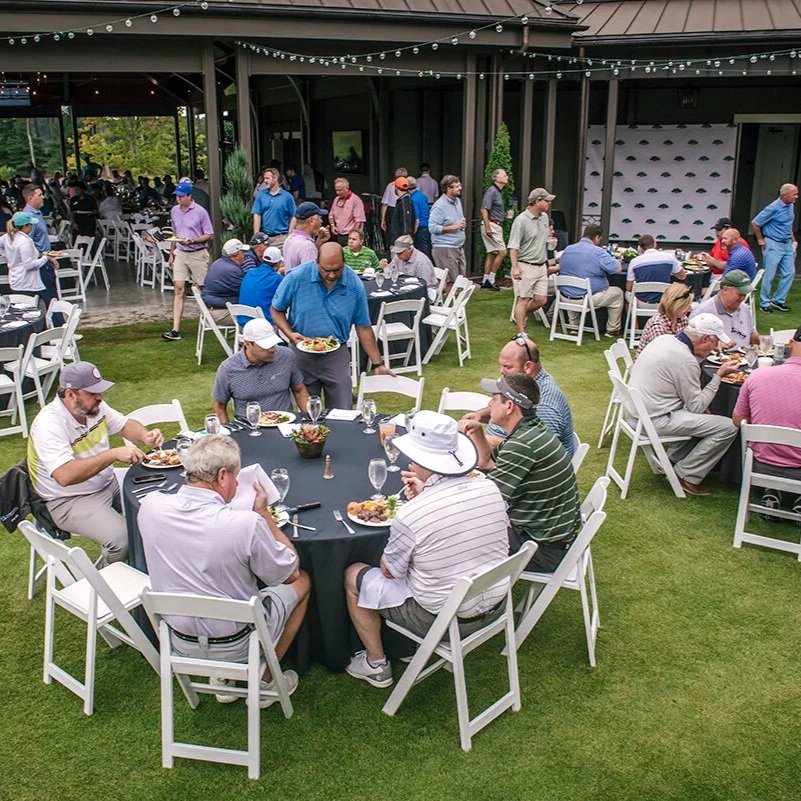
Association members enjoy lunch as part of a golf event hosted by the association.

Start planning!

Download a free golf tournament planning timeline and checklist for a roadmap to a successful golf event. Plug in your tournament date and get a detailed list of to-dos based on your time to plan.


What it is: A golf tournament presents a chance for your members, people from their networks, and member prospects to build connections over a round of golf. Charge a registration fee for teams to participate and sell sponsorships that cover the event’s hard costs, provide in-kind support, and support your association’s mission.

Why it works: Golf’s popularity continues to surge, and golf tournaments provide great engagement and brand visibility for sponsors. Plus, tech makes planning a successful golf tournament easier than ever, making it an all-around great fundraising idea for associations.

Here are four reasons golf events work so well for associations.

1. Generate Non-Dues Revenue

A golf outing is an ideal way to generate non-dues revenue. Whether your outing channels its fundraising dollars solely back into the association or parts them with a nonprofit beneficiary or beneficiaries, fundraising dollars can be collected from registrations, sponsorships, add-ons like mulligans and raffle tickets, on-course games, and other donation asks. The golf event can also be paired with a luncheon, dinner, a more formal gala, or an auction.

2. Improve Association Member Recruiting & Retention Efforts

Golf outings require participants to field a team, which encourages them to reach out to their networks and naturally leads to new member prospects. If membership growth is a primary goal for your organization, let golf event participants know so they can build their teams accordingly. You can also make the event a member-guest-style outing, so teams include both members of your association and non-members (i.e., prospects). Because of the inherent networking value golf events offer, and the fact that attendees tend to genuinely enjoy them, they’re a great way to keep members engaged and invested in supporting your organization year after year.

Golfers shake hands at the conclusion of an association golf event.

Golf events hosted by an association are a great opportunity to engage with members and prospects.

3. Forge & Steward Corporate Partnerships

Golf events are great opportunities to secure corporate support and further existing relationships. Golf’s inherent connection to business keeps it on the radars of business professionals and in the sponsorship and marketing budgets of corporate entities large and small. The event itself provides focused exposure to your members, which is a great value to corporate partners looking to sponsor and participate.

4. Build Goodwill & Spotlight Community Efforts

Golf is a fun community event that brings people together to enjoy a great day outdoors. It’s also inextricably linked to charity. As an association, your goals are to align interests and support causes that matter to your members, and you can leverage a golf outing to do both while also building goodwill for your organization and advancing its positive reputation in the community.

If your event benefits a specific cause or nonprofit organization, let players and sponsors know how much of their investments will go to this cause and what kind of impact those dollars make. Not only are you raising mission-critical funds for a great organization, you’re also building your association’s reputation and brand as a whole.


Case Study: Louisville Chapter of ASHRAE

The Louisville Chapter of ASHRAE (American Society of Heating, Refrigerating and Air-Conditioning Engineers) provides education to members, promotes students' interest in HVAC&R engineering and technical fields, raises funds for research, and supports the establishment of engineering standards.

ASHRAE has held a golf tournament for several years as a fundraising event, but also to engage existing members and attract new ones. Sponsors from the HVAC industry have jumped at the chance to sponsor the event each year, thgaanks to the valuable exposure they get to their very specific target audience. Tournament organizers leverage the digital sponsorships provided by the event management platform that offered each sponsor much more visibility. Plus, the fundraiser is centered around an event that both the association’s members and sponsors truly enjoy.


Tips for a Successful Association Golf Event

Reduce staff workload with technology. Association teams are often lean, so manually managing registration, team pairings, sponsorship sales, and coordination can quickly overwhelm staff capacity. Event management tech can automate and streamline prep and planning, freeing staff to focus on member engagement and building relationships with sponsors. Be sure your event has a dedicated website and offers online registration. Association members are busy and expect a simple, sleek way to register for any event. They don’t have time to fuss with forms, checks, and mail-in registrations. Plus, everyone’s online these days; it’s the fastest and easiest way to reach both existing and future members and supporters.

Match your goals with the event’s caliber. Consider the venue, price points, sponsorship options, and other key items as you start planning, and be sure they align with your goals. If your association has the opportunity to attract high-capacity members and big-time sponsors, be sure the caliber of the event is aligned with that opportunity. Be aware that positioning your outing as a high-end corporate entertainment event ensures that members gain substantial value from attending, making them willing to invest in supporting and participating in the event.

Make it inclusive and low-pressure. Choose a scramble format to appeal to golfers of all skill levels. Scrambles remove the intimidation factor for first-timers and ensure healthy competition for seasoned golfers. You might even add a fun theme to the tournament to drive excitement and make it memorable.

Turn up the fun. Incorporate on-course contests like longest drive, closest to the pin, hole-in-one, best-dressed team, or games to boost the fun factor. Add prizes for tournament and contest winners to help increase engagement and give members plenty of shareworthy moments for post-event conversation.

Boost revenue: Build on-course games, challenges, and contests into the tournament. These additional tournament components add more fun, draw additional attendees, offer more sponsorship opportunities, and boost revenue. A hole-in-one contest is a great example—a high-end prize is most certainly a draw for golfers, and you can sell a sponsorship to cover the cost of the hole-in-one insurance in case someone hits the lucky shot.

Offer sponsorships that businesses can’t resist. Your association’s membership is premium access for industry suppliers—and they know it. Corporate partners want visibility with your membership base, making golf tournaments ripe for high-dollar sponsorships. Offer high-end sponsorship opportunities like branded pin flags, hole-in-one contests, hole sponsorships, and tech-based exposure. Provide exposure through physical and digital channels so sponsors get quality, cross-channel impressions that drive tangible results like web traffic and genuine inquiries.

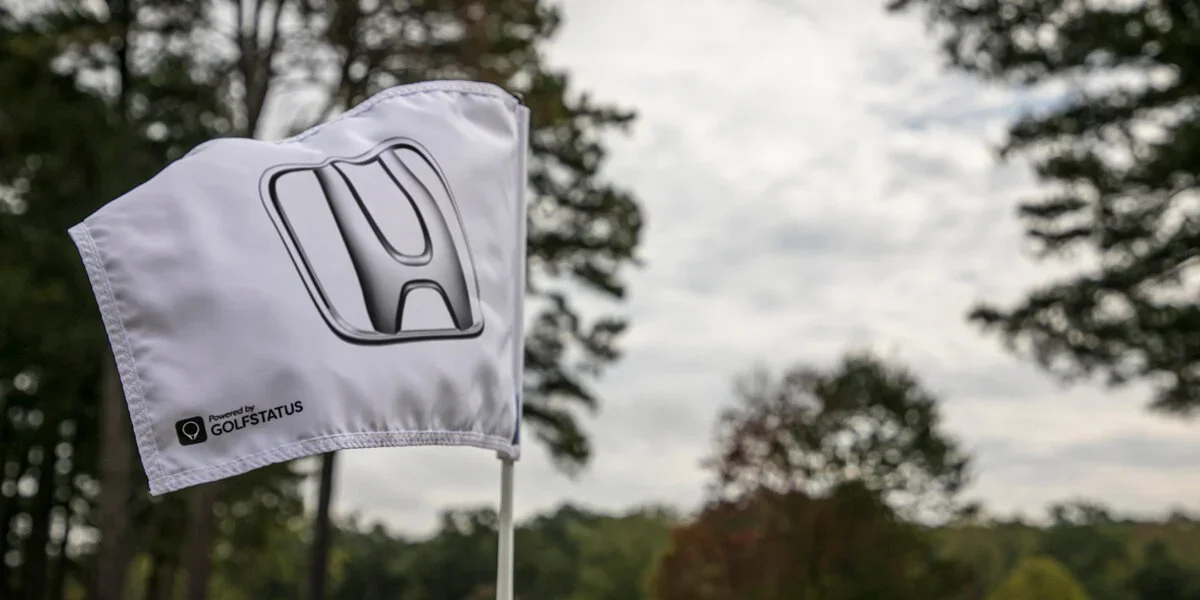
A branded pin flag at an association golf event.

Branded pin flags are a high-end sponsorship that offers unique visibility at your association’s golf event.

Tailor sponsorships to meet business goals. Businesses likely have specific goals or outcomes in mind when it comes to sponsoring events. You can help them meet those goals by working directly with them to create a tailored sponsorship opportunity that’s mutually beneficial and features options for their involvement. For instance, you might offer the chance to mingle with golfers before, during, or after the event. It’s essential to keep lines of communication open and not take a one-size-fits-all approach. Be willing to be flexible and design sponsorships that fit everyone’s needs.


Work With the Golf Fundraising Pros—At No Upfront Cost

The right tech makes golf events easier and more lucrative than ever. GolfStatus’ golf event management platform seamlessly handles everything from registration, payment processing, sponsor onboarding, and digital exposure to team pairings and hole assignments, golfer communication, and promotion. Get started with GolfStatus at no upfront cost and get a free event website, access to Fundraising Specialists, live support seven days a week, and much more. Book a meeting to learn more!


A Smarter Way to Run Outside Outings: Cedar Rapids Municipal Golf’s Partnership With GolfStatus
 

partner snapshot

Mark McMahon has spent his entire career as a golf professional in public golf. After working at municipal facilities in Des Moines, Iowa, he moved to Cedar Rapids in 2013 and serves as the Head Golf Professional at Ellis Golf Course. The City of Cedar Rapids owns and operates three courses: Ellis, Gardner, and Twin Pines. The City’s golf team manages more than 60 outside events each year across the three courses, ranging from charity fundraisers and conference add-ons to high school competitions and community outings.

That scale, combined with the realities of municipal golf, has shaped how Cedar Rapids approaches outside event management—and why efficiency is so important.

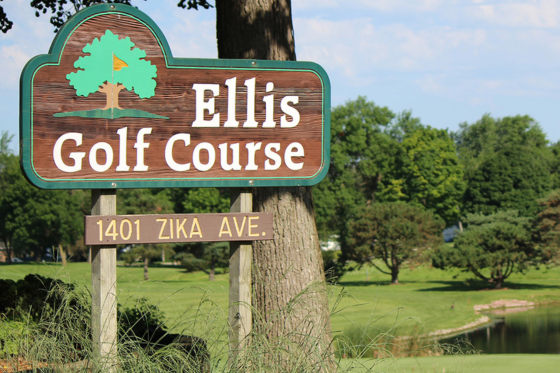
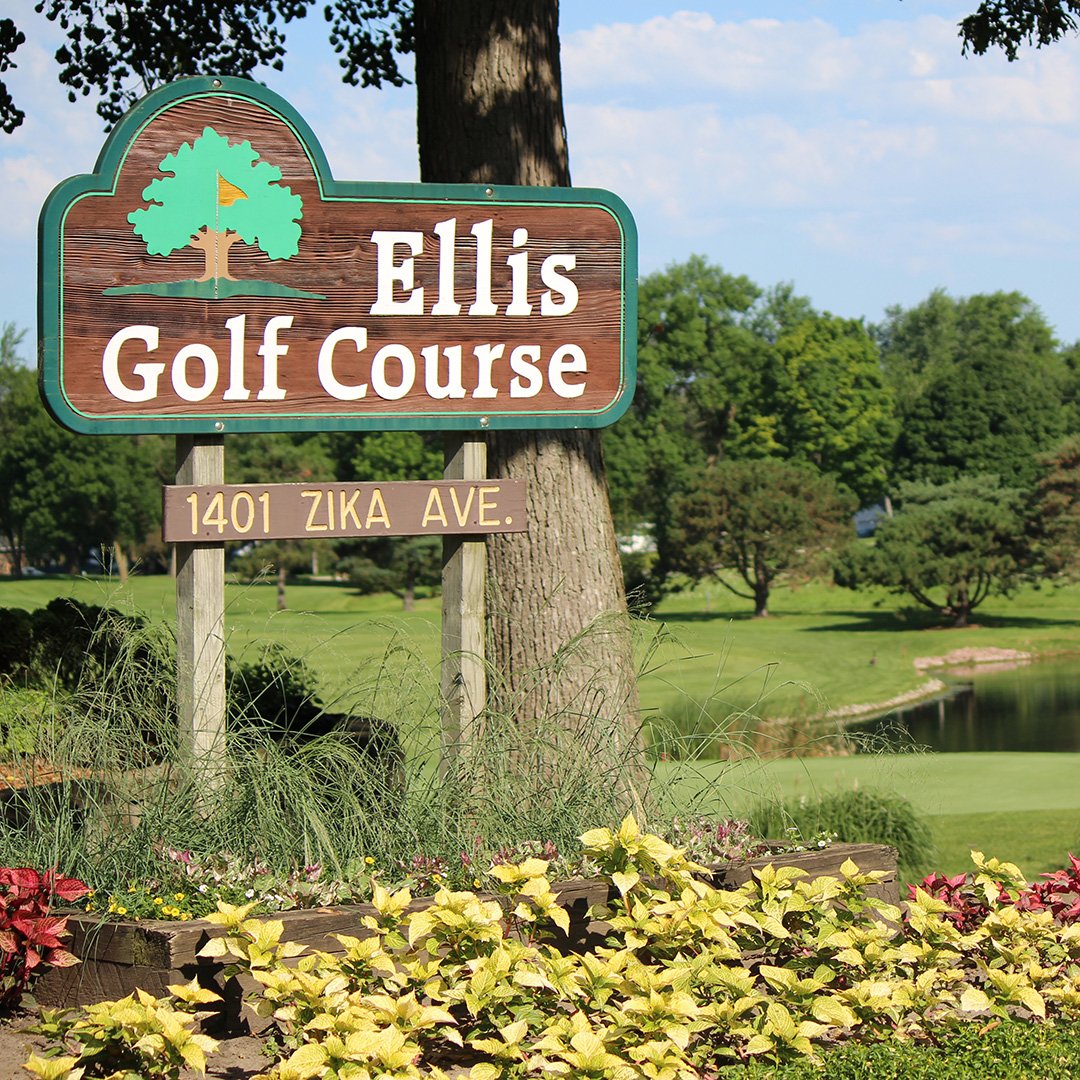
The sign for Ellis Golf Course in Cedar Rapids Iowa set among greenery in the foreground and the golf course in the background.

Ellis Golf Course is owned and operated by the City of Cedar Rapids, Iowa.

the challenge

Outside outings are a critical part of Cedar Rapids Municipal Golf’s identity, but they do come with unique challenges and circumstances. Unlike private clubs, municipal facilities are deeply connected to their communities. And while revenue is certainly a priority, relationships with local charities, schools, and civic groups are just as important.

“Municipal golf is different because we can’t just look at events strictly from a revenue standpoint,” Mark explains. “We have to think about the bigger picture and what’s good for the community.”

The three city courses’ yearly event calendars are filled with outside outings for charities and nonprofits, plus high school matches in the fall and spring, conference-related outings tied to downtown events, and young professional and community-based events. The City’s peak season runs from June through September, which means staff must carefully balance daily play with league play and outings without overbooking and overburdening operations.

Previously, managing outside outings was time-consuming, fragmented, and filled with opportunities for human error:

  • Paper registration forms came from across the city

  • Checks were mailed, dropped off at the golf facility, or handed to a staff member

  • Event details lived in emails, spreadsheets, and folders

  • Staff manually transferred data from paper forms to Excel

  • Creating and printing scorecards and cart signs and making hole assignments took hours

“It was a lot of paper and a lot of manual work,” Mark says. “You’re just trying to make sure everything ends up in the right place.”

Even when Cedar Rapids experimented with tournament management tools, complex interfaces and poor user experience made them more hassle than they were worth. “Some programs just aren’t intuitive,” Mark says. “If you can’t easily navigate it, it creates more work instead of less.”

A golf course set against clouds and a setting sun.

The front nine at Ellis Golf Course features holes with large, elevated greens.

the solution

Mark was initially introduced to GolfStatus through the golf operations management team. They initially started with a partnership for course pin flags, but Mark was hesitant at first to jump into GolfStatus’ tech for outside outings. “Golf pros are creatures of habit,” Mark laughs. “We tend to stick with what we know.”

But once Cedar Rapids piloted GolfStatus for event registration, everything changed.


Switching to GolfStatus for registration was the smartest thing I’ve ever done. Once we tested it and saw how well it worked, we moved everything over to GolfStatus.
— Mark McMahon, Head Golf Professional at Ellis Golf Course

A Simple, Centralized Platform for Outside Events

Today, GolfStatus is the primary platform Cedar Rapids Municipal Golf uses to support outside outings across all three of its golf facilities. GolfStatus simplifies nearly every part of outside event management:

  • Online registration. Event organizers collect player information and entry fees in one place, without dealing with paper forms or checks floating around.

  • Fast event setup. Golf staff can set up an event in minutes, instead of spending hours creating and printing materials from scratch, entering player information, and making hole assignments. “I can set up an event in 10 minutes,” Mark says. “Assign holes, print materials, and we’re done.”

  • Excel imports. When necessary, staff can upload participant lists directly into GolfStatus without manually re-entering data.

  • Sponsor visibility. Events can offer sponsors exposure on both signage and the event website and live scoring app, adding additional value for events and sponsoring businesses.

  • Easy event close-out. It’s simple for staff—and event organizers—to quickly reconcile registration data, payments, and payouts after the tournament closes.

  • Live scoring. Many events take advantage of GolfStatus’ reliable live scoring and digital leaderboards through the free mobile app.

The home page of the LBA Foundation Golf Classic, an outside outing at Ellis Golf Course, is displayed on a computer screen.

Outside events held at Ellis Golf Course, like the LBA Golf Classic, can utilize an event website from GolfStatus to promote the tournament, collect registrations, and sell sponsorships.

Supporting Event Organizers & Golf Staff

One of the biggest benefits Mark sees is how GolfStatus helps tournament organizers, especially charities and nonprofits that may struggle with managing the logistics of their golf event.


These aren’t event planning professionals, so they need help collecting data, money, and sponsor information in a clean way. They need the one-stop shop that GolfStatus provides.
— Mark McMahon, Head Golf Professional at Ellis Golf Course

Mark says he appreciates how GolfStatus allows tournament organizers to:

  • Utilize an event website to promote their event

  • Offer digital sponsor exposure, adding value to packages

  • Reduce confusion around registration and payments since all information is stored in one centralized platform

  • Provide a more professional experience to participants

For the golf staff, Mark says these benefits mean fewer questions to field from organizers and golfers, fewer errors in golfer and payment information, and smoother event days.

The results

Significant Time Savings for Golf Staff

The most immediate impact for Cedar Rapids Golf using GolfStatus has been better efficiency. “What used to take a couple of hours now takes just a few minutes,” Mark says.

By using GolfStatus, the burden isn’t on golf staff to:

  • Manually re-enter registration information

  • Chase down missing registration forms and payments

  • Piece together event details from multiple sources

Instead, everything lives in one user-friendly system, which is accessible by tournament organizers and golf staff to review, manage, or print.

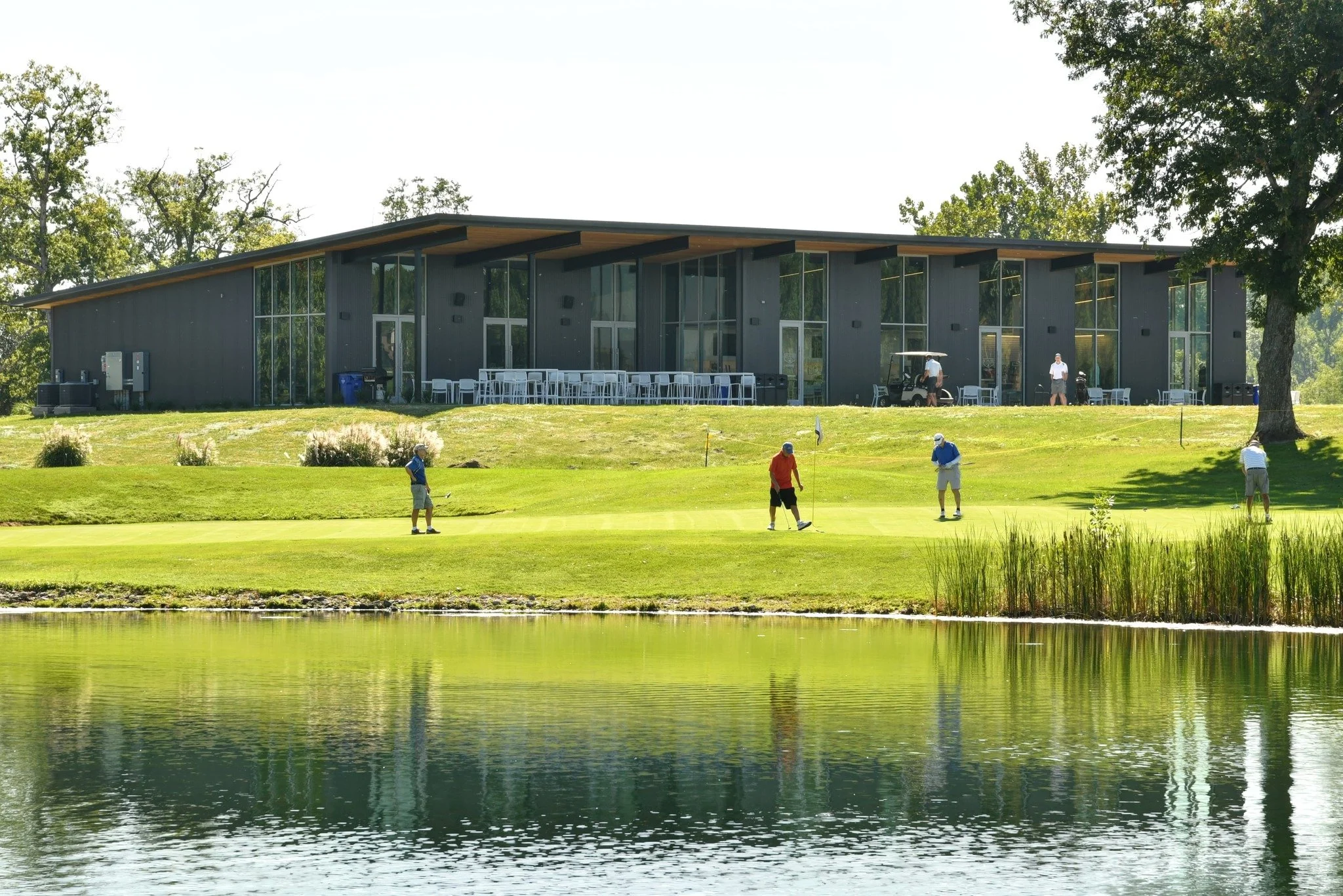
Four golfers putt on the practice green in front of the Ellis Golf Course Clubhouse, with a pond in the foreground.

The Ellis Clubhouse and Event Center opened in 2022 and hosts a variety of pre- and post-golf gatherings for its outside events.

Better Experiences for Event Hosts

Mark says the feedback from tournament organizers utilizing GolfStatus has been overwhelmingly positive.


Every event that has jumped on board with GolfStatus has had really good things to say. It’s a clean, easy process.
— Mark McMahon, Head Golf Professional at Ellis Golf Course

Organizers have appreciated having a dedicated contact at GolfStatus, with a client success rep and dedicated support available seven days a week to answer questions, provide suggestions, and help facilitate a successful event. Mark says events powered by GolfStatus tend to run smoothly because there are fewer issues with registration and payments or missing information, and hosts felt supported instead of overwhelmed.

A Partnership Model

Cedar Rapids began using GolfStatus years before a formal referral program for golf facilities existed, when facilities paid an annual fee to utilize the platform. “At the time, it was still worth the cost just for the time savings,” Mark says.

The evolution to a partnership model in which Mark and golf staff refer events to GolfStatus has added even more value. They identify tournaments that need support and infrastructure and refer them to GolfStatus, which works directly with organizers—significantly reducing golf staff workload and providing a financial incentive.

“It’s a mutually beneficial partnership,” Mark says. “GolfStatus makes my life easier, so it benefits everyone to refer events to use it.”

Golf carts lined up prior to the start of an outside outing at Ellis Golf Course.

Staff at Ellis and other Cedar Rapids municipal golf courses refer tournaments to GolfStatus, which significantly reduces the workload for golf course staff to pre and plan.

Another reason Cedar Rapids has stayed with GolfStatus is responsiveness. Not just for frontline support for tournament organizers and golfers, but also in taking feedback from partner courses and responding to the needs of golf staff. “Early on, we mentioned the need for a tear-strip scorecard, and the next spring, it was there.”

Having PGA Professionals on the GolfStatus team has made a difference. “You can always get someone on the phone who understands what golf courses need,” he says. “That matters.”

“GolfStatus Just Works”

From Mark’s perspective, the recommendation for other golf facilities to use GolfStatus boils down to simplicity. Facilities looking for a platform that’s intuitive and easy to navigate can leverage GolfStatus to:

  • Cut event setup time in half

  • Eliminate manual data entry

  • Offer better customer service to tournament organizers

“In today’s world, simple is better,” Mark says. “We’re all busy. GolfStatus just works.”

Simplify Outside Outings With GolfStatus

Golf facilities like Mahoney Golf Course benefit as much from GolfStatus’ tournament management tech as event organizers. Facility staff and the planning team can share access in GolfStatus’ backend to manage golfer and sponsor information, finalize team pairings and hole assignments, and save time from start to finish. Want to learn more about how your organization or golf facility can save time and raise more money with GolfStatus? Book a meeting with our team of golf fundraising professionals by clicking below.


Planning a Golf Tournament Isn’t as Scary as You Think
 

by Jen Wemhoff, Communications Manager at GolfStatus

If you’ve ever thought about hosting a charity golf tournament but immediately felt overwhelmed by the idea, you’re definitely not alone. In fact, many event planners are scared of tackling a golf event because they assume it’s complicated, expensive, or requires deep knowledge of the sport.

The truth is, planning a golf tournament isn’t as scary as you might think. With the right tools, resources, and support on your side, even small teams and first-timers can pull off a successful, profitable event that their supporters love. Here’s why.

A skeleton hand holds a mobile phone displaying a golf tournament's live scoring app.

Planning a golf tournament doesn’t have to be scary!

The Right Tools Save Time & Effort

In the past, tournament organizers had nightmares about spreadsheets, paper registrations, phone calls, and handwritten scorecards. Today, technology takes care of the heavy lifting. Modern golf event management platforms streamline everything from registration to sponsorships to live scoring. Such tools automate tedious tasks so you can focus on big-picture planning.

Instead of spending countless hours creating and sending mailers, figuring out how to accept credit card payments, and trying to keep your planning team up to date, lean on tech to quickly and easily:

  • Set up a branded event website with online registration and secure payment processing

  • Build sponsorship packages and collect logos and assets

  • Track players, teams, and sponsors

  • Display live leaderboards at the golf facility and online

  • Automate receipts, reminders, and thank you emails

  • Share access with your planning team and the golf facility

All of this means you can plan and manage a golf tournament in less time. And because everything lives in one centralized, easily accessible platform, you can easily keep everyone organized and on the same page.

In short: you don’t need to be a golf pro or tech expert to be successful; you just need the right tools.

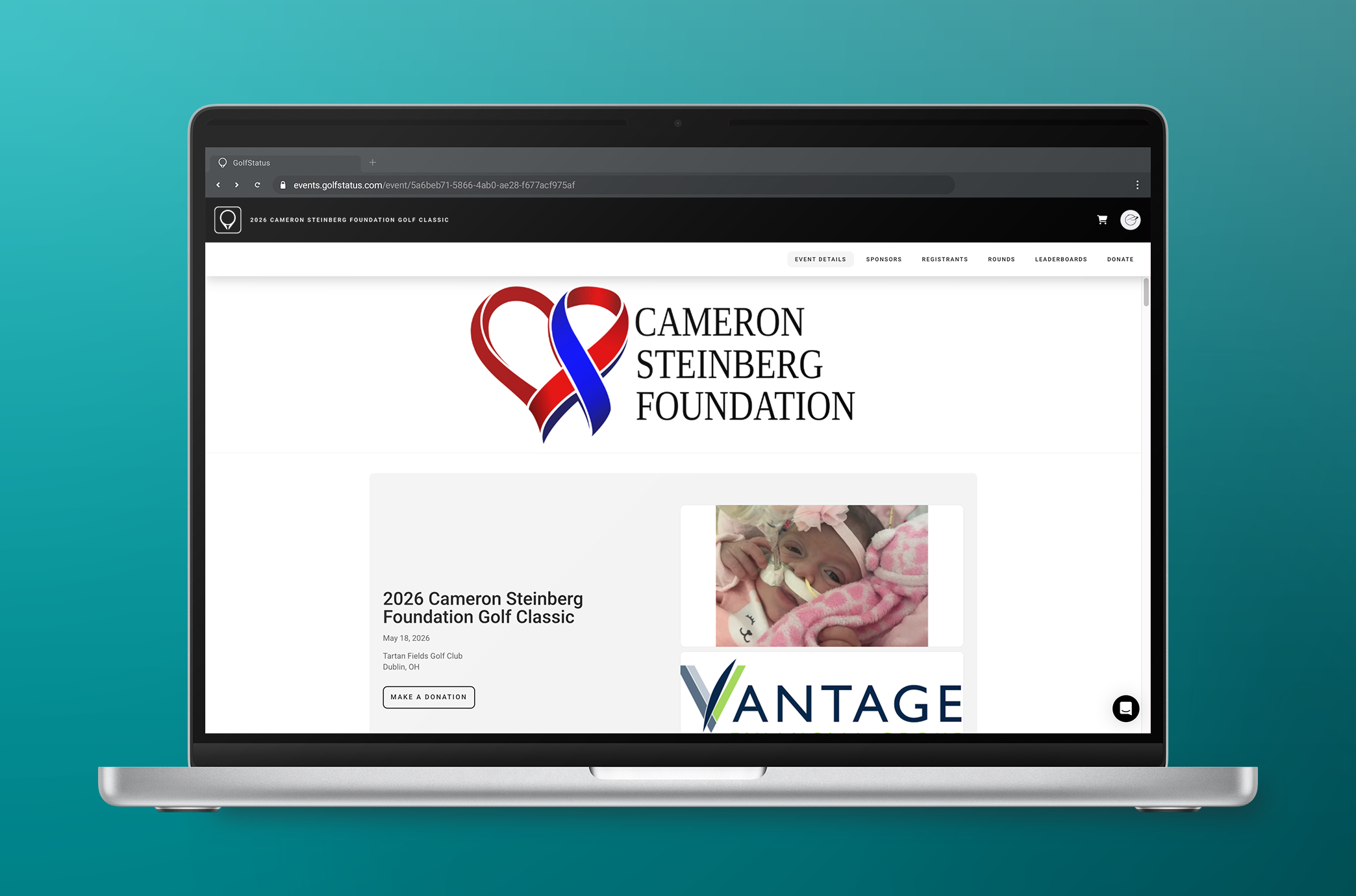
The home page of a golf tournament website is displayed on a laptop.

You won’t have nightmares about your golf tournament when using the right tools.

You Don’t Need Startup Funds

Many would-be event planners worry that a golf event requires significant upfront investment. But with smart planning, your tournament can pay for itself (and then some!).

Charity golf events typically see the bulk of their revenue from sponsorships rather than player fees. Sponsors are drawn to golf tournaments because they offer high visibility, engagement, and networking in a fun, relaxed atmosphere that allows them to connect with potential clients.

When building your team and sponsor packages, be sure to cover all your costs and build in additional revenue to go towards your cause. Build sponsorship packages at tiered price points that clearly outline benefits. For example:

  • Title Sponsor ($5,000): Event naming rights, logo on all materials, prime logo exposure on the event website home page and live leaderboards, one complimentary team

  • Pin Flag Sponsor ($3,000): Logo on branded pin flags on each hole, logo on event website, one complimentary team

  • Hole-In-One Contest Sponsor ($1,000): Logo on contest holes, opportunity to be present at the hole to engage with golfers, logo on event website

  • Hole Sponsor ($500): Signage at one hole, logo exposure in the live scoring app, logo on event website

Target local businesses, corporate partners, and long-time supporters to play in or sponsor the tournament, and start your outreach as early as possible. Use the funds that come in from teams and sponsorships to cover any invoices or costs as planning progresses.


On-Demand WebinaR

No Budget? No Problem! How to Launch a Golf Tournament with $0

Learn how to start a golf tournament fundraiser that not only doesn’t break the bank, but drives revenue for your mission. Get actionable tools, ideas, and strategies to help you hit the ground running.


You Don’t Have to Go It Alone

No one expects you to plan a golf tournament from scratch without any support. In fact, help is everywhere if you know where to look.

The host golf facility is a great resource for helping you choose a date and format, and handle logistics such as start time, contests, and set up. Golf facilities rely on charity golf tournaments as part of their bottom line and are there to help you be successful.

Your golf event management platform should also give you access to golf fundraising experts who know the ins and outs of golf fundraisers. They can help walk you through setting up your golf tournament website, answer questions, and coach you on sponsorships, contests, and event-day logistics.

Don’t overlook your organization’s staff, board, and volunteers. Many likely have golf experience and community connections that can help you recruit golfers and sponsors. Delegate tasks like registration, coordinating the raffle or auction, and running on-course games or contests so you can focus on creating an exceptional experience.

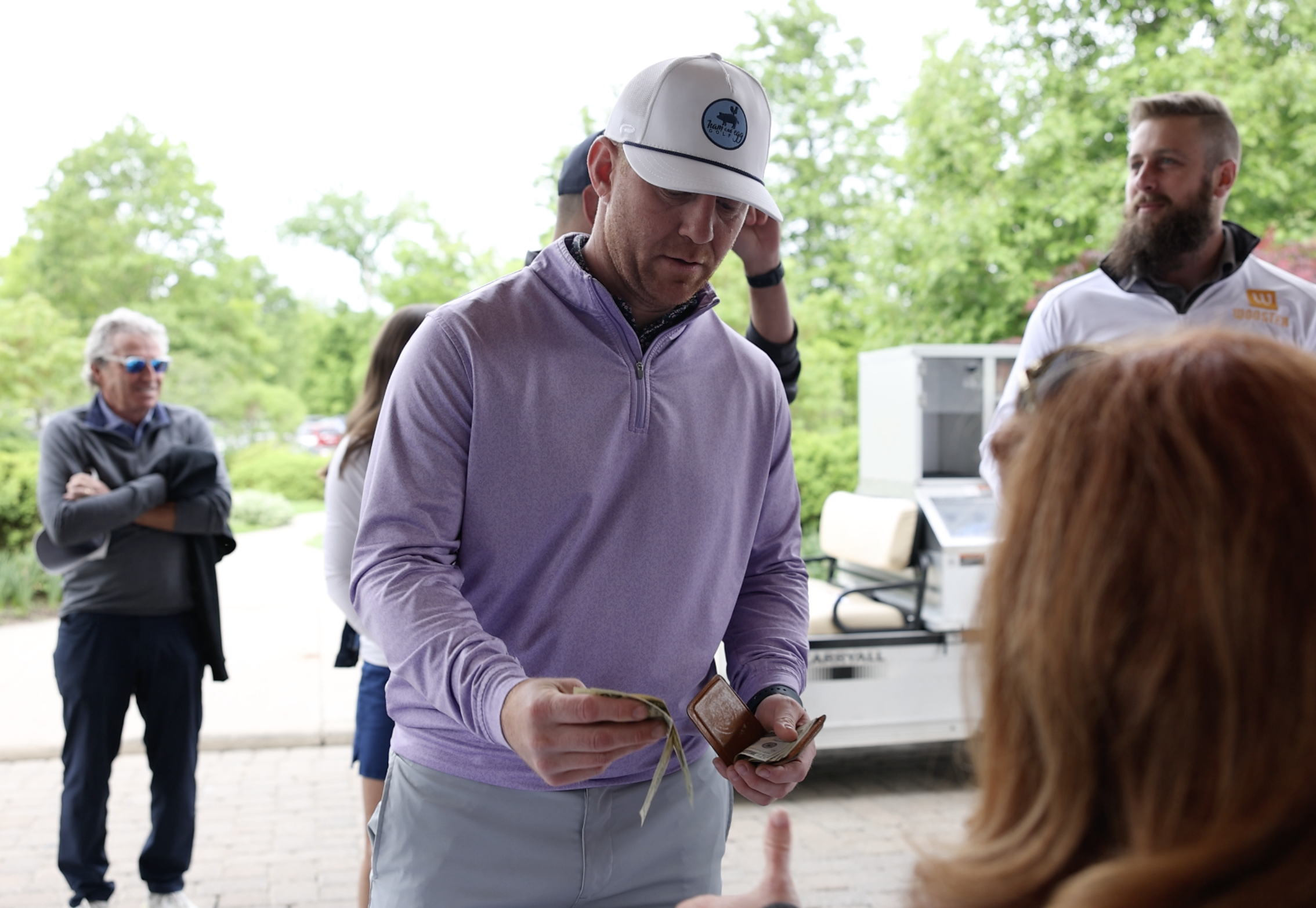
A golfer hands over money as a donation at a charity golf tournament.

Golfers are a generous bunch and jump at the chance to play golf for an important cause.

Golfers Love Playing for a Cause

Golfers are a generous, loyal, and community-minded group. When you invite them to play in a charity golf tournament, you’re offering more than just a round of golf—you’re giving them the opportunity to support a cause they care about while doing something they enjoy.

If your nonprofit’s supporters aren’t avid golfers, don’t fret. People are generally excited to join a day of fun with friends or colleagues, especially when it’s for a good cause. Beginner-friendly formats like scrambles make your tournament accessible for newbies while still keeping things fun and competitive for more seasoned players.

What’s more, golfers tend to come back year after year, especially when the tournament is well-run and they have a great time, and often bring others with them to learn about and support your mission.

Your Event Can Grow With You

One of the best parts of golf fundraisers is that they can grow with you. You can start small, as you get your footing and gain some experience, and build from there. Once you’ve run your first event, you’ll have templates, sponsor relationships, and processes you can use again and again.

Over time, many nonprofits turn their golf tournaments into annual signature fundraising events that raise thousands of dollars each year. And because golf events combine fundraising, networking, and donor engagement, they often become one of the most valuable events on a nonprofit’s calendar.

Golf carts are lined up outside the clubhouse at a charity golf tournament.

Don’t be afraid to start small and scale the tournament as you gain experience.

You’ll Have Fun, Too!

Yes, planning any successful fundraiser takes work, but golf tournaments have a way of reminding you why you do this.

On tournament day, you’ll see donors and sponsors connecting, volunteers smiling, and supporters having a great time, all while making a real impact for your mission. There’s something special about watching the tournament come together after months of planning and knowing that you helped make it happen.

And once you’ve planned one, you’ll realize it wasn’t nearly as scary as it first seemed.

Final Thoughts

Don’t let fear or inexperience keep you from tapping into one of the most successful and sustainable fundraising event models available to nonprofits. With the right tools, mindset, and support, you can plan a professional, lucrative golf event that strengthens relationships, builds community, and advances your mission.

When you’re ready to get started, GolfStatus makes it simple to plan, manage, and grow your golf fundraiser from start to finish. Intuitive software, in-house golf fundraising experts, and planning resources turn planning a golf tournament from something scary into an opportunity waiting to happen. Find out how you can get started at no upfront cost by booking a meeting with the GolfStatus team.


Mini Golf, Topgolf & More: Smart Alternatives for Golf Fundraising
 

by Jen Wemhoff, Communications Manager at GolfStatus

When you think of a golf fundraiser, a traditional 18-hole tournament on a sunny spring or summer day probably comes to mind. While these types of golf events are tried and true revenue drives, they aren’t the only golf fundraising option on the table. In fact, holding an alternative golf event this fall or winter can be a powerful way to extend your fundraising calendar, diversify your event offerings, and reach new audiences.

Whether you’re looking for a lower-lift event, something weather-proof, or a fun and inclusive experience that appeals to non-golfers, unique golf events fit the bill. Here’s why they work and how your organization can hold one successfully.

Two women pose at a mini golf fundraiser.

Adding a unique golf event in the off-season can help extend your nonprofit’s fundraising calendar, diversify your event offerings, and reach new audiences.

why consider an off-season golf event?

extend your fundraising season & momentum

If your organization already hosted a golf fundraiser earlier in the year, you've likely built up awareness, enthusiasm, and goodwill among golfers and sponsors. Instead of waiting a full year for your next event, capitalize on the momentum by inviting them to another golf-related fundraiser in the fall or winter.

The good news is that these seasonal events don’t necessarily have to be at the same large scale as your main charity golf tournament. You can think of them as a “bookend” to your fundraising year, and a chance to stay top-of-mind with supporters and strengthen donor relationships before year-end giving campaigns ramp up or to kickstart the new year.

Reach New Audiences

While traditional tournaments tend to draw in more avid golfers, alternative events like mini golf or TopGolf have broader appeal. Families, young professionals, corporate groups, and community members who might be intimidated by a full round of golf are more likely to participate in something smaller, fun, and social.

That wider net means additional exposure for your work, plus more potential donors and more opportunities to build pipelines for long-term supporters.

A mini golf tournament is a fun, family-friendly option to introduce new people to your cause.

Offer Accessibility & Flexibility

A typical 18-hole tournament takes up most of the day, which is something not everyone can commit to. Alternative golf events are shorter, more flexible, and may be easier for busy supporters to fit into their schedules.

They’re also highly accessible. No prior golf experience is required, equipment is often provided, and the atmosphere is casual and relaxed. This makes such an event less intimidating and more inviting for first-time participants.

Engage With Supporters Throughout the Year

Your event fundraising calendar doesn’t have to be confined to the spring, summer, or even fall. Indoor or weather-proof golf events create fun touchpoints with supporters throughout the year. This consistency not only diversifies revenue but also strengthens donor commitment and loyalty to your nonprofit.

Three unique golf event ideas

1. Mini Golf Fundraiser

Why it works: Mini golf is light-hearted and appeals to participants of all ages. It’s especially effective for engaging families and younger supporters, expanding your donor base beyond the typical golf crowd. It’s also easy to organize, with many local courses and indoor options available for rental, and you have the option to add on-course games or challenges.

When to host:

  • Fall: Host an outdoor mini golf tournament before the weather turns colder in your area.

  • Winter: Move indoors! Many communities have indoor mini golf facilities perfect for off-season event fundraising.

How to make it successful:

  • Charge a registration fee per player or per team.

  • Add tailored contests like hole-in-one challenges or best trick shot.

  • Offer sponsorships. Sell sponsorships to cover fixed costs and for each hole, giving local businesses visibility at a low cost.

  • Consider including family-friendly activities like face painting, giveaways, food trucks, or raffles to boost revenue and create a festive atmosphere.

The winners of a mini golf tournament pose with their trophies on top of a podium.

Alternative golf events can come with many of the same elements as a traditional 18-hole tournament, such as trophies, contests, and sponsorships.

2. top golf event

Why it works: TopGolf has exploded in popularity, offering a modern, social spin on conventional driving ranges. Guests compete in climate-controlled bays, with food, drinks, and entertainment built in. TopGolf appeals to golfers and non-golfers alike, making it a perfect way to attract diverse participants—including younger donors, corporate teams, and social groups.

When to host: TopGolf venues are open year-round, making them an excellent choice for fall or winter fundraisers.

How to make it successful:

  • Partner directly with TopGolf to book an event package, as they often have fundraising-friendly options.

  • Sell tickets and sponsorship packages for each bay, which can accommodate small groups.

  • Organize team competitions, longest-drive contests, or mission-focused challenges.

  • Take advantage of TopGolf’s built-in amenities like catering and event staff to help minimize your planning workload.

A child hits a golf ball at a TopGolf fundraising event.

Avery’s Hope Uses TopGolf to Include the families it serves

Avery’s Hope is a grassroots, all-volunteer organization that provides financial assistance to rare, ultra-rare, and undiagnosed pediatric GI patient families. They host an annual TopGolf fundraiser to be more inclusive for patient families, children, and those who don’t play golf. Bay sponsorships, a silent auction, and a raffle drawing help drive revenue for their mission from the event.

3. Indoor golf simulator event

Why it works: Golf simulators combine the fun of real golf with cutting-edge technology. Players can “play” famous courses around the world without ever leaving the building! Many simulators can also track swing data, adding a gamified element that many players love. Simulator events are weather-proof, scalable, and great for building repeatable annual fundraisers that showcase your nonprofit’s creativity.

When to host: Because golf simulators are indoors, these events are ideal for late fall and throughout the winter, when outdoor golf is impractical or impossible in many areas.

How to make it successful:

  • Partner with a local golf simulator facility or sports bar that offers simulator rentals.

  • Charge entry fees for individuals and teams and sell sponsorships.

  • Host contests like closest to the pin, longest drive, or low score.

  • Add in raffles, auctions, or mission-based presentations during downtime to maximize impact.

tips for hosting a winning alternative golf fundraiser

  1. Use golf event tech. Save yourself a ton of time and hassle by choosing an event management platform that’s built for golf. Even alternative golf events come with unique details to handle, so make sure your platform has those tools baked in. Leverage online registration to simplify collecting payments and managing golfer and sponsor information.

  2. Keep it mission-focused. No matter what type of golf event you choose, tie everything back to your cause. Share impact stories, highlight your work and beneficiaries, and make sure participants know how their support makes a difference.

  3. Offer sponsorship opportunities. Even smaller events like mini golf, TopGolf, or golf simulators present chances for businesses to get involved. From hole or bay sponsors to presenting sponsorships, local businesses appreciate the visibility and community connection.

  4. Keep it simple. Alternative events don’t need to be overcomplicated! Leverage the built-in amenities of your chosen venue and don’t be afraid to scale the event to fit your goals and resources.

  5. Promote across channels. Use an event website and share the link through email, social media, and peer-to-peer outreach to spread the word. Highlight the fun, accessible nature of the event to help draw in people who might not usually attend a golf fundraiser.

  6. Make it repeatable. Test out one of these alternative formats this year, then refine and grow it into a recurring fall or winter tradition for your organization.

The home page of the Putt Putt Fore Puppies Mini Golf Tournament is displayed on a laptop.

An event website makes it easy to spread the word about your tournament and where people can find out about your event, register a team, become a sponsor, or make a donation.

final thoughts on unique golf fundraisers

A traditional 18-hole charity golf tournament may be the flagship fundraiser for your nonprofit, but it’s far from the only option. Alternative events, like mini golf, TopGolf, or golf simulators, offer accessible, inclusive, and weather-friendly ways to engage supporters and raise additional funds in the fall and winter.

By adding a secondary golf event to your fundraising calendar, you’ll not only boost revenue but also expand your reach, engage new donors, and build lasting relationships.

golfstatus powers all types of golf events

From mini golf to TopGolf and everything in between, GolfStatus can help make your next golf fundraiser the best one yet. With powerful, easy-to-use technology and a best-in-class support team, you’ll save time, have access to tools to raise more money, and put on a professional tournament that will keep participants coming back year after year. Nonprofits and third parties raising money for charity can use GolfStatus at no upfront cost. Book a quick 15 or 30-minute meeting with our team to get started!

Book a Meeting With GolfStatus

Get Started at No Upfront Cost


How to Successfully Secure Golf Tournament Sponsorships
 

by Logan Foote, Sales and Education Director at GolfStatus

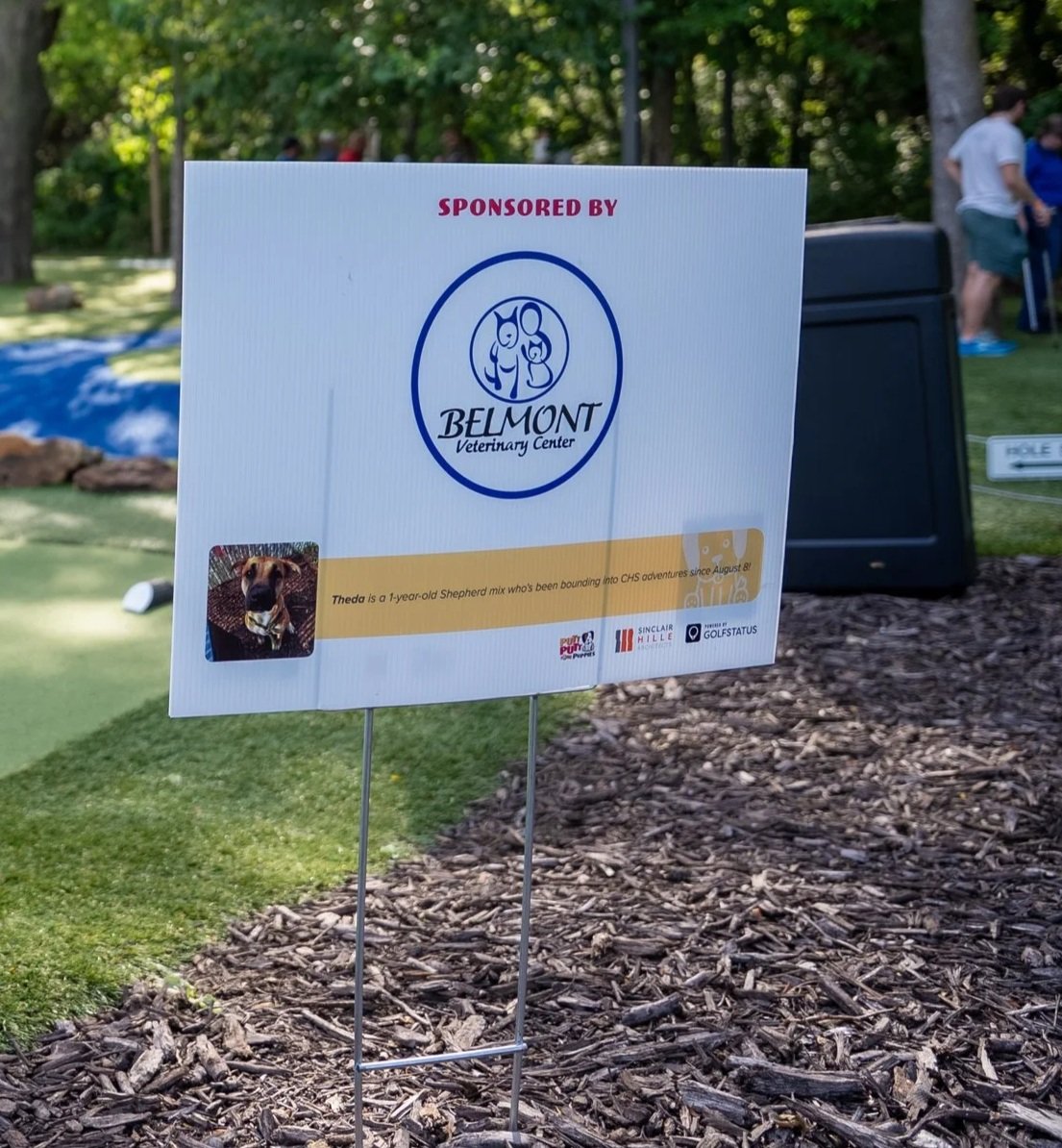
A hole-in-one contest sponsored sign, which represents an example of golf tournament sponsors.

Businesses are looking for a win-win when it comes to sponsoring events. They want to be associated with a worthy cause while also gaining positive exposure for their brand to an audience of their ideal clients or customers. Charity golf tournaments do both, making sponsorships a win-win opportunity for your nonprofit and sponsoring businesses. Knowing who to ask is key to successfully securing golf tournament sponsorships.

  • Golf tournament sponsorships are essential for driving revenue from your event and expanding your supporter network in your community.

  • Some industries and types of businesses are especially suited to be golf tournament sponsors, and are outlined in detail in this guide.

  • Sponsorship tiers are a great way to involve businesses with varying budgets. You can find sample golf tournament sponsorship tiers later in this guide.


Golf Tournament Sponsorship FAQs

What Are the Benefits of Golf Tournament Sponsorships?

FOR BUSINESSES

Golf tournaments have a unique value proposition for businesses. With the right event management platform, sponsors get high engagement with an affluent audience of golfers through exposure before, during, and after the tournament that’s non-intrusive, but memorable. Businesses also benefit from:

  • Exposure to the golfer demographic. This population segment is an especially desirable marketing target for businesses as it includes middle to high-income individuals. Consider the following data points about the average golfer:

    • Average household income: $125,000

    • Average net worth of golfers: $768,000

    • 33% are top-level managers

    • 25% own their own business

    • 91% are homeowners

    • 86% own life insurance

    • 74% dine out at least once a week

Four golfers stand on a green at a charity golf tournament.

Many businesses are interested in gaining exposure to the golfer demographic, which gives your golf tournament an edge in recruiting sponsors.

  • Multiple exposure touchpoints across the event management platform, earning impressions throughout the tournament.

  • Positive brand lift that comes with being associated with and supporting a good cause.

  • Increased customer loyalty from people who value businesses that give back to the community.

  • Community engagement in a casual setting and as part of a fun and memorable event.

  • A competitive advantage in employee recruitment. In fact, 71% of employees think it’s important to work at a company that gives back through philanthropy.

FOR NONPROFITS

Nonprofits stand to gain even more from golf tournament sponsorships, including:

  • Financial support to make the tournament a success and help power their missions.

  • Strong partnerships with sponsoring businesses that can open doors to high-level donor relationships.

  • Credibility, especially for first-year or young events. Having a well-known business involved as a sponsor helps build a positive reputation.

  • Access to new audiences when the sponsor promotes the tournament to their audiences, giving the tournament and the cause increased visibility.

What do businesses want out of golf tournament sponsorships?

  • Brand awareness. It’s not just a benefit of a golf tournament sponsorship; it’s one of the primary drivers behind a business’s support.

  • Support of important work. Many businesses see golf tournament sponsorships as an opportunity to not only support the work of nonprofits that enrich the community, but also to enjoy the good press that comes with it.

  • Opportunities to connect with potential clients or customers. Sponsors often want to engage with golfers throughout the tournament, making connections that lead to new business.

  • A positive ROI. Businesses are choosing to invest their dollars in your tournament and want to see a return on that investment.

  • Custom opportunities. If you’re not sure what a particular business wants out of sponsoring your tournament, simply ask! Work together to build custom sponsorship packages or benefits to help them meet their goals for their support of the tournament.

What golf tournament sponsorships stand out?

  • The Technology Sponsorship is a next-level sponsorship offering exclusively for GolfStatus clients. It offers premier branding and exposure for the sponsor throughout the GolfStatus platform and app, driving higher revenue and more engagement.

  • Pin flags are one of the most visible sponsorships available for a golf tournament. Branded flags give the tournament a professional look and feel, and provide sponsors with unprecedented exposure across the golf course.

  • Hole-in-one contests give sponsors broad visibility, high engagement with golfers, and association with a fun and exciting part of the tournament. A sponsorship covers the cost of hole-in-one contest insurance, which protects your organization from financial risk while offering valuable, attractive prizes.

  • Hole sponsorships are a common entry point for sponsors to support your tournament. Level up hole sponsorships with high-quality hole signage and hole-by-hole digital exposure in a live scoring mobile app.

Types of Businesses To Target for Golf Tournament Sponsorships

When it comes to how your organization will secure sponsors for your golf tournament, targeting the right businesses is crucial:

  • Start with businesses you already have a relationship with. They don’t have to be previous sponsors—they could be corporate entities that your volunteers or board members own, or even those that are within your supporters’ sphere of influence. 

  • Look for businesses that want to reach golfers. Ideal candidates to reach out to are businesses interested in getting their brand on the radar of affluent, influential members of the community—the same folks spending their time on the golf course. 

  • Target local businesses in the industries outlined below that have a generally wealthier clientele.

  • Target regional and national companies where you have a connection or those that are headquartered or have offices in your area.

1. Food & Beverage

Your golf tournament likely incorporates food and beverage into your golf tournament in some way, perhaps boxed lunches, drink tickets, a cocktail hour, or a banquet. Golfers likely frequent local dining establishments, making it a great option for these businesses to get eyeballs on their brands. Consider reaching out to the following businesses in the food and beverage industry:

  • Restaurants (including locally owned, farm-to-table, and upscale)

  • Wineries/vineyards

  • Beverage distributors

  • Sports and cocktail bars

How to Win Their Support

These businesses make great sponsorship prospects because they can customize their engagement. For instance, if outside food and drink are allowed by the golf course, you might ask these businesses to donate or discount catering for your golf tournament. They might also be interested in providing samples of a signature dish or drink on a hole or simply contributing money towards the cause.

2. Healthcare

Healthcare providers are valuable sponsor prospects because they are community-minded and your goals likely overlap: improving the quality of life for residents. Research the following healthcare providers in your area:

  • Primary care physicians

  • Dentists/orthodontists

  • Chiropractors

  • Physical therapists

  • Surgery practices

  • Dermatologists

  • Other specialty practices

How to Win Their Support

When pitching to potential healthcare sponsors, emphasize how your cause impacts their patients and their field of medicine as a whole. If your cause is related to improving healthcare for your beneficiaries, sponsoring your golf tournament could lead to a broader partnership or support of a specific project.

3. Sports & Fitness

This industry is a perfect target because of its direct tie to your fundraiser’s medium: golf. Reach out to these types of businesses in your area:

  • Gyms/fitness centers

  • Personal trainers

  • Sporting goods stores

  • Golf equipment stores

How to Win Their Support

Businesses in the sports and fitness space are often ideal candidates for an in-kind sponsorship and may be more inclined to donate goods like golf balls, tees, or even clubs for golfer gifts, pin prizes, auction items, or raffle prizes. That being said, these businesses also want the broad exposure a monetary sponsorship brings.

4. Business-to-Business & Financial Services

These businesses typically cater to affluent clientele, which makes your tournament a great opportunity for them to attract new customers. Pitch a sponsorship to the following businesses in your community:

  • Financial advisors/wealth management services

  • Insurance companies/agents

  • CPAs/accounting firms

  • Banks/credit unions

  • Advertising agencies

  • PR companies

  • Technology companies

  • Consultants

How to Win Their Support

For companies that cater to other businesses or for financial service professionals who manage important assets for their customers, building a personal connection is everything. Win these businesses over by offering opportunities to network and mingle with potential clients face-to-face, like a booth on a tee box or during a cocktail hour.

A hole sign bearing a golf tournament sponsor logo is placed on a tee box at a charity golf event.

Businesses in the home service industry are good candidates for golf tournament sponsorships.

5. Home Services

Most of your golfers likely live independently and can benefit from solid connections in the real estate world. Approach the following home services businesses to be sponsors:

  • Home builders

  • Architects

  • Real estate companies/agents

  • Home remodeling companies/contractors

How to Win Their Support

More than 90% of golfers own a home. These types of businesses jump at the chance to show off their properties and services at your golf event, perhaps with a tent on the course. Home builders and remodeling companies can showcase their work and high-quality materials, and real estate professionals have the opportunity to show off their listings and upcoming open houses.

6. Luxury Brands

As golf is commonly seen as a luxury sport, it makes sense that luxury brands and service providers would fit in at your tournament. Consider contacting:

  • Jewelers

  • High-end clothing brands

  • Local boutiques

How to Win Their Support

Similar to sports and fitness providers, these businesses would benefit from an in-kind sponsorship with your organization. An effective tactic is to use their in-kind gifts as high-end raffle or auction items, boosting donations for you and brand recognition for them.

7. Travel

The vast majority of those in the golfer demographic regularly take vacations and over half have purchased a vehicle in the past year, making these businesses hungry for exposure to this audience:

  • Car dealerships

  • Car services

  • Rental car companies 

  • Travel agencies

  • Hotels and resorts

How to Win Their Support

Beyond monetary sponsorships, consider approaching travel services for in-kind donations. Vacation packages, hotel or resort packages, travel vouchers, or even timeshares work well as raffle prizes or auction items.

Allowing sponsors the opportunity to engage with golfers or offer product demonstrations is a great perk to include in sponsorship packages.

Best Practices for Golf Tournament Sponsorships

Sponsorships are where your tournament will likely raise the most money. 

  • Offer multiple opportunities for support. Give businesses with marketing or philanthropy budgets of all sizes the chance to get involved with multiple sponsorship tiers or packages at varying price points.

  • Leverage digital exposure. Use your event management platform to provide digital sponsor exposure that guarantees impressions throughout the tournament’s lifespan, including every time a golfer registers for the event. There’s no overhead cost to your nonprofit, and sponsors love the added exposure.

  • Engage sponsors before, during, and after the tournament. Communicate with them as soon as they come on board, share updates as the tournament gets closer, recognize them during the event, and send a heartfelt thank you after the tournament concludes.

  • Report on ROI. Wow your sponsors by sending a report after the tournament that details each deliverable you promised, outcomes, impact stories, testimonials, and imagery to demonstrate the ROI of their support.

Perhaps the most important best practice is using a tech platform like GolfStatus to manage your tournament’s sponsorships. Prospective sponsors should be able to browse available packages on your dedicated tournament website, then submit payment and assets right through the platform. They start to earn impressions right away, and you’re not burdened with time-consuming back and forth to secure payment, logos, and messaging.

Master sponsorship management with a specialty solution

Book a Meeting With GolfStatus

Sample Golf Tournament Sponsorship Tiers

Your golf tournament’s sponsorship offerings should be customized to your event and organization’s needs. A good rule of thumb to consider when building sponsor packages is to look at your tournament’s hard costs and create a sponsorship that covers those costs and adds additional revenue.

How you price these packages depends on a number of factors, including the type of golf facility (public or private), the number of golfers, and the sponsor perks you’ll provide. It’s a good idea to offer sponsorships at varying levels, tiers, and price points to allow businesses with different budgets to support the event. Don’t be afraid to work with prospective sponsors to create custom sponsorship packages or themes that fit both the sponsor’s and your tournament’s needs.

Sponsor logos should always be included on your golf tournament website, earning them valuable impressions before, during, and after the tournament, as well as in the accompanying live scoring mobile app.

Title or Presenting Sponsor (often includes GolfStatus’ Technology Sponsorship)
The highest tier of sponsorship with the highest price. This sponsor should receive broad recognition on all promotional materials, throughout the tournament, and include one or more teams. Folding in the Technology Sponsorship adds additional value and robust exposure throughout the GolfStatus platform.
Gold / Silver / Bronze Sponsor
This tier of sponsor may or may not have hard costs associated with it and can be considered pure tournament revenue. The accompanying sponsor benefits should be enough to justify the business’ investment and often include one or more teams.
Pin Flag Sponsor
Pin flags not only give your tournament a professional feel, but they offer unprecedented visibility throughout the golf course. Sell separate front and back nine flag sponsorships or bundle them into one sponsorship for all 18 holes.
Food Sponsor (breakfast, lunch, dinner, snacks, etc.)
This sponsorship should cover the cost of the associated food and provide the sponsor’s logo on boxed lunches, banquet tables, snack packages, etc. An in-kind donation of food or beverage works well here (if the host golf facility allows outside food and beverage).
Hole-In-One Contest Sponsor
Hole-in-one contests offer premium exposure and associate the sponsor with a fun and exciting tournament component. Selling a sponsorship covers the cost of the hole-in-one insurance. Separate sponsorships can be sold for each contest hole, if desired.
Other Contest Sponsor
If your tournament includes contests such as putting, chipping, closest to the pin, or longest drive, you can significantly boost revenue by selling a sponsorship for each and allowing the sponsor to run the contest and engage with golfers.
Beverage Cart Sponsor
One of the most popular parts of any golf tournament is the beverage cart! Add a sponsor’s logo to the cart and offer them the chance to ride around the course and interact with golfers. The sponsorship could cover the cost of beverages, if desired.
Game Sponsor
On-course games add even more fun (and fundraising) to your tournament. You might sell a sponsorship for each game or a comprehensive games sponsor. Volunteers from the sponsor could be in charge of running the game.
Hole Sponsor (with or without a team included)
This is often an entry point for companies as they come at a lower price point and you can sell one or more for each hole. Signage on each hole, as well as their logo in the live scoring app, provides excellent exposure and a great experience for the sponsors playing in the event. Hole sponsorships can also include a team, if desired.
 

Sample Golf Fundraiser Sponsorship Packages

This free guide outlines three sets of golf tournament sample sponsorship packages, including pricing, benefits, and golfer registration costs. You’ll find examples for small, mid-sized, and large tournaments that you can adapt based on your tournament’s unique needs.


Get Exclusive Golf Tournament Sponsorships With GolfStatus

GolfStatus makes onboarding and recognizing sponsors simple. The platform includes exclusive sponsorships that help raise thousands more dollars for your cause. Nonprofits and organizations planning a golf event to benefit one can qualify for no-cost access to GolfStatus’ golf event management platform through the Golf for Good program. Click below to get qualified or email [email protected].


How to Activate Third Parties to Run Golf Events for your Nonprofit
 

by Jen Wemhoff, Communications Manager at GolfStatus

Golf tournaments remain one of the most powerful tools for third parties—like corporate partners, passionate supporters, and volunteers—to raise money for nonprofits and causes they care about. Golf’s continued popularity and its capacity as a fundraising tool make it an ideal fit for folks who are passionate about golf and a good cause.

Golf is a great way to mobilize passionate supporters or corporate partners to raise money for your nonprofit.

More than most fundraising events, charity golf tournaments offer unique advantages for the benefiting nonprofit and the organizer. For nonprofits, these events create a passive income stream that doesn’t require significant internal bandwidth like a dedicated staff member or line item in the budget. What’s more, they also build awareness and expand visibility for your mission and programs. For event organizers, particularly companies and corporate entities, there’s a major brand lift from supporting a good cause and high engagement with a typically affluent and influential demographic.

By empowering third parties to run golf tournaments on your behalf and equipping them with the right tools, you can grow your nonprofit’s impact with minimal lift. Here’s how:

1. Start with your network

Your best bet is to start with what you already have: past event participants, sponsors, volunteers, donors, and board members. If your nonprofit has hosted golf tournaments before, revisit those participant lists. Consider sending a dedicated campaign inviting those who supported your organization through golf in the past to organize a tournament that benefits your organization. The campaign could include email, direct mail, individual phone calls, a survey, or a mix based on your team’s capacity. You might also:

  • Use social media to ask your audience who plays golf or who simply likes organizing events.

  • Include a call to action in year-end giving appeals to get in touch if they’re interested in event planning or golf.

  • Create a dedicated page on your organization’s website that outlines how supporters can host a golf tournament to benefit your cause.

Do some pre-planning before you start your outreach so you have some pieces and resources already in place to provide to people who are interested. Beyond just making the process easy (see #2 below), you want to set these third-party tournaments up for success, so make sure you’re prepared to be a partner in the process.


Pro Tip:

GolfStatus’s online resource library is packed with free guides, templates, checklists, and other downloadable tournament planning tools. Share these with current and potential event organizers to help get them started.


A woman tees off while three others watch at a charity golf tournament.

Provide tools—like golf event management software—to make planning a golf fundraiser as easy as possible to people and businesses in your network.

2. Make It Easy for organizers

Even the most passionate supporters will appreciate tools that make planning a golf tournament easier. That’s where golf event-specific technology comes in. The right platform streamlines planning, automates administrative tasks, and includes built-in fundraising features, making it easier for anyone to launch, run, and repeat their tournament year after year.

Your event management platform should be able to function as the “bank” for your golf tournament, facilitating how you collect, hold, and disburse the funds raised from your event. When some registers a team, becomes a sponsor, makes a donation, or purchases an add-on, those funds should be securely processed and held in escrow until after the event. Once it concludes, those funds can be distributed directly to your organization, so both your nonprofit and the event organizer have peace of mind and clear financial accountability.

You might also consider providing the organizer with a media kit full of logos, brand guidelines, and key messaging to help your brand stay consistent. When it’s easy, it’s more fun, more rewarding, and more likely that they’ll keep the effort going.


PRO
TIP:

Say thank you whenever and wherever you can to these third-party organizers. Public shoutouts on social media, in newsletters or blogs, or on your organization’s website are powerful, but a personal touch will go a long way in expressing your gratitude. Send a handwritten note and follow it up with a phone call.


3. Standardize with golf-specific technology

Fundraising or event management platforms aren’t one-size-fits-all. Golf tournaments have unique needs that require specialized tools to manage effectively. Look for a platform that offers an attractive event website with online registration (which saves organizers a ton of time and effort), plus easy access for all members of the planning team and the golf facility to work together and keep everything organized in one place.

It should be built just for golf events, with features to handle everything from hole assignments and live scoring to digital sponsor exposure and pre-formatted scorecards and cart signs. A dedicated landing page listing all events that benefit your organization makes it easy for folks in your network to find and support them.


PRO
TIP:

Standardizing tech across all third-party golf fundraisers means your donor data is uniformly collected (see #4 below) and reported for easy integration into your CRM for additional donor stewardship.


A dedicated landing page listing all events that benefit your organization makes it easy for people to support you through golf.

4. Capture & Manage Data

Donor and participant data are essential, especially when a third party is planning and managing the event. You can’t use the information you don’t have! Seamlessly collecting this information during the registration process is crucial to understanding who is supporting your organization through golf. This way, both organizers and your team can access robust reporting tools to see who’s playing in, donating to, and sponsoring golf events tied to your nonprofit.

This valuable data helps your nonprofit build stronger relationships, grow donor pipelines, and make data-driven decisions that maximize future fundraising efforts. Using golf event management technology makes collecting and managing this data simple and efficient.


PRO
TIP:

Use this donor and participant data to segment follow-ups and personalize donor stewardship efforts. Add tags, source codes, or other identifiers to your CRM to track who came through third-party golf events.


built for golf, built for good

GolfStatus is the industry leader in event management tech built specifically for charity golf tournaments. Nonprofits can easily activate third parties to run successful, lucrative, and data-rich golf fundraisers without having to oversee every detail. Through our Golf for Good program, 501(c) organizations and those hosting tournaments to benefit them are eligible for no-cost access to the platform.

From acting as the “bank” to holding funds until post-event disbursement, to providing dedicated support, customizable websites, and donor data capture, GolfStatus makes it easy for supporters to turn a round of golf into real impact.

Book a Meeting With Our Team to Learn More


How to Recruit & Engage Golf Tournament Volunteers
 

by Jen Wemhoff, Communications Manager at GolfStatus

Golf tournaments can be a big lift for nonprofit organizations, but with the help of dedicated volunteers, you can pull off a memorable event that drives your mission forward (and doesn’t burn anyone out). Here are some help tips and context about how to effectively recruit and engage volunteers for your golf event and create a memorable experience that keeps them coming back.

Volunteers check in a golfer at a charity golf tournament.

Why volunteers are essential

Volunteers are the backbone of successful charity golf tournaments. Here’s why:

  1. They fill gaps in people power. Volunteers provide the extra hands needed to execute a seamless event. From planning to cleanup, their support ensures sponsors and participants enjoy a top-notch experience from start to finish.

  2. They develop a stronger connection to your cause. Volunteering fosters a deeper connection to your organization. Many volunteers become lifelong supporters, often contributing both time and financial resources.

  3. They build important relationships. Volunteers create a support system for your nonprofit and often bond with each other through shared experiences. These relationships often lead to ongoing engagement and advocacy centered around your cause.

  4. Everyone benefits. Volunteering benefits both your nonprofit and the volunteers themselves. The Mayo Clinic reports that volunteering reduces stress, boosts mental and physical health, provides a sense of purpose, and even teaches volunteers valuable skills. For nonprofits, volunteers help build capacity, gain loyal advocates, and convert volunteers into regular donors.


sample golf tournament volunteer assignmentS

Pre-tournament:

Tournament day set up:

  • Registration desk

  • Place hole signs

  • Direct traffic

  • On-course games and contests

  • Raffle or auction

  • Awards

registration:

  • Check in golfers, sponsors, and volunteers

  • Sell raffle tickets, mulligans, and on-course game entry

  • Collect donations

During the round:

  • Run on-course games and contests

  • Distribute food

  • Check pace of play

Post-tournament:

  • Assist with awards

  • Tear down and clean up

  • Pick up pin prizes and hole signs

  • Write thank yous


A volunteer watches a golfer tee off as part of a hole-in-one contest at a charity golf tournament.

Volunteers can serve as witnesses for a hole-in-one contest at a golf tournament. (Image courtesy of Flickr)

recruiting volunteers

If you don’t already have a volunteer base, your golf tournament is a great chance to establish one! It’s also an opportunity to beef up your volunteer pool for other events and initiatives where your nonprofit needs assistance. Before you start recruiting volunteers, make sure you have somewhere to send folks to sign up. Add a link to your volunteer sign up on your golf tournament website so people who want to know more about the event also have the information they need to help out.

  • Use your networks. Start by asking your nonprofit’s staff, board, and current volunteers to commit to volunteer at the golf event and invite a friend to help. This leverage’s social proof, which is the tendency of people to follow others’ actions when making decisions. Personal invitations and word-of-mouth are powerful motivators.

  • Leverage local community and service groups. Your community likely has people interested in volunteering—you just need to find them. Tap into service clubs in your community, such as Kiwanis or Rotary Clubs. Use the alumni associations of universities or colleges in your area or that people in your network belong to. You might also check to see if local high schools require community service hours and if volunteering for your tournament might qualify.

  • Use matchmaking websites. There are a number of volunteer matchmaking websites that can help you find local volunteers. A simple Google search will give you some great options. RiseUp Malawi used VolunteerMatch to source volunteers for their golf event’s planning committee and day-of execution.

  • Work with local media. Consider sending a press release about your golf tournament to local media outlets, such as television and radio stations and newspapers, that includes a call for volunteers. Don’t forget to list your event and volunteer opportunities on local community calendars.

  • Leverage social media and ads. Your nonprofit’s Google Ad Grant, which provides up to $10,000 in monthly ad spend, is a great way to promote your golf tournament and volunteer opportunities. You should also post content on your social media channels that show volunteers in action, data that demonstrates your impact, and stories about your work to get people excited to volunteer. You might also consider a small social media ad campaign to target potential volunteers, if your budget allows.


Using Social Media to Amplify Your Golf Fundraiser

Social media is a huge opportunity to level up your golf fundraiser, helping promote the event; recruit volunteers, players, and sponsors; thank donors, and much more. This free guide will help tournament organizers of all skill and experience levels leverage social media to make the most out of your charity golf tournament and raise the most money possible.


Keeping volunteers engaged

Your volunteers want to be engaged and in the know when it comes to their contributions and responsibilities. Keeping them engaged before, during, and after the tournament is key to volunteer satisfaction and retention.

before the tournament

  • Get volunteers excited. When volunteers sign up to help, personally reach out to thank them for their commitment and share the impact they’ll help make as a result of their time. This gets them excited both for the event and about your cause, and is key to building a long-term relationship with that volunteer.
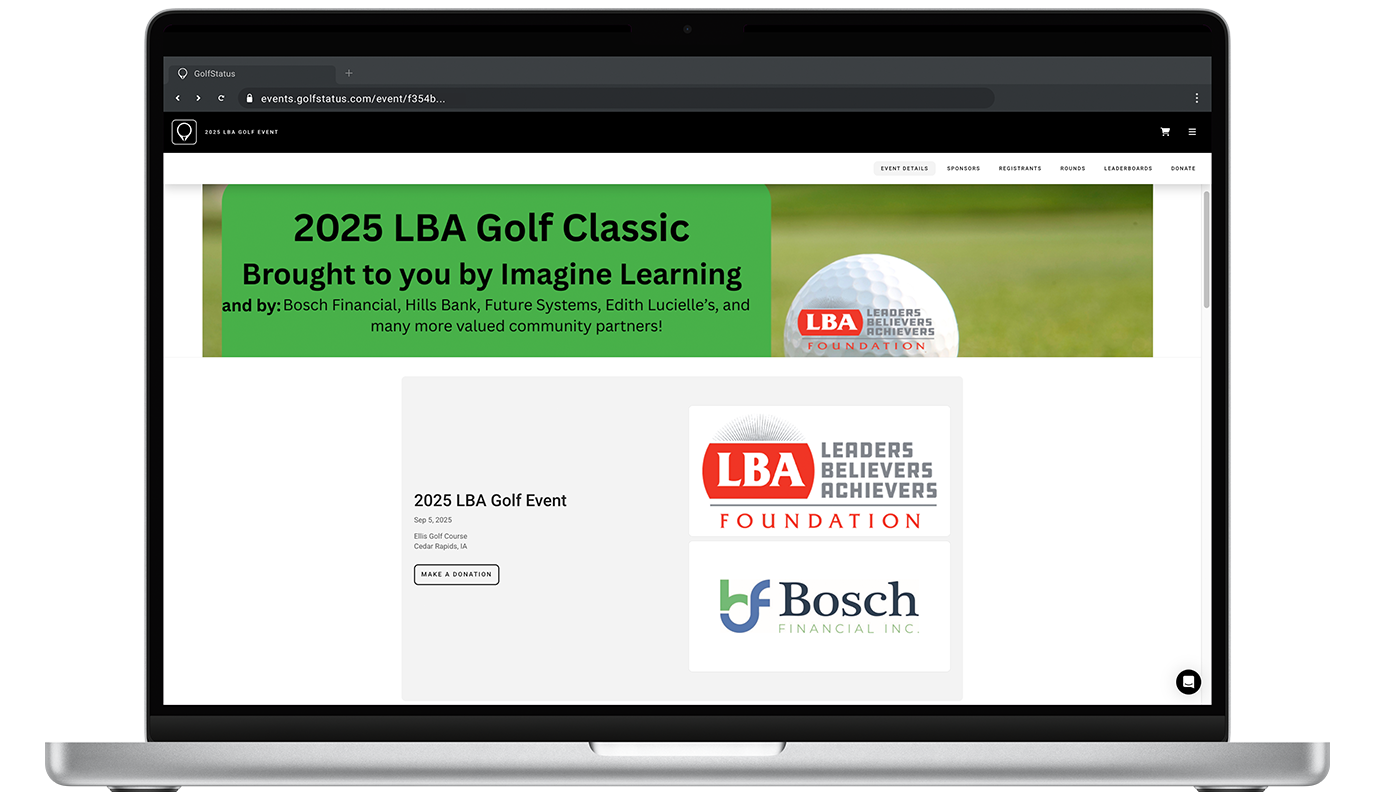
  • Help them feel a sense of ownership. Loop volunteers into the planning process (when appropriate) so they feel a sense of ownership in the event and have a vested interest in its success.

  • Create a clear onboarding process. Before you begin recruiting volunteers, document the roles and responsibilities of each assignment. Use online tools to manage sign-ups and assign roles, and share those details once they commit so they understand exactly what’s expected of them. If necessary, offer training ahead of the tournament. For example, if they’re running a hole-in-one contest, walk them through how the contest works, what they need to communicate with golfers, and what to do if someone gets a hole-in-one.

  • Communicate effectively. There’s a balance between under and over communicating with volunteers—don’t overdo it, but make sure they know enough to be helpful. Volunteer management tools make it easy to communicate with volunteers and keep correspondence in one place.

Volunteers at a charity golf tournament join hands before the event starts.

during the tournament

  • Keep volunteers in the loop. If there are any updates or changes to on event day, be sure to communicate those to volunteers via your online volunteer management tool. Let them know how the tournament is progressing, what’s happening next, and if there are any changes to their assignments.

  • Take care of them. You want your golfers and sponsors to have a great experience, but you also want your volunteers to remember your tournament fondly. Simple things like providing hot or cold beverages, food, a place to sit and rest, hand warmers on a cold day, or handheld fans on a hot day make volunteers feel more appreciated and more comfortable.

  • Say a public thank you. During the tournament’s kickoff and wrap up remarks, be sure to thank both your sponsors and volunteers for making the event a possibility. If there are only a handful of volunteers, consider recognizing them each by name.

after the event

  • Say thank you (again!). Much like with golf tournament sponsors, a handwritten thank you or a phone call can be huge in keeping volunteers engaged for subsequent years and cultivating their support of your organization. Invite volunteers to attend any post-golf gathering and perhaps provide a complimentary drink or raffle ticket. You also might consider holding a volunteer appreciation reception at your office after the golf event to say thank you. Above all, be sincere and personal in expressing your gratitude.

  • Ask for their feedback. Send a survey or have informal conversations with volunteers to find out what went well, what can be improved, and what suggestions they have for next year. This helps them feel ownership in the tournament—making them more likely to return to help again in the future.

  • Involve them in other parts of your nonprofit. If the golf tournament is the first time a volunteer has engaged with your organization, now is a good chance to share other volunteer opportunities with them. Fold volunteers into your regular organization communication so they’re aware of other events and volunteer opportunities. And be sure to share the impact their volunteerism has had on your organization. For example, assisting with the golf tournament raised funds to feed 20 shelter dogs for a year.

Make volunteering for your tournament easy & rewarding

Above all, remember that when volunteers feel valued, they’re more likely to continue supporting your organization. Recruit volunteers with purpose, communicate with them effectively, and show gratitude every step of the way to build lasting relationships.

Your golf tournament can be more than just a fundraiser—it can become a community-building event that strengthens your mission and leaves a lasting impact.

golf for good with golfstatus

Organizing and executing a charity golf tournament is easier than ever with GolfStatus. You’ll get a free event website where you can recruit volunteers, promote your tournament, sell teams and sponsorships, and solicit donations. The software’s back end makes it simple to manage teams, sponsor assets, and payments and seamlessly collaborate with your planning team and the golf facility. The software is backed by an in-house client success team that’s there to help seven days a week. And best of all, there’s no cost and no risk to get started with GolfStatus. Click below to book a demo with our team or get started in the software on your own.

Get started with GolfStatus

No Cost, No Risk