Posts tagged time savings
How to Host a Golf Putting Contest: FAQs & Best Practices
 

by Jen Wemhoff, Communications Manager at GolfStatus

On-course contests are where charity golf tournaments can come alive. A simple, engaging, and profitable option is a putting contest. With minimal setup, low overhead, and high participation potential, a well-run putting contest can generate meaningful dollars while giving golfers something extra to look forward to on tournament day.

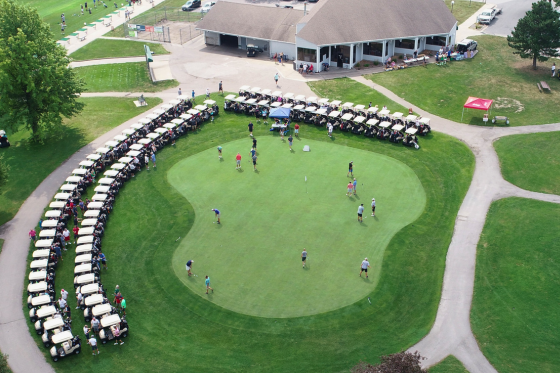
An aerial photo of a golf putting contest on a practice green.

Whether you’re looking to boost revenue, attract sponsors, or create a memorable moment that brings everyone together, a putting contest checks all the boxes. Let’s break down the most common questions, popular formats, and proven best practices to help you host a putting contest that's easy to manage and hard to forget.

Table of Contents


Golf Putting Contest FAQs

What is a Golf Putting Contest?

A golf putting contest is a standalone on-course game held during a golf event such as a charity scramble, corporate outing, or club championship. It’s often held on the golf facility’s practice green and takes place before the shotgun start, during the tournament when teams play a hole near the practice green, or post-round as part of the awards ceremony.

Unlike the larger tournament, where total score matters, a putting contest tests golfers' short-game skills. Golfers pay an entry fee to participate in the contest and attempt to make a long-range putt or series of putts. Some tournaments hold contest rounds, with successful putts advancing to the next round to compete for cash or other high-value prizes.

Why Should We Host a Golf Putting Contest?

Putting contests have the potential to drive significant revenue from your charity golf tournament. Why? There are low to no overhead costs (golfers bring their own putters, and the golf facility provides the hole and golf balls, and you can source donated prizes), and entry fees drive fundraising. What’s more, a putting contest is a prime sponsorship opportunity, much like hole-in-one contests. The practice green is a high-traffic, high-value exposure point, boosting the value of a contest sponsorship.

A putting contest can also break up a long day on the course. A high-stakes contest finale held before dinner, awards, or auction draws a crowd, creating an electric atmosphere and a shared highlight that attendees talk about until next year's event.

A golfer putts on the practice green while three others watch during a golf putting contest.

What are Popular Golf Putting Contest Formats?

Guaranteed Prize

  • How it works: All participants line up at a pre-determined distance, perhaps 10 feet. Those who make it move back to another distance, like 20 feet, then 30 feet, etc., continuing until only the winner remains.

  • Pros: This format guarantees a winner and a prize awarded right then and there. It also has a very low barrier to entry for golfers and is fairly simple to run.

  • Cons: This type of contest can take 15–20 minutes to complete, so it must be scheduled carefully to not interfere with the rest of the tournament.

Cash Prize

  • How it works: A qualifying round is held to determine one finalist. That finalist gets one single attempt from 50+ feet (often 60 feet) for a large cash prize.

  • Pros: Offering a significant cash prize can draw in large crowds and more participants.

  • Cons: Insurance is a must, and it can take a while to process the claim.

Other Variations

  • Putt a prize. Various prizes are placed on the practice green, and golfers win the prize if their putt hits it or stops within a certain distance.

  • “Pig” or “Golf”. Similar to the basketball game, where one player sets up a putt and makes it, and others must replicate the putt or get a letter.

  • Team relay. Team members must sink a putt from certain distances (such as five feet, 10 feet, 20 feet, etc.) in succession. The team with the fastest time wins.

What Else Should I Know About Golf Putting Contests?

  • If you’re interested in offering cash or non-donated prizes, you might consider putting contest insurance, which comes with a cost. A more cost-effective option is to secure donated prizes from sponsors, local businesses, or partners.

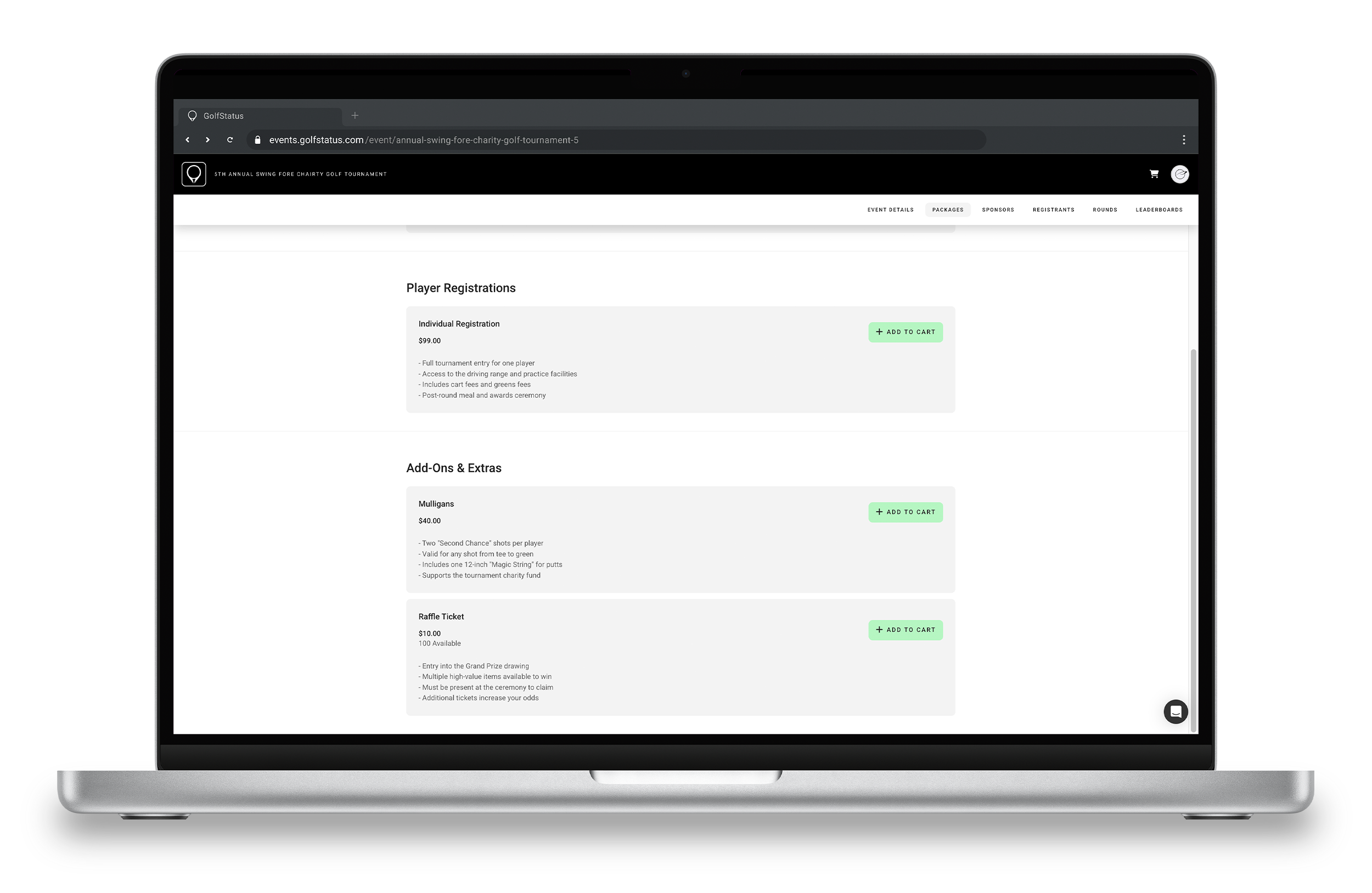
  • Use your golf tournament website to sell entry into the putting contest. You can sell entry as a standalone item or bundle it with other tournament add-ons, like raffle tickets or mulligans. Sell entry ahead of the event, as well as at check-in, to maximize participation.

  • Publicize the contest on your event website and in promotional campaigns. Highlight prizes, how much it costs to enter, and when the contest will take place. Be sure to give a shoutout to the contest sponsor when applicable.


How to Host a Golf Putting Contest

1. Choose the Right Format

Step one is to decide if the primary goal of a putting contest is high-margin fundraising or high-energy entertainment. If you need to raise money without any overhead, a guaranteed prize is a good option. If you want to make a big splash, an insured $10,000 contest might be the better choice.

2. Secure the Location & Schedule

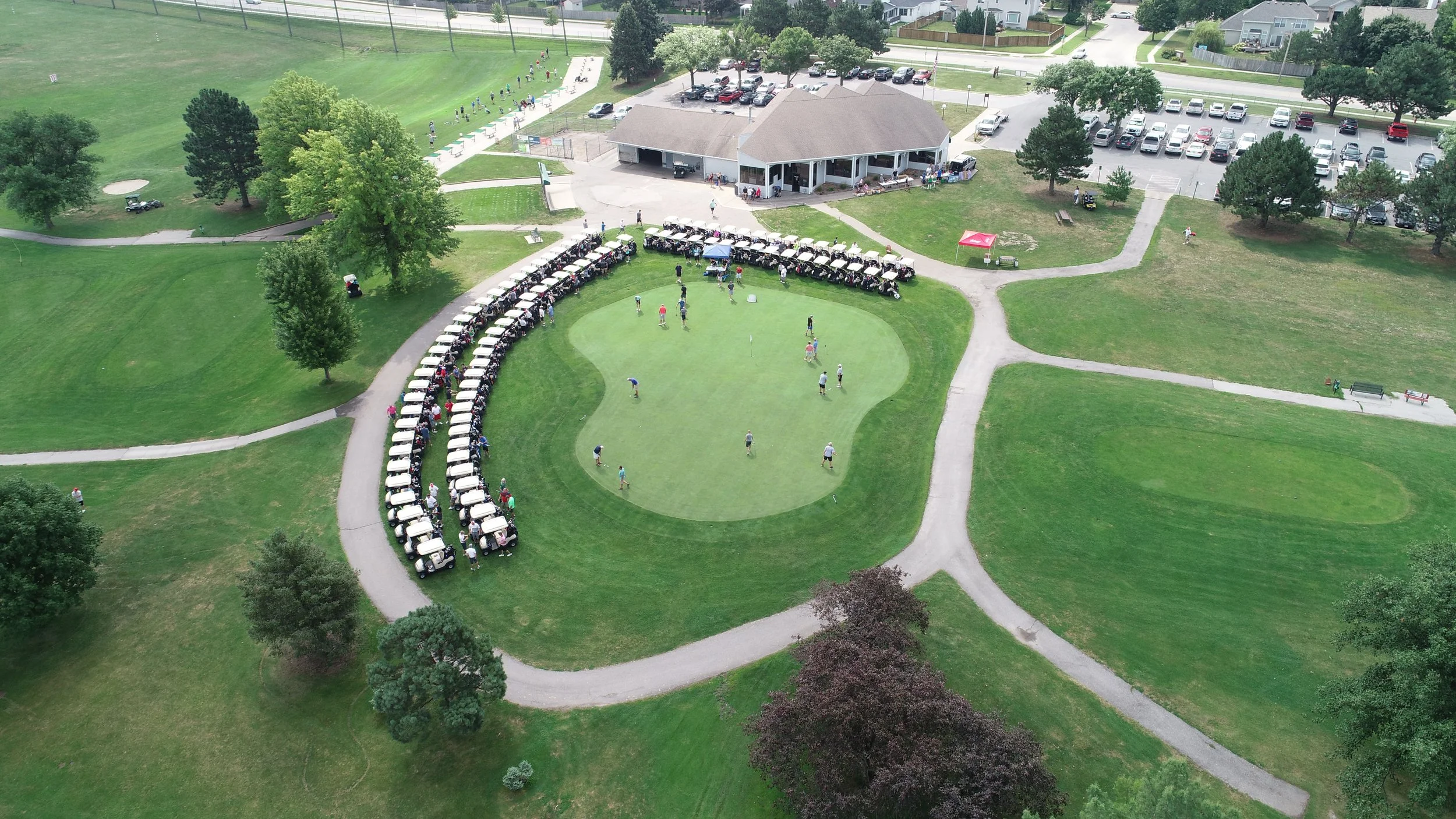
Putting contests are most commonly held on the practice green before the start of the golf tournament. If there are multiple practice greens, choose the one closest to the clubhouse or outdoor bar. The easier it is for spectators to grab a drink or a bite to eat and watch, the larger your crowd (and the higher the energy) will be.

If you have the contest on the practice green during the round or at the turn, there’s a risk of creating a bottleneck. Choose a rapid-fire format to prevent backing up the entire tournament. You might also consider hosting finals at the end of the day for a climactic finale to the event.

An aerial photo of a practice green where a golf putting contests can be held.

3. Lock Down Logistics

If you’re utilizing putting contest insurance, you’ll likely have to abide by various requirements, which might include:

  • Exact putt length. You’ll be required to measure the putt’s distance to the exact inch using a surveyor’s tape.

  • Contest witness. You’ll need to train a witness—either a volunteer, staff member, or planning team member—to watch all of the putts to ensure all of the rules were followed. For high-value prizes, you might need to submit video footage of the putts for verification.

  • Standardized equipment. You may need to provide the golf balls and even the golf clubs for the contest.

You’ll also need to determine other contest logistics, such as:

4. Price It Right

  • Sell contest entries on your tournament website. This keeps all tournament funds in one place to simplify post-event accounting and eliminates the need to pay with cash for day-of entries.

  • It’s a good idea to bundle the putting contest with other add-ons to boost revenue. A combined ticket that includes contest entry with add-ons like on-course games, mulligans, or raffle tickets creates a higher perceived value that can drastically increase participation rates. You might also give golfers the opportunity to buy a second or third qualifying attempt for half the price.

  • Sell the Putting Contest Sponsorship as an opportunity for the sponsor to set up a tent, have hole signage, hand out swag, and personally interact with every golfer.

5. Create a Fun Atmosphere

The right emcee and commentary transform the putting contest into a spectator sport. Enlist a volunteer to serve as the contest emcee. Provide a microphone (check with the golf facility) to announce finalists, crack jokes, and build excitement.

Since making a 50-foot putt is a rarity, it’s a good idea to have a backup activity to keep the mood high. That way, if the finalist misses, you can pivot to a "Closest to the Pin" chip-off or a raffle draw for a smaller prize or gift so the event ends on a high note.

6. Follow Up After the Contest

  • While the contest and excitement are still fresh, announce the winner (if applicable) at the awards ceremony or dinner. Play a video of the winning putt on a projector to engage those who may have missed it.

  • Ensure the sponsor is front and center for the check presentation or to award the prize. Even if the big cash prize wasn't won, a photo of the finalist and the sponsor shaking hands is valuable content to use to promote next year’s event.

  • Send a "thank you" text or email to contest participants or the entire field with a link to next year's early-bird registration, building on the excitement from the contest.


Final Thoughts

A golf putting contest is a high-impact add-on for your next golf tournament. It’s flexible, cost-effective, sponsor-friendly, and when done right, creates a buzz that carries through to marketing next year’s tournament. By choosing the right format, handling the necessary logistics, pricing entries strategically, and leaning into the entertainment value, you can turn the contest into a major fundraising and engagement win.

If you’re ready to put these ideas into action, the next step is simplifying how you manage your contest—and your golf tournament as a whole. Using a purpose-built golf tournament management platform like GolfStatus makes it easy to sell entries online, bundle add-ons, track participation, and keep everything organized in one place—so you can focus on creating an exciting experience.

Make Your Next Golf Event a Swinging Success!

Book a Meeting With GolfStatus to Get Started

About the Author

Jen Wemhoff - Communications Manager at GolfStatus

Jen Wemhoff accidentally discovered her passion for nonprofits in college. An internship while earning a degree in Communications from Doane University led to a 20 year career in the nonprofit sector, where she found a strong desire to be part of something bigger than herself. Her vast nonprofit experience includes roles in marketing, fundraising, and direct programming. When Jen came to GolfStatus as Communications Manager in 2020, she was struck by the power of the sport to raise money to power nonprofit missions. She tells GolfStatus’s story across platforms and channels and develops educational tools and resources to help nonprofits tap into golf’s giving power. Jen, her husband, and two daughters call Lincoln, Nebraska home.
 
 
60 Best Charity Fundraising Event Ideas to Fund Your Future
 

by Jen Wemhoff, Communications Manager at GolfStatus

In a crowded fundraising calendar, the best events are intentional, unique, and built for revenue. The right charity fundraising event can deepen donor relationships, attract sponsors, and create a repeatable engine for long-term growth.

Below are 60 proven charity fundraising event ideas, ranging from high-impact golf tournaments to low-cost community-based fundraisers, to help you stand out, maximize participation, and fund your mission’s future.


#1 Charity Fundraising Event Idea: Golf Tournament

A golf tournament is the gold standard for charity fundraising events. It remains the most effective format to raise significant funds while also engaging higher-net-worth individuals, sponsors, and corporate partners for five+ hours.

Golfers drive in golf carts at at charity golf tournament, the top charity fundraising idea.

Why It’s the Top Idea

  • Feasibility. Unlike complex events like galas, golf tournaments have a more predictable structure and an inherently scalable revenue model.

  • High visibility and engagement for sponsors. Sponsors benefit from multiple exposure points, including pin flags, hole signage, golf tournament website, live scoring app, cart signs, and more, plus high engagement with golfers.

  • Multiple revenue streams. Golf events offer numerous opportunities for generating revenue beyond registration fees and sponsorships, including raffles, silent auctions, mulligan sales, hole-in-one contests, and on-course games.

  • Appeal to all skill levels. The scramble format, common in charity golf events, allows golfers of all skills and abilities to participate and play to support the cause.

  • Networking opportunities. Golf naturally encourages relaxed, extended interaction between players and teams, which is highly valuable for sponsors, donors, and your nonprofit.

  • Complements other fundraising events. A golf tournament fits well into any nonprofit’s fundraising event calendar, complementing other ideas.

How to Host a Charity Golf Tournament

A successful charity golf tournament is built on intentional planning, the right technology, and a clear revenue strategy.

  • Start by using specialized golf tournament software to manage registration, pairings, live scoring, and sponsor exposure. This streamlines operations and delivers a more professional experience for everyone involved.

  • Next, secure a host golf facility and tournament date to attract golfers and sponsors, then promote the event consistently through email, social media, and local media outlets.

  • Add revenue-driving enhancements like hole-in-one contests and on-course games. These simple add-ons increase engagement while boosting fundraising outcomes.

  • Build strong sponsorship packages that offer clear, visible value through on-course signage, digital exposure, and sponsor recognition before, during, and after event day.

  • Set a clear fundraising goal and communicate it often. When participants understand the impact of their involvement, they’re more likely to give generously and help your tournament exceed expectations.


A great golf tournament starts with the right tech. Get a free event website and much more with GolfStatus—book a meeting to get started.


Active & Wellness Charity Fundraising Event Ideas

2. Fun Run or Walk

What It Is: A community event where participants collect pledges or pay an entry fee to walk or run a designated distance.

Pro Tip: Utilize peer-to-peer fundraising tools to turn every runner into a fundraiser who solicits donations/pledges from their own network.

What’s more, with an event site, promotion becomes as easy as sharing a link in email campaigns, social media, your organization’s website, and even on printed pieces with a QR code. This way, folks can commit to your tournament right when they hear about it, instead of filling out a paper registration form and finding a stamp to mail it back.

3. Pickleball Tournament

What It Is: A bracket-style competition utilizing the growing sport of pickleball, known for quick matches and social atmosphere.

Pro Tip: Use timed matches to keep the tournament moving, allowing for more teams and higher registration revenue.

4. Bowl-a-Thon

What It Is: An indoor team event where groups collect pledges for games played or pins knocked down.

Pro Tip: Sell bumper rail privileges as a paid advantage for teams.

5. Yoga in the Park

What It Is: An outdoor wellness session led by an instructor, where attendees pay a donation to participate.

Pro Tip: Partner with a local studio to get the instructor’s time donated in exchange for brand exposure to your attendees.

6. Dance-a-Thon

What It Is: A high-energy event where teams commit to dancing for as long as possible (usually 24 hours).

Pro Tip: Have corporate teams sponsor different activities (like silent discos) or different DJs during the night.

7. Disc Golf Tournament

What It Is: A flying disc sport played on a course with precision targets, utilizing public parks to keep costs low.

Pro Tip: Focus sponsorship asks on branded discs or baskets.

8. Tennis Round Robin

What It Is: A social tournament format where players rotate partners and opponents to maximize networking.

Pro Tip: Add a "Pro-Am" element where participants pay a premium to be paired with a local club professional.

9. Polar Plunge

What It Is: A winter event where participants gather pledges to jump into a cold body of water.

Pro Tip: Bundle registration with a "warm-up kit" (branded towel and hot cocoa) to justify a higher ticket price.


School Charity Fundraising Event Ideas

10. Penny Wars

What It Is: A competition between classes where pennies count as positive points and silver coins count as negative points.

Pro Tip: Allowing students to place silver coins in rival classrooms’ jars to subtract points.

11. Dunk Tank

What It Is: Students pay a small fee for the chance to dunk their teacher or principal in a pool of water.

Pro Tip: Sell balls to throw at the target at different tiers, and charge a higher fee to walk up and press the button for a guaranteed dunk.

12. Used Book Sale

What It Is: Ask families to donate books to sell, allowing them to recycle reading material while raising funds.

Pro Tip: Offer a "fill a bag for $10" deal in the final hour to clear out remaining inventory and maximize final sales.

13. Talent Show

What It Is: A performance showcase for students, faculty, and parents to display their unique skills.

Pro Tip: Secure donated concessions to sell, not only to raise more money but to make it feel like a real theater experience.

14. Field Day

What It Is: A day of outdoor games and activities where tickets or wristbands are sold for participation.

Pro Tip: Pre-sell “unlimited participation” wristbands online to secure revenue before the event date.

15. Read-a-Thon

What It Is: A literacy challenge where students gather pledges for every minute or page they read during a specific period.

Pro Tip: Use an online platform to track minutes so friends and family can easily pledge support remotely.

16. Shoe Drive

What It Is: A collection drive for gently used footwear that is sold to recycling organizations.

Pro Tip: Partner with recyclers who pay for shoes by the pound.

17. Car Wash

What It Is: Students wash vehicles in a high-traffic location in exchange for donations.

Pro Tip: Pre-sell tickets to parents and neighbors to guarantee funds are collected even if it rains on the event day.

18. Last Day of School Picnic

What It Is: A social gathering where students and their families attend a picnic/barbecue after school lets out for the summer.

Pro Tip: Charge for food and sell class-specific shirts.

19. Plant Sale

What It Is: A seasonal market selling flowers, vegetables, or potted plants to families.

Pro Tip: Source cuttings or starts from parents' own gardens to keep the cost of goods low.


Workplace Charity Fundraising Event Ideas

20. Corporate Steps Challenge

What It Is: A wellness competition where departments or companies compete to log the most steps over a month.

Pro Tip: Charge an entry fee to create an industry-wide challenge with a traveling trophy.

21. "Casual for a Cause" Day

What It Is: Employees donate a set amount for the privilege of wearing jeans or casual attire to the office.

Pro Tip: Allow employees to prepay for a quarter or even a year of casual Fridays at a discount to secure upfront revenue.

22. Office Cook-Off

What It Is: A culinary competition where employees cook dishes and colleagues pay to taste and vote.

Pro Tip: Monetize the lunch hour by charging for tasting spoons and selling extra voting chances.

23. Guest Bartending Happy Hour

What It Is: Senior leadership tends the bar at a local venue, with all tips going to the charity.

Pro Tip: Incentivize a rivalry between different executives with a small prize to see who can earn the most tips during their shift.

24. E-Waste Recycling Drive

What It Is: A collection event for old electronics like laptops and phones, often paid for by recycling partners.

Pro Tip: Pitch this to leadership as a tangible way to meet the company’s Environmental, Social, and Governance (ESG) goals.

25. VIP Parking Spot Auction

What It Is: Employees bid to win a prime parking location or the CEO's spot for a month.

Pro Tip: Run this quarterly to keep the revenue stream consistent throughout the year.

26. Matching Gift Drive

What It Is: A dedicated 24-hour period where the company matches employee donations dollar-for-dollar.

Pro Tip: Gamify the day by setting a collective goal that unlocks an office-wide reward, like a half-day off.

27. Office Happy Hour

What It Is: Employees pay a flat fee to go out for dinner or a drink after the workday with their colleagues, with the proceeds going to charity.

Pro Tip: Price tickets so that attending is a good value for employees.

28. Buzzword Jar

What It Is: Employees pay a nominal fee every time they use a banned corporate buzzword in a meeting.

Pro Tip: Choose words that are specific to your industry culture to make it a fun, inside joke.


Virtual Charity Fundraising Event Ideas

29. Virtual Fun Run or Walk

What It Is: Participants run or walk a distance on their own time and upload their results online.

Pro Tip: Mail a physical finisher’s medal to participants to give them a tangible connection to the event.

30. Webinar Masterclass

What It Is: An exclusive educational session or series led by an expert, accessible via a ticketed link.

Pro Tip: Ask donors and stakeholders to donate their expertise to minimize costs.

31. Online Cooking Class

What It Is: A live-streamed instructional session where a chef guides viewers through a recipe.

Pro Tip: Send a shopping list one week prior so attendees can buy ingredients and cook along live.

32. Virtual Silent Auction

What It Is: An auction held entirely online using mobile bidding software.

Pro Tip: Use software that notifies users via text when they have been outbid to drive outcomes.

33. Birthday Fundraisers

What It Is: Individuals ask for donations to a cause as birthday gifts.

Pro Tip: Provide pre-written social media templates to make it effortless for supporters to launch their own pages.

34. Social Media Challenge

What It Is: Participants perform a specific action, post it on social, and tag others to donate. The person with the most engagement wins a small prize.

Pro Tip: Create a specific, short, and branded hashtag to track participation across different platforms.

35. Virtual Book Club

What It Is: A monthly online discussion group requiring a subscription or donation to join.

Pro Tip: Select books relevant to your nonprofit's mission to deepen donor education and engagement.

36. Online Merch Campaign

What It Is: Sell branded apparel or merchandise through a dedicated web store.

Pro Tip: Use print-on-demand services to handle fulfillment, avoiding the risk of holding unsold inventory.

37. Giving Tuesday Campaign

What It Is: A global day of online giving held annually on the Tuesday after Thanksgiving.

Pro Tip: Secure a matching grant from a major donor to double the impact of all online donations.


Food & Drink Charity Fundraising Event Ideas

38. Craft Brewery Tour

What It Is: A ticketed event offering tastings or tours at a local brewery.

Pro Tip: Secure a sponsor to cover the cost of commemorative glasses so ticket sales remain profitable.

39. Pancake Breakfast

What It Is: A community meal serving pancakes, often held on weekend mornings.

Pro Tip: Use a church or community hall kitchen to avoid expensive catering rentals.

40. Food Truck Festival

What It Is: A gathering of multiple food trucks where the charity receives a portion of sales or an entry fee.

Pro Tip: Charge trucks a parking fee to ensure revenue is generated before attendees even arrive.

41. Wine Pull

What It Is: A raffle where donors pay a flat price to blindly select a wrapped bottle of wine.

Pro Tip: Mix high-end vintage bottles with budget table wines to drive excitement and perceived value.

42. Barbecue Competition

What It Is: A cooking contest focused on smoked meats where attendees sample the results.

Pro Tip: Sell VIP judge passes for exclusive tasting privileges and early access.

43. Farm-to-Table Dinner

What It Is: An upscale outdoor meal featuring locally sourced ingredients.

Pro Tip: Auction off the seat next to the chef or a guest of honor for an additional donation.

44. Pub Crawl

What It Is: A social event where a group moves between several bars, receiving drink specials.

Pro Tip: Use a branded t-shirt as the ticket for discounts, providing lasting marketing value.

45. Ice Cream Social

What It Is: A simple event serving ice cream to community members.

Pro Tip: Use this low-cost event to gather contact information from participants for future stewardship.

46. Murder Mystery Dinner

What It Is: A dinner party where guests work together to solve a fictional crime.

Pro Tip: Sell clues to tables that get stuck to generate extra revenue during the meal.


Competition Charity Fundraising Event Ideas

47. Trivia Night

What It Is: A quiz competition played in teams at a bar or hall.

Pro Tip: Make the trivia mission-related to build a connection.

48. Casino Night

What It Is: An event with gambling-style games played for prizes rather than cash.

Pro Tip: Ensure prizes are high-value (trips, electronics) to drive the sale of game chips.

49. Scavenger Hunt

What It Is: Teams solve clues to find locations or items around the city.

Pro Tip: Use a mobile app to automate scoring and direct participants to sponsor locations.

50. Karaoke Battle

What It Is: A singing competition where the audience's votes determine the winner.

Pro Tip: Allow the audience to pay money to choose songs for the singers, adding a humorous element.

51. Battle of the Bands

What It Is: Local bands compete for a title, bringing their fanbases to the event.

Pro Tip: Voting is done via cash donations, and the band that raises the most money wins.

52. 50/50 Raffle

What It Is: A raffle drawing where the winner splits the cash pot evenly with the charity.

Pro Tip: Sell tickets at an accessible price point to increase the average transaction size.

53. Envelope Fundraiser

What It Is: Envelopes numbered 1-100 are placed on a wall. Donors choose and fill an envelope with the corresponding cash amount to yield exactly $5,050 if all envelopes are filled.

Pro Tip: Bundle it with another event to raise more.

54. Pet Wash

What It Is: Volunteers wash pets in exchange for donations.

Pro Tip: Partner with a pet store to use their facilities and water supply.

55. Gift Wrapping Station

What It Is: Volunteers wrap gifts for shoppers at a mall or store around the holidays in exchange for a donation.

Pro Tip: Staff the booth during peak holiday shopping hours to maximize donations per hour.

56. Flamingo Flocking

What It Is: Donors pay to have plastic flamingos placed on a friend's lawn.

Pro Tip: Include a "removal insurance" upsell for neighbors who want to proactively protect their lawns.

57. Fashion Show

What It Is: A runway event showcasing clothing, often from local boutiques.

Pro Tip: Feature stakeholders and beneficiaries as models to increase engagement.

58. Deconstructed Gala

What It Is: A gala format with food stations and standing tables instead of a sit-down dinner.

Pro Tip: This format encourages better networking and flow among major donors.

59. Masquerade Ball

What It Is: A formal dance where guests wear masks.

Pro Tip: Sell masks at the door for guests who want to upgrade their look.

60. Comedy Night

What It Is: A stand-up comedy show benefiting the charity.

Pro Tip: Vet comics carefully to ensure their material aligns with your values.


Start planning your golf tournament!


Charity Fundraising Event FAQ

What is the most profitable fundraising event?

With the right tools and strategy, charity golf tournaments have the most fundraising potential because they appeal to corporate sponsors, attract high-net-worth individuals, are scalable, and offer high ROI.

What are the best fundraising event ideas for different budgets?

If you have a limited budget, focus on events that don’t require a ton of upfront investment. When done properly, you can hold a successful golf event with no start-up budget. You might also focus on volunteer-powered events, like peer-to-peer campaigns or car washes, because they require almost no upfront cash. Event ideas like trivia nights, bowl-a-thons, or fun runs require modest deposits for venues or permits but offer healthy profit margins through entry fees and sponsorships.

Four golfers high five at a golf fundraiser, the top charity fundraising idea.

Golf tournaments are a great charity fundraising idea—no matter your budget!

How do we choose a fundraising event idea?

Nonprofit event planners should consider:

  • The event’s primary purpose, whether it’s purely fundraising, awareness, volunteer recruitment, or a mix. A clear goal drives the best idea.

  • The age, interests, and capacity to give of your typical supporters.

  • Your budget, volunteer capacity, staff time, and available venue space. Don't choose an event that will stretch your resources too thin.

  • A connection to your nonprofit's cause. A dog shelter, for example, might host a "dog wash" fundraiser, which ties directly to the mission.

  • Potential revenue versus the anticipated costs and effort, focusing on ideas with a high potential for net profit.

  • The event’s replicability and potential to grow into an annual signature event.

  • What other local nonprofits are doing. You want your event to stand out, not compete for the same attendees and sponsors.

  • Events that offer a unique, fun, or memorable experience.

Conclusion

Successful fundraising isn’t about hosting more events—it’s about choosing the right ones for your audience, resources, and revenue goals. When your event aligns with donor interests, offers meaningful sponsor value, and scales year over year, it can become a cornerstone of your fundraising strategy.

Whether you’re launching your first event or redefining an existing one, focus on ideas that create memorable experiences, multiple revenue streams, and long-term relationships to maximize impact.

Work with the experts to host the top charity fundraising event

Get started with the golf fundraising pros at GolfStatus

Book a Meeting

About the Author

Jen Wemhoff - Communications Manager at GolfStatus

Jen Wemhoff accidentally discovered her passion for nonprofits in college. An internship while earning a degree in Communications from Doane University led to a 20 year career in the nonprofit sector, where she found a strong desire to be part of something bigger than herself. Her vast nonprofit experience includes roles in marketing, fundraising, and direct programming. When Jen came to GolfStatus as Communications Manager in 2020, she was struck by the power of the sport to raise money to power nonprofit missions. She tells GolfStatus’s story across platforms and channels and develops educational tools and resources to help nonprofits tap into golf’s giving power. Jen, her husband, and two daughters call Lincoln, Nebraska home.

 
Golf Tournament Registration Form FAQs & Best Practices
 

by Jen Wemhoff, Communications Manager at GolfStatus

Registration is the first interaction many golfers and sponsors have with your charity golf tournament, so a cumbersome registration process may turn some people off from participating. An easy way to make a good first impression is to offer an intuitive, streamlined process that uses a robust online registration form.

Golfers sit in golf carts before the start of a charity golf tournament.

Registration is the first interaction golfers may have with your golf fundraiser.

This guide answers your FAQs about golf tournament registration forms, including how to leverage a golf tournament management platform for the best possible experience.

table of contents

FAQs About Golf Tournament Registration Forms

Sample Golf Tournament Registration Form


FAQs About Golf Tournament Registration Forms

How do I get our golf tournament registration form out to golfers?

Instead of relying on direct mail to distribute paper registration forms, start by choosing a golf-specific event management software that includes a professional, polished golf tournament website complete with online registration.

The website is the home base of your tournament, where golfers and sponsors can go to learn more about your organization and submit their registration. All of your tournament’s promotion should direct people to your event website, including email campaigns, social media, newsletters, your organization’s website, and printed flyers or invitations (using a QR code).

Much of the information that typically appears on paper registration forms can be added to the event website, such as:

  • Event information. The tournament’s date, time, host golf facility name, and facility address should appear prominently on your tournament’s website.

  • Tournament and/or organization branding. Include the tournament logo if you have one, as well as your organization’s logo and brand colors when appropriate.

  • Format and scoring. Be sure to mention the tournament’s format and how it will be scored, like a four-person 18-hole scramble or best ball round.

  • Tournament schedule. Include the event’s schedule, including specific times for registration, meals, shotgun start, and any other special events like a live or silent auction, banquet, or raffle drawing.

  • Information about contests or games. Highlight any hole-in-one contests and their corresponding prizes, on-course games or challenges, and add-ons like mulligans.

  • Policies. Include information about policies related to inclement weather, refunds, media rights, alcohol use, conduct guidelines, etc.

  • Golf facility logo (optional). If your tournament is being held at a high-end, prestigious golf facility, including the logo on the website might help attract golfers.

What fields should my golf tournament registration form include?

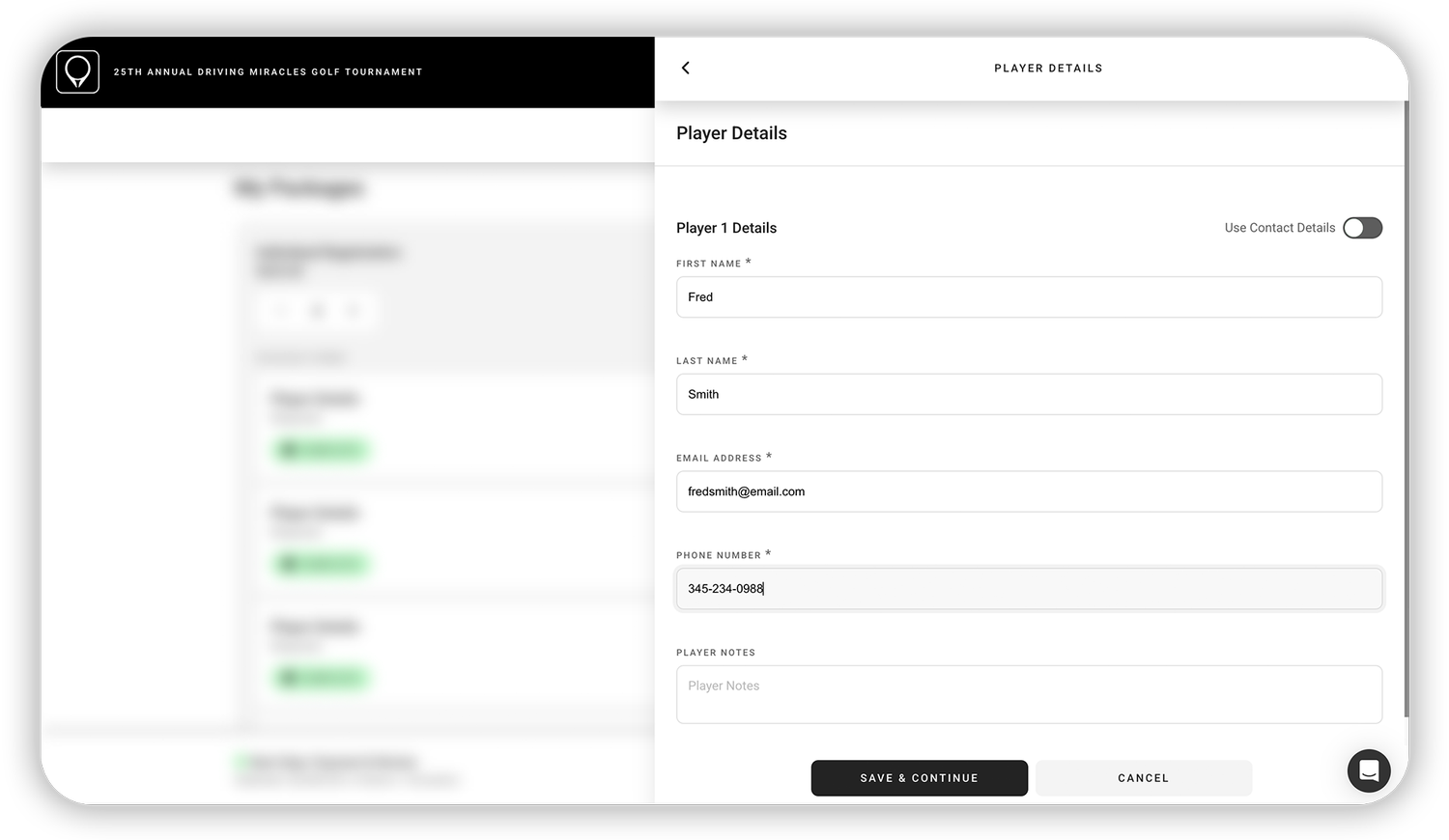
Golfers are prime candidates for donors, so it’s crucial that you capture complete, accurate contact information for each golfer to include in your donor database. Include the following form fields:

  • Name

  • Address

  • Email address

  • Phone number

  • Sponsor information

When sponsors register, your golf tournament form should include fields to upload logos and share website links and messaging.

You’ll also want to ask for additional event specifics on your registration form, such as:

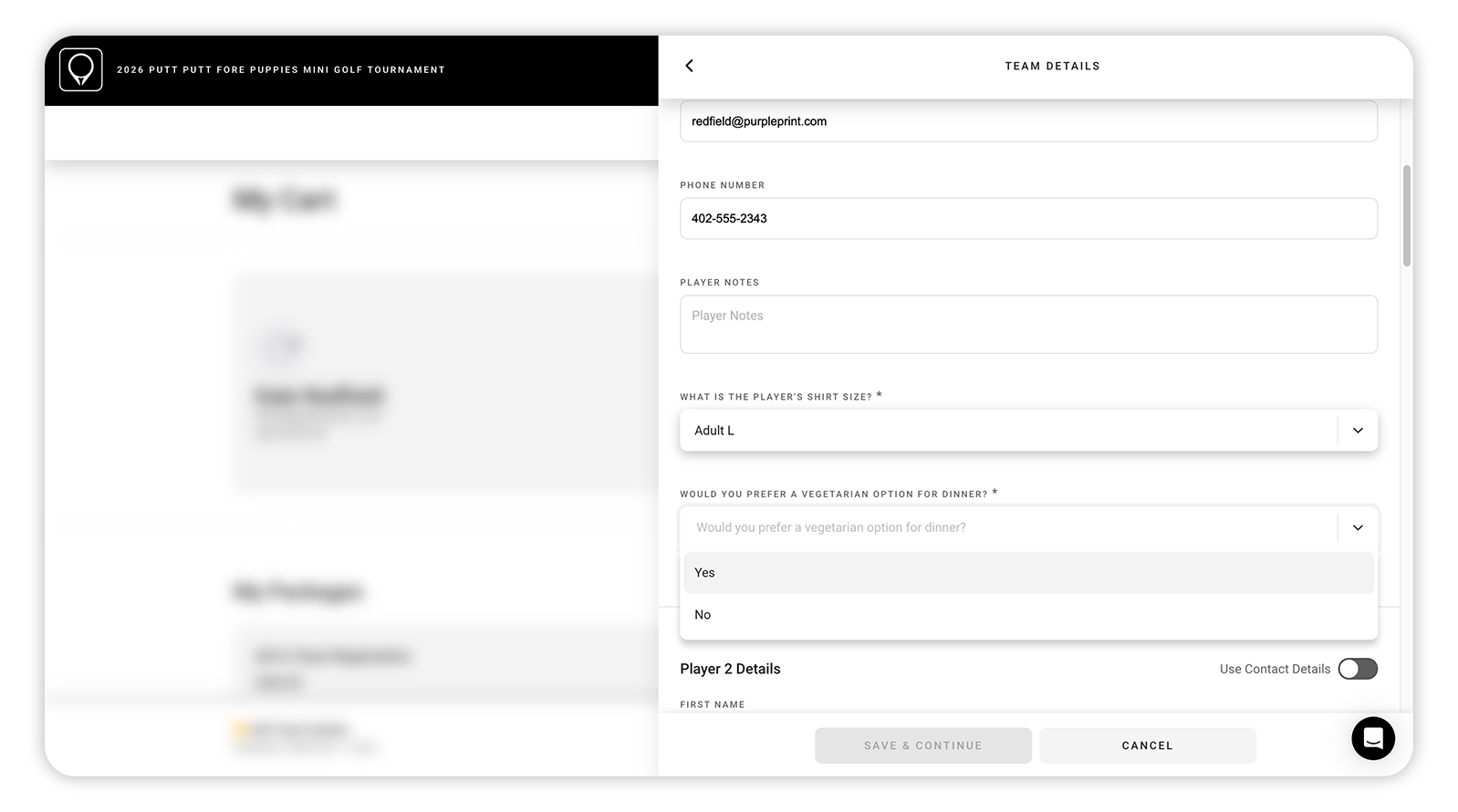
  • Dietary restrictions or preferences. If you’re providing a meal, you’ll want to accommodate any restrictions or preferences.

  • Apparel size. Many tournaments include t-shirts, polos, or other apparel items with registration or as a player gift.

  • Payment information. Instead of relying on paper forms that include cash, checks, or handwritten credit card information, an online form should be equipped with secure payment processing. Golfers submit their payment information when they register, automatically receiving a receipt and confirmation, eliminating manual processes and data entry errors.

With online registration forms, golfer and sponsor registration information can be easily accessed and managed in the software’s back end. There’s no need to bounce between paper forms, emails, information from phone calls, or spreadsheets—it’s all in one place.

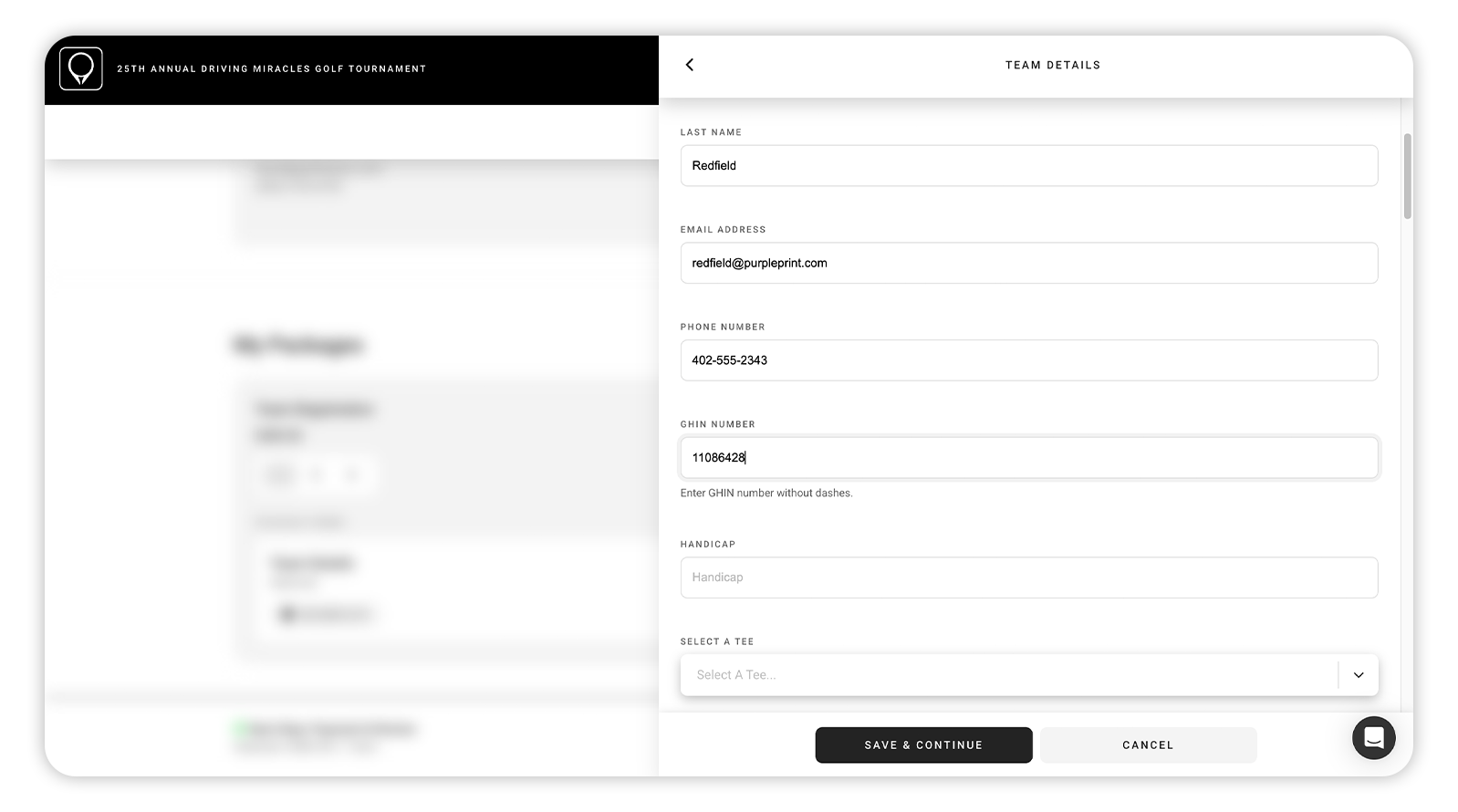
A screenshot of an online golf tournament registration form on an event website.

Using an online registration form as part of a robust golf tournament management platform is a game-changer for tournament organizers, golfers, and sponsors.

What other information should we include on our golf tournament registration form?

Using an event management platform built for golf to power your registration form makes it seamless to collect and manage golf tournament-specific information, like:

  • GHIN number. This is a unique ID for golfers in the Golf Handicap Information Network that tracks golf scores to calculate a handicap.

  • Handicap. A handicap is a number that reflects how many strokes above par a golfer might play.

  • Team pairing preferences. Golfers may want to be paired with friends, family, or colleagues during the tournament.

  • Course preferences. Some golf facilities have more than one course, so it’s helpful to ask which course golfers would prefer to play on.

  • Tee time preferences. While most charity golf tournaments utilize a shotgun start, tee times are also an option. If yours offers tee times, be sure to collect that information during registration.

What are the benefits of using an online golf tournament registration form instead of a paper form?

  • You’ll save time and effort. Tournament planning teams can expect to save 30-40+ hours by utilizing online registration, freeing them up to focus on sponsorships, donations, and the overall tournament experience.

  • It eliminates manual processes. Instead of manually processing paper forms and payments, plus entering and re-entering data, everything is automated as soon as the golfer hits submit—data collection, payment processing, confirmation emails, and receipts.

  • You can better manage cash flow. Payments flow into the platform, where they’re held until you’re ready to request a payout. You can track tournament revenue in real-time and better project profit and loss.

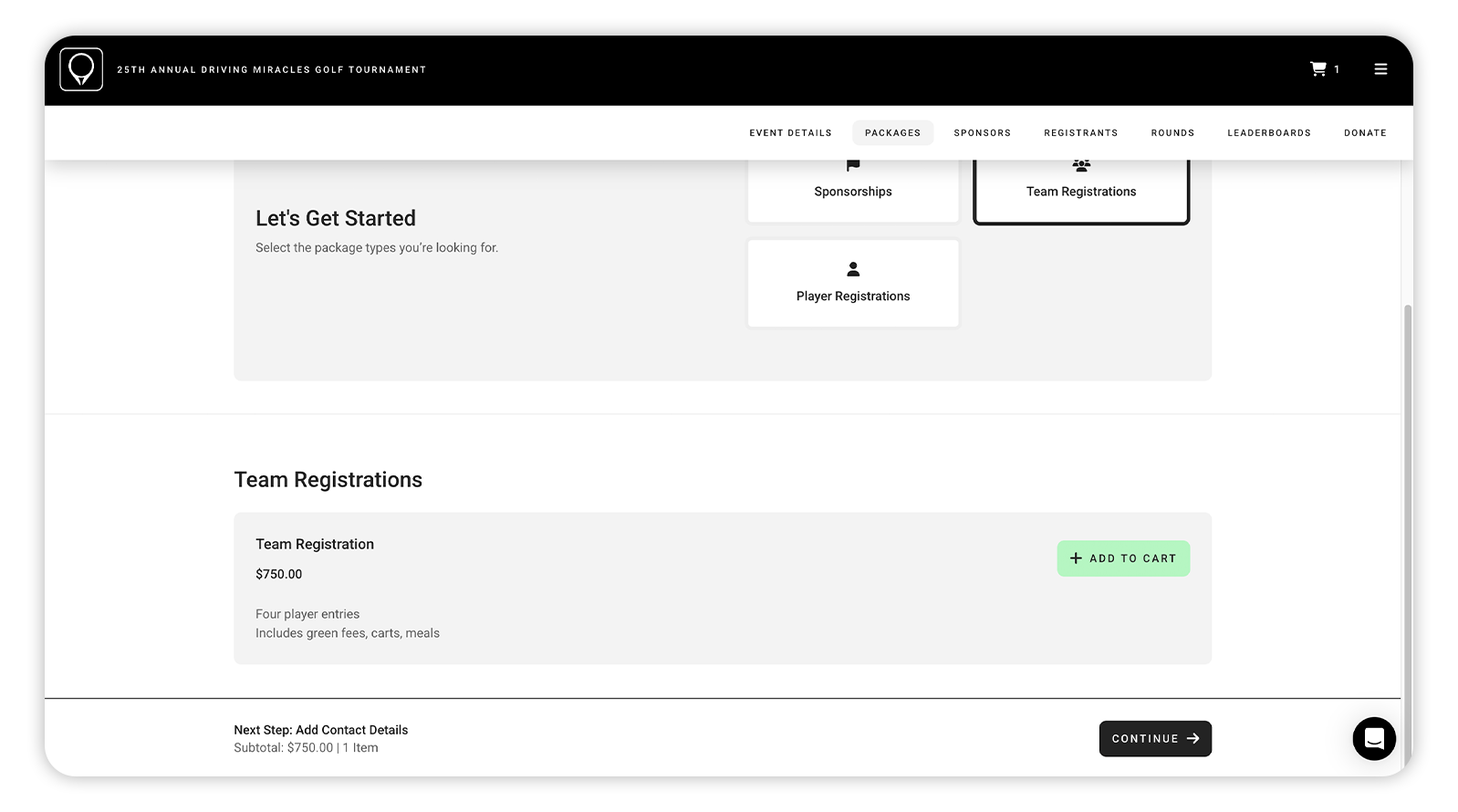
  • It’s easier to upsell. Include add-ons like mulligans, on-course game entry, merchandise sales, and raffle tickets in your registration process, so golfers can simply click to add them to their cart instead of hassling with cash on tournament day.

  • You can track inventory in real-time. When they visit your event site to register, golfers and sponsors can see exactly how many packages are available. In the back end, organizers can utilize waitlists if necessary.

How do we create our own golf tournament registration form?

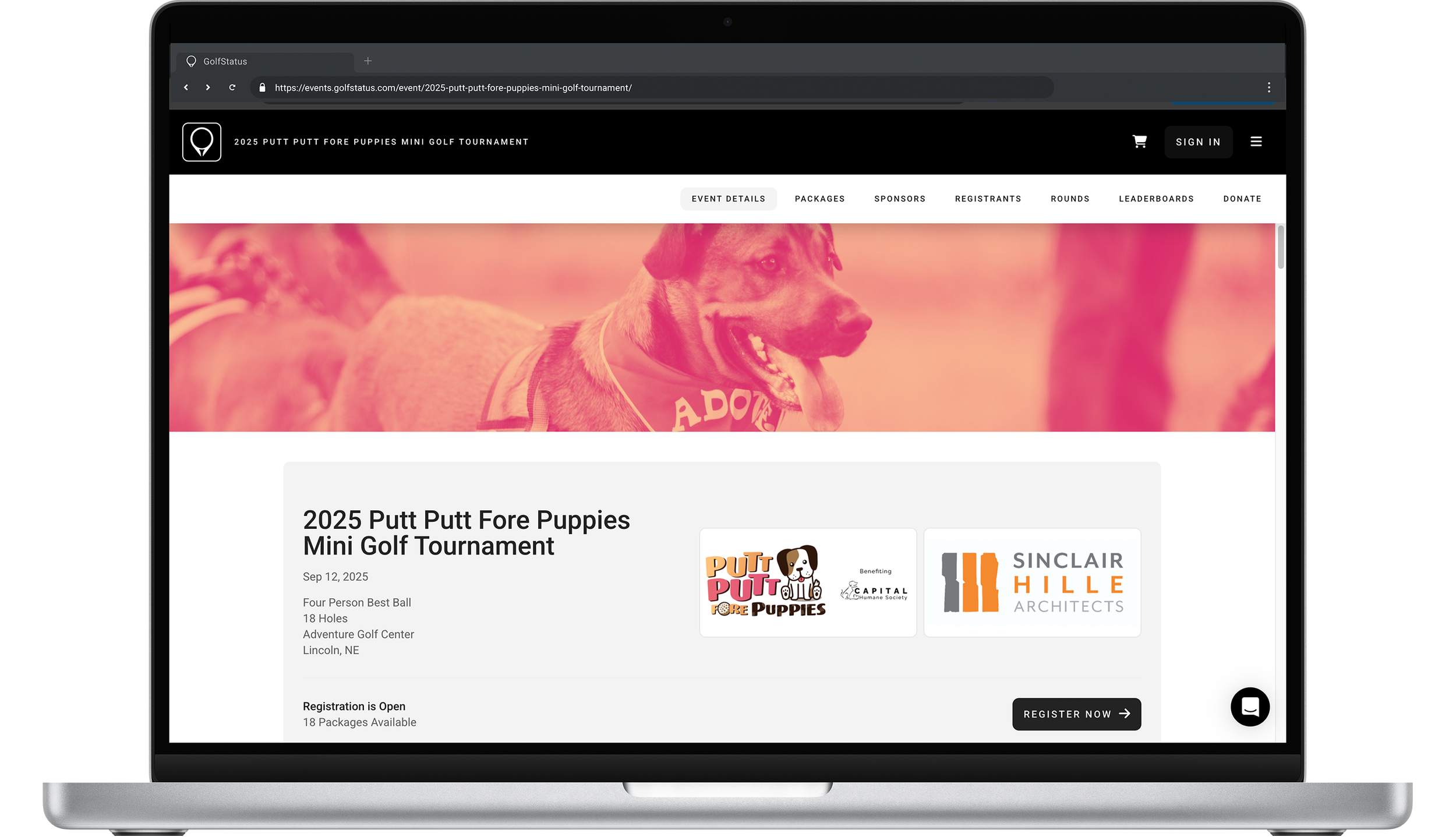
It’s easy! Get started with a tournament management software like GolfStatus and build a tournament, event website, and registration form in minutes. Simply plug your tournament information into the software, add logos and graphics, set packages and pricing, and determine form fields. Share the tournament website link with your networks as soon as the site is live, and you can start collecting registrations and selling sponsorships right away.

Best of all, you’re not on your own! GolfStatus’ team of golf fundraising experts is there to help every step of the way, from building your registration form to going live with your website to answering questions.

Sample Golf Tournament Registration Form

Using an online golf tournament registration form and an event website are game-changers for your fundraiser.


Sample Websites With Golf Tournament Registration Forms

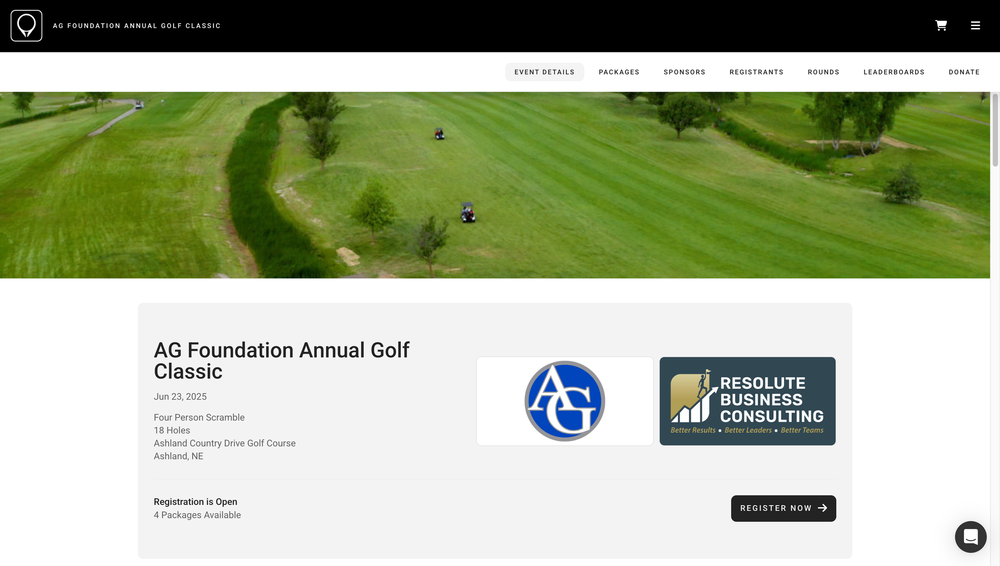
AG Foundation Annual Golf Classic

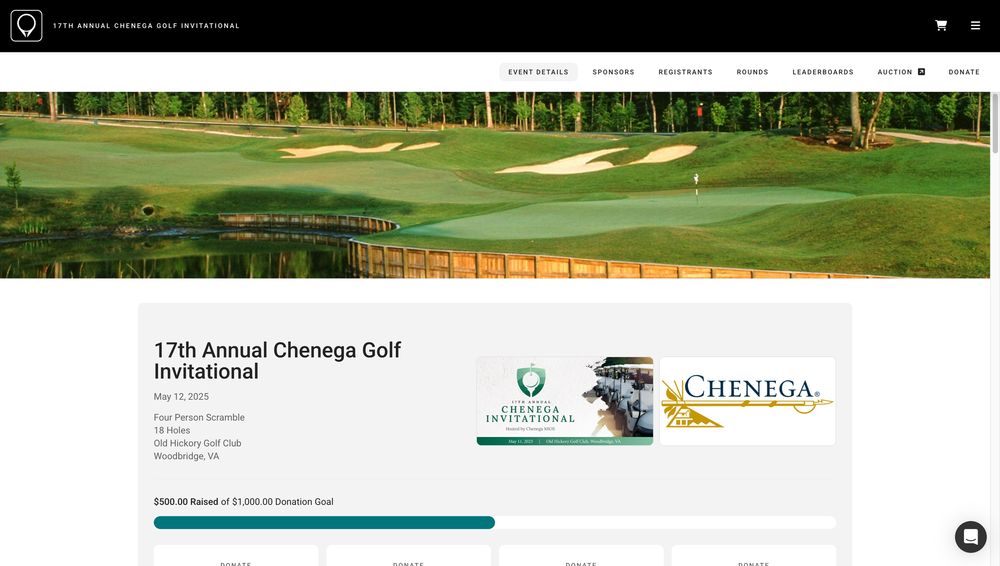
17th Annual Chenega Golf Invitational

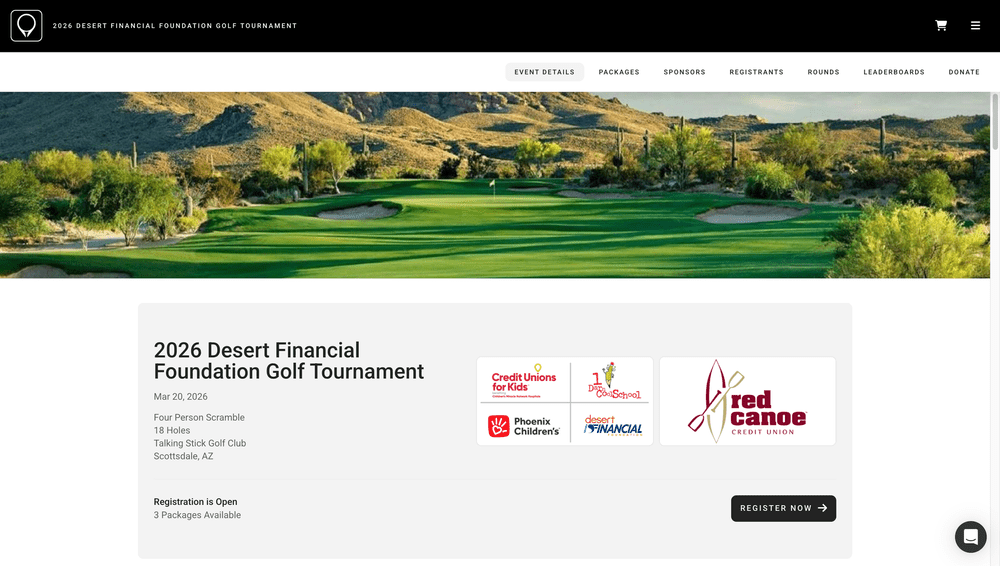
Desert Financial Golf Tournament


Final Thoughts

Your golf tournament registration form does more than just collect names and payments. A clean, intuitive online registration experience signals professionalism, builds trust with golfers and sponsors, and helps your tournament start strong.

By using a golf-specific event management platform to power your golf tournament registration form, you simplify the process, reduce manual work, and gain real-time visibility into registrations and revenue. From capturing donor data and managing sponsorships to selling add-ons and tracking inventory, everything lives in one place—saving your team valuable time and minimizing tournament-day headaches. A well-built golf tournament registration form helps you work smarter and creates a better experience for golfers and sponsors.

About the Author

Jen Wemhoff - Communications Manager at GolfStatus

Jen Wemhoff accidentally discovered her passion for nonprofits in college. An internship while earning a degree in Communications from Doane University led to a 20 year career in the nonprofit sector, where she found a strong desire to be part of something bigger than herself. Her vast nonprofit experience includes roles in marketing, fundraising, and direct programming. When Jen came to GolfStatus as Communications Manager in 2020, she was struck by the power of the sport to raise money to power nonprofit missions. She tells GolfStatus’s story across platforms and channels and develops educational tools and resources to help nonprofits tap into golf’s giving power. Jen, her husband, and two daughters call Lincoln, Nebraska home.

 
 
10 Tips for Choosing Software for Your Golf Fundraiser
 

When it comes to fundraising events, there are plenty of event management platform options out there: CRMs, event-specific platforms, ticketing platforms, peer-to-peer platforms, and more. But how will these work for your golf fundraiser? Can they handle the specific nuances of a golf tournament? Will they make your life easier—or require workarounds and adaptations to make it function the way you need it to?

Two people work on computers at a table.

A purpose-built solution is a must-have to make the most out of your golf tournament’s fundraising potential.

The last thing you need is costly, complicated software for your golf event that drains your time and resources instead of driving fundraising. As you evaluate software options for your golf event, here are 10 tips for choosing the right platform.

1. Use a Purpose-Built Solution

No other fundraising event comes with the level of specificity required for a golf tournament. Generic event management platforms simply don’t have the capacity to handle the unique components of a golf tournament, like team pairings, event formats, hole assignments, handicaps, live scoring, and flighting. Your chosen solution should be built just for golf, with baked-in features to manage everything from registration and payments to sponsor exposure and live leaderboards.

2. User-Friendliness is Non-Negotiable

When tech isn’t easy to use and learn, your attention shifts from the critical tasks of attracting golfers, connecting with donors, selling sponsorships, and providing a great experience to troubleshooting software issues, finding workarounds, and generally wasting your time. Your tournament management software should be intuitive so anyone on your staff or planning team can create an event or duplicate an existing tournament with a few clicks and make changes, additions, and updates quickly and easily. A web-based platform with shared access lets you, your team, and even golf course staff access up-to-the-minute information.

3. Look for Tools to Boost Revenue

If the goal of your golf tournament is to raise money, you’ll want a platform that comes with baked-in tools that help facilitate fundraising, including the ability to collect donations (plus a way to set a donation goal and track your progress), the option for registrants to cover any fees, and easy ways to receive your funds during planning or after the event. Look for a provider that offers tournament add-on options to drive thousands of dollars in additional revenue, like:

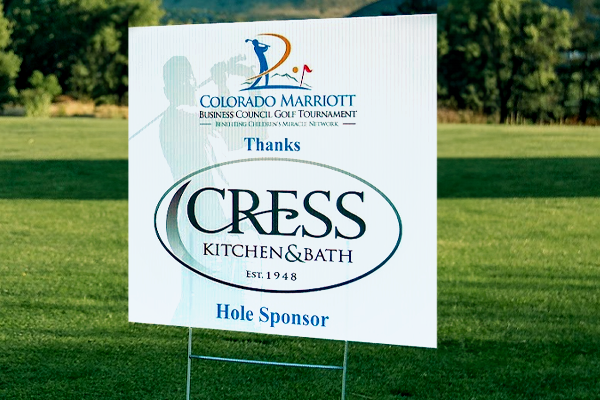
A hole sponsor sign at a charity golf tournament.

Look for a provider that offers tournament add-ons that help boost revenue, such as hole sponsor signage.

4. Save Time & Effort at Every Stage of Planning

Technology can certainly automate time-consuming tasks and manual labor, but poorly designed software or tools that aren’t quite what you need can quickly offset the time-saving benefits of technology with additional training, troubleshooting, and complicated workarounds. Choose a solution that’s both powerful enough to meet your needs and simple enough that you won’t spend hours training staff, trying to work out adaptations, and fixing problems. Look for features that ease common tournament planning pain points, like online registration, pre-formatted documents and printouts, hole assignments, live scoring, and sponsor onboarding.

Any software solution should keep you organized by tracking golfer, sponsor, and donor information in the platform’s backend, and you should be able to easily export donor data for seamless inclusion in your nonprofit’s donor database.

5. Expect a Free, Professional Event Website

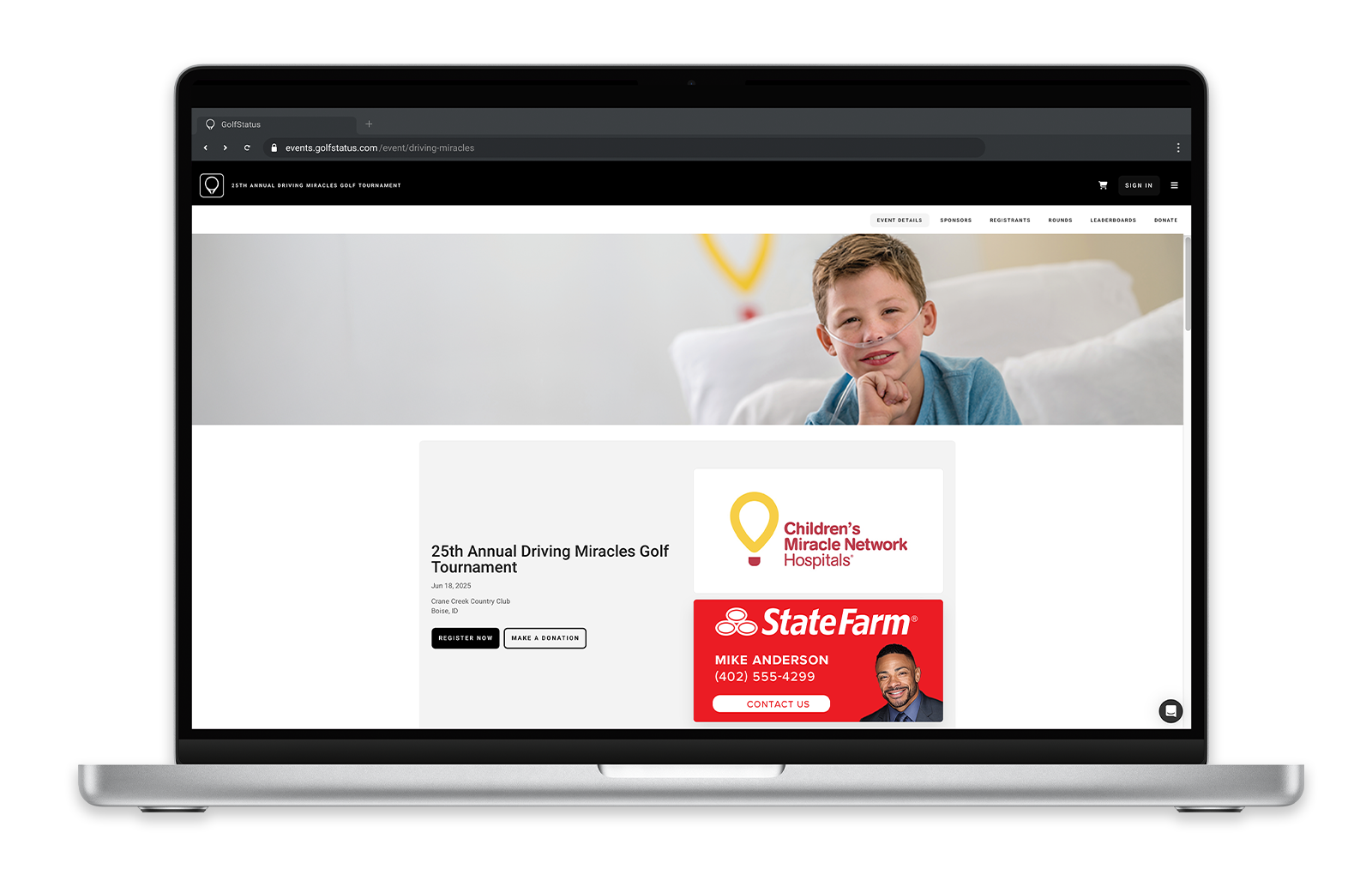
Experienced tournament organizers and event planners will tell you that every fundraising event you hold should come with an event website. When evaluating event management software, ensure that it can generate a clean, sleek, well-designed event website where golfers and sponsors can find more information, register a team, purchase a sponsorship, and pay securely. The event site serves as the home page for the tournament and presents your organization and sponsoring businesses in a professional light, with user flows that make it easy to complete transactions.

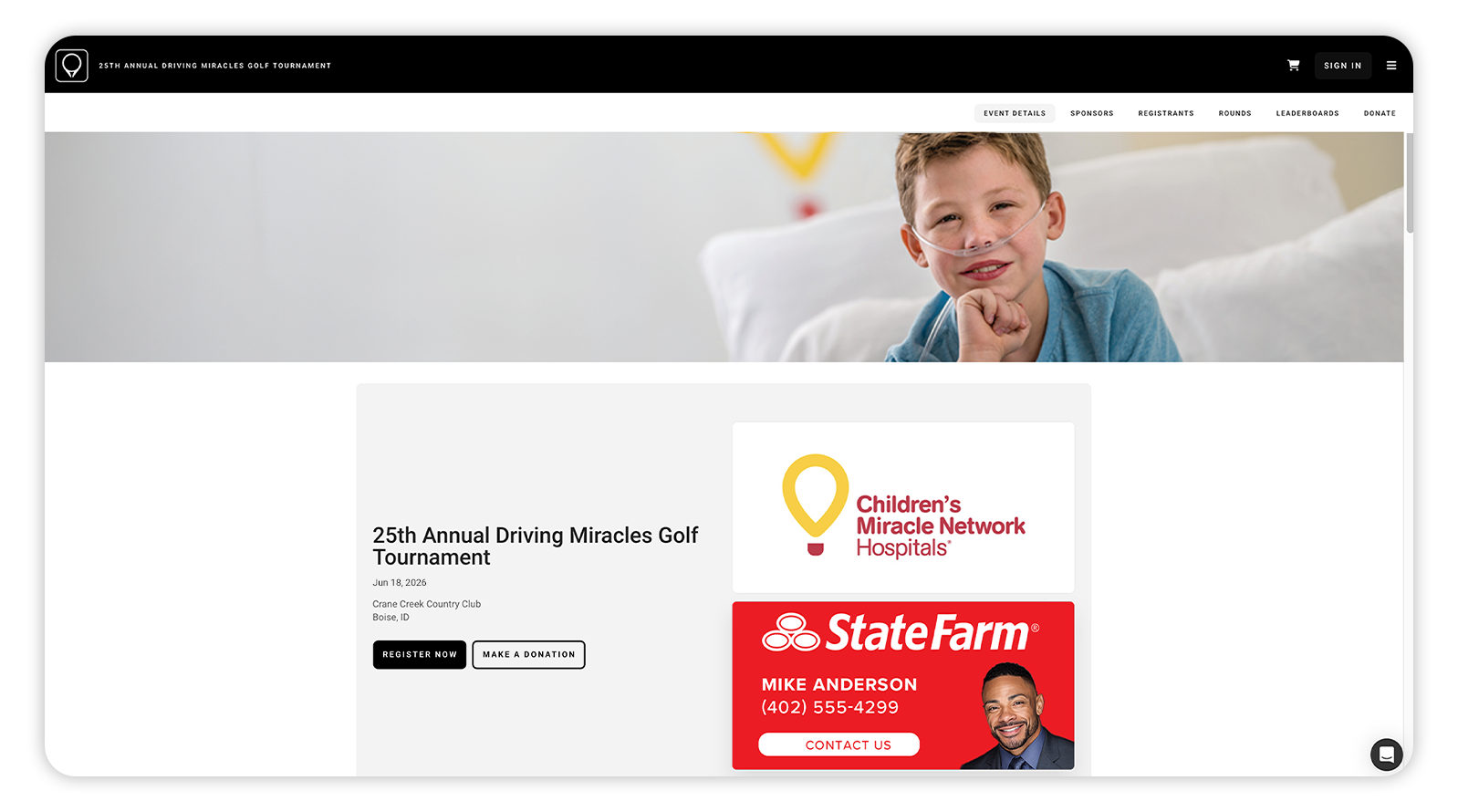
A screenshot of an event website from a golf-specific event management platform is displayed on a laptop computer.

An event website simplifies everything from promotion and marketing to registration and sponsor exposure.

What’s more, with an event site, promotion becomes as easy as sharing a link in email campaigns, social media, your organization’s website, and even on printed pieces with a QR code. This way, folks can commit to your tournament right when they hear about it, instead of filling out a paper registration form and finding a stamp to mail it back.

6. Elevate the Experience for Golfers & Sponsors

The best software lends a professional experience to every aspect of your tournament and gives it instant credibility, which can be especially helpful for first-year events. Processes and materials that look outdated or unsightly can cheapen your event, which can influence the caliber of players and sponsors it attracts. The ultimate goal is to provide a professional experience from the moment someone hears about your tournament and visits your event site to when they submit their team’s score on the live scoring app.

7. You’ll Want Live Scoring (Trust Us)

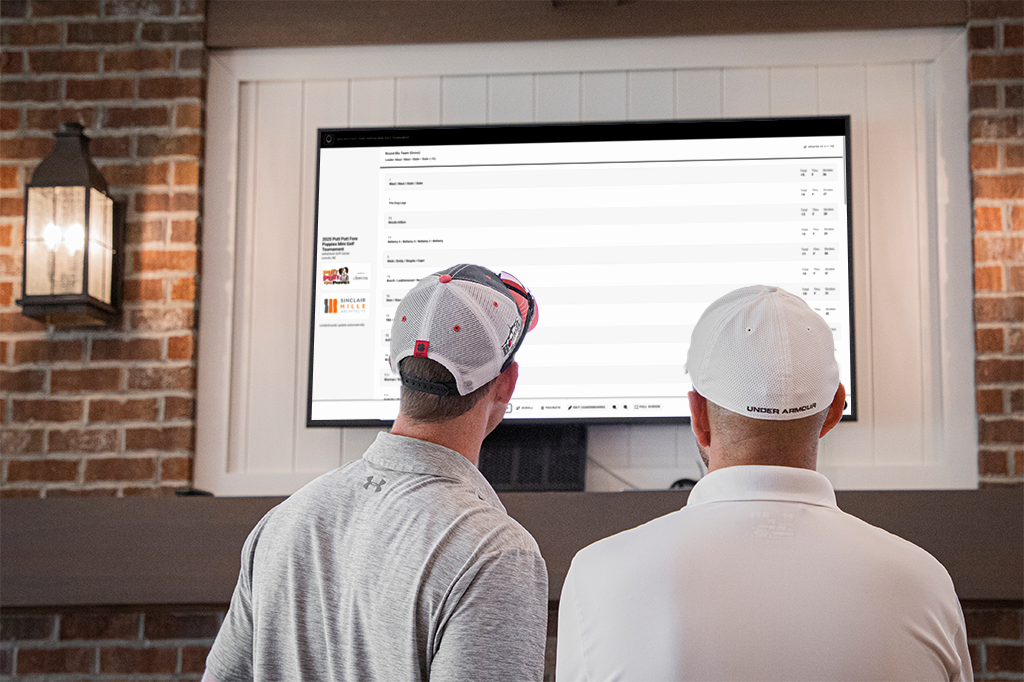
A golf-specific feature—sometimes underrated and underused by tournament organizers—to look for in your tournament management software is live scoring. Teams input their scores on a mobile app, which syncs in real-time to live leaderboards. Golfers can see hole-by-hole standings, organizers can follow the round’s progress and keep the overall event moving smoothly, and golf staff can quickly finalize the tournament’s results because there’s no need to hunt down paper scorecards. Look for a solution that offers professional, glitch-free live scoring with a leaderboard sponsorship that offers digital exposure that can be sold at a premium.

Two men view live leaderboards at a charity golf tournament.

Live scoring and leaderboards engage golfers throughout the tournament and offer sponsors additional digital exposure.

8. Don’t Break the Bank

With limited budgets, nonprofits need solutions that work well and don’t cost a fortune. Software that’s so expensive that it forces you to limit resources in other areas isn’t actually saving time or money. When choosing a tournament software platform, certainly consider baseline costs, if there’s a cost per user or for support, and look out for hidden fees, any upcharges, and tricky contracts. Many solutions offer extremely limited access at no cost and then charge substantially more for necessary features. Look for straightforward pricing, fees, and payout procedures.

9. The Golf Facility Should Love It, Too

Staff at the host golf facility stand to benefit from tournament management software as much as you and your planning team do. You should be able to share access to the platform with golf staff so they can assist with finalizing hole assignments, flighting, tie-breakers, and other golf-specific tasks.

Look for pre-formatted printouts, like scorecards, cart signs, and alpha lists, so golf staff can literally just hit “print” instead of having to create these pieces from scratch, saving them hours and allowing them to provide better service to you and your tournament’s golfers. Some golf facilities have an internal system in place that they rely on to manage and execute outside events and live scoring, but at your request, they may be willing to accommodate whatever platform you decide to use.

10. Demand Free, Responsive & Knowledgeable Support

Failure to provide adequate support is, unfortunately, common among software providers, so look at the level of support provided when choosing a tournament management tool. Be sure to ask about the support you can expect to receive:

  • Are support staff in-house or outsourced?

  • As a user, do you have immediate access to the support you need leading up to, during, or after your event?

  • Is support available seven days a week?

  • What tools are available to assist your team and the golf facility in the evenings and on weekends when events are in full swing?

Bonus points if the support team includes PGA Professionals who know the ins and outs of golf events and fundraising specialists who can provide guidance and coaching on format, pricing, and fundraising enhancers.

Two software support team members look at a computer.

Your software solution should come with responsive, expert support with no additional cost.


Get Started With the Industry’s Leading Tournament Management Software—At No Upfront Cost

GolfStatus’ mission is to help nonprofits tap into golf’s giving power by providing tools, resources, and support to plan and execute lucrative golf fundraisers. Get started with a professional event website, online registration and payment processing, live scoring, exclusive sponsorships and add-ons, and live support seven days a week at no upfront cost. Connect with the GolfStatus team to make your next golf event the best one yet!


How to Activate Third Parties to Run Golf Events for your Nonprofit
 

by Jen Wemhoff, Communications Manager at GolfStatus

Golf tournaments remain one of the most powerful tools for third parties—like corporate partners, passionate supporters, and volunteers—to raise money for nonprofits and causes they care about. Golf’s continued popularity and its capacity as a fundraising tool make it an ideal fit for folks who are passionate about golf and a good cause.

Golf is a great way to mobilize passionate supporters or corporate partners to raise money for your nonprofit.

More than most fundraising events, charity golf tournaments offer unique advantages for the benefiting nonprofit and the organizer. For nonprofits, these events create a passive income stream that doesn’t require significant internal bandwidth like a dedicated staff member or line item in the budget. What’s more, they also build awareness and expand visibility for your mission and programs. For event organizers, particularly companies and corporate entities, there’s a major brand lift from supporting a good cause and high engagement with a typically affluent and influential demographic.

By empowering third parties to run golf tournaments on your behalf and equipping them with the right tools, you can grow your nonprofit’s impact with minimal lift. Here’s how:

1. Start with your network

Your best bet is to start with what you already have: past event participants, sponsors, volunteers, donors, and board members. If your nonprofit has hosted golf tournaments before, revisit those participant lists. Consider sending a dedicated campaign inviting those who supported your organization through golf in the past to organize a tournament that benefits your organization. The campaign could include email, direct mail, individual phone calls, a survey, or a mix based on your team’s capacity. You might also:

  • Use social media to ask your audience who plays golf or who simply likes organizing events.

  • Include a call to action in year-end giving appeals to get in touch if they’re interested in event planning or golf.

  • Create a dedicated page on your organization’s website that outlines how supporters can host a golf tournament to benefit your cause.

Do some pre-planning before you start your outreach so you have some pieces and resources already in place to provide to people who are interested. Beyond just making the process easy (see #2 below), you want to set these third-party tournaments up for success, so make sure you’re prepared to be a partner in the process.


Pro Tip:

GolfStatus’s online resource library is packed with free guides, templates, checklists, and other downloadable tournament planning tools. Share these with current and potential event organizers to help get them started.


A woman tees off while three others watch at a charity golf tournament.

Provide tools—like golf event management software—to make planning a golf fundraiser as easy as possible to people and businesses in your network.

2. Make It Easy for organizers

Even the most passionate supporters will appreciate tools that make planning a golf tournament easier. That’s where golf event-specific technology comes in. The right platform streamlines planning, automates administrative tasks, and includes built-in fundraising features, making it easier for anyone to launch, run, and repeat their tournament year after year.

Your event management platform should be able to function as the “bank” for your golf tournament, facilitating how you collect, hold, and disburse the funds raised from your event. When some registers a team, becomes a sponsor, makes a donation, or purchases an add-on, those funds should be securely processed and held in escrow until after the event. Once it concludes, those funds can be distributed directly to your organization, so both your nonprofit and the event organizer have peace of mind and clear financial accountability.

You might also consider providing the organizer with a media kit full of logos, brand guidelines, and key messaging to help your brand stay consistent. When it’s easy, it’s more fun, more rewarding, and more likely that they’ll keep the effort going.


PRO
TIP:

Say thank you whenever and wherever you can to these third-party organizers. Public shoutouts on social media, in newsletters or blogs, or on your organization’s website are powerful, but a personal touch will go a long way in expressing your gratitude. Send a handwritten note and follow it up with a phone call.


3. Standardize with golf-specific technology

Fundraising or event management platforms aren’t one-size-fits-all. Golf tournaments have unique needs that require specialized tools to manage effectively. Look for a platform that offers an attractive event website with online registration (which saves organizers a ton of time and effort), plus easy access for all members of the planning team and the golf facility to work together and keep everything organized in one place.

It should be built just for golf events, with features to handle everything from hole assignments and live scoring to digital sponsor exposure and pre-formatted scorecards and cart signs. A dedicated landing page listing all events that benefit your organization makes it easy for folks in your network to find and support them.


PRO
TIP:

Standardizing tech across all third-party golf fundraisers means your donor data is uniformly collected (see #4 below) and reported for easy integration into your CRM for additional donor stewardship.


A dedicated landing page listing all events that benefit your organization makes it easy for people to support you through golf.

4. Capture & Manage Data

Donor and participant data are essential, especially when a third party is planning and managing the event. You can’t use the information you don’t have! Seamlessly collecting this information during the registration process is crucial to understanding who is supporting your organization through golf. This way, both organizers and your team can access robust reporting tools to see who’s playing in, donating to, and sponsoring golf events tied to your nonprofit.

This valuable data helps your nonprofit build stronger relationships, grow donor pipelines, and make data-driven decisions that maximize future fundraising efforts. Using golf event management technology makes collecting and managing this data simple and efficient.


PRO
TIP:

Use this donor and participant data to segment follow-ups and personalize donor stewardship efforts. Add tags, source codes, or other identifiers to your CRM to track who came through third-party golf events.


built for golf, built for good

GolfStatus is the industry leader in event management tech built specifically for charity golf tournaments. Nonprofits can easily activate third parties to run successful, lucrative, and data-rich golf fundraisers without having to oversee every detail. Through our Golf for Good program, 501(c) organizations and those hosting tournaments to benefit them are eligible for no-cost access to the platform.

From acting as the “bank” to holding funds until post-event disbursement, to providing dedicated support, customizable websites, and donor data capture, GolfStatus makes it easy for supporters to turn a round of golf into real impact.

Book a Meeting With Our Team to Learn More


Bear’s Best Atlanta Leverages GolfStatus to Streamline Outside Events
 
Photo of a golf course tee box and water hazard.
 

Partner Snapshot

Named one of the top residential golf courses in the U.S. and top 10 courses in Georgia by Golfweek, Bear’s Best Atlanta is comprised of iconic holes designed by Jack Nicklaus from around the world. As such, the semi-private club in Suwanee, Georgia offers a unique playing experience, with hole designs from famous golf courses designed by Nicklaus, including Castle Pines, Muirfield Village, PGA National Championship Course, Sherwood Country Club, Shoal Creek, and Glenagles, all in one place.

“It’s a course that has something for every golfer, and that is part of the appeal,” says Jenni Tyler, Event Sales Director at Bear’s Best Atlanta. Recent renovations of the pro shop, clubhouse, and course bunkers give the high-end club even more appeal to members and other golfers in the Atlanta metro area.


The Challenge

Bear’s Best regularly hosts charity golf tournaments at its facility. Its unique course offering, attentive staff, and top-notch event experience make it a great choice for local organizations holding golf events. “At Bear’s Best, we’re all about enriching lives and building relationships, and charity tournaments are a big part of that,” Jenni says.

With so many onsite events to manage and execute, Jenni’s sales team and the golf staff needed a tool to streamline outside outings to maximize efficiency but still provide top-notch support for event organizers.


The Solution

Bear’s Best is part of the Invited Clubs family of clubs across the U.S. For years, Invited has worked with GolfStatus for each of the club’s Charity Classic events. At Jenni’s previous club, she worked with several event organizers who used GolfStatus to collect registrations, manage golfer and sponsor information, and pass off hole assignments to the club’s golf staff. When Jenni came to Bear’s Best, Invited’s existing relationship with GolfStatus and her previous experience with the platform made it the tool of choice for outside charity tournaments at Bear’s Best.

 
Four golfers walk on the green of a golf course holding putters.
 

The Results

Efficiency & Organization

Outside events are key to golf facilities’ bottom line; but they tend to take a lot of staff time, both on the front end, educating organizers and helping with best practices, and in the days leading up to a tournament, collecting golfer information and creating printouts. “GolfStatus gives us more time,” says Jenni. Instead of spending hours tracking down and inputting golfer names, assigning holes, designing cart signs, and creating reports, “we just log in and are ready to go in about 20 minutes since everything is in one spot.” The platform auto-generates alpha lists, cart signs, and reports, so all golf staff have to do is hit “print” when they’re making their final preparations.

Jenni says the biggest value GolfStatus brings to Bear’s Best is saving time and creating efficiencies. A big part of that is having the golfer information available to the golf staff ahead of time. Because golfers register via an event website where they submit their information and payment, staff don’t have to take that information over the phone or bounce between PDFs and spreadsheets. Everything is tracked and organized in one accessible place. Online registration is great for organizers, too—they can spend their time attracting golfers and selling sponsorships instead of dealing with paper forms, checks, and receipts. “They don’t have to figure out how to get a website set up, set up a Venmo or other way to take credit cards, or deal with payments the day of,” Jenni says.

All tournament-related staff at Bear’s Best, from the General Manager, to Jenni, to the golf pro, and assistant pro, all have logins to GolfStatus so they can make changes and adjustments up until the last minute.


GolfStatus is such a timesaver for managing names, hole assignments, knowing how many guests to expect and carts needed. It lets us prepare for the tournament and have staff ready to provide a great experience all around.
— Jenni Tyler, Event Sales Director at Bear’s Best Atlanta

Live-scoring is another piece of the puzzle for golf tournaments at Bear’s Best. Golfers submit their scores in the free GolfStatus mobile app, which syncs to live leaderboards. Golfers can see current standings, use the app’s free hole-by-hole GPS to get accurate yardage to the pin, and even engage with the tournament’s host organization by making a donation to their cause. On the golf facility side, live-scoring helps staff track the round’s progress so they can be prepared for awards, a banquet, or other activity, and makes finalizing the tournament’s results a breeze. “Live-scoring is so much more efficient in finalizing scoring and getting things ready for awards,” Jenni says.


success story: North Gwinnett Dugout Club

The annual North Gwinnett Baseball Golf Tournament has been held at Bear’s Best for years. Organizers signed on with GolfStatus for the 2023 event, and Jenni says they had tremendous success. The previous year, prior to using GolfStatus, only about five teams prepaid when registering for the tournament, which left organizers hunting down teams for payment the day of the event and dealing with no-shows. After signing on with GolfStatus (and qualifying to use it at no cost through the Golf for Good program), they increased their field size to 144, collected all payments ahead of time, and brought even more sponsors on board. “Overall, they raised double what they had in years prior!” Jenni says.


best-in-class service

The organizations who host events at Bear’s Best run the gamut in terms of planning experience. “Some come to us and don’t know a thing about golf tournaments, some have been doing events for years,” Jenni says. The great thing, she points out, is that GolfStatus can help both types of events streamline planning from start to finish, stay organized, and seamlessly work with Jenni and Bear’s Best’s golf staff. “Being able to refer people to GolfStatus, who I know will be able to answer questions and provide the same level of service and support that we expect at Bear’s Best, takes so much off of my plate,” Jenni says, adding that GolfStatus also takes some of the pressure off of the organizer.

“We use GolfStatus as a selling point, quite honestly,” says Jenni. “Particularly for brand new event organizers who don’t think they can pull a tournament off, I tell them, ‘Go talk to GolfStatus, they’ll be your backup on things that are tedious so you can focus on networking and marketing the tournament.’” In fact, Jenni says several tournaments have booked with Bear’s Best and come on board with GolfStatus on the same day.

GolfStatus’ in-house support team provides backup to golf facility staff, helping guide tournament organizers as they make important decisions about event format, dates, add-ons, sponsorships, and pricing, with the ultimate goal to have a successful, lucrative tournament. “Both our team and GolfStatus are focused on making every event the best it can be.”

Image of a golf course with a tee box and water hazard visible.
 

invited clubs charity classic

Each club under the Invited Clubs umbrella hosts an annual Charity Classic event, which raises money for Invited Clubs’ Employee Care Foundation and a local charity. Bear’s Best Charity Classic benefits the ECF and First Tee of Metro Atlanta. “We get really excited about the Charity Classic event,” says Jenni. She has personally benefited from the ECF, which supports Invited Clubs’ employees in the midst of crisis such as home loss, death, illness, or domestic situations, so the cause hits home for her. “It’s an amazing resource for employees, but we also want to help youth through First Tee as they’re going through life and learning about golf,” Jenni says.

Running Bear’s Best Charity Classic event through GolfStatus puts Jenni in organizers’ shoes, and she continues to see the value in the platform. “We’re able to be efficient and stay organized while we raise money for great causes,” she says.


golf facilities & event planners save time with golfstatus

Golf facilities like Bear’s Best benefit as much from GolfStatus’ tournament management tech as event organizers. Facility staff and the planning team can share access in GolfStatus’ backend to manage golfer and sponsor information, finalize team pairings and hole assignments, and save time from start to finish. Want to learn more about how your organization or golf facility can save time and raise more money with GolfStatus? Hit the button below to get in touch!


Couple Honors Daughter by Raising $100k for Heart Care Through Golf
 

Sam and Melissa Steinberg’s journey from expectant parents to ICU veterans to creating a foundation to honor their daughter started at a routine ultrasound when Melissa was 20 weeks pregnant. They received a devastating diagnosis—Cameron had hypoplastic left heart syndrome, a congenital heart defect in which the left side of the heart does not develop properly and cannot pump enough blood to meet the body’s needs.

Not only did they have to cope with this unexpected diagnosis, but try to understand the complexities, treatment options, and prognosis of the condition at the same time. “You have this bomb dropped on you and then have to try to make sense of what’s happening,” Sam says. He explains that a heart doctor brought out a piece of paper with a diagram to explain how Cameron’s heart worked, but with all the emotions of the moment, “It didn’t make sense or help us understand.”

Cameron was diagnosed at Nationwide Children’s Hospital in Columbus, Ohio, near where the Steinbergs lived, but she was transferred to C.S. Mott Children’s Hospital at the University of Michigan in Ann Arbor after she was born, where a plan was in place to treat and correct the defect. But in addition to her heart issues, Cameron also battled a lung disease that ultimately claimed her life at just nine weeks old.


Sam, Cameron, and Melissa Steinberg


Sharing Their Experience

It was during the weeks the family spent at Mott that the Steinbergs learned about the relative lack of funding devoted to research into congenital heart defects. And it was then that the family decided to do something to help other families affected by these heart conditions.

Sam and Melissa received a care package from a family that had spent time in the cardiac ICU. “It was filled with simple things—a soft blanket, water bottles, gum, puzzles,” Sam says. “But it came from someone else who had lived in the ICU and knew what would be helpful.” That inspired them to think about how they could use their experience to help families going through the same ordeal.

They started small. While Cameron was still in the hospital, they had t-shirts made with the #CamiStrong logo to raise money that bought books and stuffed animals for kids undergoing open heart surgery. After Cami’s death, they wanted to do even more, and settled on a golf tournament as a way to bring people together in her memory and raise a significant amount of money for the newly established Cameron Steinberg Foundation.

“Our mission doesn’t stop even without her,” Sam says. “We will carry on her legacy to help other heart patients and families.”


Proceeds from selling t-shirts with the #CamiStrong logo were used to purchase books and stuffed animals for kids undergoing open heart surgery.


Play It Forward & The Cameron Steinberg Foundation Golf Classic

Dr. Michael Gaies was one of Cameron’s cardiologists when she was in the cardiac ICU at Mott Children’s Hospital. The family formed a strong bond with Dr. Gaies, who, as Sam says, really took them under his wing and made them feel like they were part of his family. “He had to deliver some really tough news to us but never left a stone unturned and went out of his way to get additional opinions about her treatment,” Sam says.

Sam and Melissa had many conversations with Dr. Gaies about the lack of funding for congenital heart defects in children and resources for families while at Mott, and he was a staunch advocate for the creation of the Cameron Steinberg Foundation and believer in its mission. They also talked a great deal about their love of golf and the sport’s capacity to rally support and raise money for a cause. Sam’s dad’s experience running a series of golf tournaments made it a natural choice for a fundraiser. “People tend to be willing to open up their wallets and donate at a golf tournament,” Sam says.


Dr. Michael Gaeis was one of Cameron’s cardiologists at C.S. Mott Children’s Hospital. He is a staunch supporter of the Foundation and has participated in both golf fundraisers.


People tend to be willing to open up their wallets and donate at a golf tournament.
— Sam Steinberg, Cameron's Father & Co-Founder of Cameron Steinberg Foundation


The inaugural Cameron Steinberg Foundation Golf Classic was held in May of 2021 and raised about $30,000 for a research fund in Cameron’s name at Mott Children’s Hospital. 

A few months after the golf tournament, Dr. Gaies came across an Instagram post for Play It Forward, a joint campaign of GolfStatus and Dormie Network, which asked people to nominate a golf fundraiser to receive a $10,000 donation. Dr. Gaies believed so strongly in the Steinberg’s work through the Foundation that he submitted a nomination to Play It Forward: “This donation could really elevate the possibilities for next year’s tournament and I have no doubt that the Steinberg family could give a huge return in that investment. They are special people and so passionate about making Cameron’s life meaningful and everlasting.”


Proceeds from the 2022 fundraiser were split between C.S. Mott Children’s Hospital in Ann Arbor, Michigan and Nationwide Children’s Hospital in Columbus, Ohio.


Year Two: Half the Administrative Work & Double the Proceeds

In the tournament’s first year, Sam relied on Venmo to collect credit card payments, processed cash and checks, then had to reconcile all payments on multiple spreadsheets, send receipts, and manually make pairings and hole assignments. “It was truly a headache,” Sam says.

After the tournament was nominated for Play It Forward following the 2021 event, Sam decided to come online with GolfStatus for the 2022 fundraiser to help reduce the administrative load. As a nonprofit, the Foundation qualified for the Golf for Good program, which provided access to GolfStatus’s entire golf event management tech at no cost. “Obviously, our goal is to raise as much money as possible, so hearing that we get all the benefits of using GolfStatus without losing a chunk of our proceeds was huge,” Sam says.


Obviously, our goal is to raise as much money as possible, so hearing that we get all the benefits of using GolfStatus without losing a chunk of our proceeds was huge.
— Sam Steinberg, Cameron's Father & Co-Founder of Cameron Steinberg Foundation


Working closely with Sam, the GolfStatus team built an event website for the golf tournament, along with custom registration packages. Golfers and sponsors could view and purchase available packages on the site, submit payment, and even make a direct donation to the Foundation. “The website was great—I didn’t have to create a site from scratch and it was a one-stop shop for people to register, become a sponsor, or make a donation,” Sam says. What’s more, sponsors could upload their logos to instantly appear on the sponsor page of the website, not only saving Sam time in collecting and posting those assets, but providing the sponsor more exposure and more return on their investment.


The 2nd Annual Cameron Steinberg Foundation Golf Classic event website.


The golf tournament software includes a number of golf-specific features to make handling those details easy and efficient, including live scoring and leaderboards, drag and drop hole assignments, and pre-formatted printouts. “I loved the printouts,” Sam says. “It was so cool to see Cameron’s logo on them.” With just a few clicks, the software generates professionally formatted score cards, cart signs, and alpha lists with the tournament or organization logo plus the Technology Sponsor logo, saving organizers a ton of time and hassle (and providing the Technology Sponsor even more bang for their buck).

Sam says the biggest benefit of upgrading to GolfStatus was having everything in one place. “Being able to see who registered or made a donation and not having to try to reconcile a bunch of different payments was so helpful,” Sam says. “Using GolfStatus cut my administrative work in half.”


Using GolfStatus cut my administrative time in half.
— Sam Steinberg, Cameron's Father & Co-Founder of Cameron Steinberg Foundation


Thanks to Dr. Gaies’s nomination, the Cameron Steinberg Foundation Golf Classic was chosen as the winner of Play It Forward. The $10,000 donation gave them a headstart in their fundraising efforts, helping crush the tournament’s 2022 goal of $50,000 and raising more than $64,000.

Proceeds from the tournament will help fund a hypoplastic left heart syndrome 3D model that uses virtual reality to help doctors, patients, and families better visualize, understand, and treat these heart conditions. “When Cameron was diagnosed, a tool like this would have been important in helping us understand the condition,” Sam says. “We’re super excited about this!”


Golf for Good Program

Qualifying nonprofit organizations, like the Cameron Steinberg Foundation, can get no-cost access to GolfStatus’s entire golf event management platform through the Golf for Good program. With solutions to streamline planning and tools to raise more money, GolfStatus helps nonprofits tap into golf’s giving power. Get qualified by clicking the link below or email us directly at [email protected].


Therapeutic Riding Program Builds On Its Golf Fundraiser’s Success


Organization Snapshot

Sarah Valentine’s vision for Riverside Ranch was simple—combine her love of horses with her innate desire to help people with special needs. She grew up riding horses, but after her grandfather passed away, she discovered therapeutic riding and felt called to create a nonprofit dedicated to using this medium to help people coping with challenging circumstances in their lives.

After intensely fundraising for over a year and a half, and a postponement due to COVID-19, Sarah opened the Ranch’s doors in July 2020. “We literally built this from the ground up, with dirt and a dream!” Sarah says. She’s grateful for the strong community support and dedicated volunteers who help empower clients dealing with autism, Down syndrome, vision impairment, cancer treatment, grief, and other conditions through therapeutic riding. Most of their riders aren’t able to participate in traditional recreational activities, so therapeutic riding not only lets them have fun, but helps with muscle strength, cognitive skills, and confidence. “At Riverside Ranch we empower different abilities and give them an opportunity to shine,” Sarah says. “When they ride, they build strength and belief in themselves and walk away feeling celebrated.”


Riverside Ranch empowers kids and adults coping with autism, Down syndrome, vision impairment, cancer treatment, grief, and other conditions through therapeutic riding.


The Challenge

Because Riverside Ranch opened during the early stages of the COVID-19 pandemic, Sarah knew her options for traditional fundraising events would be limited. The idea for a golf fundraiser came simply from observing the golfers that flocked to the golf course near where Sarah lives. “The golf course never closed,” she says, leading her to team up with the organization’s board president to explore launching a new charity golf tournament. Beyond raising mission-critical funds, Sarah says the idea for a golf tournament meant they could spread the word about what the Ranch does and who it serves.

Neither had planned a golf fundraiser before, and though both were concerned about COVID-related restrictions, they felt confident moving forward with a golf event. Unsure of where to start or how to make the process less cumbersome, they initially tried setting up registration through Riverside Ranch’s website. “That ended up making things way too complicated and not at all user-friendly,” Sarah says. They decided to seek out simpler, more efficient options.


The Solution

A Google search led them to GolfStatus as the solution to online registration and streamlining planning. “We saw GolfStatus and knew it was just what we needed,” Sarah says. In the golf tournament’s first year, the software helped give the tournament some structure and saved hours of time on administrative tasks. As a nonprofit organization, Riverside Ranch qualified for GolfStatus’s Golf for Good program, which allowed them to use the platform at no cost, which was a huge selling point for Sarah and her team.


We saw GolfStatus and knew it was just what we needed.
— Sarah Valentine, Executive Director at Riverside Ranch


The Results

In the tournament’s first two years, Riverside Ranch raised over $40,000. These funds help support the Ranch as a whole and add a third horse to its stable, allowing them to serve even more riders. Over 40 teams and sponsors supported the tournament in its two year tenure. 


Tournament format

Four Person Scramble

Dollars raised

$40,000

Additional fundraising

Mulligans, red tees, silent auction


Managing Registrations & Sponsorships

The event website was the home base for the golf fundraiser, and where all promotional materials sent golfers and sponsors. With just a few clicks, folks could purchase teams and sponsorship packages right on the spot. Sarah says creating custom sponsorship packages and being able to carry those over from year to year was super helpful, and the software made it easy to manage sponsor logos and assets. Sarah approached local businesses and contacts from families and friends as sponsors and sent them directly to the event website. “When people hear about our mission and what we’re doing at the Ranch, they want to be a part of it!” she says. The tournament involved 40 sponsors over two years

What’s more, online registration meant no dealing with multiple platforms, spreadsheets, checks, or receipts. “Online registration was so great,” Sarah says. “It’s the expectation for events anymore and made everything so easy.” She could log into the tournament management system’s back end and see who had registered, which sponsorships had been sold, and manage all the details in one easy-to-access place.


Online registration was so great. It’s the expectation for events anymore and made everything so easy.
— Sarah Valentine, Executive Director at Riverside Ranch


An event website makes it easy to promote the tournament, share information about the event, and sell team and sponsor packages.


An Easier Year Two

The first year of the golf tournament came with building the event’s infrastructure, including processes, sponsorship and team packages, pricing, designs, and promotional materials. Because Sarah employed GolfStatus from the get go, she didn’t have to manage multiple spreadsheets, process a ton of checks and receipts, and spend hours and hours doing administrative busywork. Instead, she could focus on promoting the event to attract teams and sponsors and making the tournament experience top-notch.

In year two, Sarah says the entire process was easier from start to finish. She worked with the GolfStatus team to simply copy the 2021 event for 2022, so there was no need to start from scratch. A few quick updates to the event date, course information, team and sponsorship packages, and the event website was up and running and ready to accept registrations.


GolfStatus and Dormie Network

After Sarah signed on to use GolfStatus for the tournament’s first year, she discovered the connection between GolfStatus and its sister company, Dormie Network, where her husband, Matt, and several of his friends are members. Dormie Network is a network of private destination golf clubs across the U.S. The Dormie Network Foundation donated a Stay and Play Package for the golf tournament’s auction, which helped raise several thousand dollars both years.


Connecting to the Cause

Though Riverside Ranch already had deep, meaningful connections with the community, the golf fundraiser was another opportunity to share its mission, attract new volunteers, and steward new donors and supporters. “I’m truly in awe of the positive impact therapeutic riding makes on the amazing individuals we serve. We want to share that excitement with our supporters,” Sarah says. 

To help make this connection, a father of one of the riders, Addy, spoke at the tournament’s luncheon and shared what the Ranch meant to his family. He described how riding has helped Addy gain confidence and the joy she experiences while on her favorite horse, JaRule. 

The Riverside Ranch Charity Golf Tournament was listed on GolfStatus’s master event listing, where avid golfers go to find and play in tournaments in their area. Sarah was pleasantly surprised at several teams finding the fundraiser in this way. “That meant some brand new people learned about and supported Riverside Ranch!” Sarah says.


Tournament volunteers were able to chat with golfers and sponsors about Riverside Ranch’s mission.


Get Started With Golf for Good

Through the Golf for Good program, GolfStatus serves nonprofits and provides access to its entire golf event management and fundraising platform at no cost. Qualifying nonprofits get an event website, with online registration and secure payment processing, plus golf-specific tools, robust reporting, and the ability to collect donations to save organizers a ton of time and raise even more money for organizations’ missions. Want to learn more and get qualified? Click the button below or email [email protected].


Now’s the Time to Reevaluate Your Golf Fundraiser's Processes
 

Let’s be honest—golf fundraisers are a lot of work. There are lots of balls in the air starting months ahead of time, plus committees, volunteers, and sponsors to manage. Maybe you’re tracking everything by hand, working across multiple spreadsheets, or even trying to make a standard event management platform work for your golf event (when it’s designed for a gala or auction). Or maybe you’re looking at a mountain of work and wondering if there’s a way to make your golf event simpler and more efficient. 

Whatever the case may be, now is a great time to re-evaluate the systems and processes behind your golf tournament. Whether you’re in the thick of planning your tournament or just getting started, it’s worth a deep dive into your fundraiser’s systems and processes to find ways to save time, improve coordination, and improve outcomes. Here are key questions and considerations to get you started.


Registration

Key questions: Are you still relying on hard copy, mail-in registrations? How much time do you (or your volunteers) spend processing these forms and payments? How does that information get transferred to your donor database?

The easier it is for people to find and register for your event, the more likely they are to do so. Processing paper registration forms and handling checks, cash, and receipts are time-consuming and cumbersome to track and manage. This inherently makes the event more work, not only by creating duplicative work but a call to action that puts the onus on the registrant or sponsor to remember to print off a registration form, fill it out, write a check, find a stamp, and mail it in. An online, mobile-friendly registration process is much easier for participants and sponsors to complete with a few clicks or taps. It’s also simpler for staff to process and manage, saves a ton of time, and leads to a seamless hand off to the golf facility. What’s more, online registration allows you to collect important donor data for inclusion in your organization’s donor management system to steward for future support.


Promotion

Key questions: How easy is it for staff, volunteers, and board members to spread the word about the tournament? Is there one place folks can find more details about the event, the cause it supports, sponsorship packages and pricing information, and logistical info (date, time, course, etc.)? Can players and sponsors register quickly and easily on the site? 

With an event website, spreading the word about your event is as simple as sharing a link with past supporters and casting a wide digital net to attract new golfers and sponsors. Folks can find the information they need in a clean, sleek, and easy-to-find place, plus the call to action is clear so players and sponsors can commit right then and there. Golfers often tap into their personal and professional networks to field a team for charity tournaments, so you automatically raise awareness about your cause and expand your donor base. This is amplified even further by connecting with potential sponsors and businesses interested in getting their brand in front of the golfer demographic.


Sponsorship Management

Key questions: How do you reach out to new sponsors to share sponsorship opportunities? How are sponsors handled once they transition from prospects to committed supporters? How are logos and assets collected and shared? Do your sponsorship packages align with the types of sponsors you want to attract and retain?

Sponsors are looking for opportunities to align their brand with well-run events that support great causes and community efforts, so it’s important to consider the professionalism of your event and whether it shines supporters in a positive light. Higher end events quickly become an opportunity for sponsors to entertain clients, vendors, and other business associates—ensuring that you’re able to retain existing sponsorships while attracting new ones at increasingly higher levels. However, where professionalism is crucial, systems and processes must ensure timely service and organized communications so sponsors’ expectations are always met and exceeded. The most successful golf outings offer title sponsors and top-tier supporters exposure through digital avenues like live leaderboards and mobile apps, pin flags, and other premium opportunities specific to golf. Consider where and how you can incorporate these offerings to align your event with the best and what tools you have in place to sell and manage sponsorships.


Delegation & Coordination

Key questions: Is everyone able to access the information they need? Is that information up to date? Can registrations, sponsor information, event specifics (flights, hole assignments, handicaps, et cetera), and other key information be accessed in a central system? How easy is it to delegate tasks (especially the tedious ones)? How easy is it to check on a specific detail like a certain donor’s registration or a specific hole sponsorship?  

Between committee chairs, board members, staff, volunteers, vendors, sponsors, and golf facility staff, golf fundraisers require easy coordination. Organizers need to be able to automate tedious tasks and delegate them so every member of the team is able to contribute as effectively as possible. From calling on and engaging previous supporters and leveraging networks to spread the word to managing teams and sponsors and coordinating with the golf facility, it’s important to leverage tools that keep everyone organized. A platform that’s accessible to everyone that needs it and contains current and accurate event information makes handling the details so much simpler.


Coordination with the Golf Facility

Key questions: How do you facilitate the handoff of information to golf staff? Are club staff scrambling the day before and the day of the event? How free are they to assist players and provide the kind of high-end service experience that makes donors feel acknowledged and attended to? How would the outing improve if you could streamline this coordination and reduce it from days and weeks of work to under an hour? 

Depending on the systems and processes in place at the golf facility, coordinating a golf event with an event organizer can be a substantial amount of work for staff there. The head professional must coordinate with food and beverage, grounds staff, and event staff to get everything in order ahead of the event. They must also work with your organization (and any planning teams or volunteer committees) to prepare teams, hole assignments, tee sheets, cart signs, and other day-of documents. This can require hours or even days of work. What’s more, when course staff are stuck in a back office somewhere the morning of the event, they’re unable to provide great service and attention to detail that wows your players and sponsors. The bottom line is this: The easier it is to coordinate information and automate logistics between your staff and the golf facility’s staff, the smoother things go for everyone. A common technology platform ensures a seamless handoff.


Time Savings & better Outcomes

At the end of the day, it’s about measuring outcomes against inputs. There’s no doubting the positive impact a golf outing can provide, but if outcomes are negated by huge time and resource requirements, it’s probably time to consider better systems and processes. GolfStatus’s event management platform designed specifically for golf outings makes information available and accessible in one centrally-accessible location (with access permissions where you need them) so you can automate and streamline the tricky, time-consuming logistics so your team can focus on donor outreach, sponsorship sales, promotion, press, and more.

Want to learn more about streamlining your golf outing and how you can qualify for no-cost access to GolfStatus’s tech? Click the button below or email us directly at [email protected].


Originally published October 2019