Posts tagged live leaderboards
How to Price, Package & Sell Mulligans for Your Golf Event
 

by Jen Wemhoff, Communications Manager at GolfStatus

Mulligans are a low-lift option to add real revenue to your charity golf tournament. They cost you nothing to offer, golfers of all skill levels love them, and they’re one of the easiest add-ons to any golf tournament.

Many golf tournament organizers leave money on the table by either not offering mulligans at all or not pricing, packaging, and selling them effectively. Learn how to leverage mulligans for your next tournament.

What is a Mulligan?

A mulligan is simply a “do-over” or a chance for a golfer to retake a shot without it counting against their score.

Mulligans aren’t allowed in professional or official competitions, but are a staple of charity tournaments. They’re less about strict rules and more about fun and raising money for your cause. Golfers who shank a tee or approach shot are usually more than happy to pay a few dollars to erase it and keep the round moving.

A golfer prepares to hit a tee shot at a golf tournament. Mulligans are commonly used on tee shots.

Golfers who hit a poor tee shot are happy for the chance for a “do-over” by using a mulligan.

How to Price Mulligans

There’s no single “right” price—it depends on your tournament, format, competitiveness, and what golfers are used to paying. Here are a few general suggestions:

  • Casual charity tournaments: $5-$10 per mulligan. A reasonable price point keeps sales volume high.

  • Competitive or higher-end tournaments: $15-$25 per mulligan. Golfers at higher-end events tend to have more discretionary income to spend and can justify the higher cost.

  • Bundles: Selling mulligans as a set—for example, three mulligans for $20 instead of $10 each—encourages golfers to buy more than they might as a single.

Whatever price point you decide, think about it the way you think about sponsorship and registration packages. Even though most golfers at a charity event already know they’re there to support a cause, you still want to offer value, and they’re generally willing to spend accordingly.


Pro Tip: Ask for feedback on mulligan pricing in your post-tournament communications with golfers to help you lock in options for next year.


Building Mulligan Packages That Sell

Pricing is only half the equation. How you package mulligans can have a big impact on whether or not golfers decide to buy them. Consider these mulligan package options:

  • Bundle them into team registration. Consider an upgraded registration tier that includes a set number of mulligans per golfer or team, so those who want the cushion of a mulligan don’t have to make a separate purchase decision later.

  • Sell them as a standalone add-on. Not everyone wants mulligans bundled in—and some golfers may want additional mulligans than what’s included with a package. Give them the option to add mulligans à la carte during registration and at check-in.

  • Fold them into VIP or premium packages. Another option is to pair mulligans with other perks, like premium parking, extra raffle tickets, or contest entries, to make an upgrade package feel like a deal rather than an upsell.

  • Offer tiered mulligan bundles. Offer a “basic” bundle of two or three mulligans at a lower price, and an “upgraded” bundle of four or five at a better price per mulligan to give golfers options without overcomplicating the package.

  • Pair mulligans with raffle tickets. Golfers who buy one of these are often receptive to the other, so consider offering a combo package that includes both mulligans and raffle tickets.
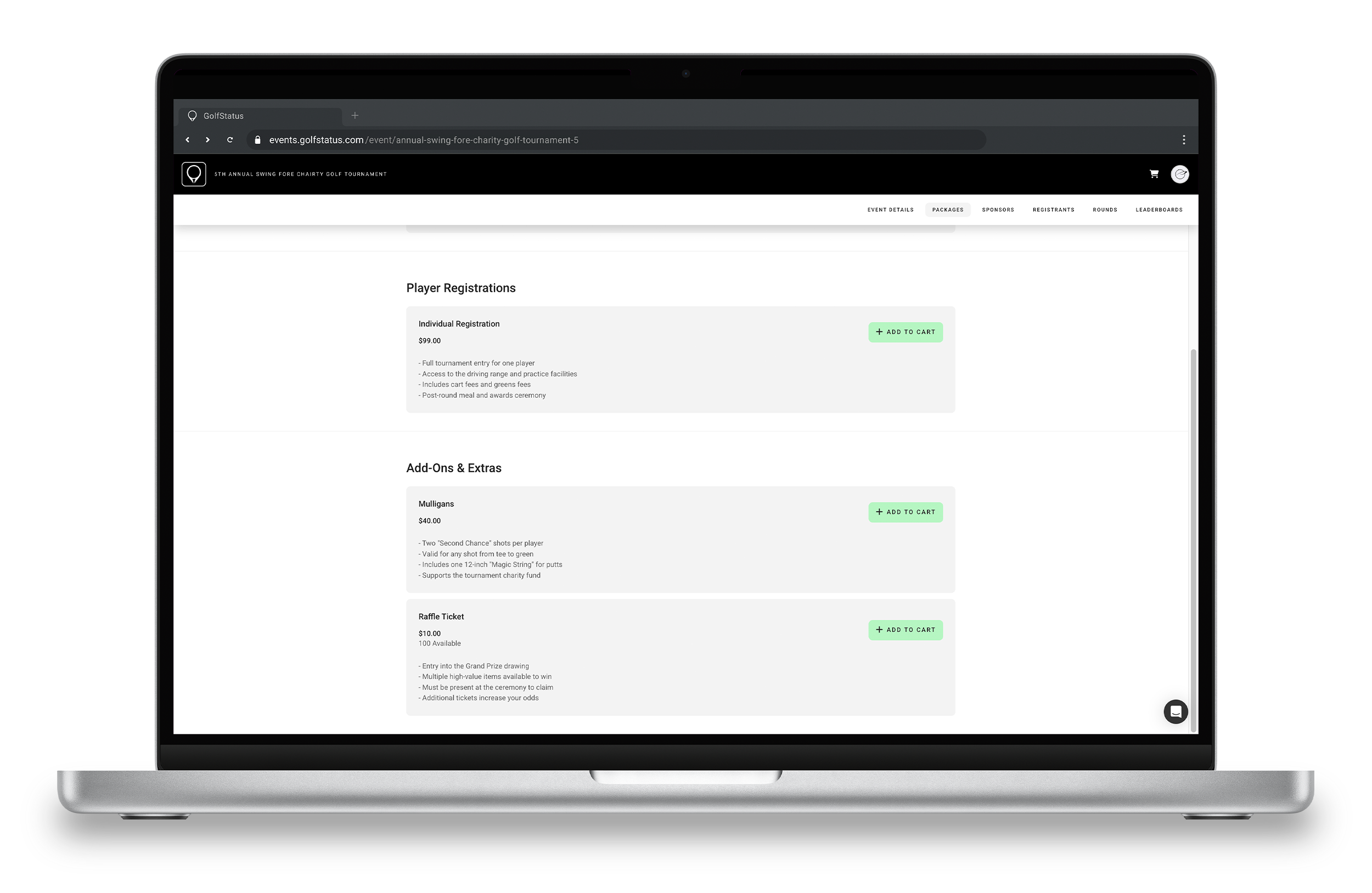
An event website screenshot showing a package to buy mulligans is display on a laptop computer.

List a mulligan package on your event website to make it as easy as possible for golfers to buy them.

The goal with any package for mulligans is to make the decision easy. Keep your menu of options simple and clearly priced on your event website so golfers can make their selection without having to think through a ton of choices.

Where & How to Sell Mulligans

Mulligans sell best when they’re easy to buy in the moment someone’s already thinking about them, so it’s a best practice to offer them before the tournament and at the course.

  • At registration. Include mulligan options in the online registration flow so golfers can add and pay for them without a separate transaction. This is the prime converting moment, since golfers already have their credit card out and are ready to buy.

  • At check-in. Some golfers wait until tournament day to decide, and others may want to add additional do-overs, so make sure mulligans are just as easy to purchase when they arrive at the golf facility.

  • On the course. Consider setting up a mulligan station or two near the tee box of notoriously tough holes. A well-timed mulligan offer right before a challenging hole can be one of your highest-converting moments of the day.

Across all three touchpoints, the common thread is removing as much friction as possible. If buying a mulligan means finding cash, hunting down a volunteer, or filling out a form, you’ll lose sales. A mobile-friendly event website lets golfers buy mulligans (or anything else) right from their phones, wherever they are in the course, keeping the process quick and easy and eliminating the headache of tracking and reconciling cash payments.


Pro Tip: Post QR codes that link directly to the mulligans package on your event website at the check-in table and any mulligan stations for easy access.


A golfer uses his mobile phone to purchase mulligans at a charity golf tournament.

Direct golfers to your mobile-friendly event website to purchase mulligans at the event, eliminating the need to hassle with and reconcile cash payments.

Communicate Rules to Keep It Fun & Fair

Mulligans work so well because they’re lighthearted, not because they let anyone buy their way to winning a tournament. It’s crucial to set clear limits and expectations up front. A common approach is limiting mulligan purchases to two to four per golfer and specifying where they can be used, such as for tee shots only. Communicate the rules on your event website and again at check-in so there’s no confusion, frustration, or push-back mid-tournament. You might even post signage that explains mulligan usage.

Physical mulligan cards, tickets, or wristbands can help volunteers and other golfers see at a glance who has purchased them and how many they have left, which cuts down on disputes and keeps the pace of play moving.


Mulligan FAQs

Why should we offer mulligans at our tournament?

For nonprofits, golfers’ willingness to pay is a golden opportunity. Mulligans require no inventory, vendors, or setup, beyond deciding your pricing and how you’ll sell them, which means every dollar collected goes straight toward your mission.

Are mulligans allowed at all golf tournaments?

Mulligans aren’t utilized in official or professional competitive tournaments, but they’re standard practice at charity events and other casual formats where the focus is fun and fundraising. As the organizer, you get to set the rules for your own event.

How many mulligans should we let golfers buy?

Most tournaments cap purchases somewhere between two and five per player. Capping the number keeps the format fair and prevents mulligans from feeling like a way to buy a win rather than the fun add-on they’re intended to be.

Where on the course can golfers use mulligans?

Many tournaments limit mulligans to tee shots only to keep play moving and avoid disputes over lies in the fairway or on the green. That being said, you can allow them for any shot—the key is to communicate the expectations clearly before the round starts so there’s no confusion. Mulligans can’t typically be used on hole-in-one contest holes and in putting contests.

Do we need physical mulligan cards?

Physical cards or wristbands give volunteers an easy way to verify purchases and their use on the course. Selling them through your event website ahead of time (or from a phone on tournament day) cuts down on the need to handle cash and makes reporting easier post-tournament. If golfers buy them ahead of time, have them ready for pick-up at check-in.

Should mulligans be included in registration or sold separately?

Both approaches work, and offering them both ways helps you capture the most revenue possible. Bundle a set number into an upgraded registration or VIP package for golfers who want the cushion built in, and offer them as a standalone add-on for everyone else.

What’s a reasonable price to charge for mulligans?

It depends on your event, goals, and field, but $5-$10 per mulligan is typical for charity golf tournaments. Higher-end events may be able to charge $15-$25 per mulligan. Bundling mulligans together at a slight discount usually outperforms selling them individually.

Turn a Small Add-On Into Real Revenue With Mulligans

Mulligans won’t replace sponsorships or registrations in terms of revenue, but they’re an easy win to fold into your tournament. With thoughtful pricing, a simple package structure, and a frictionless way to buy, mulligans can add meaningful dollars to your tournament’s fundraising outcomes, all from something golfers already want.

Mulligans are a great way to build in easy, low-cost revenue drivers to charity golf tournaments. Make it easy to package, list, and sell with a free event website from GolfStatus. Websites are powered by GolfStatus’ golf event management platform, which streamlines and simplifies tournaments to save organizers time and help raise more money for your cause, and backed by a team of golf fundraising pros. Book a meeting to find out more and get started at no upfront cost!

Get Started With GolfStatus at No Upfront Cost

Book a Quick Meeting

About the Author

Jen Wemhoff - Communications Manager at GolfStatus

Jen Wemhoff accidentally discovered her passion for nonprofits in college. An internship while earning a degree in Communications from Doane University led to a 20 year career in the nonprofit sector, where she found a strong desire to be part of something bigger than herself. Her vast nonprofit experience includes roles in marketing, fundraising, and direct programming. When Jen came to GolfStatus as Communications Manager in 2020, she was struck by the power of the sport to raise money to power nonprofit missions. She tells GolfStatus’s story across platforms and channels and develops educational tools and resources to help nonprofits tap into golf’s giving power. Jen, her husband, and two daughters call Lincoln, Nebraska home.


 
 
10 Golf Tournament Formats for Your Next Fundraiser
 

by Jen Wemhoff, Communications Manager at GolfStatus

Keeping your annual golf tournament fresh and exciting can be a challenge for longstanding events. Returning golfers always look forward to seeing familiar faces and supporting your mission, but offering them a new experience helps keep them engaged year after year.

Trying different golf tournament formats is an easy way to shake things up without completely reinventing the event. A new format can help differentiate your tournament from others in your community and encourage past participants to return. Different formats can also help you attract beginners, who might be playing in an organized event for the first time. The National Golf Foundation reports that more than three million beginners take up golf every year, so choosing the right format ensures they have a great experience.

Two female golfers smile as they sit in a golf cart during a charity scramble.

The right golf tournament format keeps golfers engaged from start to finish. The key is understanding your audience.

Organizers have plenty of golf tournament format ideas to choose from. Some emphasize teamwork, others create more competition, and several invite golfers of all skills.

In this guide, we’ll break down the most popular alternative golf tournament formats, explain the benefits of each one, answer common questions, and share tips for using tech to make implementation and scoring simple.


Top Golf Tournament Formats

Every golf tournament format creates a different player experience and comes with its own strengths. As you explore the different options for your next golf outing, consider which format best fits your audience, fundraising goals, and golfer mix.

1. Scramble

The scramble is by far the most popular format for charity golf tournaments. It encourages teamwork, keeps play moving, and makes the event accessible for golfers of all abilities.

  • How it works: Every golfer hits a tee shot, the group selects the best one, and all players hit their next shot from that location. The process continues until the ball is holed, with the team recording a single score for each hole.

  • Benefits: A scramble is one of the most beginner-friendly tournament formats because higher-handicap players don’t have to worry about a single bad shot hurting the team’s overall score. It creates a fun, low-pressure atmosphere that keeps the round moving.

  • Best practice: Consider setting a minimum number of shots used for every player, helping everyone contribute more equally to the team.

2. Shamble

The shamble format offers a great combination of team and individual play, and is a strong choice for charity tournaments,

  • How it works: Every golfer tees off, and the group selects the best shot—just like in a scramble. But from that point on, each golfer plays their own ball through the hole. Team scores are typically calculated by combining one or more of the lowest individual scores on each hole.

  • Benefits: A shamble gives golfers the advantage of starting each hole from a favorable position, while still allowing them to play their own game. Beginners benefit from the team’s best drive, while stronger golfers have opportunities to showcase their abilities. Shambles move at a good pace and create a balance between teamwork and competition.

  • Best practice: Before the round begins, clearly explain how team scores will be calculated—whether you’re counting the lowest score, combining the two lowest scores, or another variation.

3. Match Play

If you’re looking to bring a little friendly rivalry to your event, match play is a great way to create head-to-head competition and engagement.

  • How it works: Golfers compete hole by hole rather than counting total strokes for the entire round. The player or team that has the lowest score on a hole earns a point, and the player or team with the most points at the end of the round is the winner.

  • Benefits: Because the score is based on holes won instead of cumulative strokes, one bad hole won’t ruin an otherwise great round. That keeps players in the moment and focused on the next shot, maintaining enthusiasm on each hole.

  • Best practice: Consider organizing your event with a bracket-style draw. Head-to-head matchups and advancing rounds can build anticipation and heighten the excitement and competitiveness of the event.

4. Best Ball

The best ball format is a nice middle ground between individual competition and team play, making it a popular choice for events with a mix of skill levels.

  • How it works: Every golfer plays their own ball on each hole, and the team records the lowest individual score as the team’s score.

  • Benefits: This format lets strong golfers excel while still allowing every participant to play their own game. It strikes a nice balance between personal performance and teamwork.

  • Best practice: When assigning groups for a best ball tournament, aim for a mix of skill levels to create a more balanced, inclusive competition.

5. Alternate Shot

Alternate shot is all about collaboration. It challenges pairs to work together and make strategic decisions throughout the round.

  • How it works: Teams of two play a single ball, alternating shots until the ball is holed. One golfer tees off on odd-numbered holes, the other on even-numbered holes.

  • Benefits: Since every shot affects your partner, the alternate shot format naturally builds trust and stresses communication. It’s a great fit for corporate golf outings or sponsor-driven team-building events that want to emphasize collaboration.

  • Best practice: Pair golfers with complementary strengths to create a more competitive and enjoyable round. For instance, match a great long driver with someone who excels at the short game.

Two male golfers stand on the golf course during an alternate shot golf tournament format event.

Organizers can choose from a number of golf tournament format ideas to keep the event fun and competitive.

6. Stableford

Stableford encourages bold play while also keeping golfers from getting discouraged after a bad hole, making it an attractive alternative to traditional scoring.

  • How it works: Rather than counting the fewest strokes, Stableford awards points based on a golfer’s score relative to par. A common scoring system gives players no points for a double bogey or worse, one point for a bogey, two points for par, three points for a birdie, four points for an eagle, and five points for a double eagle.

  • Benefits: Stableford shifts a golfer’s mindset from avoiding mistakes to chasing opportunities. Golfers are often more willing to take risks to hit birdies and eagles to maximize their scores.

  • Best practice: Make the scoring system easy to reference by printing a simple point chart on score cards, displaying it on golf carts, or including it in your golf tournament management app.

7. Bingo Bango Bongo

If you’re looking to surprise returning golfers with something completely different, Bingo Bango Bongo is one of the most entertaining golf tournament format ideas out there.

  • How it works: Players have three opportunities to earn points on every hole. One point goes to the first golfer to hit the green (bingo), another goes to the player closest to the pin once everyone is on the green (bango), and the final point goes to the first golfer to hole (bongo).

  • Benefits: This format rewards several aspects of the game, giving golfers of varying skill levels a chance to succeed. Skilled drivers, precise iron players, and strong putters all have opportunities to contribute, and it works well for both team and individual events.

  • Best practice: If you’re running a team Bingo Bango Bongo event, designate one golfer in each group as the official scorekeeper.

8. Chapman (Pinehurst)

The Chapman, or Pinehurst, format combines elements of scramble and alternate shot to create a unique tournament experience that rewards strategy and teamwork.

  • How it works: Both partners tee off and then select the best drive. From that point forward, they alternate shots using a single ball until the hole is completed.

  • Benefits: Chapman offers more variety without being overly complicated. It’s a fun option for intermediate and experienced golfers who want something a little different from a traditional charity outing.

  • Best practice: Walk through the rules before the tournament begins to prevent confusion, and have volunteers available on tee boxes to answer questions once play gets underway.

9. Skins

A skins game introduces a little extra drama by turning every hole into its own competition and creating memorable moments throughout the round.

  • How it works: Each hole is assigned a “skin,” and the player or team with the lowest score wins the skin. If two or more golfers tie, the skin carries over to the next hole and increases the value of the next opportunity to win.

  • Benefits: The carryover element keeps golfers engaged, even if they have a slow start. A string of tied holes can build anticipation and create high-stakes moments when golfers compete for multiple skins at once.

  • Best practice: Keep participants updated by announcing or displaying carryover skins throughout the event to add another layer of excitement.

10. Money Ball (Lone Ranger)

Money ball, sometimes called lone ranger, is a creative team format that gives every golfer the chance to make a meaningful contribution.

  • How it works: One player on each team is designated as the “money ball” golfer for a hole, and that player’s score counts as the team’s score for that hole. The money ball rotates from player to player throughout the round.

  • Benefits: Because every golfer takes a turn carrying the team score, stronger players don’t dominate the competition, and higher-handicap players still have the chance to shine.

  • Best practice: Determine the money ball rotation before the tournament begins and print the order on scorecards or include it in the event website, helping to avoid confusion and keep play moving smoothly.

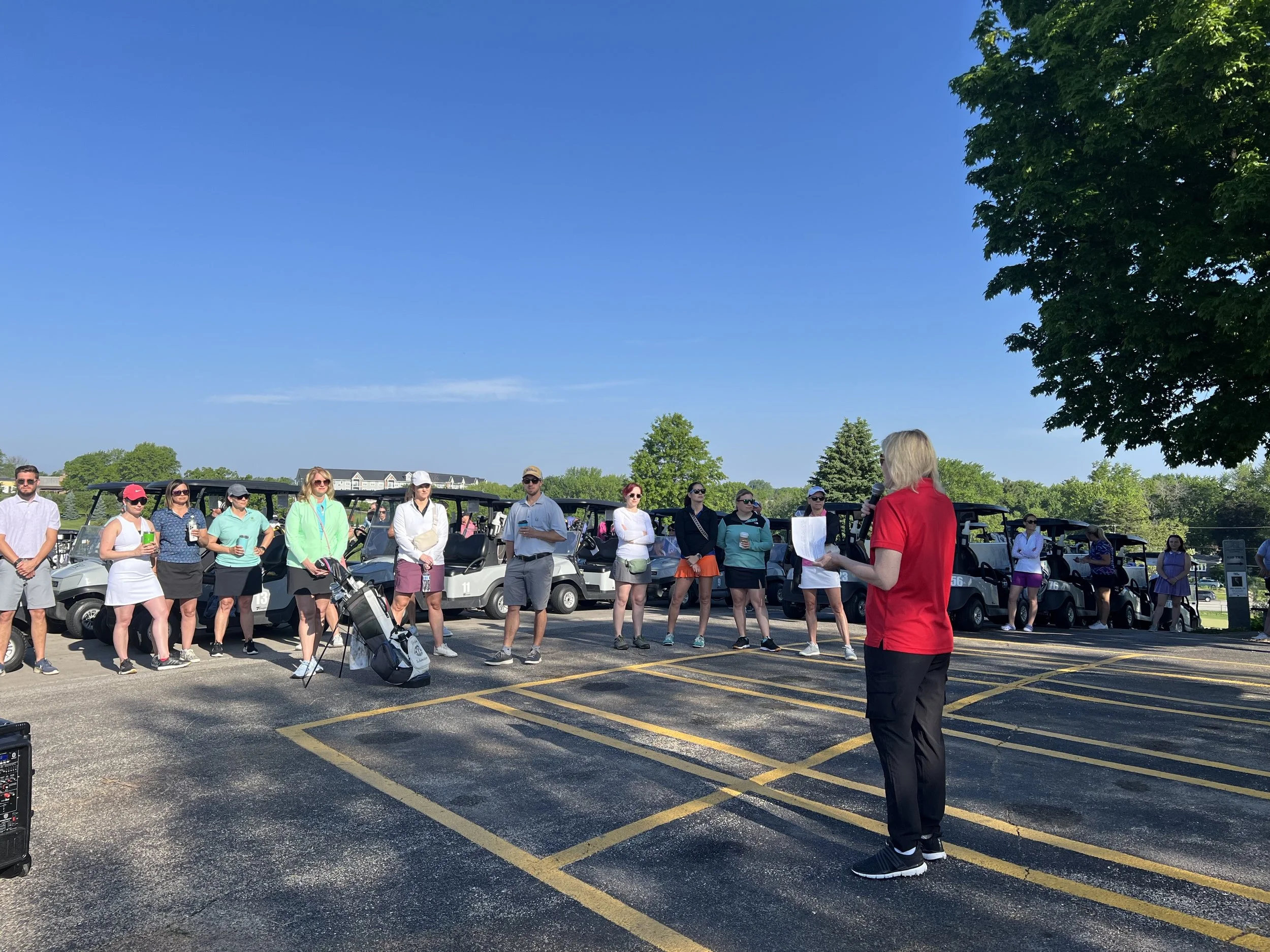
An organizer reviews the golf tournament format with players before the start of the event.

Make sure every player understands the golf tournament format by reviewing the rules during opening announcements.

Golf Tournament Format FAQs

What should I consider when choosing a golf tournament format?

The best format for your specific tournament depends on key factors like:

  • The skill level of your audience

  • The size of your field

  • The overall goals of your event

For example, a scramble works well for a broad audience because it’s accessible and collaborative. On the other hand, skins and match play can be better suited for experienced golfers who are looking for a more competitive atmosphere.

What’s the most popular alternative tournament type?

For charity events, scramble remains the clear favorite. It accommodates golfers of all skill levels, keeps pace of play moving along, and encourages teamwork.

That said, if you host an annual fundraiser with many returning participants, experimenting with other golf tournament formats can help keep the event fresh. You might even try rotating formats from year to year to create a new experience without changing the overall structure of your event. A good practice is to survey participants to gather valuable feedback about what formats they’d like to see incorporated.

Can you mix different formats within a single tournament?

Absolutely! In fact, some of the most memorable professional events do exactly that. The Ryder Cup is a well-known example, using multiple formats throughout the event. If you’re holding a multi-day or multi-round event, you can borrow from that concept by combining formats like match play and best ball or creating separate challenges that use different scoring systems.

The key here is communication. Provide participants with written rules before the event and review the format during opening announcements to keep everyone on the same page.

Do different formats affect the rate of play?

Yes. Team-focused formats like scramble often move more quickly, while those that involve more individual scoring or point calculations (like Stableford) may require more time.

As you plan your event schedule, don’t forget to factor in the pace of play associated with your chosen format and communicate expectations to players in advance.

A screenshot of an event website showing the golf tournament format is shown on a laptop computer.

Your event website should clearly state the golf tournament format.

Pro Tips for Managing Different Golf Tournament Formats

Once you’ve chosen your format, the next step is making sure everything runs smoothly. Preparation and the right tech can eliminate confusion, reduce your team’s administrative workload, and improve the golfer experience.

#1 Tip: Use Golf Tournament Management Software

Alternative formats can create a lot of manual scoring complexity. Keeping track of points and carryovers and calculating scores with paper scorecards can quickly become a headache.

Purpose-built golf tournament management software like GolfStatus helps simplify this process by handling scores and tracking calculations automatically, while updating results in real time. These features are especially valuable when using alternative formats:

  • Live leaderboards: Digital leaderboards let golfers check standings throughout the round from their phones, keeping everyone up-to-date from the first drive to the last putt.

  • Handicap integration: Formats like best ball and match play often work best when teams and pairings include players with varying abilities. Software that automatically collects and applies handicaps saves time and eliminates disputes.

  • Sponsor visibility: Leaderboards, event websites, and mobile apps create additional opportunities for sponsor recognition across multiple digital touchpoints.

Other Best Practices

No matter which format you choose, a little preparation goes a long way. Helping participants understand the rules before the tournament and gathering feedback after the event will make it easier to offer an even better experience next year. Keep these best practices in mind:

  • Communicate the format in advance: Include an overview of the rules in registration confirmation emails and pre-event communications so golfers can familiarize themselves with the format’s rules before tournament day. Consider posting hole signage across the course that clearly outlines the rules.

  • Run a practice hole: If you’re using a less familiar format, consider running a practice hole or demonstration before play officially begins. A quick trial run will help golfers feel more confident when their score counts.

  • Collect feedback after the event: Send a post-tournament survey to golfers asking what they enjoyed and whether they’d like to see the same format or something different in the future. Their feedback can help guide future decisions and reassure them that their experience matters to your organization.

Try a New Format for Your Next Tournament

The format you choose shapes nearly every aspect of the golfer experience, from competitive and pace of play to teamwork and fun. While the traditional scramble remains a proven, popular option for charity events, exploring new golf tournament format ideas can help your fundraiser stand out, bring new golfers to the table, and keep longtime supporters coming back.

The right choice ultimately depends on your audience. A beginner-friendly scramble may be perfect for introducing golfers to your mission, while Stableford or match play could appeal to a more experienced crowd. You may find that mixing formats or rotating them each year keeps your event feeling fresh.

Whatever you choose, don’t be afraid to experiment. A creative format can be a memorable part of your fundraiser, and with the right planning tools and technology, implementing something new is easier than ever.

Work With the Golf Fundraising Pros

Book a Meeting to Get Started

About the Author

Jen Wemhoff accidentally discovered her passion for nonprofits in college. An internship while earning a degree in Communications from Doane University led to a 20 year career in the nonprofit sector, where she found a strong desire to be part of something bigger than herself. Her vast nonprofit experience includes roles in marketing, fundraising, and direct programming. When Jen came to GolfStatus as Communications Manager in 2020, she was struck by the power of the sport to raise money to power nonprofit missions. She tells GolfStatus’s story across platforms and channels and develops educational tools and resources to help nonprofits tap into golf’s giving power. Jen, her husband, and two daughters call Lincoln, Nebraska home.

 
 
Product Alert: Improved Tool for Golf Event Communication
 

Communicating with golfers, sponsors, and other tournament participants is one of the most important parts of running a successful golf event. That’s why we’re excited to share a major update to GolfStatus’ golf tournament management software: a brand new messaging tool.

The messaging feature now gives organizers a more streamlined way to create, schedule, send, and track communications from within the tournament’s dashboard.

A screenshot of an email sent with GolfStatus' new messaging feature.

GolfStatus’ new messaging tool comes with new capabilities and features to give tournament organizers more flexibility with communication.

Easy Message Management

Messaging is now fully integrated into the platform and is no longer a separate application. Organizers can access everything from the dedicated “Messages” tab inside their tournament in the software, without toggling between screens or systems, where they can:

  • Quickly create new messages

  • View sent, scheduled, and draft messages

  • Search past communications

  • Monitor delivery results

Message Types

When creating messages, organizers can choose between:

  • Emails, which are delivered to individual golfers, donors, and sponsors' inboxes. Emails are great for pre-tournament updates, announcements, player instructions, or post-event stewardship.

  • App notifications, which appear in the GolfStatus live scoring mobile app. These messages are intentionally streamlined for quick updates and reminders, with a simple subject line.

The message types are now managed independently, giving organizers much more flexibility and removing limitations that existed in the previous version.

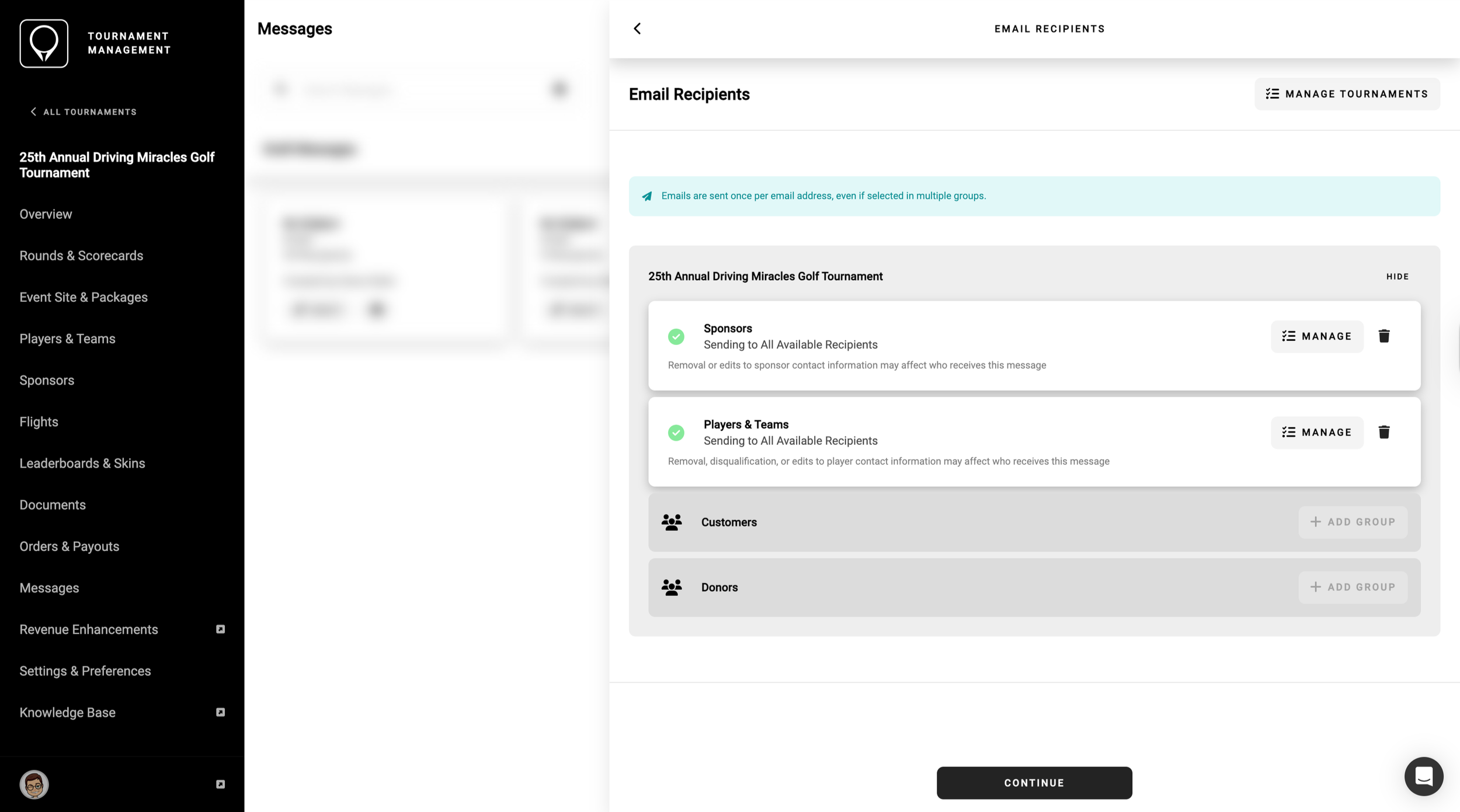
A screenshot of the GolfStatus software's messaging interface, showing how to choose recipients.

Choose desired message recipients with just a few clicks.

Reach the Right Audience

Recipients are automatically organized into predefined groups based on your tournament. Available groups may include:

  • Sponsors

  • Players

  • Teams

  • Waitlist contacts

  • Customers

  • Donors

Because every tournament is different, the messaging tool dynamically displays the groups that exist within each event.

Organizers can send messages across multiple tournaments (including past years’ tournaments), to entire recipient groups, or manually select specific individuals. When scheduling future sends, recipient groups remain dynamic, meaning newly registered participants will automatically be included. Current tournament participants can also be excluded from promotional sends.

Another helpful improvement is deduplication. If an individual belongs to multiple recipient groups, they will only receive one copy of the message.

Better Emails With More Flexibility

The updated email experience gives organizers significantly more control over message content and formatting, with these new capabilities:

  • Subject lines and rich email content

  • A full WYSIWYG (what you see is what you get) editor

  • Expanded formatting options

  • Attachments up to 25 MB

  • No character limits

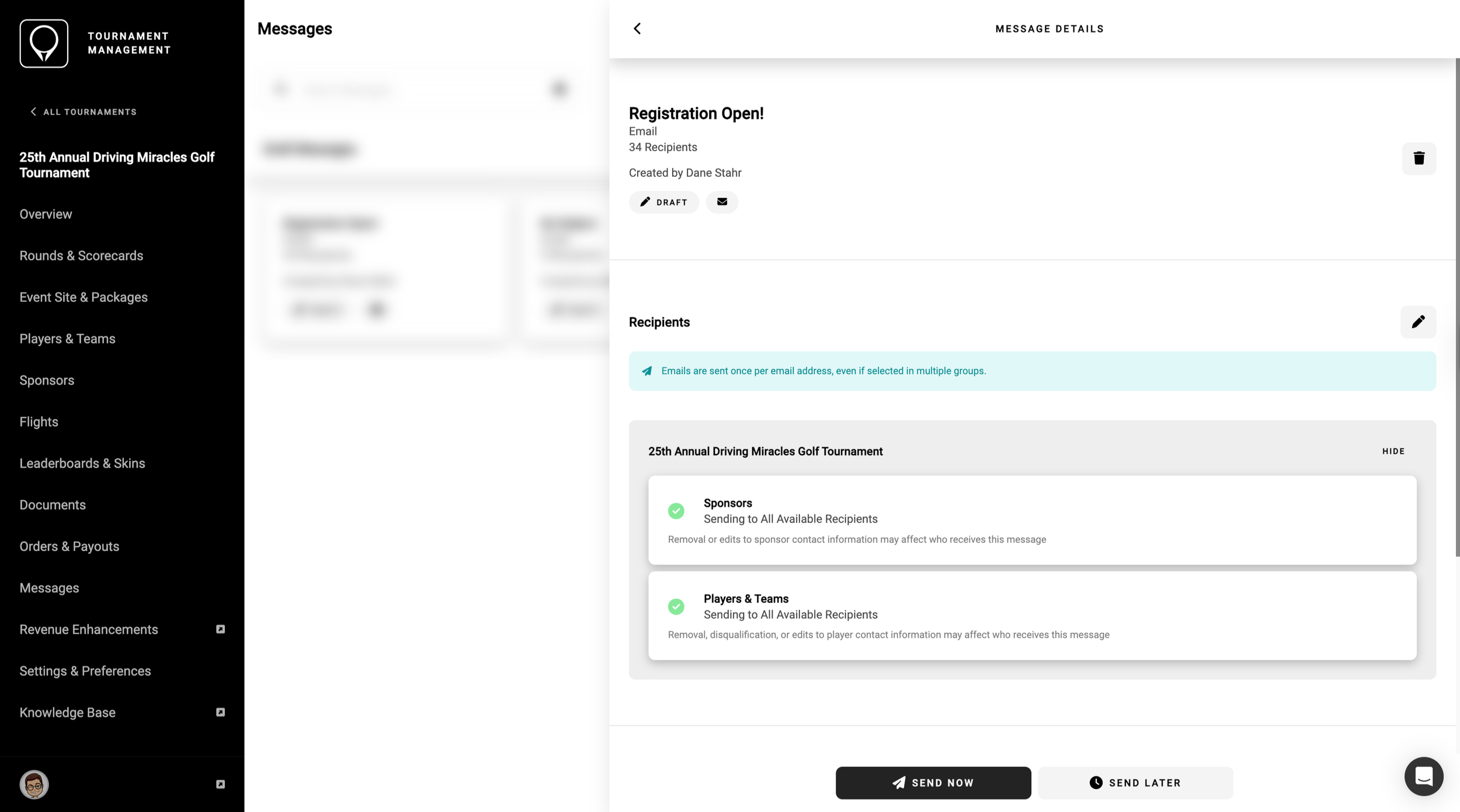
A screenshot of the GolfStatus software's messaging interface, showing how to draft a message.

Tournament organizers now have more control over message content, format, and send date.

Message Creation

Creating a message follows a simple, intuitive workflow that’s designed to help organizers quickly communicate with their audience:

  1. Open the “Messages” tab.

  2. Click “New Message”

  3. Choose “Email” or “App Notification”

  4. Select recipients

  5. Compose your message

  6. Choose “Send Now” to send immediately or “Send Later” to schedule delivery

Schedule Ahead and Stay Organized

Tournament organizers often plan their communications weeks or even months in advance. With the new messaging tool, every message begins as a draft until it’s sent or scheduled. Once your message is ready to go, you can send it immediately or schedule it for a future date and time.

Drafts and scheduled messages can be edited or deleted as needed. Sent messages remain permanent, showing who sent the message and when, providing transparency and accountability for teams collaborating on communications.

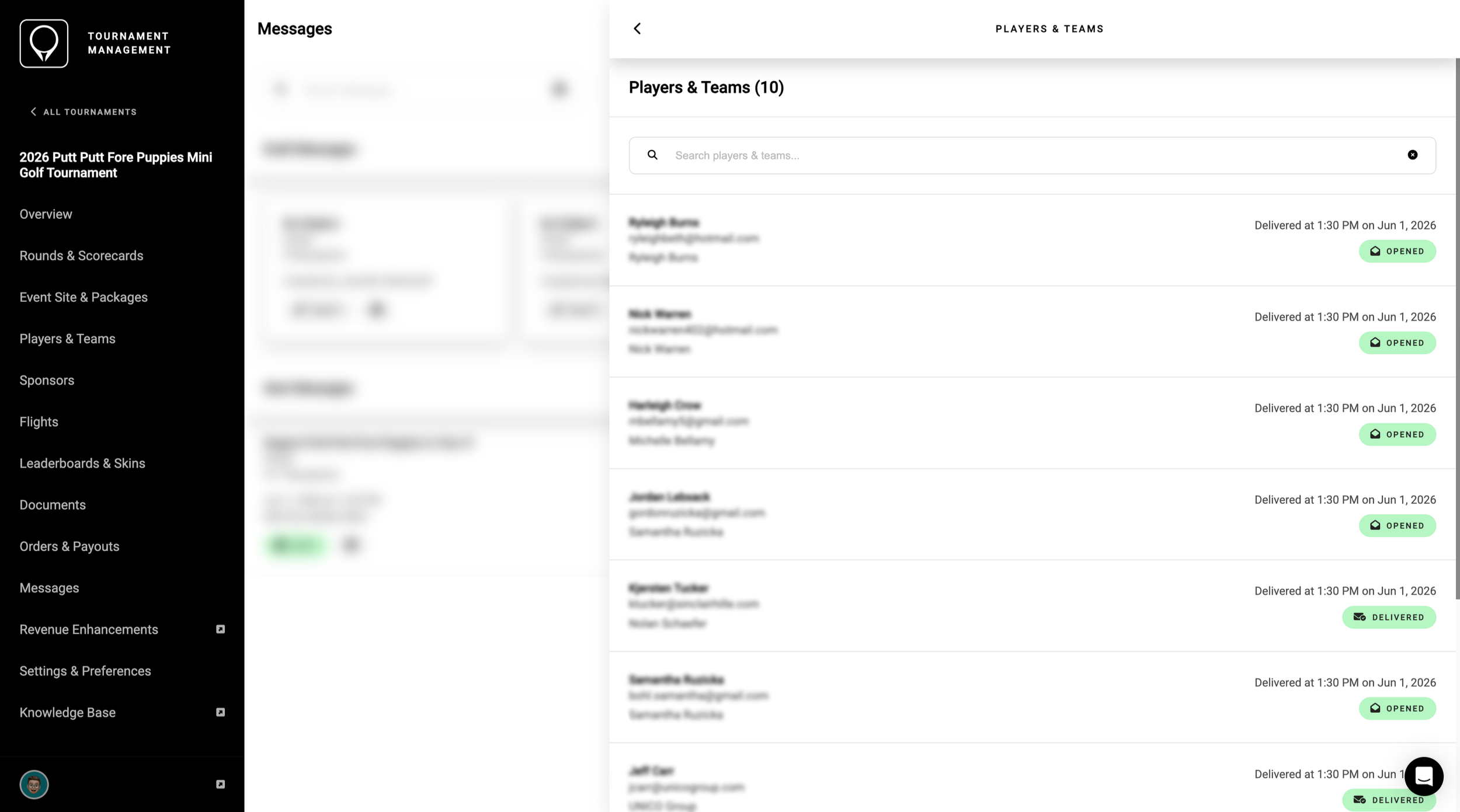
A screenshot of the GolfStatus software's messaging interface, showing if a recipient opened the message.

See who opened your message, who clicked it, and if any messages bounced or were reported as spam.

Know Whether Your Messages Are Working

One of the most requested messaging improvements was greater visibility into delivery and engagement. Now, after a message is sent, organizers can see the following by clicking into each audience group:

  • Who received it

  • Who opened it

  • Who clicked it

  • Bounce activity

  • Spam reports

These insights provide much-needed confidence that tournament communications are reaching the right people and generating engagement. Use this data to make data-driven decisions about participant communication and follow-up.


Easy Communication & Much More With GolfStatus

From registration reminders and sponsorship updates to fundraising campaigns and day-of logistics, communication plays a critical role in every successful golf tournament. The improved messaging tool is another way GolfStatus brings flexibility and efficiency to golf tournament planning, management, and execution.

Learn more about the messaging feature—as well as GolfStatus’ entire suite of tournament management solutions—and how you can get started with GolfStatus at no upfront cost by booking a meeting with our team.

already a golfstatus client?

Get in touch with your Client Success representative to learn more about using the new messaging tool for your next golf tournament.


11 Ways to Re-energize & Refresh Your Annual Golf Event
 

There’s something powerful about an annual golf tournament that’s become more than just a day on the course and has evolved into a tradition. The same course, the same time of year, the same group of supporters showing up year after year to build community.

That tradition is something to celebrate, but a tradition that doesn’t continue to improve can quickly become stale and a reason for golfers and sponsors not to come back.

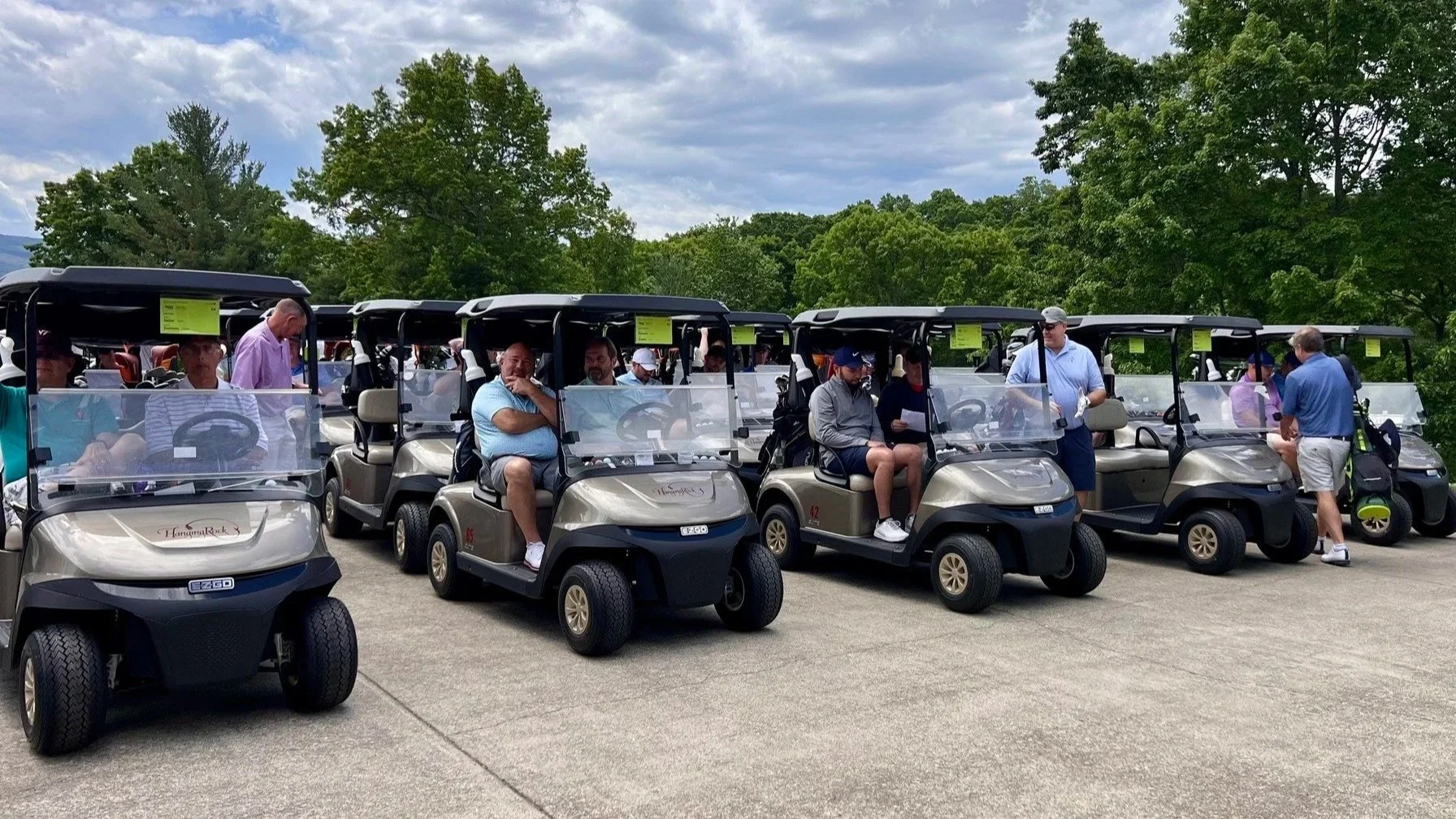
Golf carts are lined up at a longstanding golf tournament.

If your golf event has been running for five, 10, or even 20+ years, you’ve done the hard part of building something that people care about and trust. Now the challenge is keeping it fresh and exciting enough that last year’s participants can’t wait to register again, while new golfers and sponsors are eager to join in.

You don’t need to completely reinvent your tournament to make it feel new. Small, strategic changes can elevate the golfer experience, keep sponsors excited, improve fundraising results, and keep people excited to show up year after year.

Here are 11 ways to refresh a longstanding golf tournament while honoring the traditions that made it successful in the first place.

1. Debrief After the Event (Every Year)

Before you think about next year’s tournament, gather your planning team and do an honest debrief. Discuss what went smoothly, what felt clunky, and what they heard from golfers and sponsors throughout the day.

You should also build feedback into your planning process so you hear directly from participants through a short post-event survey. Send it to golfers and sponsors to help glean:

  • What they loved

  • What they would change

  • What would make them bring a friend next year

  • What experiences or components stood out

Look for insights into which fundraising elements (raffles, auctions, on-course games, merch, etc.) performed best, which sponsor packages delivered the best value, and when (or if) the day lost energy. These responses tell you where to invest time and money for the future.

Make this a formal part of your planning process every year. You’ll find areas to improve because you’re paying attention to what participants are saying, and they’ll appreciate being heard.

2. Evaluate the Golfer Experience

An effective way to refresh a tournament is to consider the tournament—from start to finish—from the golfer’s perspective. Think through every touchpoint of the event:

  • Is registration simple and efficient?

  • Is communication clear leading up to the event?

  • Is check-in welcoming?

  • Is signage professional and easy to follow?

  • Does the pace of the day feel brisk and organized?

  • Is the awards ceremony or program engaging and celebratory?

Big improvements can come from fixing small points of friction. Ensuring the registration process is easy and communication is effective. Making check-in quick and painless. Offering great food and beverage. Keeping a steady pace of play. Maintaining high energy post-round. These details show participants that you want them to have the best possible experience.

Two golfers shake hands following a golf tournament.

Ensuring golfers have a great experience will elevate any golf tournament.

3. Introduce New Contests & On-Course Games

Adding new interactive tournament elements is one of the fastest ways to boost the event’s energy. There’s no need to completely overhaul the tournament’s format. A four-person scramble is the classic choice for charity events for a reason—it’s inclusive, fast-moving, and fun for all skill levels. But small additions can generate excitement. Some popular, low-lift options include:

  • Hole-in-one contests

  • Longest drive contest

  • Closest to the pin challenge

  • Putting contests

  • Beat-the-pro (or amateur) hole

  • Ball drop

  • Poker hand

  • On-course entertainment

  • On-course games or fundraising stations

These activities not only make the day more entertaining, but they also create additional fundraising opportunities. Even introducing one or two new elements each year gives returning golfers something to look forward to and gives sponsors new activation options.

4. Refresh Your Branding & Introduce a Theme

Tournaments often use the same logo and look for years. And while consistency is important, a visual refresh can make your tournament feel updated and exciting without abandoning its identity. Consider tweaks or updates to colors and graphics, a more unified brand across digital and print, and an event website that reflects the caliber of the experience you’re delivering.

Introducing or updating a theme can complement a refreshed brand. You can do as much or as little with a theme as you want. Maybe a patriotic theme, a Masters-inspired tournament, a tropical or beach vibe, or team colors tied to a favorite sports team can all work beautifully. A theme can give golfers and sponsors something new to engage with, creating natural opportunities for fun on-course decor, social content, and creative sponsor activations that feel fresh each year.

A golfer lines up to hit a glow-in-the-dark golf ball as part of a glow golf-themed tournament.

Adding a theme, like glow golf, can significantly elevate a longstanding golf event.

5. Upgrade Player Gifts

Golfer gifts are remembered and used long after the tournament ends. If your event has been handing out the same golf balls and koozies for years, it may be time to rethink your swag strategy.

Today’s golfers want high-quality, useful items they’ll actually reach for. Rotating your gifts is a low-effort way to make repeat golfers feel like they’re getting something new, and thoughtful gifts elevate the perceived value of your tournament. Consider items like:

  • Premium golf accessories

  • Branded drinkwear

  • Custom headcovers

  • Branded golf towels

  • Performance apparel

  • Bluetooth speakers

  • Portable phone charges

  • Local products

  • Experience-based prizes (gift cards, tee times)

6. Improve the Sponsor Experience

Sponsors are the financial backbone of your tournament. You can help build strong partnerships with sponsors by helping them feel like active participants instead of just logos on a banner. Each year, think through how you can deliver more value, more visibility, and more engagement to the businesses supporting your cause.

Think beyond static banners and create interactive opportunities for sponsors to engage with golfers:

  • Branded tee box activations

  • Sponsored contests, on-course games, or giveaways

  • Product sampling stations

  • Drink or snack stations

  • Sponsored text messages or leaderboard placements

  • Social media collaborations before, during, and after the event

Digital sponsor exposure is increasingly valuable, so don’t overlook your event website, email campaigns, mobile apps, and live scoring platforms for visibility that extends beyond tournament day.

Consider personalized sponsorship packages instead of the same tiers every year. Add fun, new names to packages and work with the sponsors to design packages that meet the goals of the business and your event.

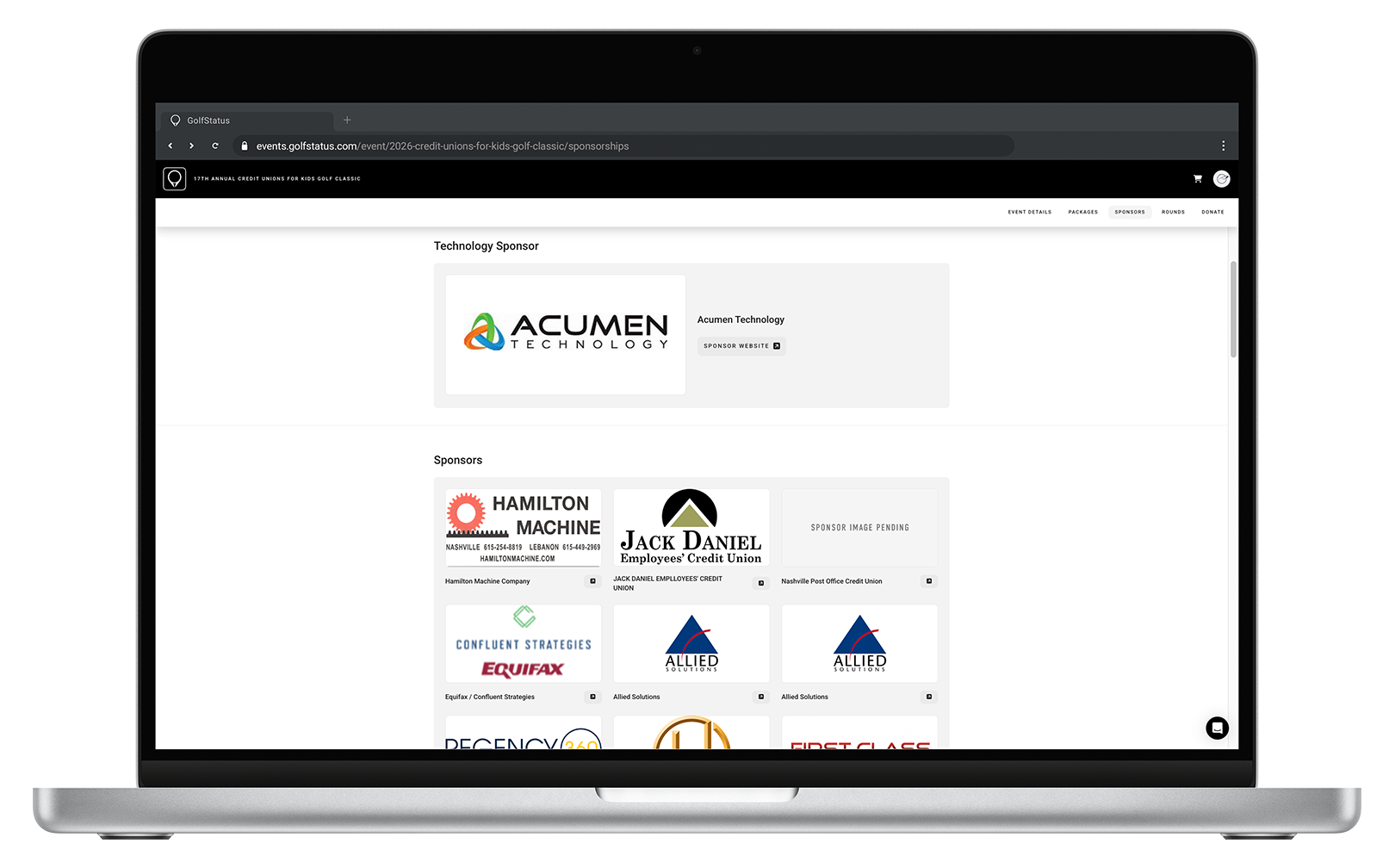
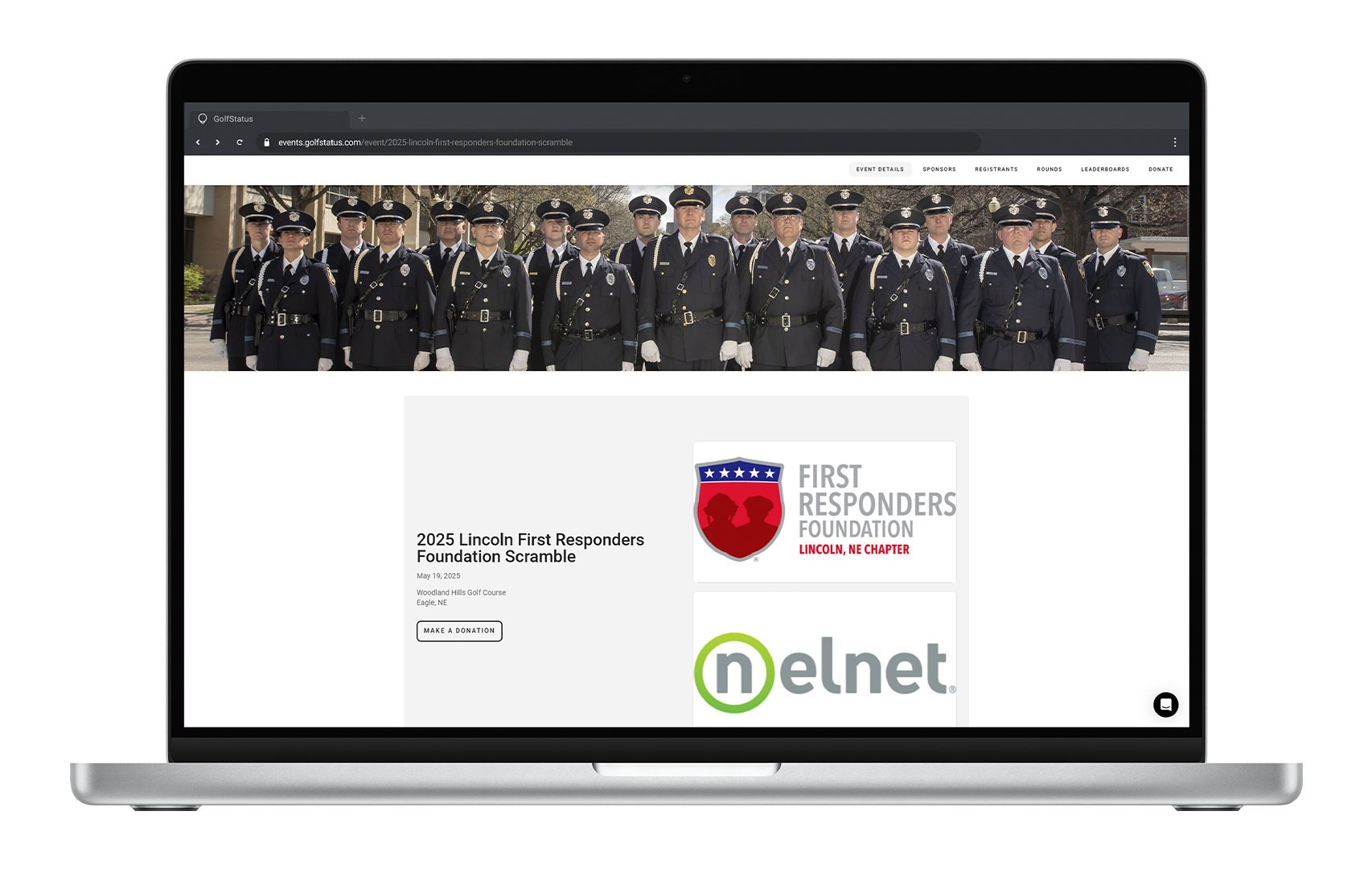
Sponsor logos on a golf tournament website are displayed on a laptop computer.

Give sponsors more for their investment, like digital exposure, to improve their experience with your tournament and keep them coming back.

7. Modernize the Event with Technology

One of the fastest and easiest ways to elevate your tournament is to modernize the experience. Golfers, sponsors, and our planning committee will benefit from tools that streamline management and execution.

It starts with a dedicated event website that gives your tournament a polished, digital home base where golfers can register in minutes, sponsors can purchase packages and upload logos, and supporters can make donations—all without a phone call, paper form, or any effort from your team. This frees you up to focus on the relationships and experiences that make your tournament stand out.

The right tech can also help with:

  • Team and sponsor management

  • Mobile scoring and live leaderboards

  • Auctions

  • Raffle tickets and mulligan sales

  • Donor tracking

  • Payment processing and receipts

  • Post-event reporting and accounting

8. Create Memorable Moments

The best tournaments leave people with stories that keep them talking. These might be:

  • A surprise guest

  • A heartfelt mission moment

  • An incredible raffle prize

  • A fun on-course challenge

  • A unique food or beverage experience

  • An emotional speech from a beneficiary

  • A dramatic finish

  • A hole-in-one contest winner

These transform a golf outing from just another fundraiser to an event that people circle on their calendars year after year. Think intentionally about where your tournament can create emotional peaks throughout the day. The goal is to go beyond simply entertaining golfers to creating memorable moments that they’ll talk about with coworkers, friends, sponsors, and future participants. They don’t have to be expensive; they simply have to be meaningful and well-executed.


Case Study: Credit Unions for Kids Golf Classic

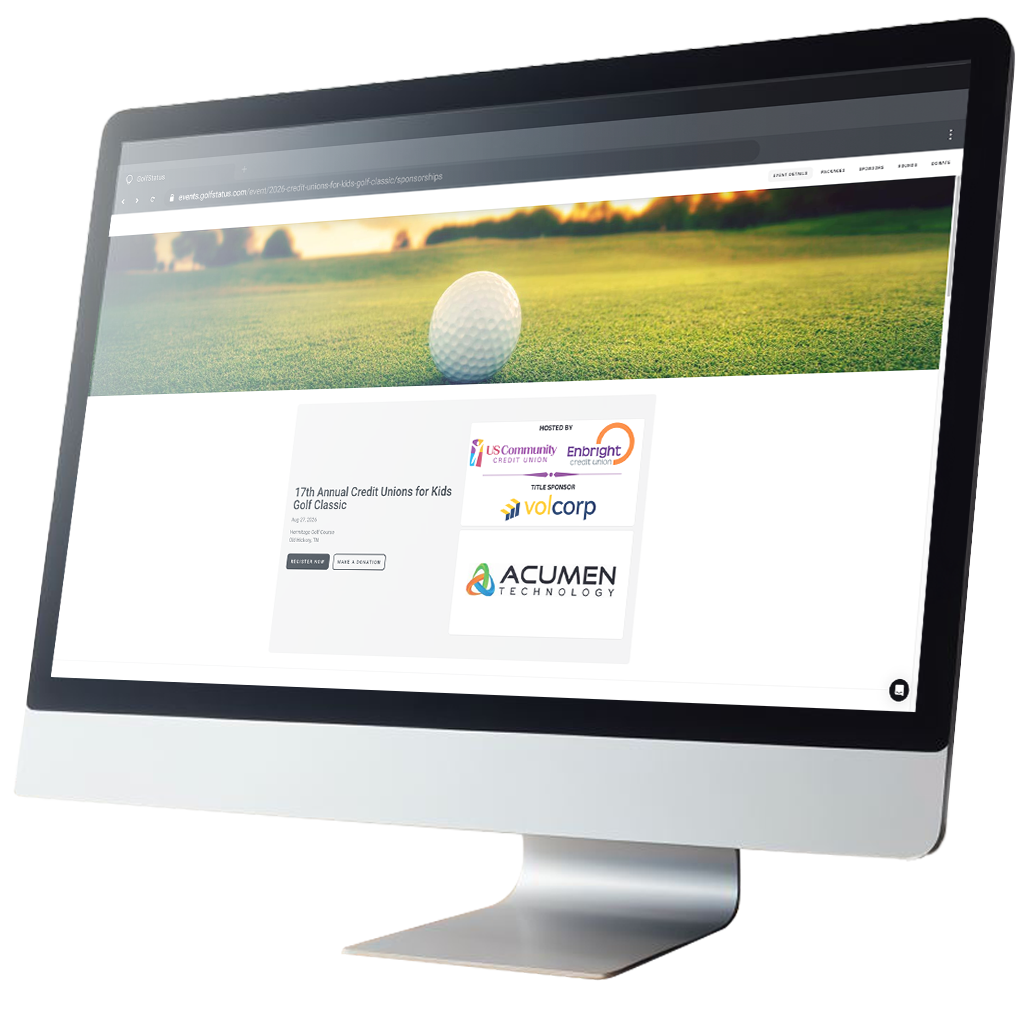
For 17 years, U.S. Community Credit Union and Enbright Credit Union have joined forces to host the Annual Credit Unions for Kids Golf Classic. Keeping the event fresh and fun every year is a priority for organizers, who have added new games, tech tools, sponsorships, and more, while raising tens of thousands of dollars for Monroe Carrell Jr. Children’s Hospital at Vanderbilt.

READ MORE


9. Keep the Cause Front & Center

For nonprofit or charity tournaments especially, one of the biggest opportunities is strengthening the connection between the event and the mission it supports. Longstanding tournaments, in particular, can sometimes get hyper-focused on logistics and tradition that the “why” beyond the fundraiser gets lost.

Golfers are more likely to give generously and keep coming back when they feel an emotional connection to the cause, not just the event. Keep the mission visible and personal to strengthen donor engagement and long-term support:

  • Mission-focused signage throughout the course

  • Videos or impact stories during meals or awards

  • QR codes linking directly to your event website’s donation page

  • Beneficiary speakers or testimonials

  • Updates on how last year’s golf tournament funds were used

  • Live fundraising appeals connected to specific outcomes

10. Use Data to Make Decisions

Every year, your tournament generates valuable data that can help improve future event iterations. The key is collecting, analyzing, and using this data to make strategic decisions instead of guessing.

Track and pay attention to:

  • Registration trends (when people register, how they pay, if they use discount codes, if they make an additional donation, etc.)

  • Sponsor renewal rates

  • Contest or game participation

  • Raffle ticket and mulligan sales

  • Golfer feedback

  • Auction and raffle engagement

  • Marketing response rates

  • Fundraising outcomes

  • Expenses

For example, if certain sponsorship levels sell out immediately, consider expanding or restructuring them. If early-bird pricing consistently drives registrations, invest more in early marketing campaigns. If golfers consistently rate check-in as a poor experience, prioritize fixing it next year.

11. Preserve Traditions While Embracing Change

Don’t worry—not everything needs to change! In fact, some traditions are exactly why golfers return year after year. Whether it’s a beloved course, a signature contest, a longtime emcee or auctioneer, or a post-round awards moment people genuinely look forward to, the goal isn’t to erase what makes the tournament the tournament—it’s to evolve it.

You’ll succeed by balancing consistency with innovation. Preserve what people value most while introducing enough new energy each year to keep the event exciting, engaging, and financially strong. And when participants and supporters feel like your tournament just keeps getting better, they’re the ones who help fill your field.


Modernize Your Tournament With GolfStatus

GolfStatus’ tech is built to help golf fundraisers stay fresh, relevant, and profitable. Its golf event-specific tools help organizers save time, raise more money, and deliver a professional experience that golfers and sponsors love year after year. Learn how you can get started at no upfront cost and get a free event website by booking a meeting with our team!

Keep Golfers and Sponsors Coming Back

Book a Meeting to Get Started


10 Ways to Ask for Donations During a Golf Fundraiser
 

Charity golf tournaments are opportunities for fun, connection, competition, and above all, fundraising. While team registrations and sponsorships typically drive the bulk of the event’s revenue, the most successful tournaments don’t stop there. They layer in thoughtful, well-timed donation asks before, during, and after the tournament to maximize impact and leverage the generosity of golfers.

The key? Make giving easy and aligned with the tournament experience. When done strategically, your asks won’t interrupt the round; instead, you’re simply enhancing the reason people showed up in the first place.

Here are 10 actionable ways to ask for donations during your next golf fundraiser.


1. Use Your Event Website as Your Fundraising Hub

Your golf tournament website should be the central engine for donations. Every ask, no matter where it happens, should point back to a simple, mobile-friendly donation site. This way, there’s no hassling with cash, reconciling Venmos, or processing checks after the tournament. Instead, all funds are kept in a centralized repository for easy post-tournament accounting.

Remove barriers to giving by making sure your event website:

  • Clearly communicates your mission, what the tournament is raising money for, and its impact

  • Includes a prominent “Donate” button across the site’s pages

  • Works seamlessly on mobile devices

  • Includes a donation tracker

  • Connects to and displays your live leaderboard with a donation call to action

PRO TIP: Incorporate storytelling on your golf tournament website.

Use photos, impact stats, and a clear call to action so visitors understand why their donation matters before they ever even set foot on the course.

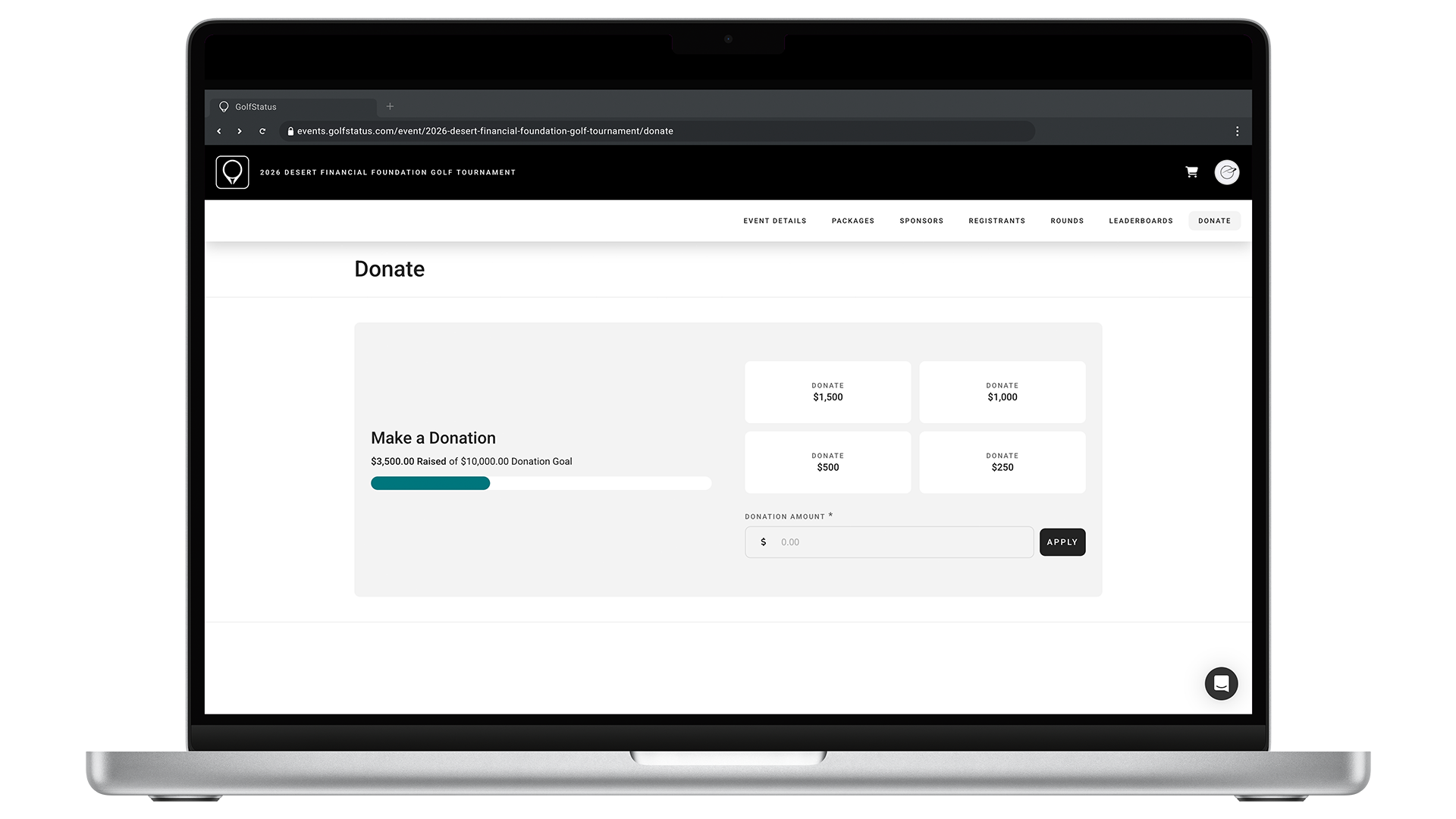
A golf tournament website showing a donation tracking bar is displayed on a laptop computer.

Every donation ask should link to your event website, where golfers can donate with just a few taps and see progress toward your goal.

2. Send Strategic Asks Throughout the Day

Communication is one of your most powerful fundraising tools, so use it wisely. You’ll need an easy way to get in touch with golfers and donors at the right moments during the event, like email or push notifications. Timing matters, so spread your messages throughout the day so they feel helpful, not overwhelming.

Use your event management platform to:

  • Link to the donation page of your event website

  • Announce fundraising milestones

  • Highlight contests or challenges

  • Share any matching donation campaigns

PRO TIP: Pair donation asks with updates.

Fold your day-of donation appeals into useful updates, like lunch announcements, current standings, or on-course game or contest reminders. This makes them feel like part of the event flow, rather than a disruption.

3. Set a Day-of Fundraising Goal & Rally Around It

A clear, tangible tournament day fundraising goal gives golfers and sponsors something to rally behind and can motivate them to make an additional contribution. Instead of a vague ask, be as specific as possible. For example:

  • “Help us raise $5,000 today and feed shelter pets for three months.”

  • “We’re halfway to our goal of $7,000—help us close the gap!”

Leverage your event management platform’s donation tracker to keep attendees up to date on your progress, building momentum and urgency. What’s more, when the overall tournament experience is top-notch, golfers are much more likely to chip in to help you reach the day’s goal.

PRO TIP: Tie your goal to a specific outcome.

Donors tend to be more motivated to make a contribution when they can visualize its impact on your mission.

4. Use a Compelling Story to Help Make the Ask

Not every golfer at your event will have a deep connection to your cause. Many are there because they were invited to play by a friend or family member or to fill their company’s foursome.

Your golf tournament is an incredible opportunity to connect these new potential donors to your mission. Consider these ideas:

  • Share an impact story during the tournament’s kickoff

  • Feature a beneficiary’s story during the awards ceremony

  • Display signs, banners, or posters around the course that describe your work

  • Include brochures or handouts in golfer gift bags

Follow these up with an ask that helps attendees understand how their donation makes a difference.

PRO TIP: Keep mission moments concise and emotional.

A brief two or three-minute story from a beneficiary or your nonprofit’s executive director with a clear takeaway is much more effective and memorable than a long presentation.

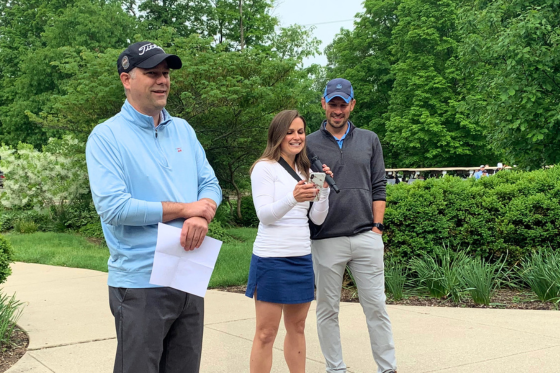
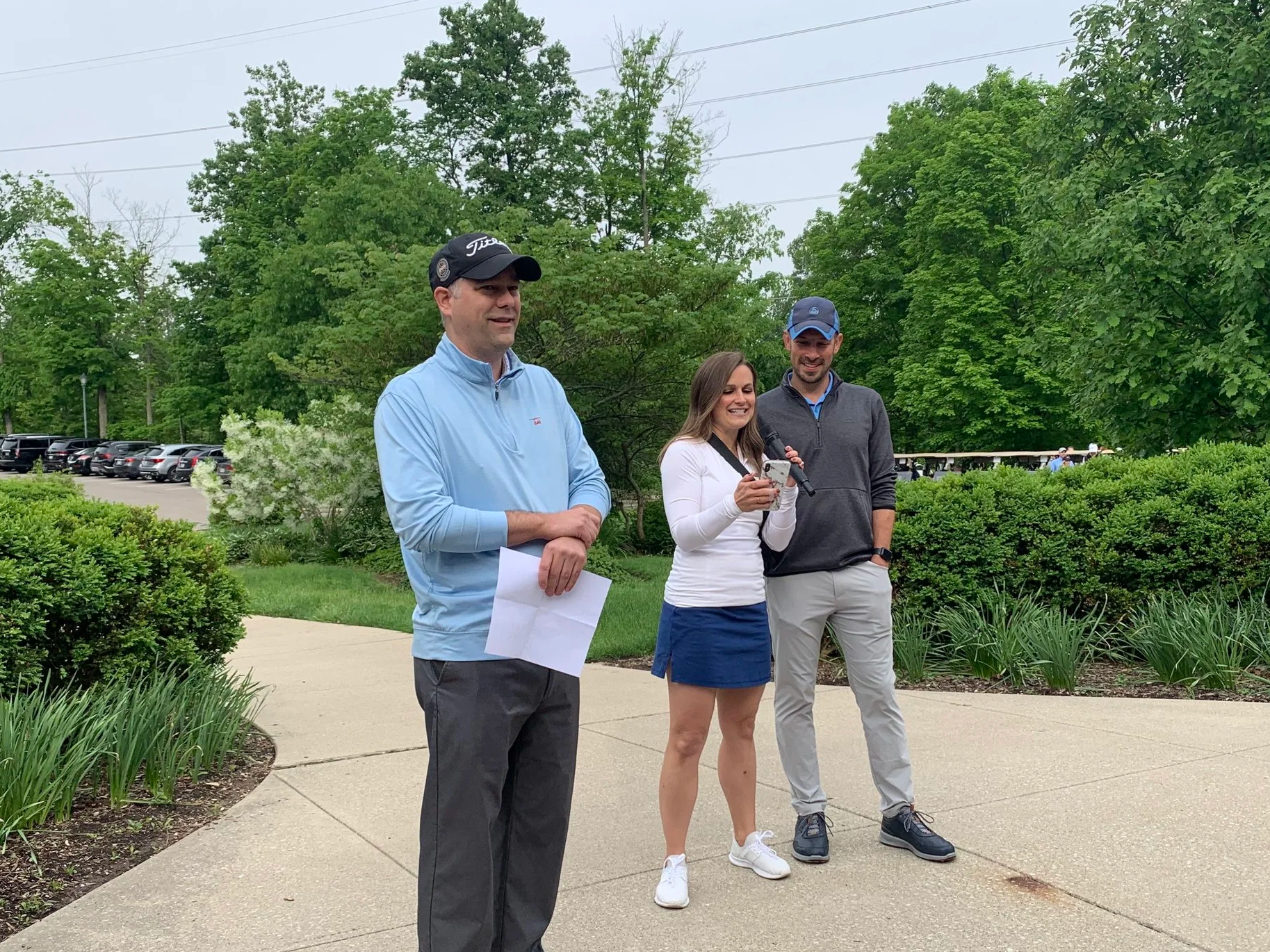
A golf tournament organizer speaks into a microphone to ask for donations at the start of the event.

Tie donation asks to compelling stories to help the audience connect with your mission.

5. Have Donation Stations Around the Course

Make giving accessible—and visible—with designated donation stations in strategic locations at the golf facility. Staff them with knowledgeable volunteers, staff members, or even beneficiaries who can answer questions, share stories, and assist with donations.

Place donation stations in high-traffic, but unobtrusive, areas, like:

  • Registration/check-in

  • The turn or comfort station

  • A par five tee box that’s likely to get backed up

  • Near the clubhouse

  • Near the bar at the post-round gathering

PRO TIP: Use QR codes that link to your event website.

Place signage with QR codes that link golfers to your event website’s donation page at every donation station. This way, golfers can donate using their phones (and you won’t have to hassle with handling cash) and instantly get a receipt.

6. Leverage Live Leaderboards for Real-Time Giving

Live leaderboards aren’t just for tracking scores—they’re a powerful engagement and fundraising tool. Anyone, anywhere can follow along with the tournament’s progress via online and in-app live leaderboards, expanding your reach beyond the course and keeping people engaged in real time. Encourage giving by:

  • Sharing leaderboard links on social and via email before and during the event

  • Inviting spectators and remote supporters to donate while following along

  • Creating fun pledges (donate a specific amount for every birdie, eagle, or bogey)

PRO TIP: Use social media to engage donors.

Give social media shoutouts to online donors, consider having a special prize drawing for day-of donors, and be sure to follow up after the tournament with a thank you.

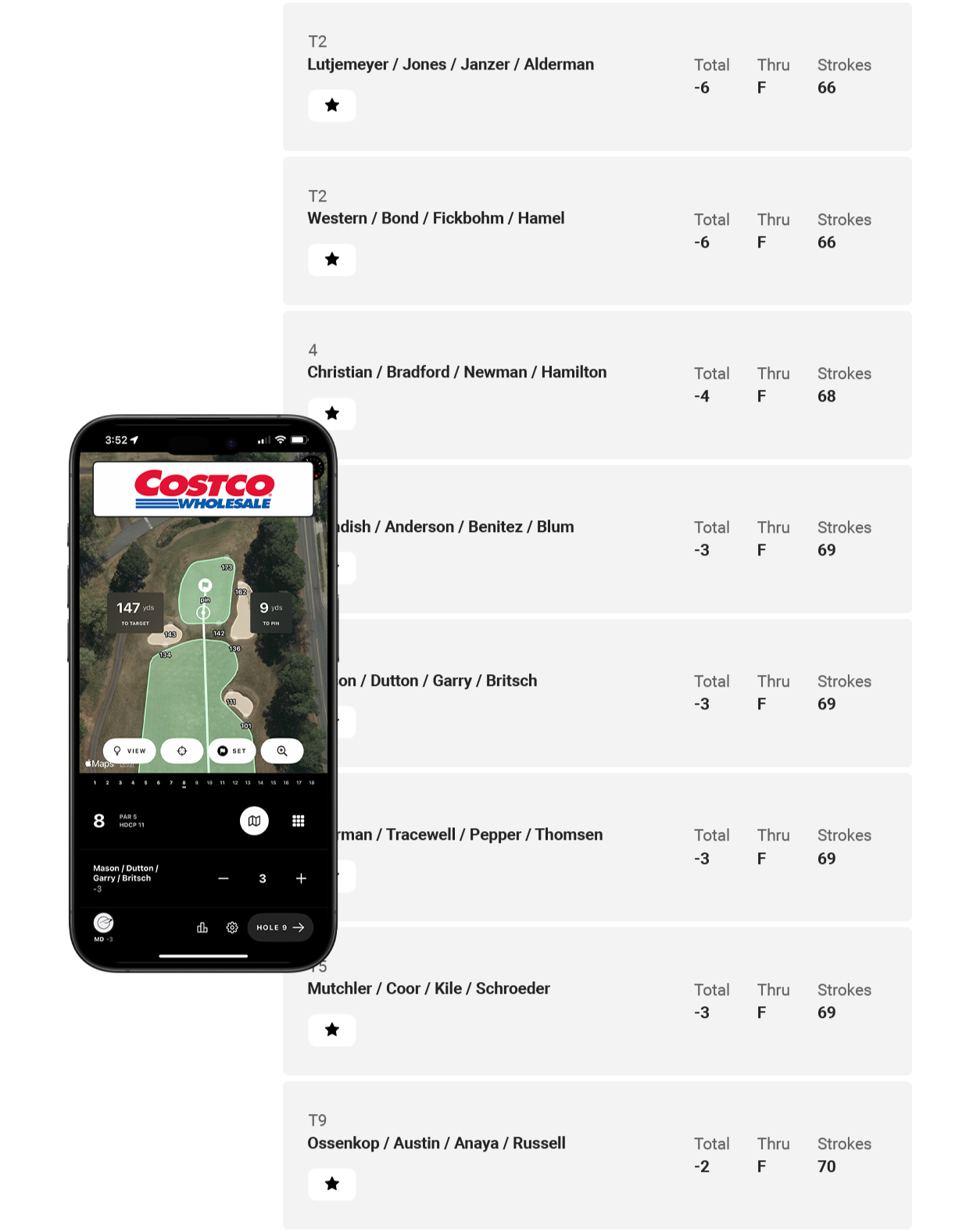
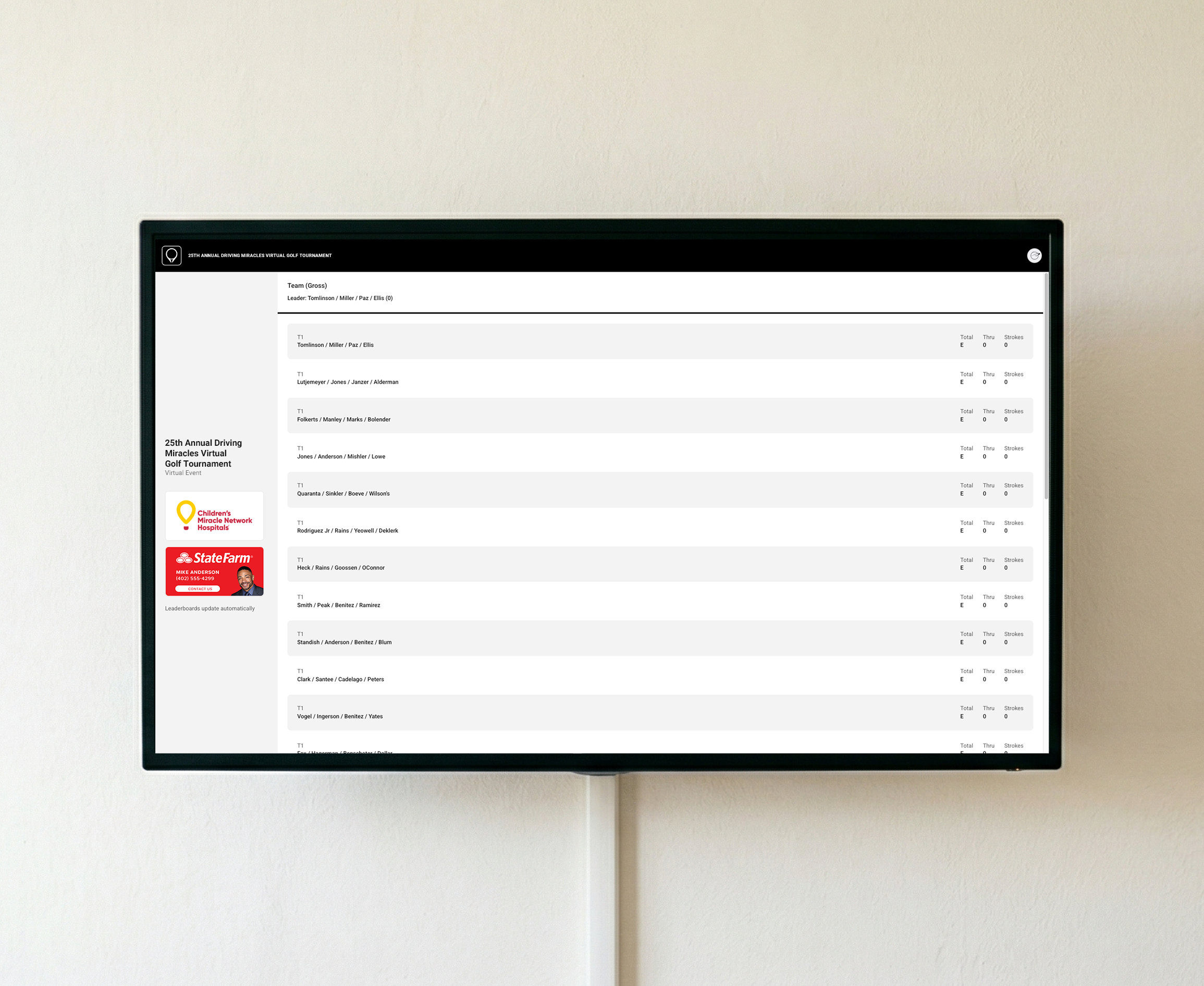
A live scoring app with a sponsor logo is shown in a mobile phone, over tournament standings from a live leaderboard.

Live leaderboards are a great way to engage donors throughout a golf tournament.

7. Turn On-Course Moments Into Giving Opportunities

Your golf tournament is full of natural pauses, so take advantage of these lulls (and captive audiences) to ask for a donation. Keep these asks light, fun, and optional. The goal is to invite participation, not pressure it.

Consider adding donation prompts at:

  • Contest holes (hole-in-one, longest drive, closest to the pin, putting)

  • High-traffic wait areas

  • Comfort stations

  • Driving range

  • Practice green

PRO TIP: Pair donation asks with games or incentives.

Keep the energy high and the atmosphere casual by pairing donation asks with on-course games, drawings, or other incentives.

8. Introduce a Score-Based Giving Challenge

Tie donations directly to the tournament by asking golfers to donate based on scores. It’s simple, memorable, and easy to execute! Some ideas include:

  • Donating an amount equal to their team’s final score (if they shot a 72, they would donate $72)

  • Matching the winning team’s score

  • Using the last-place score for a fun twist

PRO TIP: Make this ask during awards.

The awards ceremony, banquet, reception, auction, or other post-golf gathering is a great time to make this particular ask. When you announce the winning teams and scores, challenge attendees to get out their phones and donate.

Golfers get their food from a buffet at a post-golf tournament banquet.

A tournament’s post-round meal, ceremony, or reception is a perfect opportunity to make a donation ask.

9. Add a Post-Round Call to Action

Golf is over, but post-round gatherings are prime opportunities to raise additional funds. People are relaxed, engaged, and reflecting on the fun they had during the event, making it an ideal moment to ask for contributions.

Share impact stories, progress toward the day and overall event fundraising goals, celebrate the day’s successes, and make a final, direct donation ask.

PRO TIP: Display a live fundraising total during the reception.

Project your event website’s donation tracker on a screen during the reception, showing real-time updates towards your goal to encourage last-minute donations.

10. Follow Up After the Tournament

Some of your best donation opportunities can happen after the tournament. Not everyone will give on tournament day, but many will once they’ve had time to reflect. Within a week or so after the tournament, send a follow-up email that includes:

  • A thank-you message

  • Event highlights, photos, and videos

  • Fundraising totals

  • A clear link to donate

PRO TIP: Segment your follow-up messages.

Tailor your asks specifically for players, sponsors, and non-attendees who engaged online.


Raise More Money With Your Golf Event

When it comes to donation asks, success isn’t necessarily about doing more—it’s about doing it better. Strategic timing, clear messaging, and seamless tech make all the difference. The easier you make it to give, and the more connected people feel to your mission, the more likely they are to support your cause.

GolfStatus’ full-service golf event management and fundraising platform helps you do exactly that. From mobile-friendly event websites and live leaderboards to built-in donation tools and communication features, everything works together to create a smooth, engaging experience for your supporters.

Click below to book a meeting with GolfStatus’ team of golf fundraising experts to find out how you can get started at no upfront cost.

Save Time & Raise More Money

Book a meeting with GolfStatus


Smart Tips & Strategies for a High-Impact Virtual Golf Fundraiser
 

by Jen Wemhoff, Communications Manager at GolfStatus

Traditional golf tournaments are ideal fundraisers and a proven way to raise serious funds. But for nonprofits with a dispersed donor and supporter base, it can be challenging to rally local support. Other nonprofits may be limited by course availability in their area or have concerns about unpredictable weather with a traditional golf fundraiser.

A virtual golf fundraiser is a smart, viable alternative to an in-person event. With low risk and broad reach, a virtual format allows you to engage supporters—and expand your donor base—from anywhere without the logistical concerns of a single-location event.

This guide will cover how to structure, monetize, and execute a successful virtual golf tournament fundraiser to maximize impact.

Table of Contents


Virtual Golf Tournament FAQs

What is a Virtual Golf Fundraiser?

Essentially, it’s a decentralized tournament where participants play a round at a local golf course (or even a simulator) on their own schedule. Instead of golfers gathering at a single golf facility on a single day, your supporters can participate from anywhere during a designated time period and still compete together in a unified event.

Much like traditional golf fundraisers, virtual events generate revenue through:

  • Golfer registration fees (though they’ll still need to pay green and cart fees at their chosen golf facility)

  • Sponsorships

  • Donations

Virtual events are also well-suited to a peer-to-peer fundraising element, with a format that blends the competitive fun of golf with the accessibility of online fundraising.

A female golfer submits her score as part of a virtual golf fundraiser.

Virtual golf events have the potential to reach a broad audience, especially if your supporter base isn’t localized.

What Are Some Virtual Golf Fundraiser Formats?

There’s no one-size-fits-all approach to a virtual event, so be flexible and tailor it to your audience. Here are a few common formats:

  1. "Play-anywhere" multi-day format. Your organization chooses a date range (such as a week or weekend), and golfers play a round at a course, day, and time of their choosing. This is the most accessible and scalable option for a virtual event.

  2. Hybrid format. This combines an in-person event with a virtual component. Local golfers attend your in-person tournament, while out-of-town supporters compete remotely at the same time. A hybrid event offers the networking and camaraderie of a traditional golf tournament with the accessibility and reach of a virtual tournament.

  3. Indoor simulator format. Partner with simulator venues like TopGolf or X-Golf to host synchronized, weather-proof, indoor events. This option can be perfect for winter fundraising in urban audiences.

What Are the Benefits of Hosting a Virtual Golf Fundraiser?

A virtual golf fundraiser offers several key advantages that can translate into higher fundraising outcomes:

  • Broad reach. No geographic limits means golfers can join from anywhere, increasing participation.

  • Reduced overhead costs. Because you’re not renting a golf facility or providing food and beverage, there are next to no costs associated with venue rental, catering, and on-site staffing.

  • Flexibility. With some virtual tournament formats, golfers can play when it fits their schedule, making it easier for busy supporters to participate.

  • Digital engagement. Use technology and social media to create a fun, interactive, and shareable event experience that keeps golfers connected.

  • Weather-proof. A virtual event eliminates the risk of cancellation, the need to reschedule, or low turnout due to inclement weather.

When is the Best Time to Host a Virtual Golf Fundraiser?

Virtual events can be held year-round, and the flexibility of a virtual format means you can align the event with your broader fundraising calendar.

Want to engage donors during the offseason? Consider a winter simulator event. Looking to build momentum before Giving Tuesday? Try a multi-day virtual tournament in early fall. Want to engage remote supporters in tandem with your annual in-person golf fundraiser? Add a hybrid virtual component.

Best Practices for Planning & Execution

A successful virtual golf event requires the right systems and structure to make it feel polished and professional, along with effective communication strategies to make it feel cohesive.

  • Leverage golf-specific software. An event management platform is a must-have for an in-person golf event, and a virtual setup makes it even more important. Trying to manage a virtual tournament relying on spreadsheets or standard ticketing software is a recipe for disorganization and confusion. Golf event tech ensures a seamless experience for everyone, plus massive time savings for organizers.

  • Maximize passive data capture. One of the biggest missed opportunities in any type of golf tournament is limited data collection. With paper registration forms, one team member registers, leaving you without contact information for the rest of the golfers. Online registration eliminates this hurdle, capturing email addresses for every participant so you can build a stronger donor database and improve marketing and fundraising efforts.

  • Negotiate partnerships with golf facilities. In areas where your organization has a strong donor presence, you might work with a handful of golf facilities to negotiate discounted rates and fees for tournament participants. These “preferred virtual courses” benefit from more players, more food and beverage sales, and more exposure to guests. What’s more, having standardized courses can offer better consistency in scoring (though it’s not necessary).

  • Outline clear rules. Clarity is everything in a virtual setting. Without it, confusion and disputes can derail your event. To keep things running smoothly, define and communicate the following at the outset of the tournament:

    • Tournament format, whether it’s a four-person scramble, individual stroke play, two-man best ball, etc.

    • Scoring. Explain how scores are to be submitted, what app needs to be downloaded and used, and where participants can access the leaderboards. The mobile app should integrate into your golf event management platform.

    • Equipment/technology requirements. If yours is a golf simulator event, specify the necessary golf simulator requirements to participate.

    • Eligible facilities. Outline the requirements of the facility, such as the course’s par, slope rating, number of holes, etc., to help level the playing field. If you are working with preferred courses or a specific simulator franchise, be sure to

    • Timeframe. Set the start and end dates/times for the virtual tournament.

    • Code of conduct. Make expectations for sportsmanship and fair play as clear as possible.

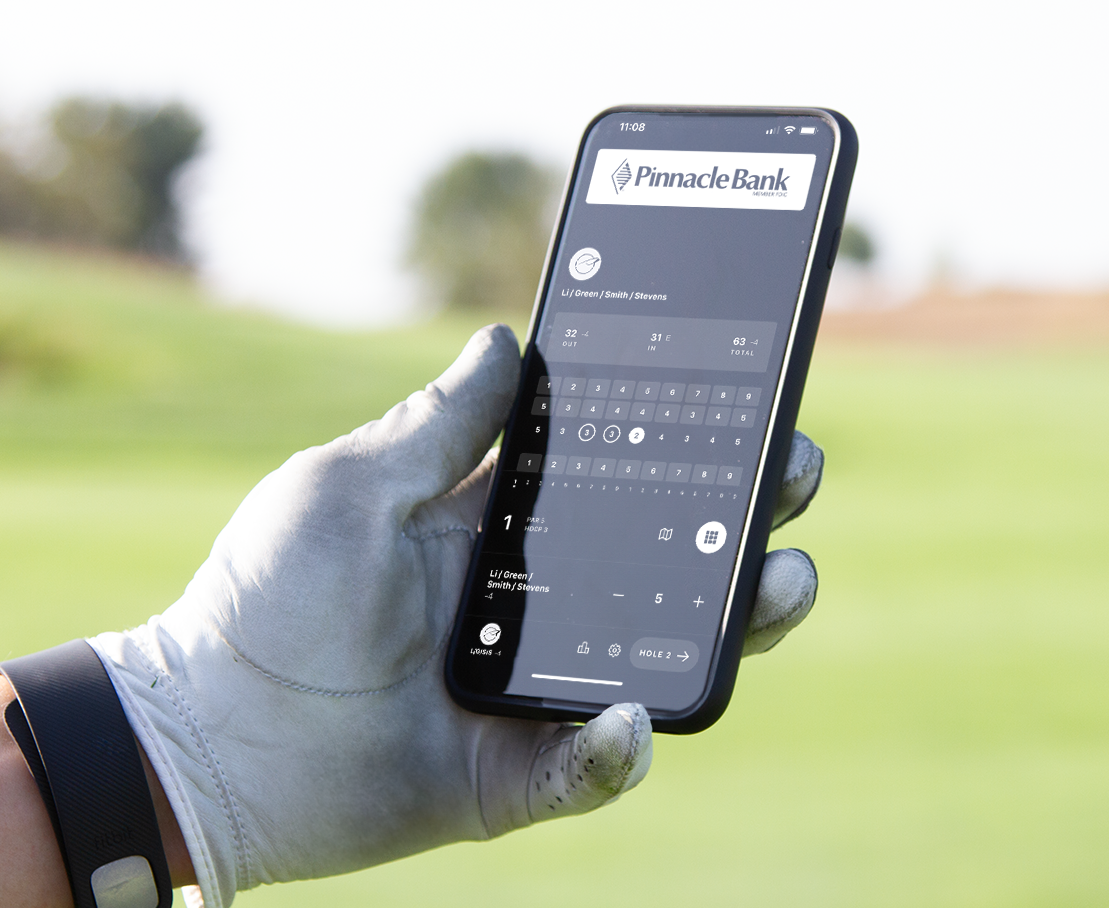
A smartphone displays a mobile scorecard for a virtual golf fundraiser.

It’s important to explain to virtual golf event participants how scores will be submitted and where they can access the leaderboards.

Creative Ideas to Maximize Virtual Golf Engagement & Revenue

One challenge of virtual tournaments is keeping participants engaged from afar. Creating shared experiences can keep golfers connected and even boost revenue.

  • Sell digital add-ons. Digital add-ons are low or no-cost to your tournament. These might include virtual mulligans, an online silent auction, entries into virtual on-course games, or a virtual raffle drawing.

  • Solicit themed donations. Boost fundraising by setting up themed donation tiers. Get creative and offer fun donation options like "Bogey Insurance" or "Take a Virtual Shot."

  • Drive social media interaction. Encourage participants to share their experience and keep everyone feeling connected with user-generated content. This could include a branded event hashtag, trick shot video contests, or photo challenges from each golf course.

  • Involve club pros or other special guests. Invite the golf pro at a local golf club, a local celebrity, or even a well-known supporter to record a welcome video or motivational message that’s shared on the tournament website or sent directly to golfers. This personal touch adds credibility and builds excitement for your event.

  • Host virtual opening and/or closing ceremonies. Create bookends for your tournament with live virtual events. Open the event with a welcome message, sponsor recognition, and an event overview. Wrap up the tournament by announcing winners, drawing raffle prizes, and publicly thanking sponsors, volunteers, and golfers.

How to Sell and Fulfill Digital Sponsorships

Sponsorships are a major driver of revenue, even for virtual formats. The key is translating on-course visibility into digital exposure. Here are some ideas:

  • Use an event website. Digital sponsorships start with your golf tournament website, where you can list packages, sell sponsorships, and onboard sponsors in one place. Logo placements throughout the platform offer broad digital exposure every time someone visits the site to register or make a donation.

  • Digital leaderboard naming rights. Offer a title sponsorship for your virtual event’s live leaderboard. To provide maximum exposure, include the sponsor’s name: The [Sponsor] Live Leaderboard or the Live Leaderboard Presented by [Sponsor].

  • Push-notification sponsorships. Sell the ability to send push notifications through your live scoring app to all golfers during their round. Messages could include promotions for their business, simple sponsor recognition (“The back nine is sponsored by [Sponsor]), or even calls-to-action to donate on your event website.

  • Virtual hole sponsorships. Use your live scoring app’s hole-by-hole scorecard to assign sponsor logos and boost visibility. Highlight virtual hole sponsors further through email blasts, social media posts, and in-app messages.

  • Create a digital swag bag. Replace the traditional golfer gifts with a digital version that doesn’t require shipping. It could include valuable gifts like promo codes, discounts, and special offers from sponsors or other partners. Deliver it via email to golfers, giving sponsors direct access to your audience.

A virtual golf fundraiser live leaderboard is displayed on a screen.

Anyone, anywhere should be able to access the event’s virtual live leaderboards on your event website.

Wrapping Up

A well-executed virtual golf fundraiser can be just as impactful as a traditional golf event, or even more. With low costs, flexibility, and a broad reach, a virtual golf tournament is an opportunity to expand your audience while increasing your fundraising potential.

The key? Using golf-specific event management software lays the foundation for a successful virtual event, keeping your planning team organized and on the same page, providing a home base for decentralized participants, and offering digital sponsor exposure.

Pairing a strong event strategy with the right technology, setting clear expectations, and building engaging digital experiences will help you run a seamless virtual golf tournament fundraiser that delivers real results.

Start Planning a Virtual Golf Tournament With GolfStatus!

Click to Get Started at No Upfront Cost

About the Author

Jen Wemhoff accidentally discovered her passion for nonprofits in college. An internship while earning a degree in Communications from Doane University led to a 20 year career in the nonprofit sector, where she found a strong desire to be part of something bigger than herself. Her vast nonprofit experience includes roles in marketing, fundraising, and direct programming. When Jen came to GolfStatus as Communications Manager in 2020, she was struck by the power of the sport to raise money to power nonprofit missions. She tells GolfStatus’s story across platforms and channels and develops educational tools and resources to help nonprofits tap into golf’s giving power. Jen, her husband, and two daughters call Lincoln, Nebraska home.
 
 
Product Alert: Streamline Registration With New Check-In Feature
 

As part of our constant commitment to innovation and meeting the evolving needs of tournament organizers, GolfStatus is excited to release its newest golf tournament management software feature: team check-in.

Tournament day check-in has historically relied on static printouts with no ability to sync across stations, creating bottlenecks at registration when large groups arrive at the same time. This part of the tournament can quickly devolve into chaos if the people at registration aren’t able to quickly and easily access information.

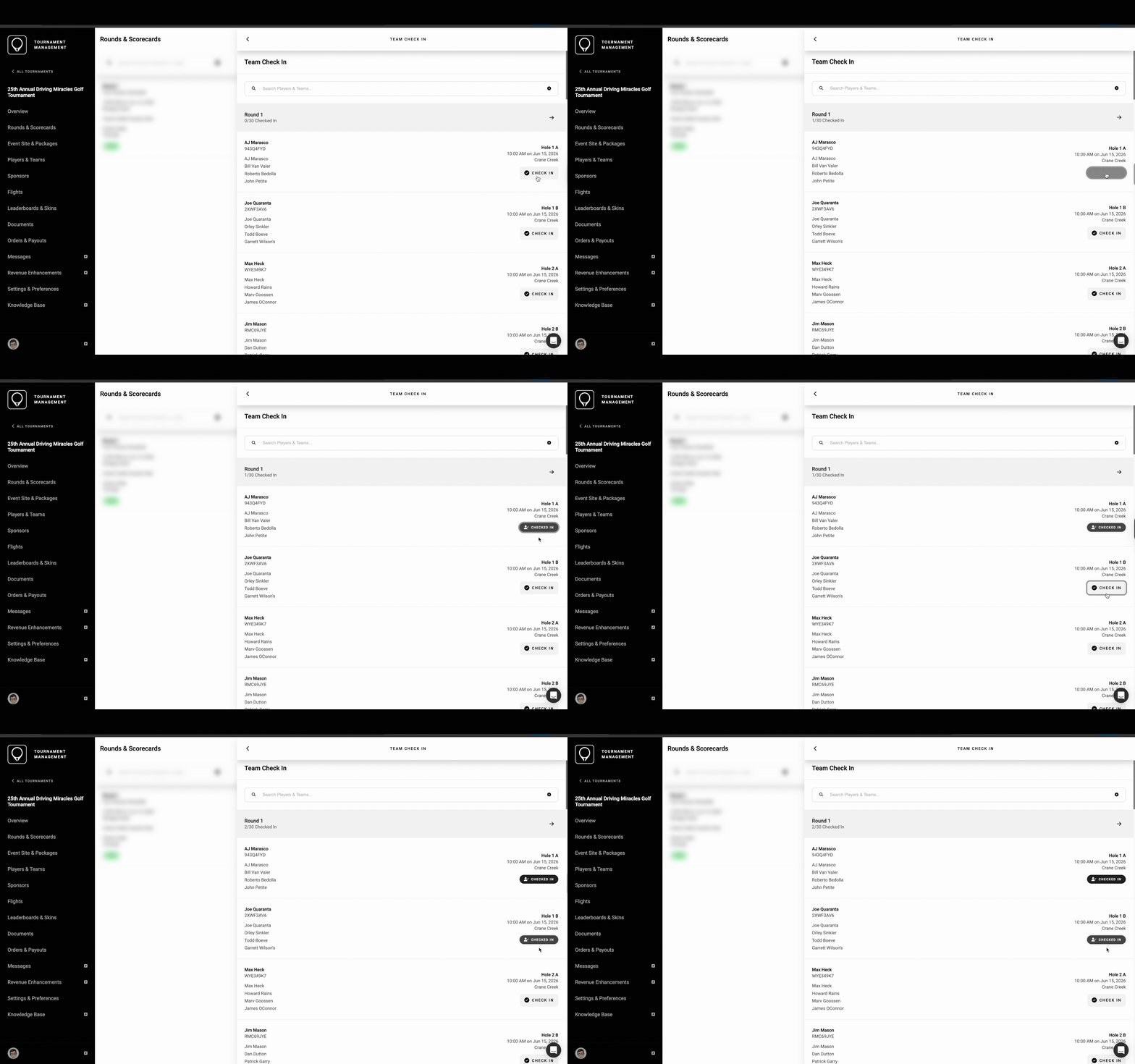
To alleviate this common pain point, GolfStatus’ check-in feature embeds the process into the software, where team information is centralized and check-ins update in real time. When one organizer checks a team in, every connected device sees the update instantly—no refreshing required. A laptop computer or mobile device with internet access is required to utilize check-in. A live counter below each round shows how many teams have been checked in, so organizers always know how registration is progressing.

A short video showing teams being checked in in the GolfStatus software.

The live counter updates in real-time, showing how many teams have been checked in out of the entire field.


Mulitple Access points

Users can access check-in from multiple places within the software, including the tournament overview screen, the Rounds and Scorecards menu, and the Players and Teams list. Every entry point leads to the same check-in experience, with identical functionality and real-time sync. Having multiple access points lets organizers jump in from the point in the software that feels the most natural without being locked into a single workflow.


Tournament Overview

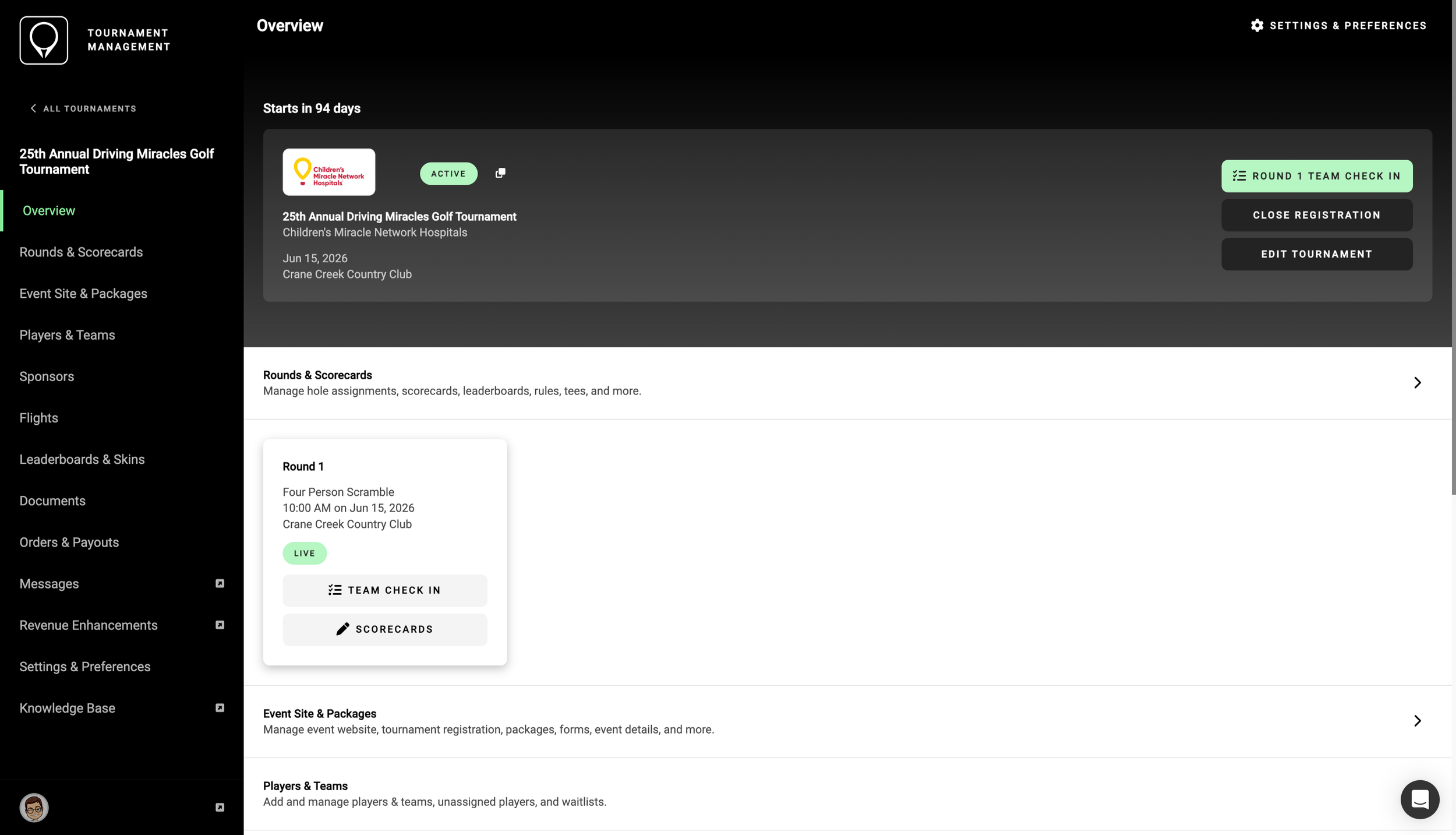
Access check-in from the tournament’s home screen in the software, either from the Quick Actions menu or the Round tile.

A screenshot of the Tournament Overview Screen in the GolfStatus Software.

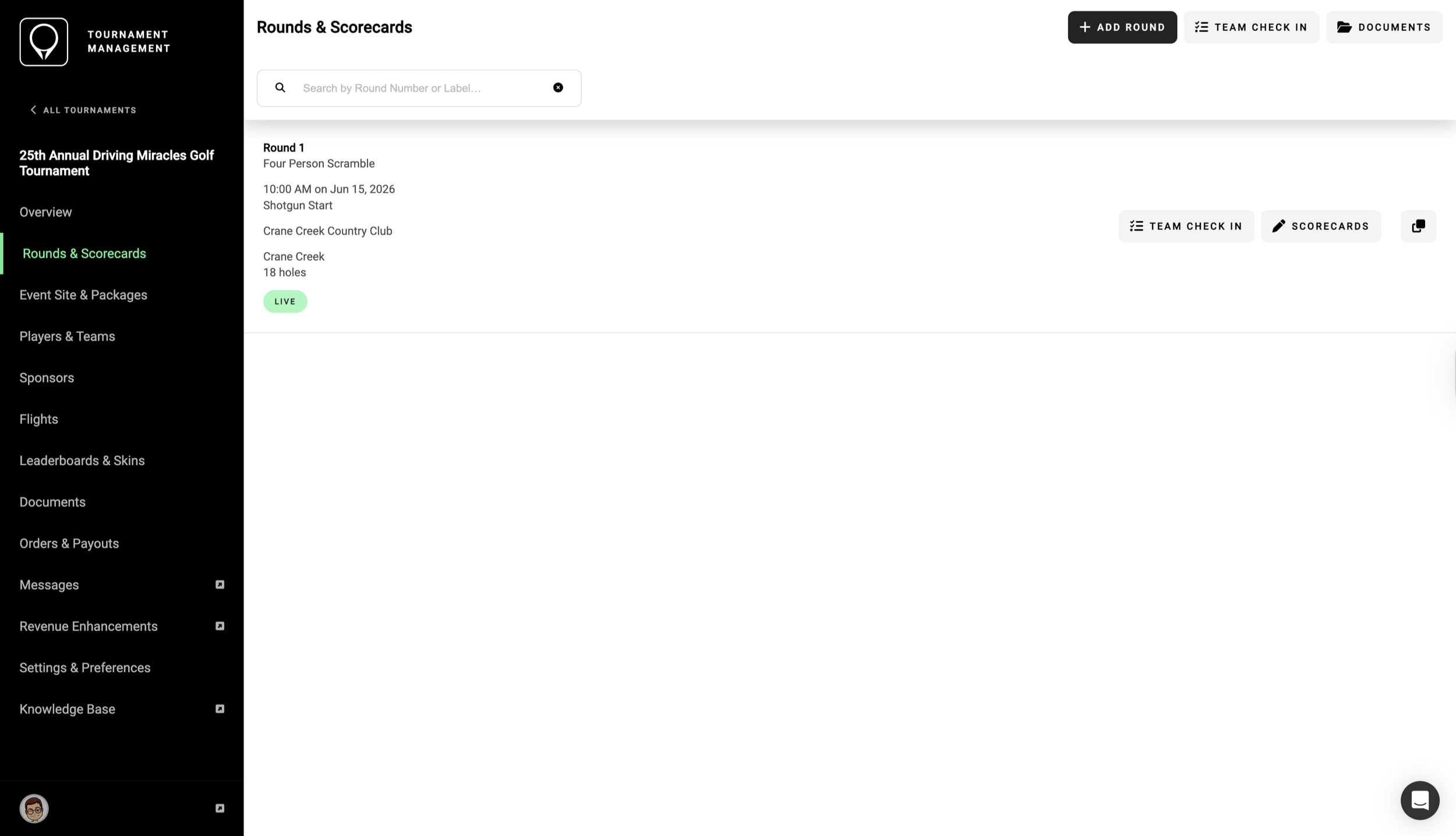
Rounds & Scorecards

Organizers can filter by a specific round or search player or team names across all rounds at once, a huge time-saver for tournaments that have fields split across different time slots or courses.

A screenshot of the Rounds and Scorecards screen in the GolfStatus Software.

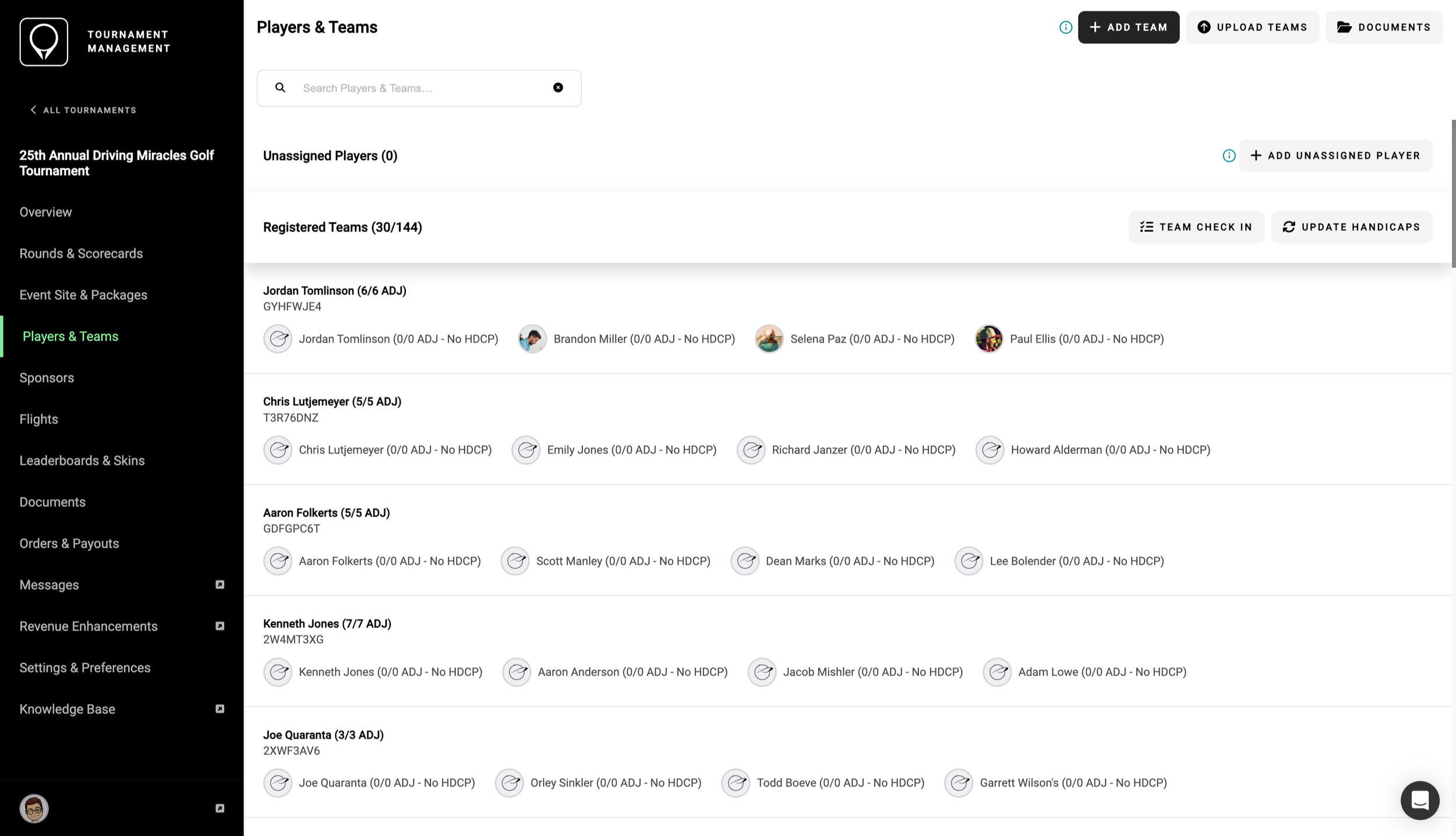
Players & teams

One tap of the “check in” button marks the team as checked in and syncs the update to every connected device, allowing multiple registration stations and streamlining the process.

A screenshot of the Players and Teams screen in the GolfStatus Software.

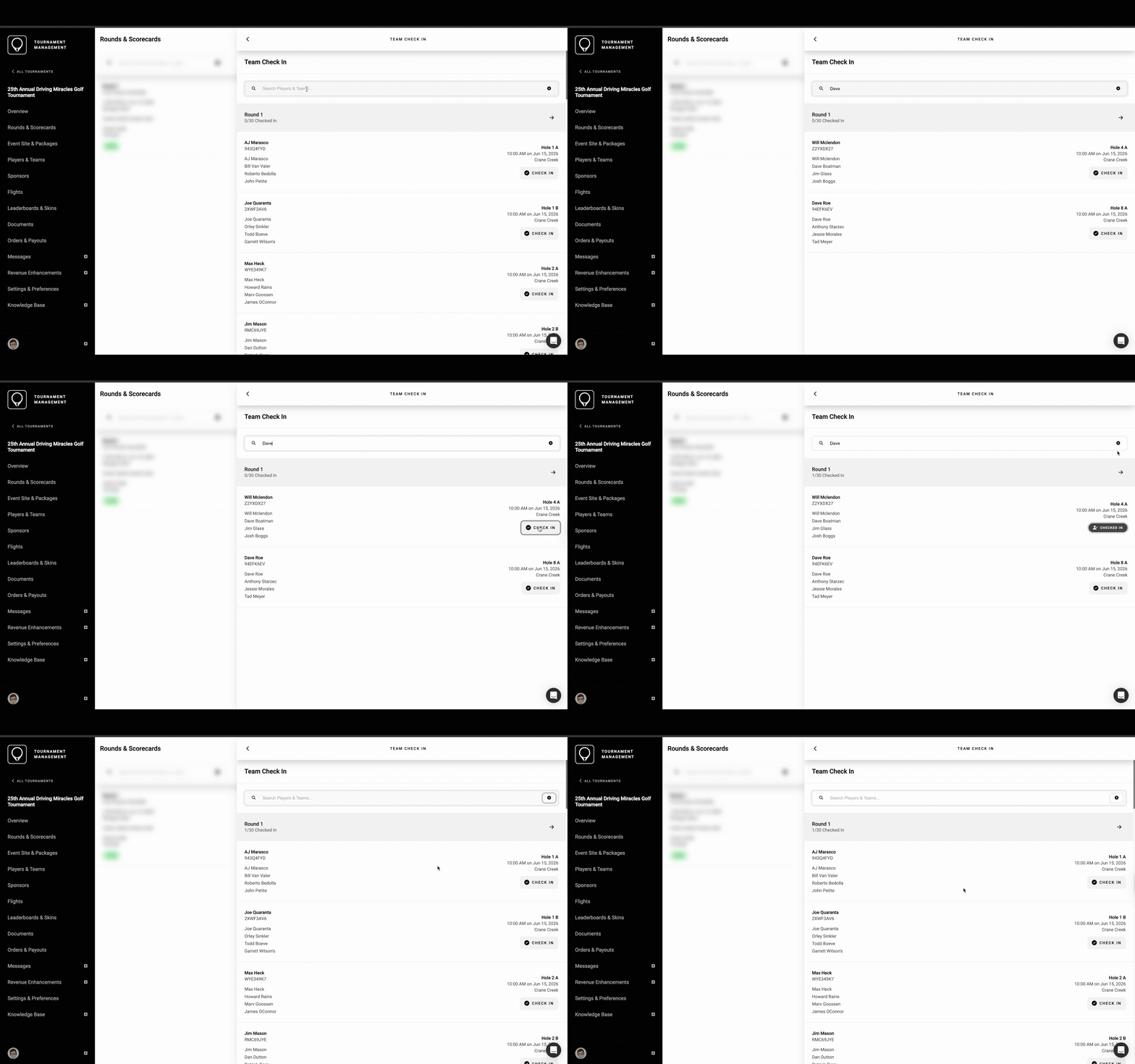
Check-in lets volunteers staffing registration rapidly search by team name or player name, so participants can be located in just a few seconds instead of flipping back and forth through multiple pages of printouts. And because the checked-in counter updates instantly, anyone who’s logged into the software, anywhere on the course, can get a clear picture of how registration is moving.

A short video showing a search for a player  and teams being checked in in the GolfStatus software.

It’s quick and easy to search for a golfer or team across rounds.


want to know more?

Get in touch to find out more about how GolfStatus can save time and help raise more money with your golf tournament. Whether you’ve got a golf event on the calendar or are just exploring the idea, GolfStatus can help. Click below to book a meeting with our team and get started with no upfront cost!

already a golfstatus client?

Get in touch with your Client Success representative to learn more about the check-in feature for your next tournament.


Golf Tournament Advertising Ideas to Boost Registration & Sponsors
 

by Jen Wemhoff, Communications Manager at GolfStatus

Advertising is an area where you can truly see your tournament grow and scale. It can be the difference between a half-empty field and a sold-out, high-energy event that attracts both golfers and sponsors and raises significant funds for your organization.

Golf carts line up at the start of a sold out charity golf tournament.

Effective golf tournament advertising can help your golf fundraiser grow, scale, and boost revenue.

A robust golf tournament advertising strategy ensures your event doesn’t just happen—it thrives. This guide breaks down the basics with FAQs about golf tournament advertising, a step-by-step outline, and a sample campaign plan to help you fill your tournament and secure high-value sponsorships.

Table of Contents


Golf Tournament Advertising FAQs

What is Golf Tournament Advertising?

At its core, golf tournament advertising is the strategic promotion of your event across digital, print, and community channels. Its goal is to attract golfers, sell out teams, and secure sponsors to fund the event.

Why is Golf Tournament Advertising Important?

Advertising ensures a full field for your charity golf tournament, which is a key part of covering golf facility costs and reaching fundraising goals. Strong visibility also demonstrates to sponsors that their brand will get exposure to a large, engaged audience. In short, consistent promotion elevates your tournament from a simple round of golf to a highly anticipated, must-attend event in your community.

What are the Best Golf Tournament Advertising Ideas?

You have a lot of choices when it comes to advertising your golf event, but here are some of the top ideas that are cost-effective and provide solid results:

  • Use a dedicated golf tournament website where you can direct all advertising. It should offer online registration through a frictionless process.

  • Run geo-targeted social media ads on Facebook, Instagram, and LinkedIn to target prospective golfers and sponsors in your area.

  • Execute a phased email marketing campaign to hit participants with appropriate messaging at various stages of planning, such as Save the Date → Early Bird → Last Chance.

  • Partner with the host golf facility to post tournament flyers in their pro shop or clubhouse, list the event on their website, or, if possible, on cart GPS screens.

  • Provide promo kits to sponsors, board, and committee members so they can easily advertise the event to their own networks. Include logos, graphics, and canned social media and email verbiage to make it as simple as possible.

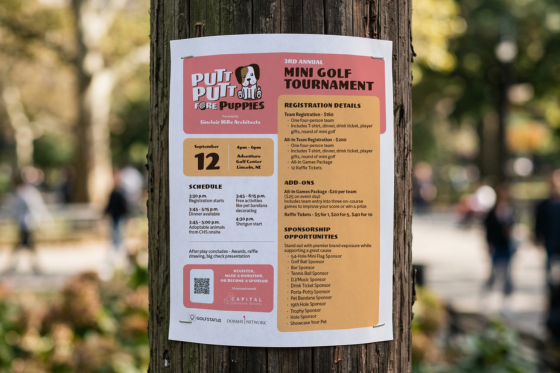
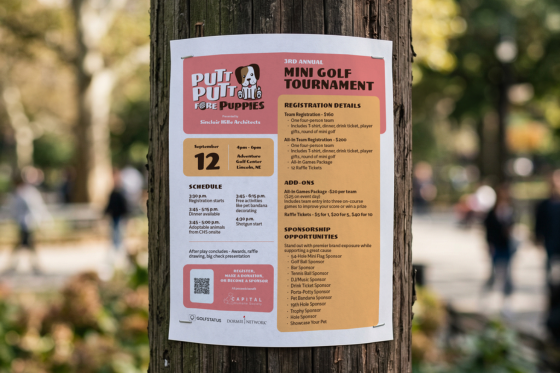
A flyer is posted on a pole advertising a golf tournament.

When using print materials, be sure to include a QR code that links to your golf tournament website.

When Should We Start Promoting a Charity Golf Tournament?

A good rule of thumb is to start reaching out to sponsors four to six months out from tournament day, though it’s never too early to start. Your public promotion will ramp up in the final months and weeks leading up to the tournament.

How to Create a Golf Tournament Advertising Campaign

1. Define Your Campaign Goals and Target Audience

Start by identifying who you want to reach. Are you trying to fill the last 20 player spots with local golfers, or are you targeting corporate executives for high-ticket sponsorships? Set concrete goals for golfer registrations, sponsorships, and marketing success.

2. Launch a Centralized Event Website

Before you send a single promotional email or print a flyer, you need a mobile-friendly event website. Prospective golfers or sponsors should never have to download a PDF or mail a check to register for your tournament, so make sure your site is live before advertising begins.


The homepage of a golf tournament website is shown on a laptop.

Get a Free Golf Tournament Website

Launch a professional, branded event website in minutes with GolfStatus. The website acts as your campaign hub, automating golfer registrations, donations, and sponsorships online 24/7.


3. Define and Package Your Inventory

Your inventory is golfer or team registrations and sponsorship packages. Conduct an audit and ensure it includes a mix of physical assets (pin flags, hole signage) and high-margin digital assets (live leaderboard or mobile app branding and push notifications).

Package ideas include:

  • Technology Sponsorship

  • Pin Flag Sponsorship

  • Hole-In-One Contest Sponsorship

  • Elevated Hole Sponsorships

  • Individual Golfer Registration

  • Team Registration (Twosome or foursome)

  • Add-On Packages (raffle tickets, mulligans, on-course games, etc.)


Pro Tip:

List all team and sponsorship packages on your GolfStatus event website so interested golfers and businesses can browse packages, see each option’s benefits, and commit on the spot. The software’s back end makes it simple to track registrants, sold sponsorships, and payments in one place.


4. Map Out an Omnichannel Promotion Strategy

Plan a coordinated approach across multiple channels to reach the widest audience possible. Use generative AI to quickly write copy for channels like social media ads, email campaigns, short-form video (like Instagram Reels and YouTube Shorts), and text message marketing. Encourage peer-to-peer promotion by giving supporters branded assets to share, and include testimonials from previous fundraising events or past golf tournaments to further strengthen your appeals.

Remember: All channels should include a CTA (call to action) that directs people to your event website, even print pieces. Use a QR code that links to the website so people can register from their phones.

5. Maximize Digital Real Estate

In your advertising, highlight opportunities that provide multi-touchpoint visibility before, during, and after the tournament. Digital placements are a great option to attract sponsor interest and offer engagement beyond the day of the tournament.

GolfStatus’ exclusive Technology Sponsorship embeds the sponsor’s brand across the platform, giving them premium exposure on the event website, live leaderboards, live scoring mobile app, and more. These placements don’t come with overhead costs, which means more profit for your organization.

A collage showing sponsor logo placements on a phone, website, and printed scorecard.

Digital exposure with multiple touchpoints, like that provided by GolfStatus’ Technology Sponsorship, offers sponsors broad visibility.

Example Golf Tournament Advertising Campaign Plan


Ready to Launch Your Tournament With GolfStatus?


Golf Tournament Advertising Best Practices

From optimizing your sponsorship packages to unique options for spreading the word, these best practices will help you make the most out of your advertising efforts.

  • Be specific in your sponsorship listings. When adding sponsorship packages to your events website, be specific. Include identifying names, such as “Hole-In-One Contest Sponsor," "Beverage Cart Sponsor," or "Leaderboard Sponsor," and include details about the accompanying sponsorship benefits. This helps businesses justify the spend and understand the ROI of their support.

  • Integrate physical and digital assets. When leveraging physical assets, like flyers, postcards, or signage, use a QR code that links to your event website. This helps you track registrations from non-digital sources.

  • Work with local media. Send press releases to local newspapers, community magazines, and local radio and television stations. If your tournament benefits a local charity, media outlets may be willing to provide discounted or free ad space. You might also utilize online community calendars or events listings.

  • Engage with micro-influencers. Hyper-local influencers can often have a larger impact than a more well-known A-lister. Connect with local influencers to spread the word about your event.

  • Empower your planning team. Turn your planning committee and board members into an active sales team. Similar to peer-to-peer campaigns, you might create a friendly competition to see who can recruit the most sponsors or golfers or get the most engagement on posts by leveraging their personal and professional networks.

Wrapping Up

Golf tournament advertising takes some trial and error to find the right tactics and strategies that work for your supporter base. Test different options, measure your results, and lean into messaging and channels that resonate with your audience. By putting in the marketing work, you’ll cast a wide net to secure registrations, sell sponsorships, and ensure your tournament is the one that everyone wants to be part of.

Make sure you have the right golf management tech in place to streamline planning, management, and execution for a memorable experience. GolfStatus’ software, combined with industry-leading support and exclusive Fundraising Enhancers, can make your tournament better than ever. Click below to book a meeting with the GolfStatus team to get started at no upfront cost.

Offer Better Sponsorships & Raise More Money With GolfStatus

Click Here to Get Started at No Upfront Cost!

About the Author

Jen Wemhoff accidentally discovered her passion for nonprofits in college. An internship while earning a degree in Communications from Doane University led to a 20 year career in the nonprofit sector, where she found a strong desire to be part of something bigger than herself. Her vast nonprofit experience includes roles in marketing, fundraising, and direct programming. When Jen came to GolfStatus as Communications Manager in 2020, she was struck by the power of the sport to raise money to power nonprofit missions. She tells GolfStatus’s story across platforms and channels and develops educational tools and resources to help nonprofits tap into golf’s giving power. Jen, her husband, and two daughters call Lincoln, Nebraska home.
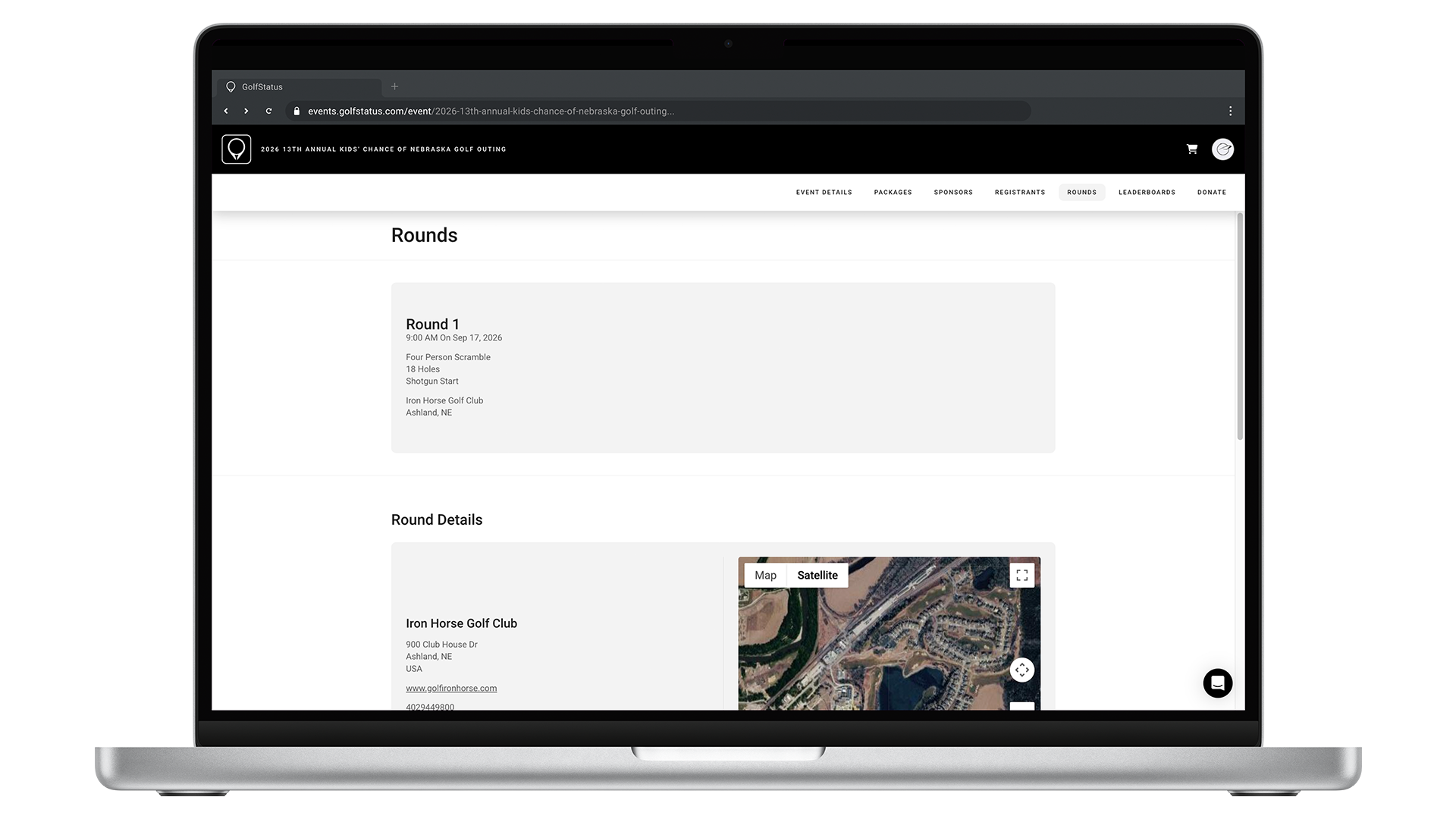
 
 
How to Host a Golf Putting Contest: FAQs & Best Practices
 

by Jen Wemhoff, Communications Manager at GolfStatus

On-course contests are where charity golf tournaments can come alive. A simple, engaging, and profitable option is a putting contest. With minimal setup, low overhead, and high participation potential, a well-run putting contest can generate meaningful dollars while giving golfers something extra to look forward to on tournament day.
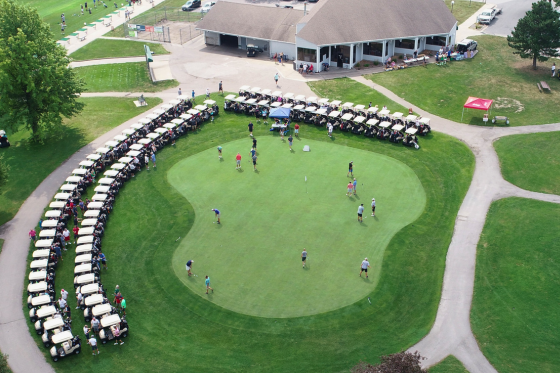
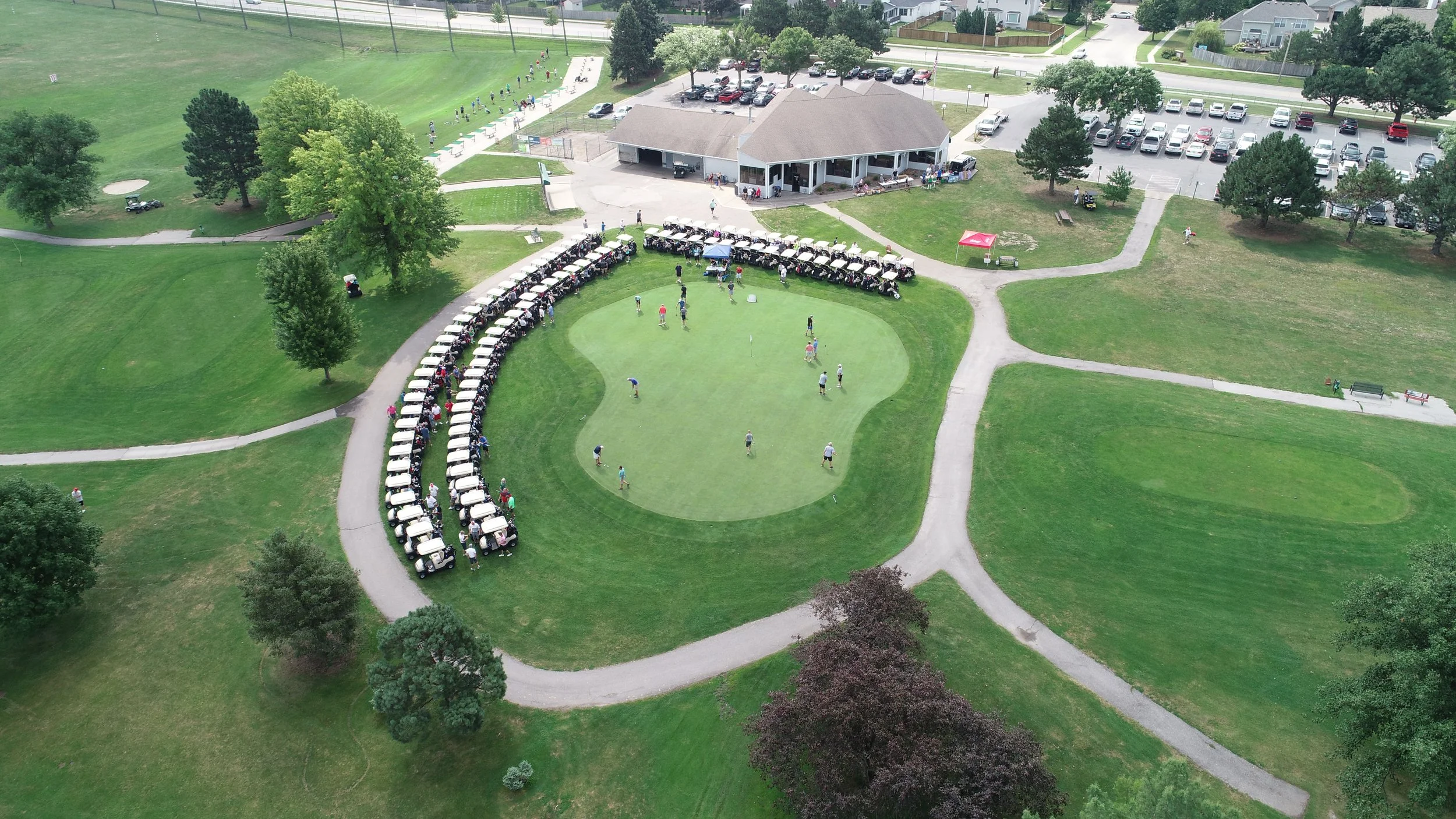
An aerial photo of a golf putting contest on a practice green.

Whether you’re looking to boost revenue, attract sponsors, or create a memorable moment that brings everyone together, a putting contest checks all the boxes. Let’s break down the most common questions, popular formats, and proven best practices to help you host a putting contest that's easy to manage and hard to forget.

Table of Contents


Golf Putting Contest FAQs

What is a Golf Putting Contest?

A golf putting contest is a standalone on-course game held during a golf event such as a charity scramble, corporate outing, or club championship. It’s often held on the golf facility’s practice green and takes place before the shotgun start, during the tournament when teams play a hole near the practice green, or post-round as part of the awards ceremony.

Unlike the larger tournament, where total score matters, a putting contest tests golfers' short-game skills. Golfers pay an entry fee to participate in the contest and attempt to make a long-range putt or series of putts. Some tournaments hold contest rounds, with successful putts advancing to the next round to compete for cash or other high-value prizes.

Why Should We Host a Golf Putting Contest?

Putting contests have the potential to drive significant revenue from your charity golf tournament. Why? There are low to no overhead costs (golfers bring their own putters, and the golf facility provides the hole and golf balls, and you can source donated prizes), and entry fees drive fundraising. What’s more, a putting contest is a prime sponsorship opportunity, much like hole-in-one contests. The practice green is a high-traffic, high-value exposure point, boosting the value of a contest sponsorship.

A putting contest can also break up a long day on the course. A high-stakes contest finale held before dinner, awards, or auction draws a crowd, creating an electric atmosphere and a shared highlight that attendees talk about until next year's event.

A golfer putts on the practice green while three others watch during a golf putting contest.

What are Popular Golf Putting Contest Formats?

Guaranteed Prize

  • How it works: All participants line up at a pre-determined distance, perhaps 10 feet. Those who make it move back to another distance, like 20 feet, then 30 feet, etc., continuing until only the winner remains.

  • Pros: This format guarantees a winner and a prize awarded right then and there. It also has a very low barrier to entry for golfers and is fairly simple to run.

  • Cons: This type of contest can take 15–20 minutes to complete, so it must be scheduled carefully to not interfere with the rest of the tournament.

Cash Prize

  • How it works: A qualifying round is held to determine one finalist. That finalist gets one single attempt from 50+ feet (often 60 feet) for a large cash prize.

  • Pros: Offering a significant cash prize can draw in large crowds and more participants.

  • Cons: Insurance is a must, and it can take a while to process the claim.

Other Variations

  • Putt a prize. Various prizes are placed on the practice green, and golfers win the prize if their putt hits it or stops within a certain distance.

  • “Pig” or “Golf”. Similar to the basketball game, where one player sets up a putt and makes it, and others must replicate the putt or get a letter.

  • Team relay. Team members must sink a putt from certain distances (such as five feet, 10 feet, 20 feet, etc.) in succession. The team with the fastest time wins.

What Else Should I Know About Golf Putting Contests?

  • If you’re interested in offering cash or non-donated prizes, you might consider putting contest insurance, which comes with a cost. A more cost-effective option is to secure donated prizes from sponsors, local businesses, or partners.

  • Use your golf tournament website to sell entry into the putting contest. You can sell entry as a standalone item or bundle it with other tournament add-ons, like raffle tickets or mulligans. Sell entry ahead of the event, as well as at check-in, to maximize participation.

  • Publicize the contest on your event website and in promotional campaigns. Highlight prizes, how much it costs to enter, and when the contest will take place. Be sure to give a shoutout to the contest sponsor when applicable.


How to Host a Golf Putting Contest

1. Choose the Right Format

Step one is to decide if the primary goal of a putting contest is high-margin fundraising or high-energy entertainment. If you need to raise money without any overhead, a guaranteed prize is a good option. If you want to make a big splash, an insured $10,000 contest might be the better choice.

2. Secure the Location & Schedule

Putting contests are most commonly held on the practice green before the start of the golf tournament. If there are multiple practice greens, choose the one closest to the clubhouse or outdoor bar. The easier it is for spectators to grab a drink or a bite to eat and watch, the larger your crowd (and the higher the energy) will be.

If you have the contest on the practice green during the round or at the turn, there’s a risk of creating a bottleneck. Choose a rapid-fire format to prevent backing up the entire tournament. You might also consider hosting finals at the end of the day for a climactic finale to the event.

An aerial photo of a practice green where a golf putting contests can be held.

3. Lock Down Logistics

If you’re utilizing putting contest insurance, you’ll likely have to abide by various requirements, which might include:

  • Exact putt length. You’ll be required to measure the putt’s distance to the exact inch using a surveyor’s tape.

  • Contest witness. You’ll need to train a witness—either a volunteer, staff member, or planning team member—to watch all of the putts to ensure all of the rules were followed. For high-value prizes, you might need to submit video footage of the putts for verification.

  • Standardized equipment. You may need to provide the golf balls and even the golf clubs for the contest.

You’ll also need to determine other contest logistics, such as:

4. Price It Right

  • Sell contest entries on your tournament website. This keeps all tournament funds in one place to simplify post-event accounting and eliminates the need to pay with cash for day-of entries.

  • It’s a good idea to bundle the putting contest with other add-ons to boost revenue. A combined ticket that includes contest entry with add-ons like on-course games, mulligans, or raffle tickets creates a higher perceived value that can drastically increase participation rates. You might also give golfers the opportunity to buy a second or third qualifying attempt for half the price.

  • Sell the Putting Contest Sponsorship as an opportunity for the sponsor to set up a tent, have hole signage, hand out swag, and personally interact with every golfer.

5. Create a Fun Atmosphere

The right emcee and commentary transform the putting contest into a spectator sport. Enlist a volunteer to serve as the contest emcee. Provide a microphone (check with the golf facility) to announce finalists, crack jokes, and build excitement.

Since making a 50-foot putt is a rarity, it’s a good idea to have a backup activity to keep the mood high. That way, if the finalist misses, you can pivot to a "Closest to the Pin" chip-off or a raffle draw for a smaller prize or gift so the event ends on a high note.

6. Follow Up After the Contest

  • While the contest and excitement are still fresh, announce the winner (if applicable) at the awards ceremony or dinner. Play a video of the winning putt on a projector to engage those who may have missed it.

  • Ensure the sponsor is front and center for the check presentation or to award the prize. Even if the big cash prize wasn't won, a photo of the finalist and the sponsor shaking hands is valuable content to use to promote next year’s event.

  • Send a "thank you" text or email to contest participants or the entire field with a link to next year's early-bird registration, building on the excitement from the contest.


Final Thoughts

A golf putting contest is a high-impact add-on for your next golf tournament. It’s flexible, cost-effective, sponsor-friendly, and when done right, creates a buzz that carries through to marketing next year’s tournament. By choosing the right format, handling the necessary logistics, pricing entries strategically, and leaning into the entertainment value, you can turn the contest into a major fundraising and engagement win.

If you’re ready to put these ideas into action, the next step is simplifying how you manage your contest—and your golf tournament as a whole. Using a purpose-built golf tournament management platform like GolfStatus makes it easy to sell entries online, bundle add-ons, track participation, and keep everything organized in one place—so you can focus on creating an exciting experience.

Make Your Next Golf Event a Swinging Success!

Book a Meeting With GolfStatus to Get Started

About the Author

Jen Wemhoff - Communications Manager at GolfStatus

Jen Wemhoff accidentally discovered her passion for nonprofits in college. An internship while earning a degree in Communications from Doane University led to a 20 year career in the nonprofit sector, where she found a strong desire to be part of something bigger than herself. Her vast nonprofit experience includes roles in marketing, fundraising, and direct programming. When Jen came to GolfStatus as Communications Manager in 2020, she was struck by the power of the sport to raise money to power nonprofit missions. She tells GolfStatus’s story across platforms and channels and develops educational tools and resources to help nonprofits tap into golf’s giving power. Jen, her husband, and two daughters call Lincoln, Nebraska home.