Posts tagged golf fundraisers
Kids’ Chance Uses Golf to Drive Fundraising & Awareness
 

Nebraska Nonprofit Engages Supporters Year-Round Through Golf

partner snapshot

Kids’ Chance of Nebraska sees golf as much more than just a day on the course. It’s a way to bring people together to raise critical funds and, perhaps most importantly, introduce more people to a mission that can easily be overlooked.

The Nebraska chapter shares a mission with the national Kids’ Chance community: to provide scholarships and support to the children of workers who have been killed or seriously injured in workplace accidents. While workers’ compensation provides some support, it often doesn’t cover everything a family needs, especially the cost of higher education.

A Kids' Chance of Nebraska ball marker sits in the grass on a golf course.

Kids’ Chance of Nebraska relies on golf to raise funds for scholarship and spread the word about its mission.

The organization finds children who qualify and connects them with scholarship opportunities and support throughout their education. “A lot of kids don’t realize they qualify for this support,” says Shawn Willis, Kids’ Chance of Nebraska Board Treasurer and Past President.

Golf plays an important role in making that support a reality. What started as a small tournament with just a handful of golfers has grown into an annual event drawing more than 130 golfers, while a second golf fundraiser—a TopGolf event—gives Kids’ Chance of Nebraska another opportunity to engage its network.

the challenge

When Shawn first started looking for a fundraising option more than a decade ago, golf seemed like a natural solution. “I needed a fundraiser, and I like to golf,” he says. The golf outing quickly became the organization’s major fundraiser of the year.

But as the tournament grew, so did the administrative work behind it. Participants received information about the event by mail, filled out paper forms or PDFs, and sent in checks. Shawn had to track payments, follow up with people who hadn’t paid, and maintain spreadsheets to try to keep everything organized. “I had to go collect checks at the P.O. box, keep track of who had paid, and chase people down on the day of the tournament,” Shawn says.

There was also the added administrative work that comes with a major fundraising event—selling and managing sponsorships, coordinating teams and pairings, reconciling income and expenses. For an organization with a largely volunteer-run board, that workload quickly became a barrier for growth.

And because the goal of the golf event is broader than raising money, the organization saw an opportunity to expand beyond its traditional tournament to add a second fundraiser to engage more people—a spring TopGolf event. But a second event meant additional work, and they needed a solution to streamline planning for both events.

Two female and two male golfers post on a golf course at a golf fundraiser.

The 18-hole golf tournament has grown from a handful of golfers in its first year to regularly attracting more than 150.

the solution

GolfStatus has helped make managing both events easier. After being introduced to GolfStatus through a connection at Dormie Network Foundation, Kids’ Chance of Nebraska moved its tournament into the digital age.

Simplifying Logistics

Online registration made an immediate, significant difference. Instead of relying on the PDFs, checks, and spreadsheets, golfers register and pay online, without any manual processing. “It’s a piece of cake,” Shawn says. “It made my job a lot easier.”

The platform is used to manage teams, pairings, and sponsorships. Shawn says he appreciates being able to see at a glance who has registered and can organize participants as the event takes shape.

The event website has also become an important part of the tournaments, giving participants a clean, easy-to-use hub for registration and event information. Shawn includes the site’s link in all promotional materials, and golfers and sponsors take it from there.

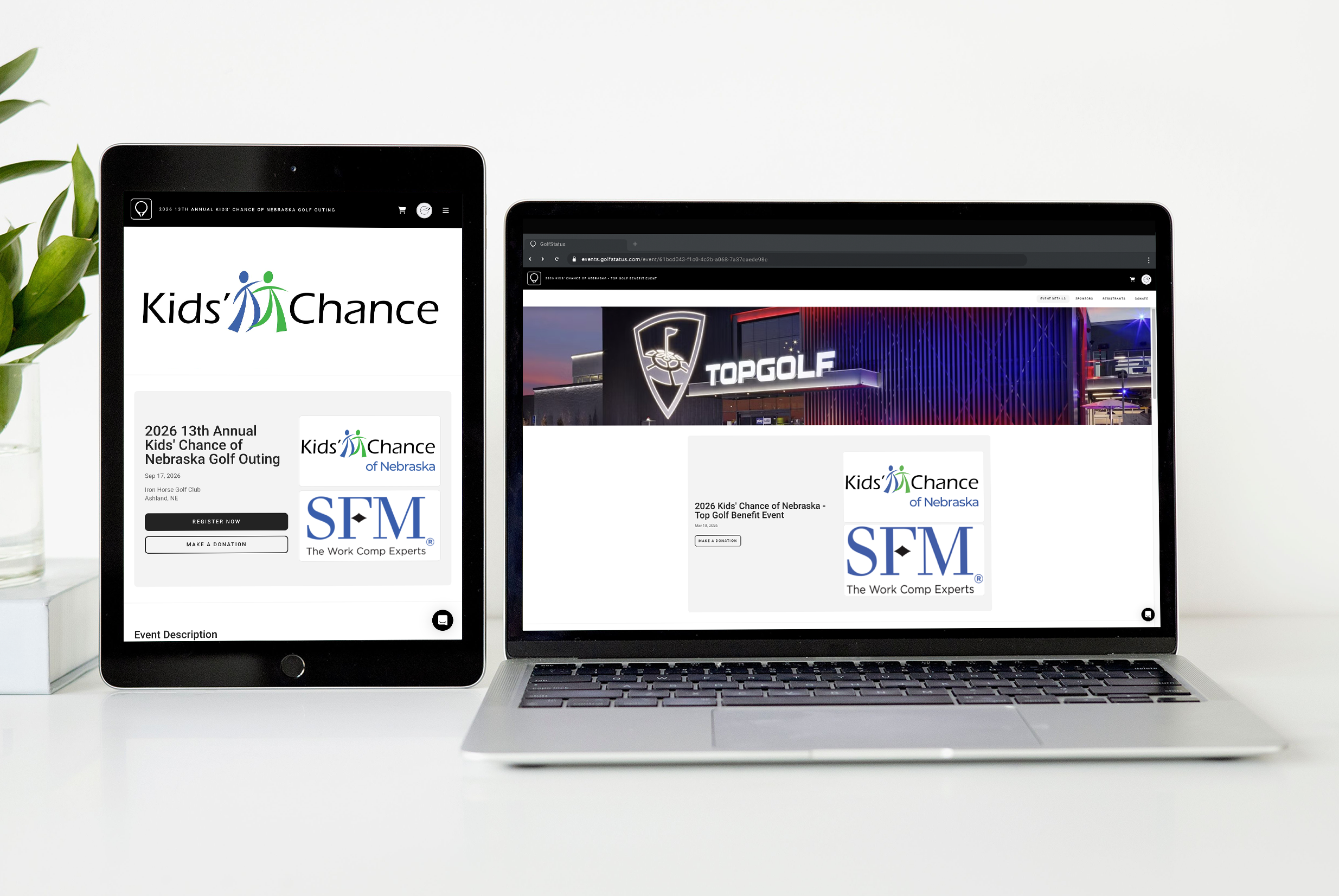
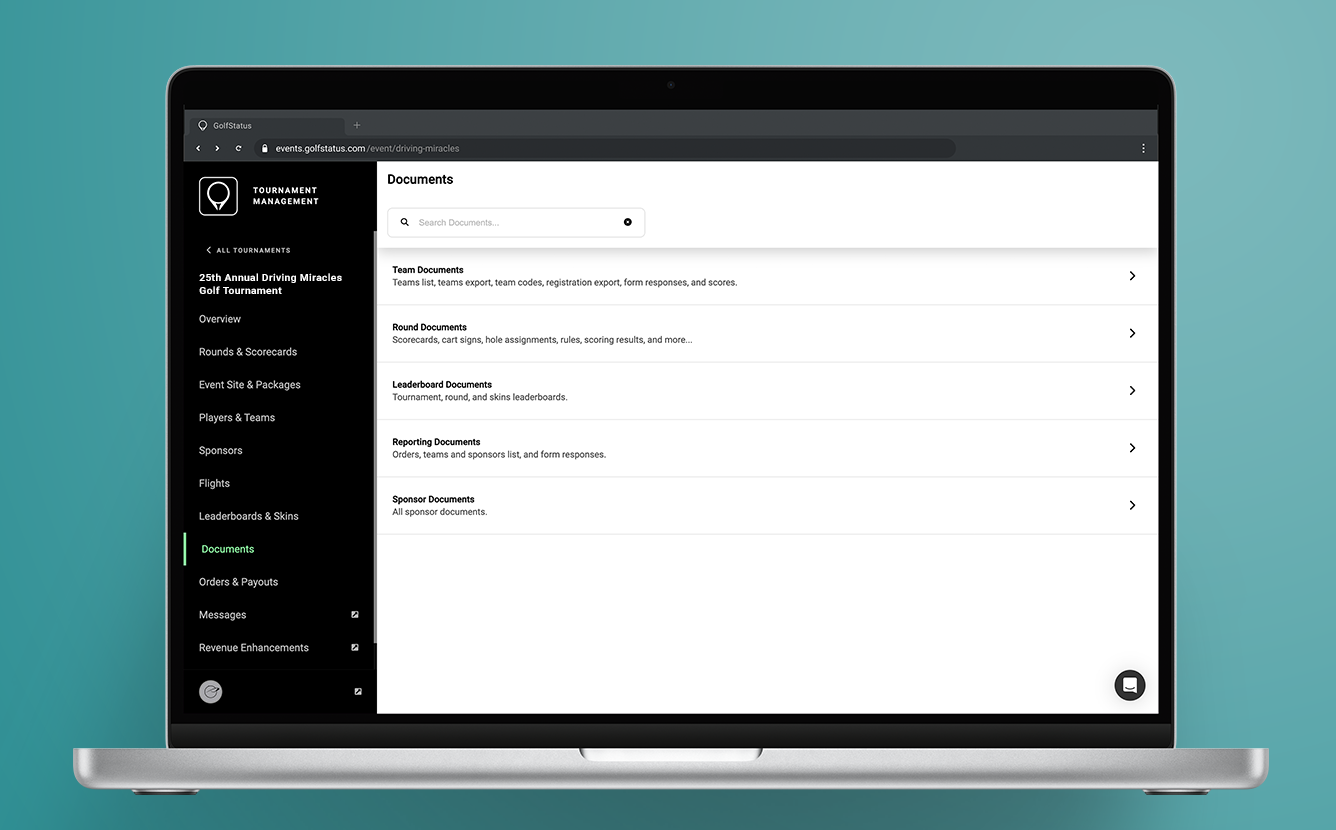
Screenshots of the Kids' Chance of Nebraska golf event websites are displayed on a tablet and laptop.

Kids’ Chance of Nebraska uses event websites powered by GolfStatus for both its 18-hole tournament and TopGolf event.

For a volunteer-led organization, these efficiencies quickly added up. Instead of spending time tracking down payments or maintaining spreadsheets, the planning team can shift their focus to the things that make the event even more successful: recruiting sponsors, securing auction donations and raffle prizes, promoting the tournament, and connecting participants with the Kids’ Chance mission.


Improved Sponsorships & Relationships

GolfStatus helped Kids’ Chance of Nebraska offer new, lucrative sponsorships for its 18-hole tournament, including a hole-in-one contest sponsorship, pin flag sponsorship, and the exclusive Technology Sponsorship. These created new ways for businesses to support the event.

Their sponsorship strategy for both events is rooted in relationships, with most sponsors returning year after year. The sponsor pool includes businesses connected to the workers’ compensation industry, such as defense attorneys and insurance agencies that work with cases, plus other local businesses and vendors.

A golfer hits a ball toward a target at a sponsor tent at a charity golf tournament.

Some sponsors choose to have an active role in the golf tournament with a game or display set up on a tee box.

Shawn says some sponsors simply want to support the mission, while others want to be more actively involved at the event by hosting a hole and interacting with golfers. Sponsors play a major part in creating events that feel like true community gatherings, rather than just a fundraiser.

And with both golf events, organizers keep the focus on creating an enjoyable experience that people look forward to every year.

The results

Kids’ Chance of Nebraska’s golf fundraising efforts have come a long way from its humble beginnings. Today, the organization’s flagship 18-hole tournament attracts close to 150 golfers and drives $30,000 in revenue, while the TopGolf event draws 70+ people and $10,000 in fundraising.


We used to want to cover just one scholarship from the golf event, but now we’re able to cover three times that or even more.
— Shawn Willis, Kids’ Chance of Nebraska Board Treasurer and Past President

One Mission, Two Golf Events

Kids’ Chance of Nebraska’s two distinct golf events engage supporters throughout the year. The traditional tournament, held in September at Iron Horse Golf Club in Ashland, Nebraska, brings together many of the organization’s longtime supporters and has become a familiar tradition for participants, many of whom come back year after year. The tournament incorporates a silent auction and a raffle drawing.

The spring TopGolf event offers a format that appeals to a broader audience of non-golfers, spouses, and guests. It replaced a bowling fundraiser, with Shawn explaining, “The TopGolf event appealed more.”

Not everyone spends the evening hitting golf balls. “Half of the people don’t go to their bay,” Shawn says. “They just network, which is half the value.”

The TopGolf event features 20 bays, with opportunities for bay sponsorships, as well as food, beverage, signage, and video sponsorships. They also do a 50/50 raffle for a new putter.

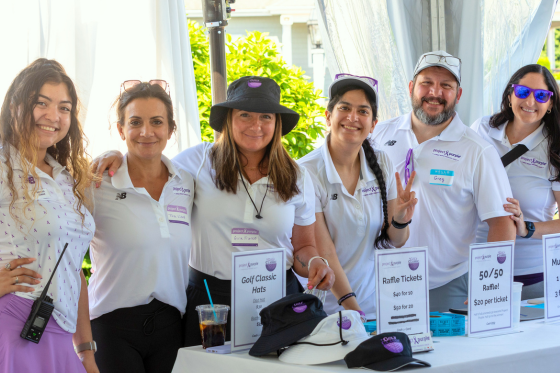
Two male and four female golfers pose with a golf club at a TopGolf fundraiser.

The TopGolf event draws non-golfers and guests to network and learn more about Kids’ Chance of Nebraska.

More Than the Numbers

The fundraising numbers only tell part of the story. Yes, the events provide funding for Kids’ Chance of Nebraska’s operating needs and scholarships for students whose families have been affected by workplace accidents, but they also reach people who may not know their work exists.

That mission-building component has become increasingly important as the tournaments have grown, creating a broader community of supporters around the organization. In particular, the TopGolf event has helped reach people outside the nonprofit’s traditional industry audience.

In 2025, Kids’ Chance of Nebraska awarded 14 scholarships. The impact of these scholarships is beginning to come full circle as former scholarship recipients have graduated from college and gone on to serve on the organization’s board. “Watching them get their scholarships and then seeing them come back on the board—it’s really a full circle moment,” says Shawn.

Lessons Learned

Shawn’s goals for the golf events are simple—give people an event they look forward to, raise money, make it easy to participate, and share the mission. GolfStatus has helped make that easier.


Go to GolfStatus. There are lots of apps out there, but the packages and extras with GolfStatus make it easy for us. It’s a no-brainer for me.
— Shawn Willis, Kids’ Chance of Nebraska Board Treasurer and Past President

As both tournaments continue to grow, Shawn plans to keep working with GolfStatus. “GolfStatus has been great, and everyone is easy to work with,” he says.

Shawn’s advice to other tournament planners? It’s key to start planning early, but to be patient. “In our experience, most people sign up in the few weeks ahead of the tournament.” He also says it’s important to stay connected with past participants, making sure they receive event communications and know that they’re invited back.

Above all, Shawn says Kids’ Chance of Nebraska’s golf events give supporters a reason to get together and the organization another opportunity to tell its story.


Golf for Good With GolfStatus

Kids’ Chance of Nebraska was able to use GolfStatus at no upfront cost, with a free event website, access to the software’s tournament management and fundraising tools, and support from the in-house team. Anyone can get started at no upfront cost—click below to book a meeting with our team of golf fundraising pros to learn more or explore the software on your own!

Get Started With GolfStatus at No Upfront Cost


How to Capture Golfer & Sponsor Data at Your Golf Event
 

By Jen Wemhoff, Communications Manager at GolfStatus

Your charity golf tournament draws some of your most affluent, influential supporters—golfers, sponsors, and their networks. Yet, this is often the exact group that slips through the cracks of even the most data-savvy nonprofit’s fundraising efforts. If that data isn’t making it into your donor database, you’re leaving valuable relationships (and future gifts) on the table. Here’s exactly how to capture it, step by step.

Data Capture Checklist

  1. Choose a golf-specific event management platform, not a generic event tool

  2. Launch a dedicated online registration website for your tournament

  3. Centralize data management, particularly if third parties are running events on your behalf

  4. Export tournament data from your event management tool and tag every golfer, sponsor, and donor by year and level

  5. Add the data to your nonprofit’s CRM as part of your broader fundraising strategy

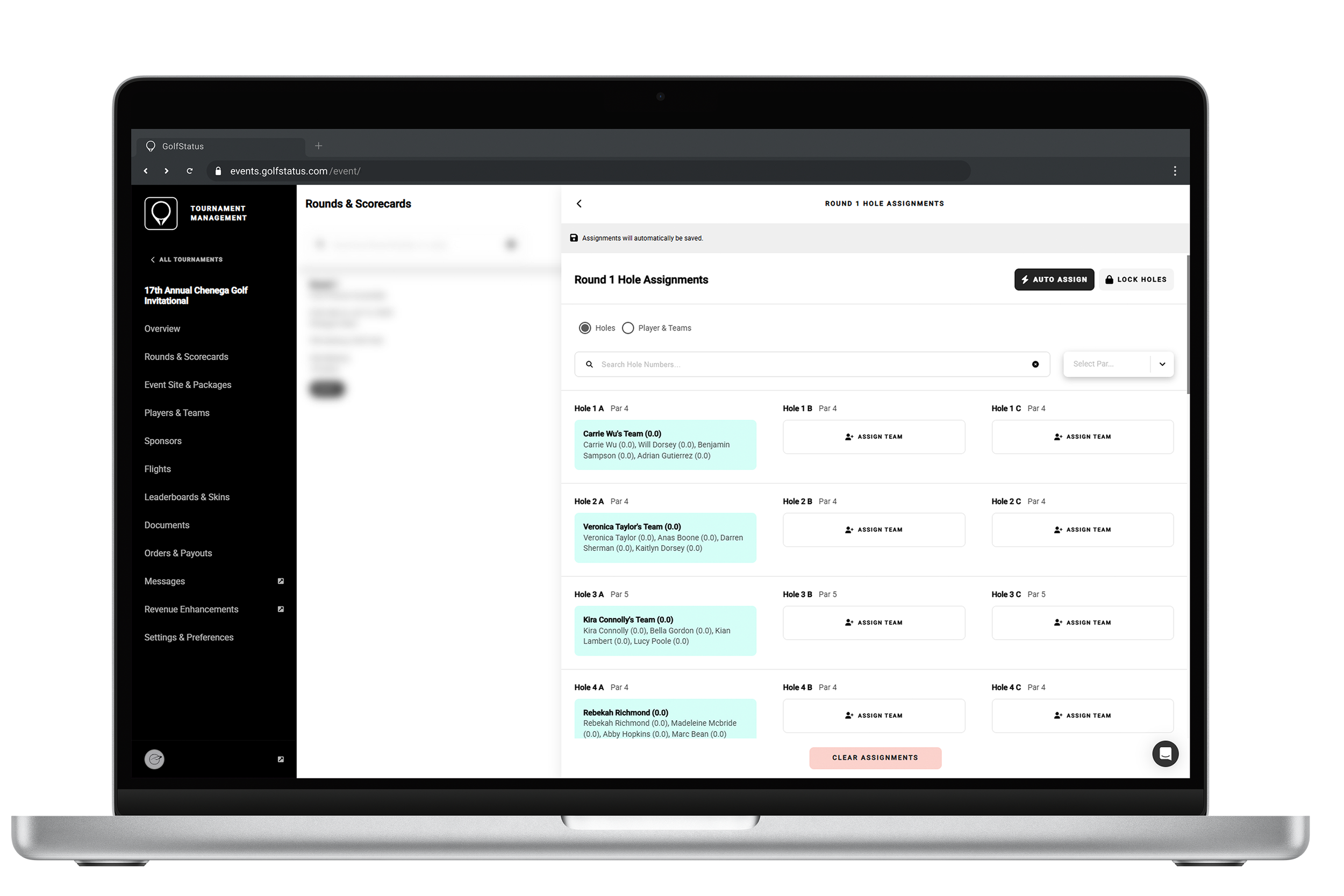
  6. Put the data to work to inform hole assignments and team pairings

  7. Use data to re-engage lapsed golf tournament participants

Why Golfer & Sponsor Data Matters

The basic reality is this—you can’t use information that you don’t have. If your golf event participants aren’t in your donor database, you’re missing out on a huge opportunity to steward high-capacity donors over time. And the worst thing? You may not even realize it’s happening, since the gap is a blind spot, not an obvious red flag.

  • When golfers or sponsors tap their personal and professional networks to fill a team, your organization gets exposed to new, high-level supporters you’d otherwise never meet.

  • A golf tournament sponsorship is often a company’s first touchpoint with your mission, and sponsors are strong candidates for deeper corporate partnerships down the road.

  • Golf event-specific data, like handicap, participation history, add-on purchases, auction winnings, or day-of donations, gives you conversation starters and stewardship angles that generic donor data doesn’t.

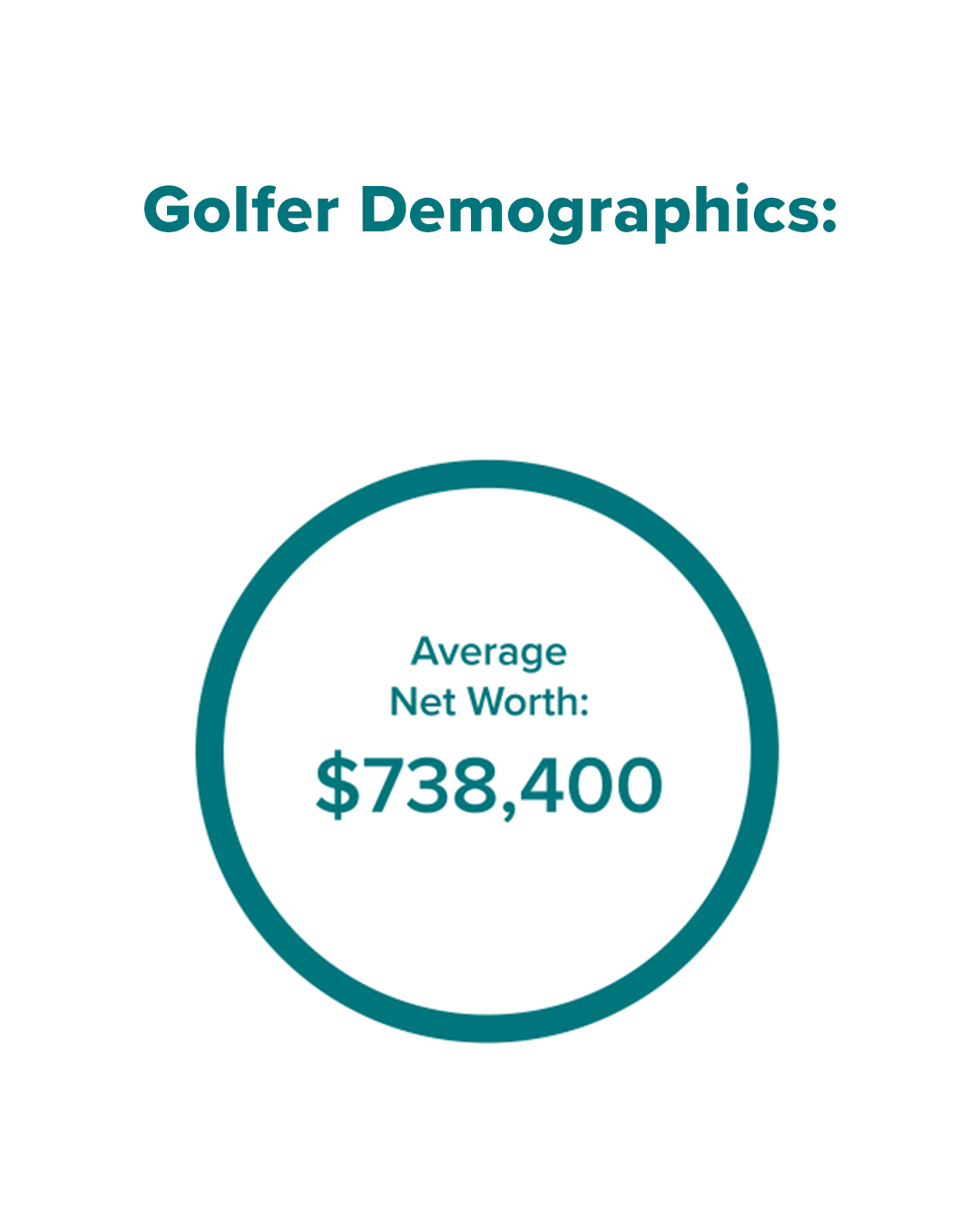
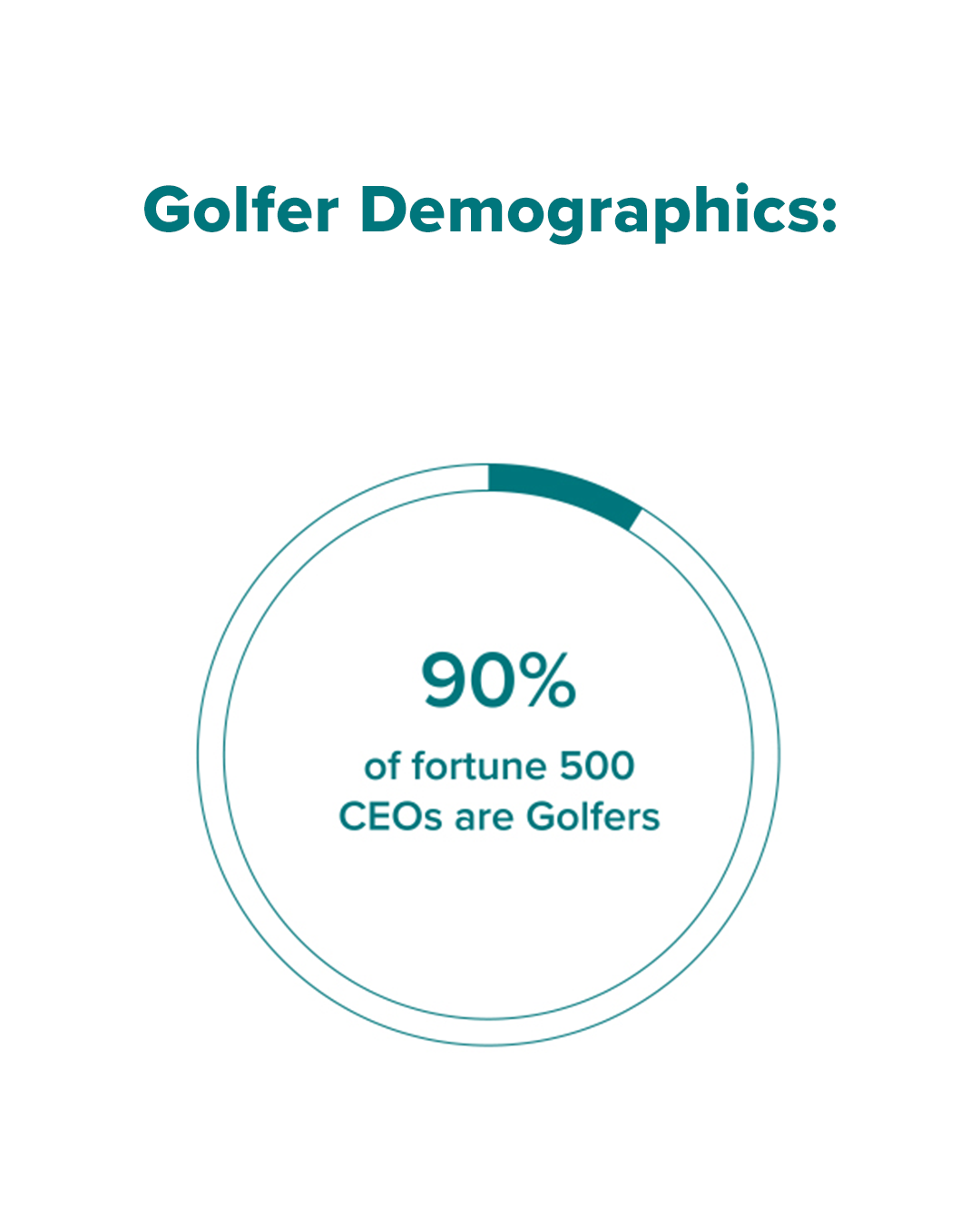
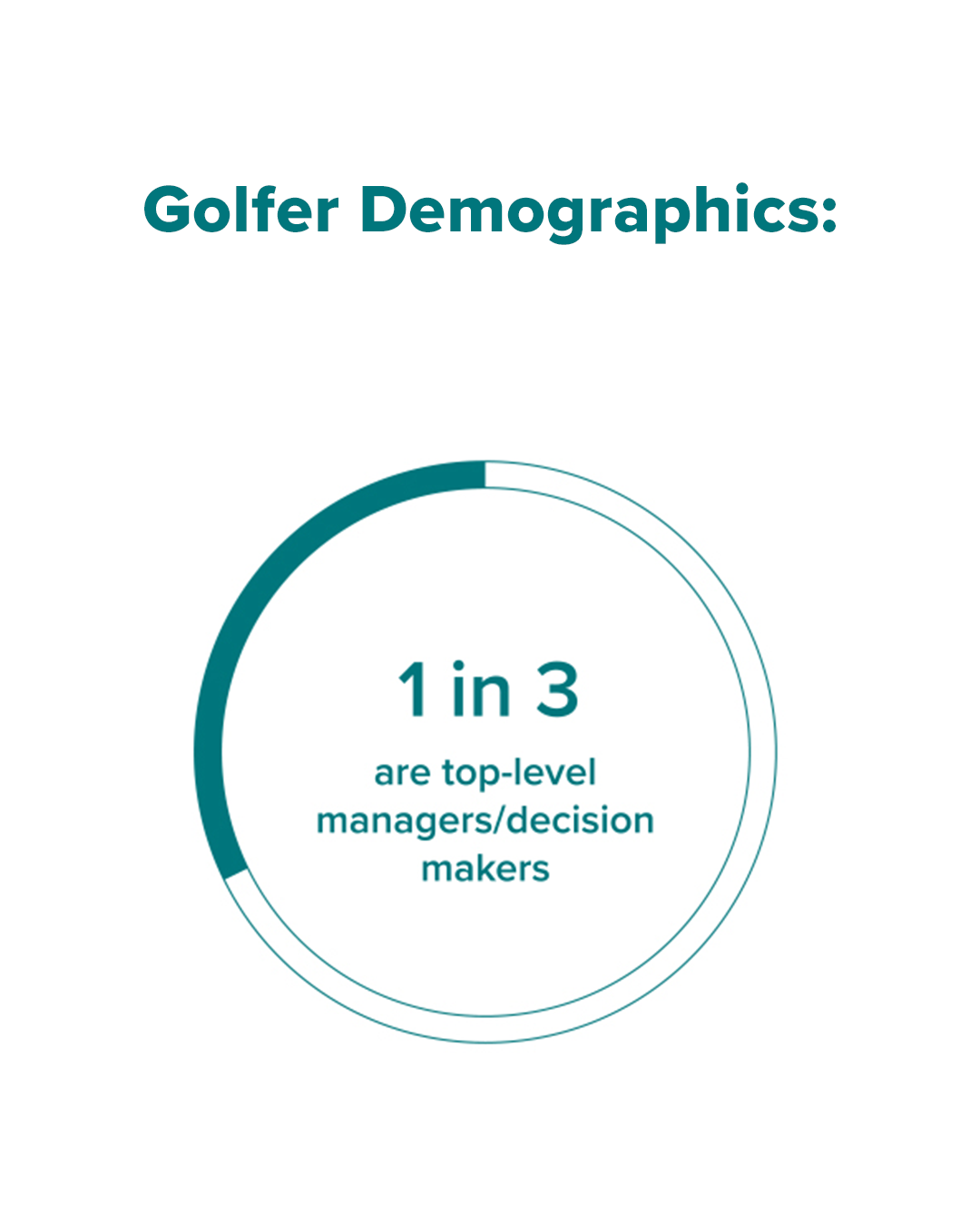
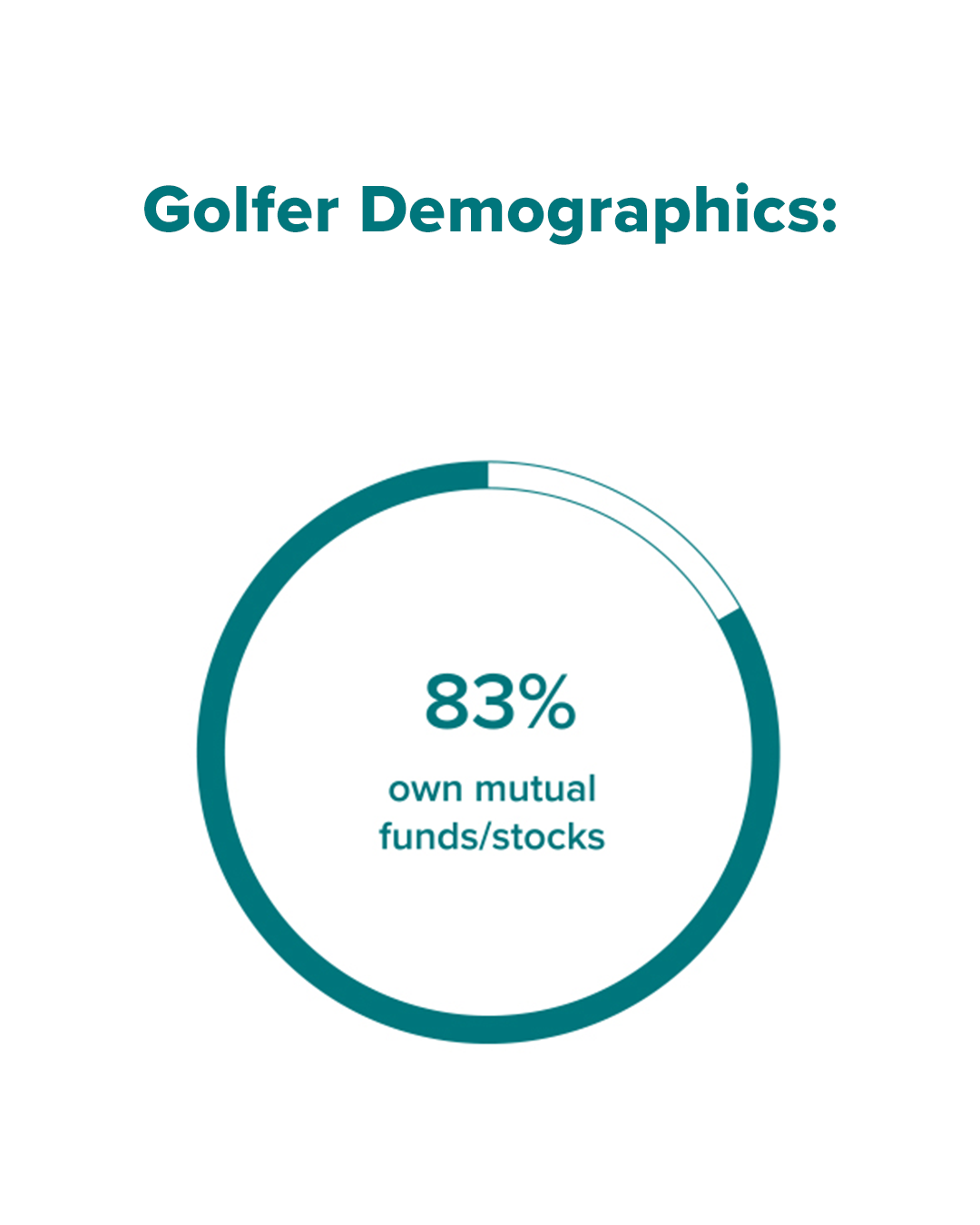
  • Golfers represent an affluent demographic with strong ties to the local business community.

Step-by-Step Golf Tournament Data Collection

1. Choose a Golf-Specific Event Management Platform

General event management tools or generic ticketing platforms simply aren’t built for the level of specificity that golf tournaments require. Set yourself up for success from the get-go and look for a purpose-built solution that seamlessly handles:

  • Golfer information (handicaps, GHIN, course preferences, shirt sizes)

  • Custom sponsorship packages and tiers

  • Digital sponsor exposure throughout the platform

  • Hole assignments and team pairings

  • Online donations before, during, and after the event

  • Live scoring and leaderboards

The right platform should make registration frictionless. Its flow should be intuitive, so golfers and sponsors complete it without abandoning their carts partway through. Every field, click, or step that feels unnecessary is a chance to lose a registrant before they finish.

2. Launch an Online Registration Website

Your event management platform should power a sleek, professional golf tournament website. Whether your tournament is weeks or months away, this is perhaps the single most impactful thing you can do. Why? Online registration replaces emailed signups and manually processed paper forms with a system that captures clean, structured data automatically—without extra work from you or your event committee.

A well-built website should ideally collect more than just a name and payment. Capture each golfer’s contact information (or give registrants the ability to add that information later if all golfers aren’t yet determined), and potentially their employer, job title, and sponsor affiliation. Pairing that information with their purchases—mulligans, game or contest entry, raffle tickets—offers additional context that can turn your registration list into data your development team can leverage later.

An event website that helps capture charity golf tournament data is displayed on a laptop computer.

An event website makes capturing data from your charity golf tournament easy and efficient.


PRO TIP:

Keep all tournament purchases within your event management platform to ensure you capture as much useful data as possible—and you won’t be stuck reconciling cash payments or Venmos post-tournament.


3. Centralize Data Management

Online registration keeps all your event data in one easy-to-access spot so everyone on your team is working with up-to-date information, instead of multiple spreadsheets that quickly become outdated.

If your organization benefits from events hosted by volunteers, businesses, or other third parties, data capture and management can become even more convoluted—and fast. You may have limited visibility into who’s registering, sponsoring, or donating at an event you didn’t organize yourself.

Tech that centralizes events and their data into a single platform while still letting them run independently makes it easy for others to raise funds on your behalf. Plus, you capture the event’s data for long-term stewardship. This gives you the best of both worlds: expanded reach through the third party’s networks and goodwill and the donor and sponsor relationships that come with it.

4. Export, Tag, and Track Data by Year and Level

The best event data is useless if it’s not accessible outside of the fundraiser itself. An intuitive golf event platform should offer robust reporting and make it easy to export data to include in your nonprofit’s CRM.

Once the data is exported, use source codes, tags, or other batch notations to track who played in, donated to, or sponsored your event at what level and in what year. This turns a one-time registration list into a broader piece of each contact’s multi-year donor history.

Over time, this kind of tracking lets you answer questions that matter for stewardship and solicitation for next year’s golf tournament:

  • Which sponsors have upgraded their level year over year?

  • Which golfers have played every year?

  • Who sponsored once and never came back?

  • Which golfers played in the past but missed last year?

Each of these questions gives your team the context they need for outreach messaging that resonates.

The donor export screen of a golf event management platform is displayed on a computer.

Your event management platform should make it simple to export donor and sponsor data with a few clicks.

5. Import Data to Your CRM

Once the data is in your CRM, combine it with the rest of your donor information to make timely, relevant asks—donations, support for other events, invitations to future golf tournaments—through regular donor touchpoints.

This step is what connects your charity golf tournament to the rest of your nonprofit’s fundraising efforts. A golfer who’s been quietly showing up year after year or a company that’s sponsored the same hole-in-one contest for years are potential candidates for additional support. Your development team can only spot that pattern if the data actually makes it into their systems and processes.

6. Put the Data to Work

Organized data lets you be intentional about the event itself, not just what happens after it. You wouldn’t seat a major donor in the back of a dimly lit ballroom at a gala, and the same logic applies on the golf course.

Use what you know about sponsors and top donors to make thoughtful team pairings and hole assignments, especially since many sponsors are there to talk business over 18 holes. Good data also pays off in sponsor satisfaction. A sponsor who’s paired with or near golfers or other sponsors they have a business connection to is more likely to find value in the event and renew their support for next year.


Pro Tip:

Strategically pair your nonprofit’s executive director with a team from the title sponsor or potential major partner. The hours spent on the golf course can go a long way toward future support and gifts.


7. Re-Engage Repeat and Lapsed Participants

Repeat attendees, sponsors, and donors are typically more engaged and more generous than new participants, so getting them back year after year should be important. Reaching out to participants who missed last year’s tournament is also one of the more effective ways to bring active supporters back into the fold.

A simple low-effort habit worth building is to flag anyone who registered or sponsored the prior year but didn’t return. Next, reach out personally well before registration opens for the next event. A short personalized note asking what changed or saying simply that you missed them does much more than a generic email blast.

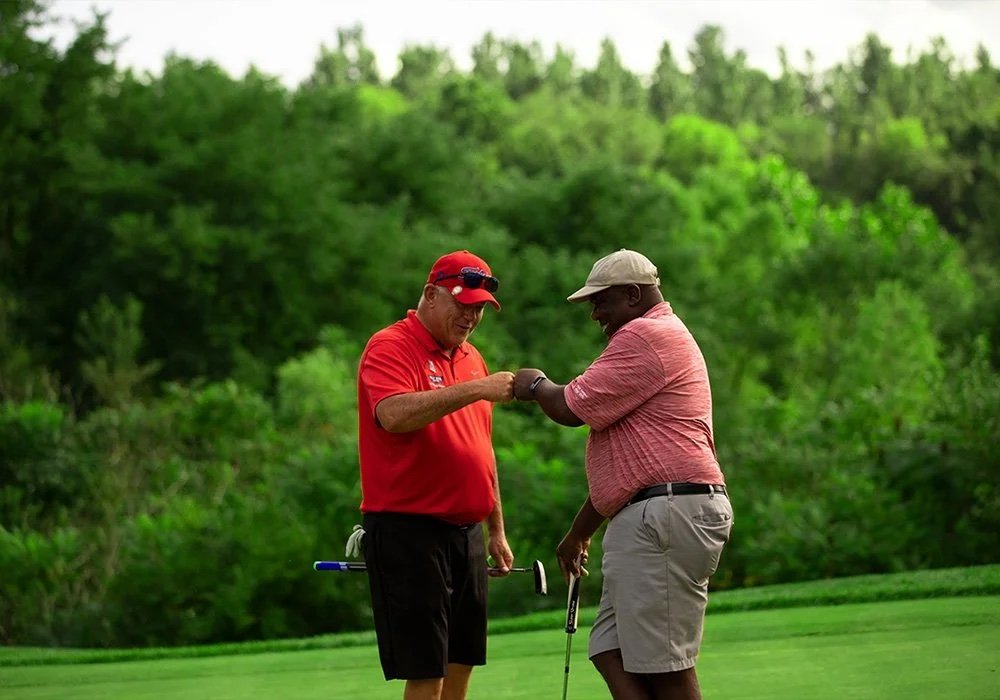
Two golfers fist bump at a charity golf tournament.

Use your golf event’s data to re-engage with lapsed participants, sponsors, and donors.

Common Data Capture Mistakes to Avoid

  • Treating the tournament as a standalone event rather than an ongoing donor relationship. The data only pays off if it feeds back into your broader fundraising strategy.

  • Relying on manual data entry from paper forms or email signups. Not only is it slow and error-prone, but it takes an enormous amount of time that could be better spent building relationships.

  • Skipping data export so golfer and sponsor data sits in the event platform and is never used.

  • Missing tags or notations when your data is uploaded to your CRM. Without this critical information, your data tells an incomplete story.

  • Losing visibility into third-party events run on your organization’s behalf, which can mean entirely missing some promising sponsor prospects.

Wrapping Up

Your charity golf tournament is much more than a one-day fundraiser. In fact, it’s one of the richest sources of donor and sponsor data your organization has access to all year. The difference between capturing that data and letting it slip away usually comes down to a handful of decisions: registering golfers online rather than on paper, choosing a platform built for golf rather than a generic ticketing platform, and ensuring data reaches the people who need it rather than keeping it siloed.

The best news of all is that none of this requires a bigger budget or team. It simply requires the right tools and the habit of treating every tournament as an input into your broader donor strategy. Start with the steps outlined in this article, and you’ll be ahead of the game for your next tournament.


Get a Free Event Registration Website

Worried that a dedicated event website will take a huge chunk out of your limited tournament budget? Nonprofits, charities, and third parties running golf events to benefit one can get a free event website, plus access to GolfStatus’ golf event management and fundraising platform at no upfront cost. Easily capture golfer and sponsor data, manage teams, track payments, communicate with participants, and much more—all to save you time and help raise thousands more dollars for your cause. Click below to book a meeting or get started in the software on your own!

Get Started With GolfStatus at No Upfront Cost

 
How to Price, Package & Sell Mulligans for Your Golf Event
 

by Jen Wemhoff, Communications Manager at GolfStatus

Mulligans are a low-lift option to add real revenue to your charity golf tournament. They cost you nothing to offer, golfers of all skill levels love them, and they’re one of the easiest add-ons to any golf tournament.

Many golf tournament organizers leave money on the table by either not offering mulligans at all or not pricing, packaging, and selling them effectively. Learn how to leverage mulligans for your next tournament.

What is a Mulligan?

A mulligan is simply a “do-over” or a chance for a golfer to retake a shot without it counting against their score.

Mulligans aren’t allowed in professional or official competitions, but are a staple of charity tournaments. They’re less about strict rules and more about fun and raising money for your cause. Golfers who shank a tee or approach shot are usually more than happy to pay a few dollars to erase it and keep the round moving.

A golfer prepares to hit a tee shot at a golf tournament. Mulligans are commonly used on tee shots.

Golfers who hit a poor tee shot are happy for the chance for a “do-over” by using a mulligan.

How to Price Mulligans

There’s no single “right” price—it depends on your tournament, format, competitiveness, and what golfers are used to paying. Here are a few general suggestions:

  • Casual charity tournaments: $5-$10 per mulligan. A reasonable price point keeps sales volume high.

  • Competitive or higher-end tournaments: $15-$25 per mulligan. Golfers at higher-end events tend to have more discretionary income to spend and can justify the higher cost.

  • Bundles: Selling mulligans as a set—for example, three mulligans for $20 instead of $10 each—encourages golfers to buy more than they might as a single.

Whatever price point you decide, think about it the way you think about sponsorship and registration packages. Even though most golfers at a charity event already know they’re there to support a cause, you still want to offer value, and they’re generally willing to spend accordingly.


Pro Tip: Ask for feedback on mulligan pricing in your post-tournament communications with golfers to help you lock in options for next year.


Building Mulligan Packages That Sell

Pricing is only half the equation. How you package mulligans can have a big impact on whether or not golfers decide to buy them. Consider these mulligan package options:

  • Bundle them into team registration. Consider an upgraded registration tier that includes a set number of mulligans per golfer or team, so those who want the cushion of a mulligan don’t have to make a separate purchase decision later.

  • Sell them as a standalone add-on. Not everyone wants mulligans bundled in—and some golfers may want additional mulligans than what’s included with a package. Give them the option to add mulligans à la carte during registration and at check-in.

  • Fold them into VIP or premium packages. Another option is to pair mulligans with other perks, like premium parking, extra raffle tickets, or contest entries, to make an upgrade package feel like a deal rather than an upsell.

  • Offer tiered mulligan bundles. Offer a “basic” bundle of two or three mulligans at a lower price, and an “upgraded” bundle of four or five at a better price per mulligan to give golfers options without overcomplicating the package.

  • Pair mulligans with raffle tickets. Golfers who buy one of these are often receptive to the other, so consider offering a combo package that includes both mulligans and raffle tickets.

An event website screenshot showing a package to buy mulligans is display on a laptop computer.

List a mulligan package on your event website to make it as easy as possible for golfers to buy them.

The goal with any package for mulligans is to make the decision easy. Keep your menu of options simple and clearly priced on your event website so golfers can make their selection without having to think through a ton of choices.

Where & How to Sell Mulligans

Mulligans sell best when they’re easy to buy in the moment someone’s already thinking about them, so it’s a best practice to offer them before the tournament and at the course.

  • At registration. Include mulligan options in the online registration flow so golfers can add and pay for them without a separate transaction. This is the prime converting moment, since golfers already have their credit card out and are ready to buy.

  • At check-in. Some golfers wait until tournament day to decide, and others may want to add additional do-overs, so make sure mulligans are just as easy to purchase when they arrive at the golf facility.

  • On the course. Consider setting up a mulligan station or two near the tee box of notoriously tough holes. A well-timed mulligan offer right before a challenging hole can be one of your highest-converting moments of the day.

Across all three touchpoints, the common thread is removing as much friction as possible. If buying a mulligan means finding cash, hunting down a volunteer, or filling out a form, you’ll lose sales. A mobile-friendly event website lets golfers buy mulligans (or anything else) right from their phones, wherever they are in the course, keeping the process quick and easy and eliminating the headache of tracking and reconciling cash payments.


Pro Tip: Post QR codes that link directly to the mulligans package on your event website at the check-in table and any mulligan stations for easy access.


A golfer uses his mobile phone to purchase mulligans at a charity golf tournament.

Direct golfers to your mobile-friendly event website to purchase mulligans at the event, eliminating the need to hassle with and reconcile cash payments.

Communicate Rules to Keep It Fun & Fair

Mulligans work so well because they’re lighthearted, not because they let anyone buy their way to winning a tournament. It’s crucial to set clear limits and expectations up front. A common approach is limiting mulligan purchases to two to four per golfer and specifying where they can be used, such as for tee shots only. Communicate the rules on your event website and again at check-in so there’s no confusion, frustration, or push-back mid-tournament. You might even post signage that explains mulligan usage.

Physical mulligan cards, tickets, or wristbands can help volunteers and other golfers see at a glance who has purchased them and how many they have left, which cuts down on disputes and keeps the pace of play moving.


Mulligan FAQs

Why should we offer mulligans at our tournament?

For nonprofits, golfers’ willingness to pay is a golden opportunity. Mulligans require no inventory, vendors, or setup, beyond deciding your pricing and how you’ll sell them, which means every dollar collected goes straight toward your mission.

Are mulligans allowed at all golf tournaments?

Mulligans aren’t utilized in official or professional competitive tournaments, but they’re standard practice at charity events and other casual formats where the focus is fun and fundraising. As the organizer, you get to set the rules for your own event.

How many mulligans should we let golfers buy?

Most tournaments cap purchases somewhere between two and five per player. Capping the number keeps the format fair and prevents mulligans from feeling like a way to buy a win rather than the fun add-on they’re intended to be.

Where on the course can golfers use mulligans?

Many tournaments limit mulligans to tee shots only to keep play moving and avoid disputes over lies in the fairway or on the green. That being said, you can allow them for any shot—the key is to communicate the expectations clearly before the round starts so there’s no confusion. Mulligans can’t typically be used on hole-in-one contest holes and in putting contests.

Do we need physical mulligan cards?

Physical cards or wristbands give volunteers an easy way to verify purchases and their use on the course. Selling them through your event website ahead of time (or from a phone on tournament day) cuts down on the need to handle cash and makes reporting easier post-tournament. If golfers buy them ahead of time, have them ready for pick-up at check-in.

Should mulligans be included in registration or sold separately?

Both approaches work, and offering them both ways helps you capture the most revenue possible. Bundle a set number into an upgraded registration or VIP package for golfers who want the cushion built in, and offer them as a standalone add-on for everyone else.

What’s a reasonable price to charge for mulligans?

It depends on your event, goals, and field, but $5-$10 per mulligan is typical for charity golf tournaments. Higher-end events may be able to charge $15-$25 per mulligan. Bundling mulligans together at a slight discount usually outperforms selling them individually.

Turn a Small Add-On Into Real Revenue With Mulligans

Mulligans won’t replace sponsorships or registrations in terms of revenue, but they’re an easy win to fold into your tournament. With thoughtful pricing, a simple package structure, and a frictionless way to buy, mulligans can add meaningful dollars to your tournament’s fundraising outcomes, all from something golfers already want.

Mulligans are a great way to build in easy, low-cost revenue drivers to charity golf tournaments. Make it easy to package, list, and sell with a free event website from GolfStatus. Websites are powered by GolfStatus’ golf event management platform, which streamlines and simplifies tournaments to save organizers time and help raise more money for your cause, and backed by a team of golf fundraising pros. Book a meeting to find out more and get started at no upfront cost!

Get Started With GolfStatus at No Upfront Cost

Book a Quick Meeting

About the Author

Jen Wemhoff - Communications Manager at GolfStatus

Jen Wemhoff accidentally discovered her passion for nonprofits in college. An internship while earning a degree in Communications from Doane University led to a 20 year career in the nonprofit sector, where she found a strong desire to be part of something bigger than herself. Her vast nonprofit experience includes roles in marketing, fundraising, and direct programming. When Jen came to GolfStatus as Communications Manager in 2020, she was struck by the power of the sport to raise money to power nonprofit missions. She tells GolfStatus’s story across platforms and channels and develops educational tools and resources to help nonprofits tap into golf’s giving power. Jen, her husband, and two daughters call Lincoln, Nebraska home.


2 Months to Tee Off: Must-Do Tasks Before Your Golf Event
 

With just two months until tournament day, your planning efforts should be shifting into high gear. Many of the biggest decisions are behind you, and now it’s time to focus on execution. The more you can accomplish over the next several weeks, the less stressful the final countdown will be.

Five women and one man pose at a charity golf tournament.

Planning should be in high gear at two months before your golf tournament.

This installment of the blog series will walk you through the key tasks to focus on two months before your charity golf tournament, working to fill the remaining team spots, secure sponsorships, outline logistics, and make sure every detail is coming together.

9 Months Post

6 Months Post

It’s important to note that while having more time to plan is usually better, it’s possible to plan a successful golf tournament in a matter of a couple of months.

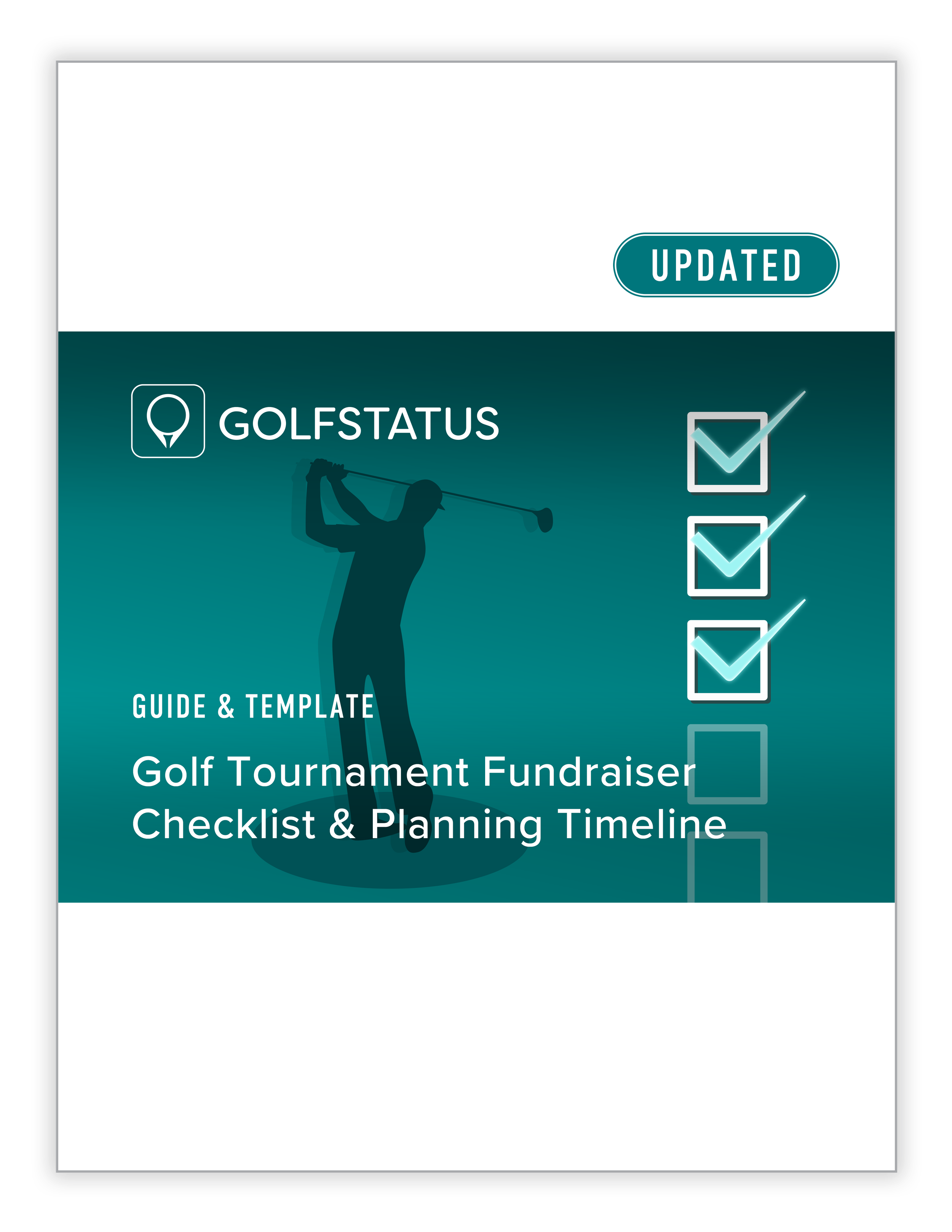
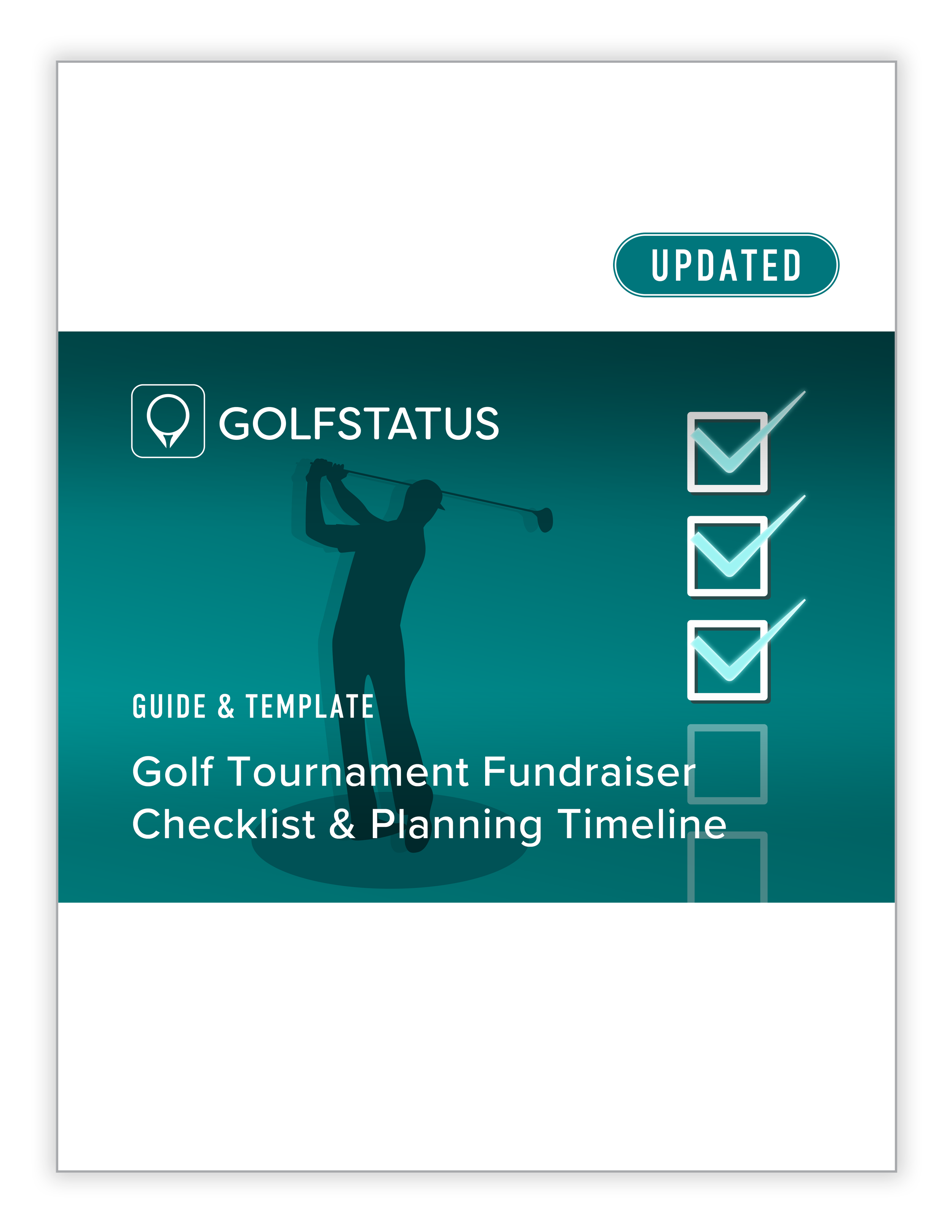
The cover of the Golf Tournament Fundraiser Checklist and Planning Timeline.

Free Download:

Golf Tournament Checklist and Planning Timeline

Get a roadmap of every task so you stay on task and on target throughout your tournament planning! Find out what to do and when to do it.

Pre-Planning & Reference

Whether you need a refresher on GolfStatus features, planning best practices, or ideas to raise more money, take advantage of the educational tools and resources available to you. If you haven’t already:

  • Get a GolfStatus demo. GolfStatus is the industry’s leading platform for charity golf tournaments and fundraisers. Find out how to save 40+ hours and raise thousands more dollars!

  • Get a GolfStatus Education Session. Once you’re on board with GolfStatus, our client success team will walk you through the software’s backend.

  • Book a consultation with a Fundraising Specialist. Your dedicated GolfStatus Fundraising Specialist will walk you through opportunities to raise more money and qualify for GolfStatus Rewards.

  • Watch a GolfStatus webinar. GolfStatus holds free monthly webinars on topics like sponsorships, planning basics, logistics, marketing, and more. Browse upcoming webinars.


Planning Team & Committee Meetings

Your committee meetings should become increasingly focused on progress and accountability. Review outstanding tasks, celebrate accomplishments, and make sure every committee member knows exactly what’s expected of them between now and tournament day.

  • Hold monthly committee meetings. Continue to talk through the budget, sponsorship prospects and outreach, logistics, on-course contests or games, and promotion.


Date & Golf Facility

Clear communication with the golf facility becomes more important as your field starts to take shape. Keeping staff informed and asking questions helps prevent surprises and ensures everyone is on the same page.

  • Share access to GolfStatus’ backend. If you haven’t already, share access with the golf facility so there are no surprises in the weeks leading up to tournament day. There’s no cost to grant staff at the golf facility access to your GolfStatus tournament management platform’s backend.

  • Touch base with facility staff with questions. Don’t be afraid to reach out to golf facility staff with any questions or concerns.


Event Website

Your golf tournament website should serve as the central hub for golfers, sponsors, volunteers, and supporters. Keep it current with the latest information so participants can find everything they need to know—without having to contact your team.

  • Make event website updates as needed. Continue to add and update information as needed. Common updates include new raffle prizes or auction items, contest or challenge announcements, special guests, and the event’s schedule.

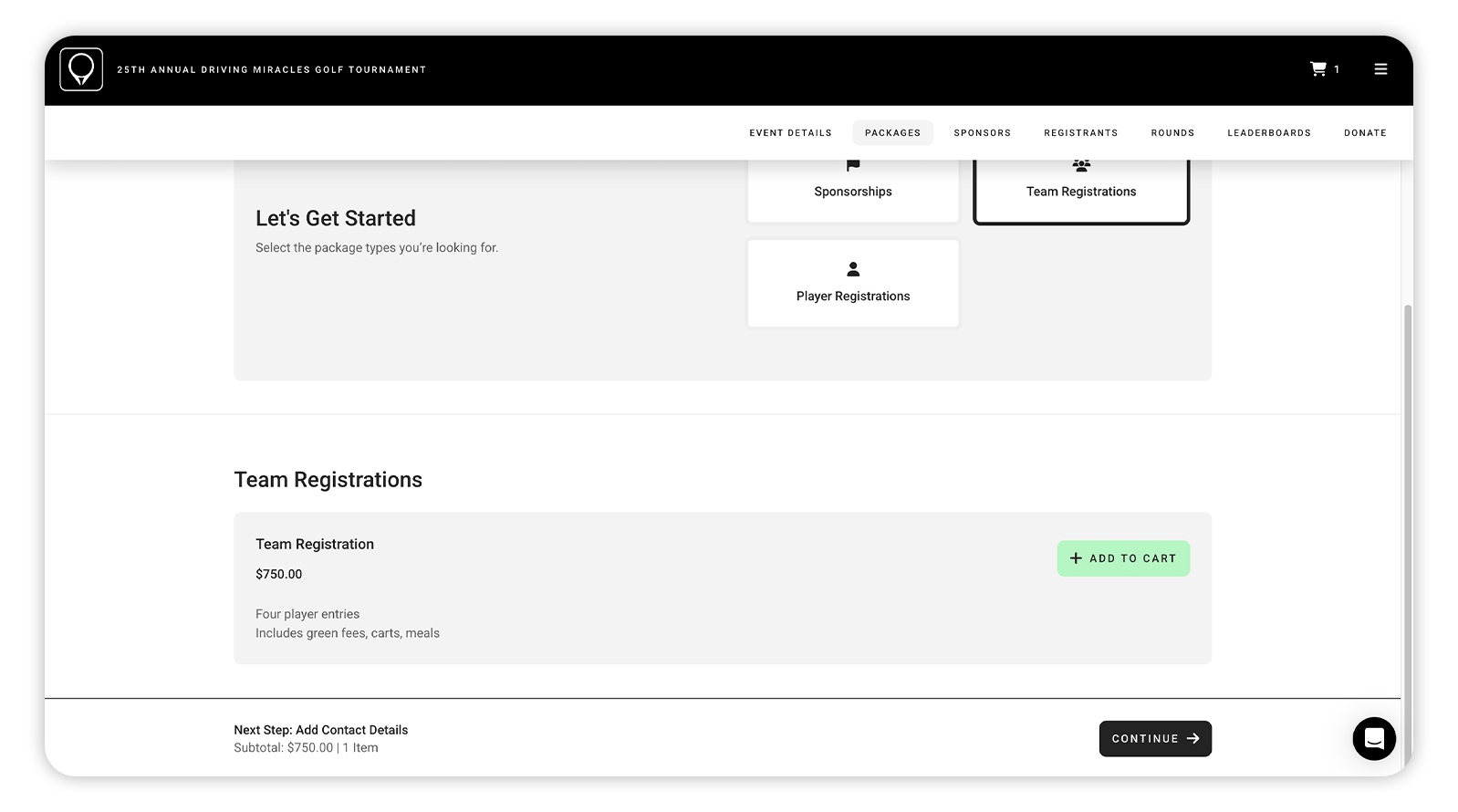
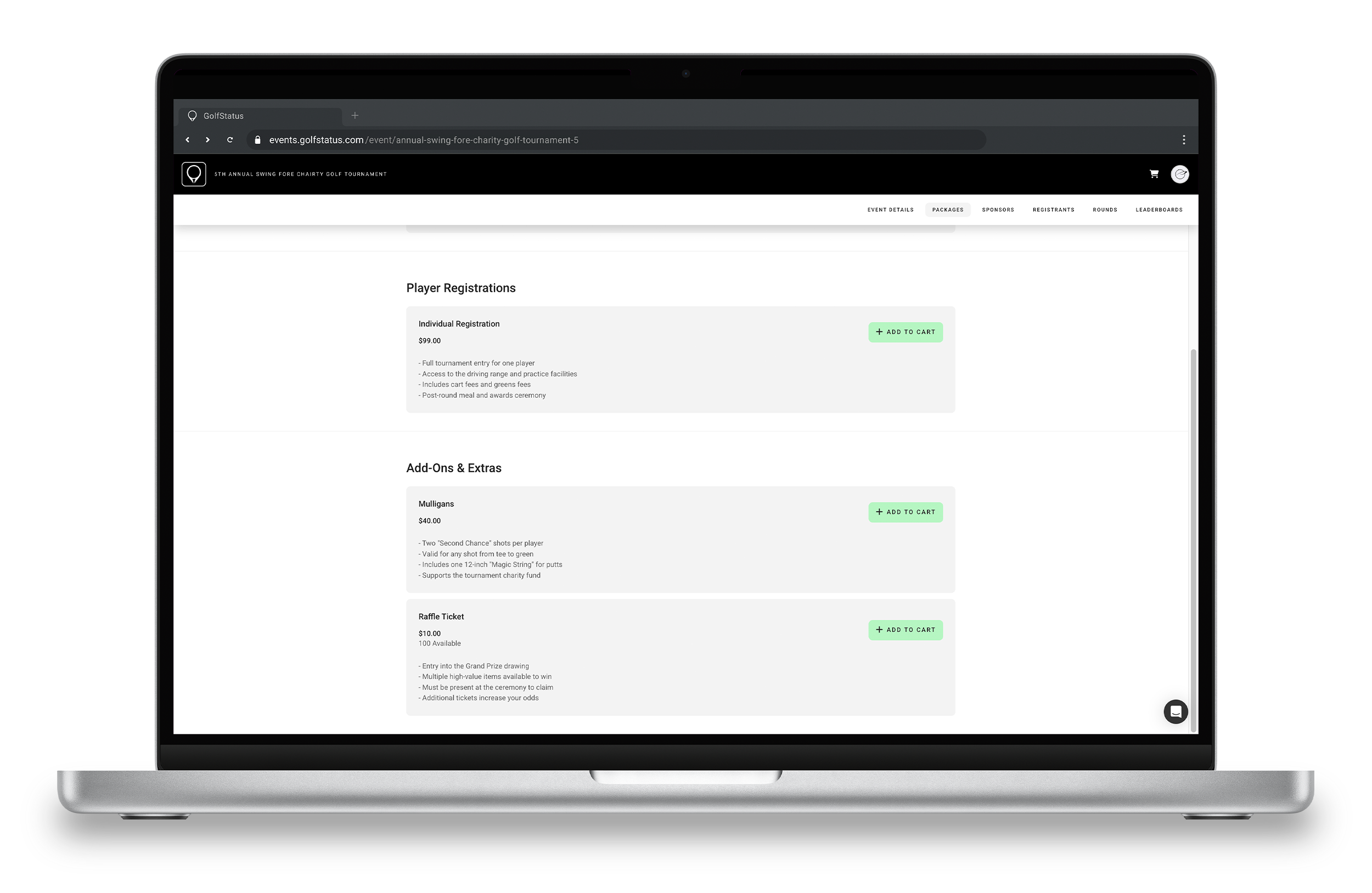
The packages screen of a golf tournament's registration website.

Include the link to your event website in every outreach—texts, emails, social media, flyers, and more.

Team & Sponsor Packages

Now is the time to fill any remaining sponsorships and encourage golfers to register before spots disappear. Consistent follow-up, flexible sponsorship options, and clear deadlines can help create urgency and keep registrations moving.

  • Follow up with prospects for each sponsorship. Follow up with prospective sponsors to see if they have questions on next steps or would like to talk about a custom sponsorship opportunity.

  • Add custom packages as needed. As you reach out to sponsors, ask them what their goals are for sponsoring your event, and don’t be afraid to create custom packages or modify existing packages as needed to help them get the most out of their investment in your tournament.

  • Determine a registration closed date. Decide when you’ll close registration, both for teams and sponsorships. Having a deadline can create urgency for prospective sponsors and teams, and you can always extend the deadline if necessary.

  • Order items as necessary. If a sponsorship is tied to any materials, such as golf balls, golf towels, bags, or other items, order them as soon as the sponsorship is sold and payment is received. This gives you plenty of time to deal with any ordering or shipping issues or misprints.


Marketing & Promotion

With registration open and in full swing, your marketing efforts should become more frequent and targeted. Use a mix of email, social media, local outreach, and personal invitations to encourage people to register as soon as possible.

  • Send targeted promotional emails. Segment your list and target messaging to past participants (if applicable), donors, and supporters. Send a series of emails leading up to the registration closed date.

  • Promote on social media. A combination of organic posts and a modest paid campaign targeted to people in the area can help drive registrations.

  • Distribute your tournament flyer. Print copies for every committee member and send them loose, asking them to post them in libraries, coffee shops, gyms, community centers, grocery stores, or any other visible place.

  • Send a press release to local media. Send a release to local television and radio stations with information about the event, what it’s raising money for, any notable tournament components, and your organization.

  • Submit the event to community calendars. Community calendars are a cheap and easy way to spread the word to potential golfers. You can even use AI to help you identify local calendars and submission instructions.

  • Reach out to friends and family. Ask committee members to call, text, or chat with five people and invite them to play in the event. There’s no substitute for personal outreach!

  • Refine your promotional strategy as needed. Update and further refine your promo plan as details come into focus and advertising budgets are set, if applicable.


Helpful Golf Tournament Promotional Resources


Details & Logistics

The behind-the-scenes work starts to take center stage over the next two months. Staying on top of logistics now gives you time to solve problems before they become last-minute emergencies.

  • Determine food and beverage. Connect with the golf facility, a caterer, or an in-kind donor to determine food and beverage needs. Be mindful of allergies or special dietary needs.

  • Determine player gifts. Whether you’re selling a sponsorship for player gifts or purchasing them outright, now’s the time to move forward, especially if anything needs to be produced.

  • Outline a schedule. Add this information to your event website. Include times for registration, warm-up, shotgun start, and estimates for any post-golf celebrations.

  • Determine contests. A hole-in-one contest is an easy and popular addition to a golf tournament. Research and purchase hole-in-one insurance to protect yourself from financial risk. Putting contests, longest drive, and closest to the pin are other popular contest options.

  • Determine on-course games or challenges. On-course games have the potential to drive additional dollars for your cause. Keep them simple, easy to understand, and quick to play to keep the tournament’s pace of play moving smoothly.

  • Determine raffle details (if applicable). Add a raffle ticket package to your event website, and start procuring donations for prizes.

  • Determine auction details (if applicable). Add a link to your online auction listing (if applicable) from your event website, and start procuring donations for items.

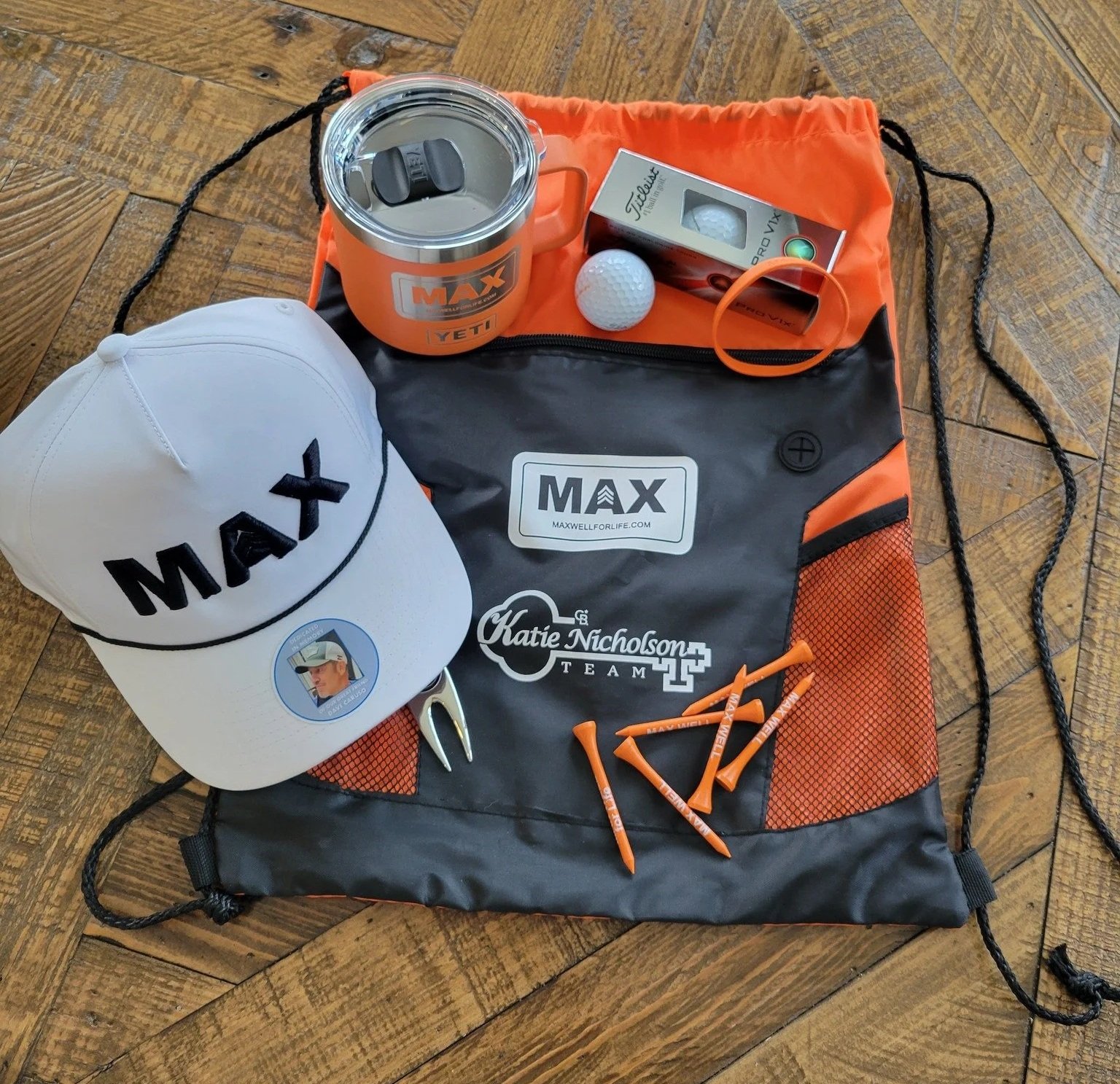
Player gifts from a charity golf tournament, including a hat, mug, golf balls, tees, and bag.

Now’s the time to move forward with player gifts, like those from the Max Well For Life Charity Golf Tournament.

What’s Next?

You’re entering the home stretch. By the end of the next two months, most registration should be complete, sponsorships sold, and logistics largely finalized. The more proactive you are now, the more confident you’ll feel when tournament week arrives.

The next installment of the series will cover everything you should focus on during crunch time—the month before your tournament—to make sure event day runs as smoothly as possible. After months of planning, it will finally be time to bring it all together and deliver an unforgettable experience.


More Than a Golf Event: A Conference Kickoff That Gives Back
 

Why the Class 2 Gathering Starts With a Charity Golf Tournament that Raises $100k to Benefit the Boys & Girls Club of the Prairie Band Potawatomi Nation

partner snapshot

After nearly three decades with Prairie Band Casino and Resort in Mayetta, Kansas, Ashley Bergquist knows charity golf tournaments inside and out. As Promotions, Events, and Entertainment Manager, she’s managed countless golf events at the casino’s golf facility, Firekeeper Golf Course, from VIP outings to charity tournaments.

Today, Ashley also serves on the board of the Boys and Girls Club of the Prairie Band Potawatomi Nation, giving her a unique perspective on both the operational and charitable sides of golf fundraising events. And that experience has helped shape one of the most unique tournaments in the tribal gaming industry.

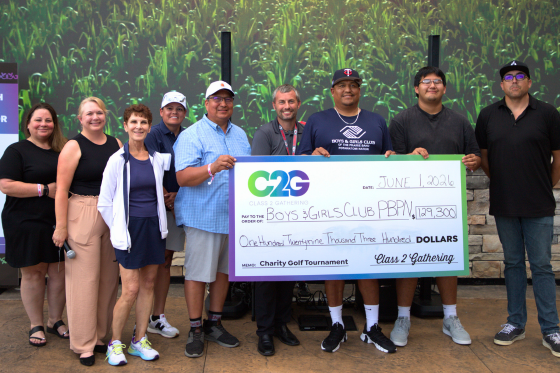
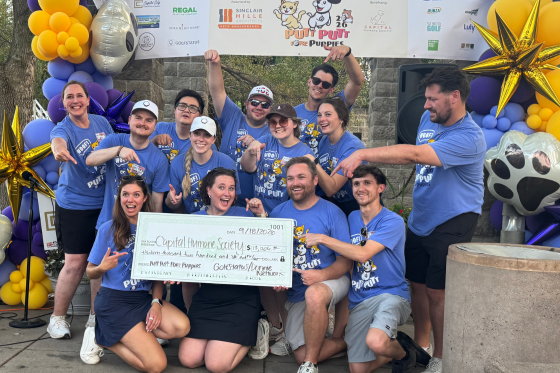
A group of eight people holding a large check awarding $120,000 to the Boys and Girls Club of the Potawatomi Nation from the Class 2 Gathering Golf Tournament.

The Class 2 Gathering raises funds to support the Boys and Girls Club of the Potawatomi Nation.

Class 2 Gathering

The standalone Boys and Girls Club event became part of the Class 2 Gathering (C2G), a nationwide gaming conference, held at Prairie Band Casino & Resort. The result is a golf tournament that brings together casino operators, vendors, exhibitors, and sponsors from the community and across the country—all while raising funds for local Boys and Girls Club programs.

The strategy has proven to be a win for everyone involved. The tournament serves as the kickoff to the conference, giving attendees the chance to network on the course before moving into educational conference sessions. The tournament concludes with a combined launch party and awards celebration featuring raffles, a silent auction, food trucks, sponsor recognition, and additional fundraising.

“It’s really a two-for-one opportunity,” Ashley says. “By combining the conference and the tournament, we’re able to bring people together who might not have attended the golf event otherwise.”

the challenge

Before combining with C2G, the Boys and Girls Club held its own charity golf outing. And like many nonprofit golf fundraisers, much of the administrative work was done manually.

Registrations came in through phone calls and invoices, and credit card payments had to be processed individually. Team rosters lived in static spreadsheets, and any changes required updating multiple documents. Tournament materials, like scorecards, signage, and player lists, had to be recreated with every last-minute change.

Ashley says that because of these manual processes, the tournament could really only be managed by one person. “Otherwise, there were too many chances for things to get mixed up.” When the event was paired with the national C2G conference, those manual processes became even more of a challenge.

The tournament’s audience was different than a traditional community fundraiser. Instead of recruiting local golfers, Ashley needed to coordinate:

  • Casino operators from across the country

  • Tribal gaming vendors and suppliers

  • Conference exhibitors

  • National sponsors

  • Local business partners

Many participants had to travel to attend, so final player names weren’t confirmed until the week of or even the day before the tournament. That meant materials needed to stay flexible.

What’s more, Ashley wanted the event to deliver an experience worthy of the investment people were making to attend. Every detail matters, from the registration experience and pace of play to sponsor recognition and the post-round celebration. “We’re not trying to be the biggest tournament out there,” Ashley says. “We’re trying to be the tournament that people want to come back to.”

the solution

When C2G assumed responsibility for the annual tournament, Ashley was introduced to GolfStatus by the Firekeeper Golf Course’s general manager. The timing couldn’t have been better.

Instead of juggling spreadsheets and manually collecting payments, the tournament could move to one centralized platform where registration, player management, sponsorships, scoring, and administration all worked together.

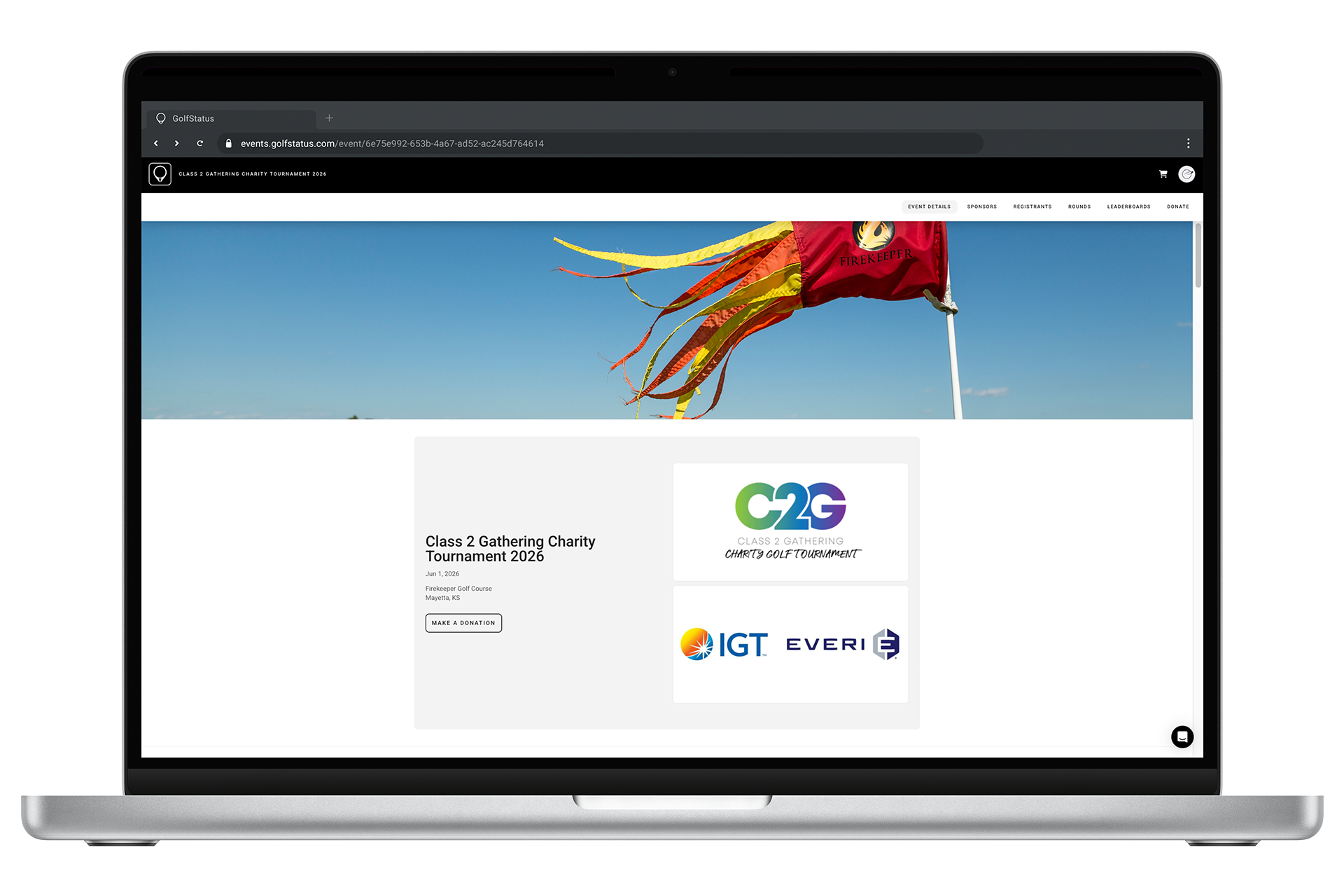
The home page of the Class 2 Gathering Golf Tournament is displayed on a laptop computer.

An event website eliminated manual registration processes and made it easy to manage teams and sponsors.

The results

Fundraising Outcomes

The combination of thoughtful planning, a built-in conference audience, and streamlined tournament management has helped the event build momentum each year. The fundraiser generated more than $129,000 for the Boys and Girls Club of the Prairie Band Potawatomi Nation, which helps fund:

  • Educational opportunities

  • Youth trips and enrichment activities

  • Scholarships and tuition assistance

  • Facility improvements

  • Updated equipment and resources

  • General operating support that helps local children thrive

Immediate Value

Ashley immediately saw the value in GolfStatus. “Why wouldn’t I use this?” she says. Golfers register and pay online, and update teammates as plans change. “The platform is easy to use. I send the website to people, and they take it from there. I don’t have to take time to enter information.”

For Ashley, one of the biggest advantages isn’t just online registration—it’s flexibility. “If something changes the day of the tournament, it’s easy to reprint signs, alpha lists, scorecards, everything.” Instead of needing to recreate tournament materials manually, the information already exists inside the platform. “It saves so much time, I can literally just click print,” Ashley says.

Each GolfStatus client works directly with a dedicated Client Success Representative and has access to a Fundraising Specialist and live support seven days a week.


It’s just so easy. The people are great to work with, they understand golf tournaments, and they can give advice because they’ve actually done it.
— Ashley Bergquist, Promotions, Events, and Entertainment Manager at Prairie Band Casino & Resort

Sponsor Opportunities & Management

Thoughtful sponsor recruitment has helped the tournament continue to grow. Rather than cold-calling prospective sponsors, Ashley begins with businesses already participating in the conference. Exhibitors, sponsors, vendors, and longtime business partners become natural prospects because they’re already planning to attend.

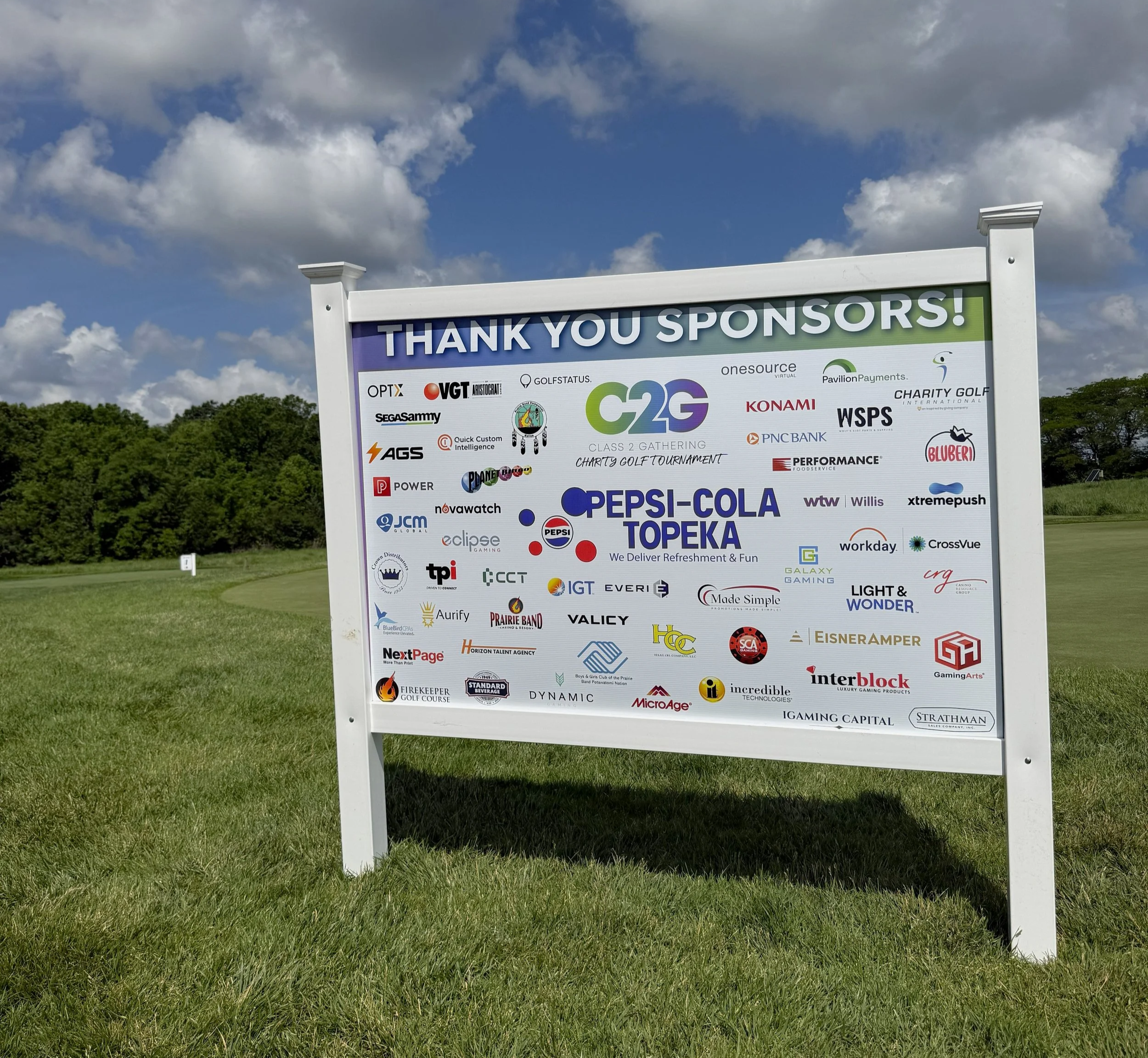
Timing also matters. Ashley intentionally releases the event’s sponsorship offerings before companies finalize annual budgets. “By getting sponsorship information to businesses early, they can plan and budget for the tournament ahead of time, giving them a much better chance of securing approval and participating,” Ashley says. This strategy has helped secure significant sponsor commitments, including a five-year title sponsorship from a local Pepsi distributor.

Releasing sponsorship offerings as early as possible has helped the tournament secure sponsor commitments.

GolfStatus simplified sponsor management and elevated the sponsorship offerings with its exclusive Technology Sponsorship, plus a pin flag sponsorship and hole-in-one contest sponsorship.

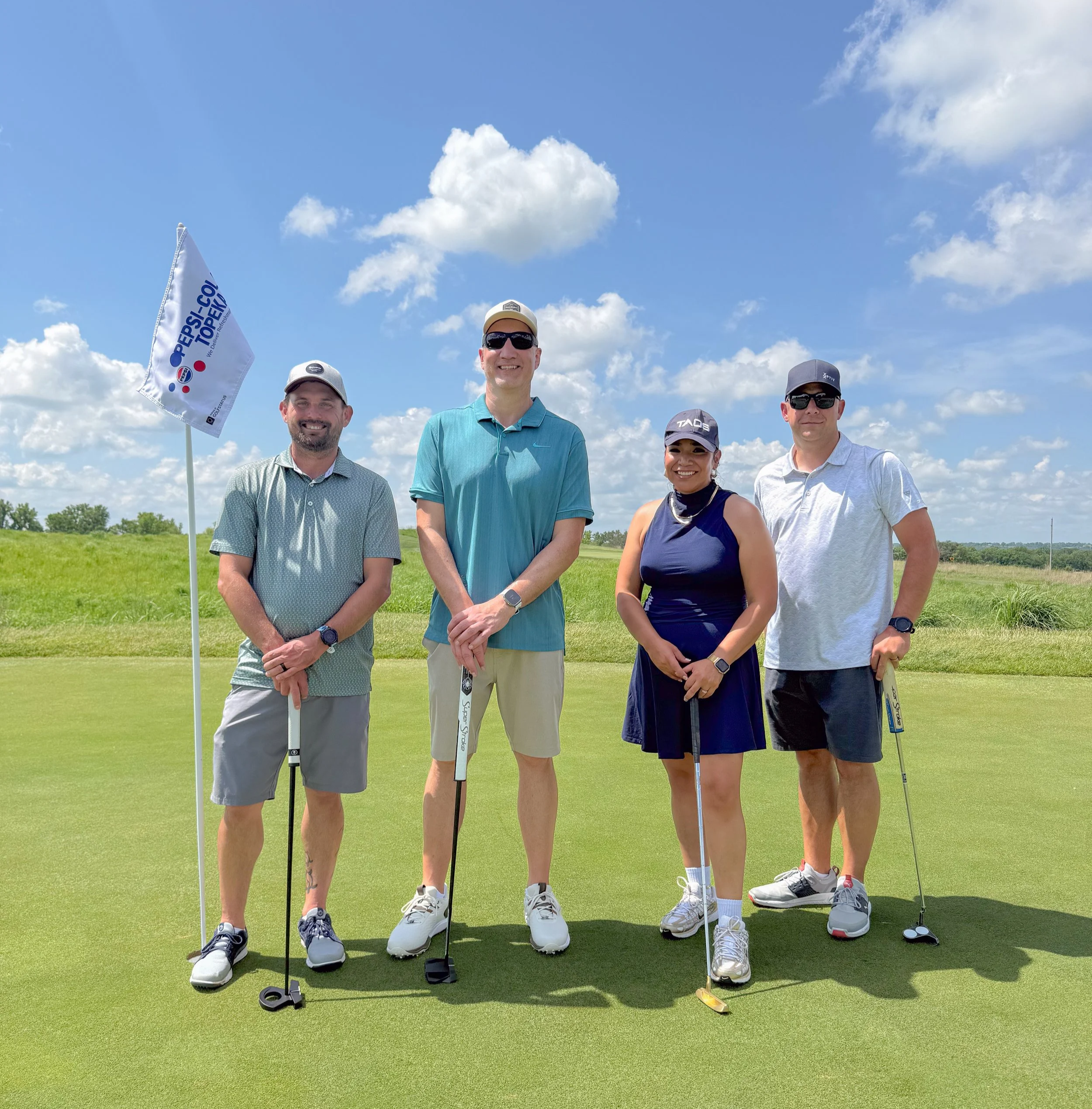
Custom pin flags are not only used on the course, but also as sponsor recognition pieces. The tournament presents each hole sponsor with a pin flag following the event. Sponsors attending the awards celebration receive theirs in person, while those unable to attend receive their flag in the mail. “Pin flags are a great keepsake!” Ashley says. “I have one hanging on my office wall.”

A Memorable Experience

While many fundraising tournaments focus on maximizing the number of golfers, C2G intentionally limits the field to 144 golfers to create a premium experience. “We could probably squeeze in more golfers, but we’d rather have a great pace of play and have people leave saying it was the most fun tournament they played all year.”

This philosophy has helped the tournament become a highlight of the annual C2G conference. Every player receives high-end gifts, including items like premium sunglasses, Bluetooth speakers, and other golf accessories, plus casino free play and gift cards. Ashley says that in her experience, practical gifts outperform novelty items. “When people actually use your player gifts during other tournaments, it’s free advertising for your event.”

Custom pin flags help elevate the tournament experience for golfers and sponsors.

Fundraising & Engagement

One of the biggest successes has been expanding fundraising opportunities beyond the golf course itself. Because the tournament flows directly into the conference kickoff celebration, participants who only attend the conference still become part of the fundraising experience.

Throughout the evening, attendees purchase raffle tickets, participate in the silent auction, and celebrate tournament winners together. That broader audience of conference attendees creates new fundraising streams and supporters that simply didn’t exist when the tournament stood on its own.
On the course, Ashley looks for engaging activities that everyone can enjoy, including:

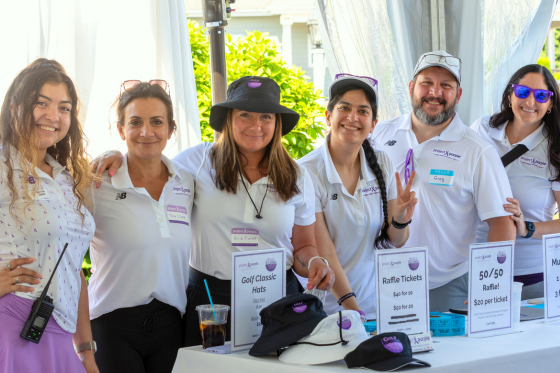
  • Four hole-in-one contest holes

  • A golf ball cannon, which is included in registration

  • Closest to the pin competition

  • A second-shot hole-in-one challenge hosted by a Charity Golf International professional long-driver (which generated $2,500 for the Boys and Girls Club)

One of Ashley’s goals is to keep golfers there for the post-round celebration. Many tournaments lose attendees immediately after golf ends, but Ashley has built an experience worth sticking around for, with food, drinks, entertainment, and fundraising.
The result? An event that feels less like waiting for scores and more like the official kickoff to the conference and celebration of the golf tournament.

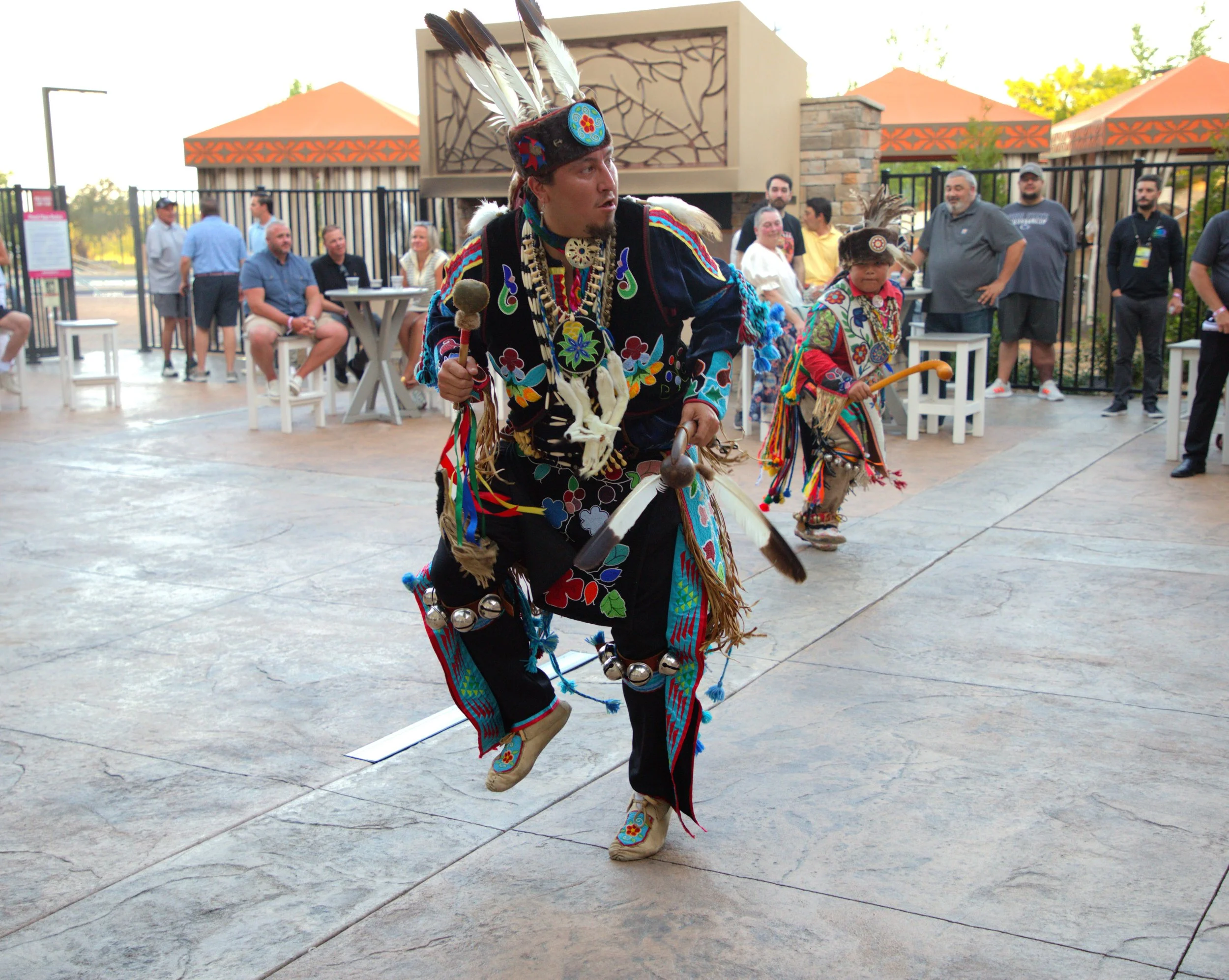
A Native American from the Potawatomi Nation performs at the kickoff to the Class 2 Gathering.

The post-golf celebration and Class 2 Gathering kickoff features performances from members of the Potawatomi Nation.

Advice to Other Casino Operators

For casinos considering launching their own charitable golf tournament or adding one to an existing conference or other event, Ashley offers one simple piece of advice: Play in other tournaments first.


Go experience them as a golfer. Figure out what you like and don’t like, then build the tournament you’d want to play.
— Ashley Bergquist, Promotions, Events, and Entertainment Manager at Prairie Band Casino & Resort

She also encourages casinos to recognize the unique inherent advantages they have, which naturally support a successful fundraising event:

  • Championship golf courses

  • Experienced hospitality teams

  • Food and beverage options

  • Entertainment

  • Established vendor relationships

Beyond raising money, a charity golf tournament showcases the property’s amenities, strengthens relationships with vendors and partners, and creates meaningful support for important community organizations. For C2G, that means investing in the next generation through the Boys and Girls Club.

With GolfStatus helping simplify tournament operations, Ashley can spend less time managing spreadsheets and more time creating the experience golfers look forward to every year.

As C2G and the tournament continue to grow, the focus remains the same: offer an exceptional experience, foster relationships across the gaming industry, and generate meaningful support for local youth—one great round of golf at a time.


Boost Golf Tournament Results With GolfStatus

GolfStatus works with golf tournaments of all types and sizes, from small nonprofit events to massive charity fundraisers. Its tech streamlines and simplifies registration, payment processing, player management, sponsor onboarding, scoring, and much more. The software is backed by an in-house team of golf fundraising professionals, and all tournaments have access to exclusive Fundraising Enhancers and Rewards, as well as consultations with Fundraising Specialists. Get started at no upfront cost by booking a meeting with our team.


Fairways for Families: Homebuilder Supports Military Families Through Golf
 

partner snapshot

For Beazer Homes, building communities extends far beyond the act of construction. Beazer Homes has become one of the nation’s leading homebuilders, and its philanthropic roots run deep. Across its divisions across the U.S., the company has embedded giving back into its culture, even establishing nonprofit title and mortgage insurance companies to help fund its charitable initiatives.

Beazer Homes employees pose for a photo at their charity golf tournament.

Charity is a core business principle for Beazer Homes, which uses golf as a tool to raise money for Fisher House.

In the Maryland division of Beazer Homes, that philanthropic mission is brought to life by Jennifer Eastman, Sales and Marketing Coordinator, who is the driving force behind the team’s charitable and employee engagement efforts. After 13 years with Beazer Homes, she has become the go-to leader for anything related to charity, including creating meaningful opportunities to make an impact.

The primary recipient of Beazer Homes’ outreach is Fisher House, which Jennifer describes as a “home away from home for military families” traveling for medical care. Stays at these “comfort houses” are free of charge while a loved one is in the hospital or undergoing treatment at a military or VA medical center. The very first Fisher House was built near Walter Reed Medical Center in Bethesda, Maryland, right in the heart of Beazer Homes Maryland’s territory. The division donated $500,000 toward the renovation and upkeep of the original house, raised from division employees, donations from friends, family, and vendors, and support from the Beazer Charity Foundation.

the challenge

When Beazer Homes acquired a community with a golf course, a charity golf tournament seemed like a natural fit to support its work with Fisher House, which now has 100 comfort houses that serve 570,000 families. Jennifer and her colleague, David Jacques, began work to launch a charity golf tournament in 2024, believing that it was the best opportunity to raise significant funds, enjoy a day of camaraderie with partners and sponsors, and have the potential to grow and scale year over year.

The biggest hurdle wasn’t enthusiasm or effort—it was managing the finances. The division couldn’t mix fundraising with internal funds to run the tournament, so they needed an easy, transparent way to collect and distribute the charitable dollars. Jennifer was prepared to manually manage everything, piecemealing systems and processes for everything from registration to logistics, but holding tournament funds remained a hangup.

Five Beazer Homes employees pose at a charity golf tournament.

Fairways for Families brings together Beazer Homes employees, partners, and friends for a fun day on the golf course raising money to support military families through Fisher House.

the solution

The IT team at Beazer Homes came to Jennifer with a better option for collecting registrations, selling sponsorships, and managing payments: GolfStatus. Best of all, they could get set up in the software at no upfront cost. Within a week of connecting with GolfStatus, Fairways for Families had an event registration website ready to go.

The primary driver for adopting GolfStatus was simple: a secure, efficient way to collect, hold, and disburse funds. The additional features and capabilities were icing on the cake.


The biggest benefit was being able to run all the money through the platform. Everything else was a bonus!
— Jennifer Eastman, Sales and Marketing Coordinator at Beazer Homes

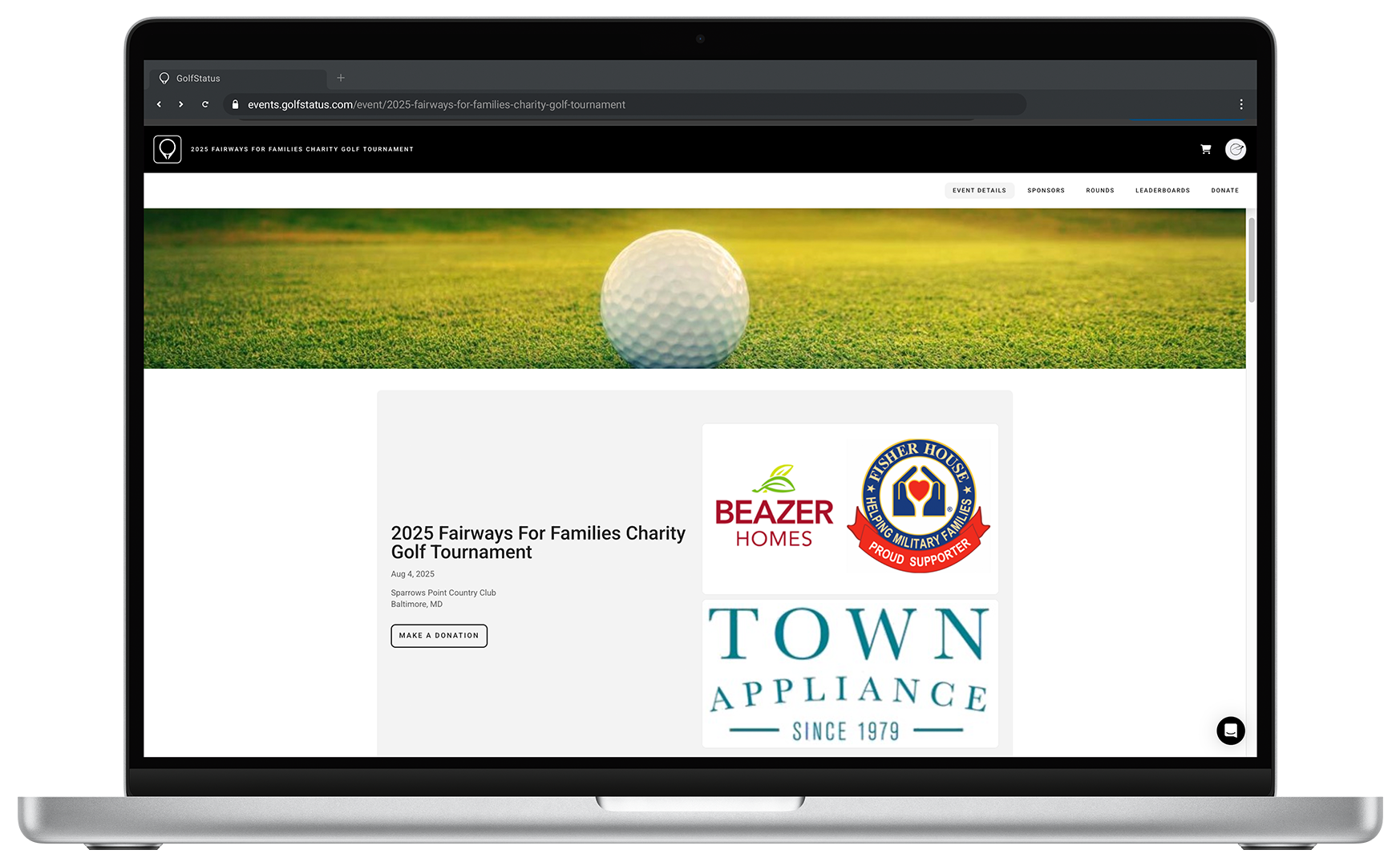
The home page of the Fairways for Families golf tournament website is displayed on a laptop computer.

The tournament website simplified promotion, registration, and sponsor onboarding.

Those “bonuses” helped streamline nearly every part of tournament planning and management, while elevating the tournament experience for golfers and sponsors:

  • The event website gave golfers and sponsors a professional, centralized hub to find out more and get involved.

  • Online registration streamlined sign-ups, payment processing, and receipts, while the tournament funds were held securely until the tournament’s conclusion.

  • Add-on packages like mulligans and raffle tickets were added to the site for purchase, keeping funds in one place.

  • Responsive support from the GolfStatus team whenever Jennifer or David needed help or had a question, plus access to Fundraising Specialists with ideas to boost revenue.

  • High-end sponsorships from GolfStatus, like hole-in-one contests, pin flags, hole signage, and the Technology Sponsor, became powerful revenue generators.

“We used all of GolfStatus’ add-ons,” Jennifer says. “We were able to sell sponsorships for each one, and even gave all the top sponsors custom pin flags.

The results

With the right systems and strategy in place, Fairways for Families has seen consistent growth and success with its golf fundraiser. The funds raised from the tournament provide general support for Fisher House’s mission to serve hundreds of thousands of service members, veterans, and families dealing with a loved one in the hospital.

“Raise more than the year before”

Jennifer’s goal for the golf event is simple: “Raise more than we did the year before!”

In 2025, the second year of Fairways for Families netted nearly $70,000 for Fisher House from 36 teams and 35 sponsors. Its success led Jennifer to create a golf tournament playbook for other divisions, with suggestions for pricing and sponsorship packages, detailed screenshots, golf event ideas, best practices, and who to contact at GolfStatus.

Beazer Homes divisions around the country have adopted golf tournaments as a fundraising tool, leveraging GolfStatus’ tech, tools, and support to save time and raise more money.

Two men pose with a big check showing the proceeds of the charity golf tournament to be donated to Fisher House.

In 2025, Fairways for Families grossed over $100,000 and donated nearly $70,000 to the Fisher House Foundation.

elevating the tournament experience

Beazer Homes didn’t just focus on fundraising. They prioritized creating a memorable, engaging experience for participants, which included sponsor representatives, division business partners, local avid golfers, and employee families. “We wanted to add little things to make the experience better and more memorable for everyone,” Jennifer says. Thoughtful touches included:

  • Snack bags for golfers

  • Portable fans in gift bags and extra shade tents (lessons learned from a sweltering 101-degree first year)

  • A marshal to improve the pace of play

  • Pre-paid food on the course

  • Walk-up music for golfers at contest holes

On-course activities also made an impact, both in terms of experience and fundraising outcomes.

  • Closest-to-the-pin challenge. Golfers paid to participate and contribute additional funds to the Fisher House.

  • Hole-in-one contest, staffed by division employees to chat with golfers.

  • Raffle drawing, with prizes generously donated by sponsors and the host golf facility’s pro shop.

  • Cornhole challenge, with winners earning the right to take one stroke off their score.

Two female golfers throw cornhole bags at the charity golf tournament.

On-course games, like the cornhole challenge, boosted fundraising outcomes and improved participating golfers’ scores.

lessons learned

The best advice Jennifer can give to other golf tournament organizers is to start planning as early as possible. “In our first year, we started a little too late, and we felt pushed because no one had bought the top sponsorships,” Jennifer says.

A major takeaway from that experience is to talk with potential sponsors to ask what they’re specifically looking for and how a sponsorship can fit their needs. “I ask what they want, and modify the package accordingly,” Jennifer says. “Some want logo placements, some want more golfer spots; it all depends on their perception of value. So we work to give them what they want.” That flexibility and willingness to tailor packages to what sponsors actually value have helped the Maryland division build loyal, returning golf tournament partners year after year.

Jennifer plans to continue to use GolfStatus as she builds for the future of Fairways for Families.


GolfStatus solved our biggest problem of how to track funds, and everything else worked so well, I can’t imagine trying to do all of it manually.
— Jennifer Eastman, Sales and Marketing Coordinator at Beazer Homes

Get started with GolfStatus at no upfront cost

GolfStatus’ event management platform is built specifically for golf events, with solutions that save tournament organizers time and effort and tools that help raise more money. Our in-house Client Success team is there seven days a week to answer questions, provide coaching, and make the most out of the software. Tournaments can get started with GolfStatus at no upfront cost, with a free event website launched within a week. Book a meeting with GolfStatus’ team of golf fundraising pros to get started!


Smart Tips & Strategies for a High-Impact Virtual Golf Fundraiser
 

by Jen Wemhoff, Communications Manager at GolfStatus

Traditional golf tournaments are ideal fundraisers and a proven way to raise serious funds. But for nonprofits with a dispersed donor and supporter base, it can be challenging to rally local support. Other nonprofits may be limited by course availability in their area or have concerns about unpredictable weather with a traditional golf fundraiser.

A virtual golf fundraiser is a smart, viable alternative to an in-person event. With low risk and broad reach, a virtual format allows you to engage supporters—and expand your donor base—from anywhere without the logistical concerns of a single-location event.

This guide will cover how to structure, monetize, and execute a successful virtual golf tournament fundraiser to maximize impact.

Table of Contents


Virtual Golf Tournament FAQs

What is a Virtual Golf Fundraiser?

Essentially, it’s a decentralized tournament where participants play a round at a local golf course (or even a simulator) on their own schedule. Instead of golfers gathering at a single golf facility on a single day, your supporters can participate from anywhere during a designated time period and still compete together in a unified event.

Much like traditional golf fundraisers, virtual events generate revenue through:

  • Golfer registration fees (though they’ll still need to pay green and cart fees at their chosen golf facility)

  • Sponsorships

  • Donations

Virtual events are also well-suited to a peer-to-peer fundraising element, with a format that blends the competitive fun of golf with the accessibility of online fundraising.

A female golfer submits her score as part of a virtual golf fundraiser.

Virtual golf events have the potential to reach a broad audience, especially if your supporter base isn’t localized.

What Are Some Virtual Golf Fundraiser Formats?

There’s no one-size-fits-all approach to a virtual event, so be flexible and tailor it to your audience. Here are a few common formats:

  1. "Play-anywhere" multi-day format. Your organization chooses a date range (such as a week or weekend), and golfers play a round at a course, day, and time of their choosing. This is the most accessible and scalable option for a virtual event.

  2. Hybrid format. This combines an in-person event with a virtual component. Local golfers attend your in-person tournament, while out-of-town supporters compete remotely at the same time. A hybrid event offers the networking and camaraderie of a traditional golf tournament with the accessibility and reach of a virtual tournament.

  3. Indoor simulator format. Partner with simulator venues like TopGolf or X-Golf to host synchronized, weather-proof, indoor events. This option can be perfect for winter fundraising in urban audiences.

What Are the Benefits of Hosting a Virtual Golf Fundraiser?

A virtual golf fundraiser offers several key advantages that can translate into higher fundraising outcomes:

  • Broad reach. No geographic limits means golfers can join from anywhere, increasing participation.

  • Reduced overhead costs. Because you’re not renting a golf facility or providing food and beverage, there are next to no costs associated with venue rental, catering, and on-site staffing.

  • Flexibility. With some virtual tournament formats, golfers can play when it fits their schedule, making it easier for busy supporters to participate.

  • Digital engagement. Use technology and social media to create a fun, interactive, and shareable event experience that keeps golfers connected.

  • Weather-proof. A virtual event eliminates the risk of cancellation, the need to reschedule, or low turnout due to inclement weather.

When is the Best Time to Host a Virtual Golf Fundraiser?

Virtual events can be held year-round, and the flexibility of a virtual format means you can align the event with your broader fundraising calendar.

Want to engage donors during the offseason? Consider a winter simulator event. Looking to build momentum before Giving Tuesday? Try a multi-day virtual tournament in early fall. Want to engage remote supporters in tandem with your annual in-person golf fundraiser? Add a hybrid virtual component.

Best Practices for Planning & Execution

A successful virtual golf event requires the right systems and structure to make it feel polished and professional, along with effective communication strategies to make it feel cohesive.

  • Leverage golf-specific software. An event management platform is a must-have for an in-person golf event, and a virtual setup makes it even more important. Trying to manage a virtual tournament relying on spreadsheets or standard ticketing software is a recipe for disorganization and confusion. Golf event tech ensures a seamless experience for everyone, plus massive time savings for organizers.

  • Maximize passive data capture. One of the biggest missed opportunities in any type of golf tournament is limited data collection. With paper registration forms, one team member registers, leaving you without contact information for the rest of the golfers. Online registration eliminates this hurdle, capturing email addresses for every participant so you can build a stronger donor database and improve marketing and fundraising efforts.

  • Negotiate partnerships with golf facilities. In areas where your organization has a strong donor presence, you might work with a handful of golf facilities to negotiate discounted rates and fees for tournament participants. These “preferred virtual courses” benefit from more players, more food and beverage sales, and more exposure to guests. What’s more, having standardized courses can offer better consistency in scoring (though it’s not necessary).

  • Outline clear rules. Clarity is everything in a virtual setting. Without it, confusion and disputes can derail your event. To keep things running smoothly, define and communicate the following at the outset of the tournament:

    • Tournament format, whether it’s a four-person scramble, individual stroke play, two-man best ball, etc.

    • Scoring. Explain how scores are to be submitted, what app needs to be downloaded and used, and where participants can access the leaderboards. The mobile app should integrate into your golf event management platform.

    • Equipment/technology requirements. If yours is a golf simulator event, specify the necessary golf simulator requirements to participate.

    • Eligible facilities. Outline the requirements of the facility, such as the course’s par, slope rating, number of holes, etc., to help level the playing field. If you are working with preferred courses or a specific simulator franchise, be sure to

    • Timeframe. Set the start and end dates/times for the virtual tournament.

    • Code of conduct. Make expectations for sportsmanship and fair play as clear as possible.

A smartphone displays a mobile scorecard for a virtual golf fundraiser.

It’s important to explain to virtual golf event participants how scores will be submitted and where they can access the leaderboards.

Creative Ideas to Maximize Virtual Golf Engagement & Revenue

One challenge of virtual tournaments is keeping participants engaged from afar. Creating shared experiences can keep golfers connected and even boost revenue.

  • Sell digital add-ons. Digital add-ons are low or no-cost to your tournament. These might include virtual mulligans, an online silent auction, entries into virtual on-course games, or a virtual raffle drawing.

  • Solicit themed donations. Boost fundraising by setting up themed donation tiers. Get creative and offer fun donation options like "Bogey Insurance" or "Take a Virtual Shot."

  • Drive social media interaction. Encourage participants to share their experience and keep everyone feeling connected with user-generated content. This could include a branded event hashtag, trick shot video contests, or photo challenges from each golf course.

  • Involve club pros or other special guests. Invite the golf pro at a local golf club, a local celebrity, or even a well-known supporter to record a welcome video or motivational message that’s shared on the tournament website or sent directly to golfers. This personal touch adds credibility and builds excitement for your event.

  • Host virtual opening and/or closing ceremonies. Create bookends for your tournament with live virtual events. Open the event with a welcome message, sponsor recognition, and an event overview. Wrap up the tournament by announcing winners, drawing raffle prizes, and publicly thanking sponsors, volunteers, and golfers.

How to Sell and Fulfill Digital Sponsorships

Sponsorships are a major driver of revenue, even for virtual formats. The key is translating on-course visibility into digital exposure. Here are some ideas:

  • Use an event website. Digital sponsorships start with your golf tournament website, where you can list packages, sell sponsorships, and onboard sponsors in one place. Logo placements throughout the platform offer broad digital exposure every time someone visits the site to register or make a donation.

  • Digital leaderboard naming rights. Offer a title sponsorship for your virtual event’s live leaderboard. To provide maximum exposure, include the sponsor’s name: The [Sponsor] Live Leaderboard or the Live Leaderboard Presented by [Sponsor].

  • Push-notification sponsorships. Sell the ability to send push notifications through your live scoring app to all golfers during their round. Messages could include promotions for their business, simple sponsor recognition (“The back nine is sponsored by [Sponsor]), or even calls-to-action to donate on your event website.

  • Virtual hole sponsorships. Use your live scoring app’s hole-by-hole scorecard to assign sponsor logos and boost visibility. Highlight virtual hole sponsors further through email blasts, social media posts, and in-app messages.

  • Create a digital swag bag. Replace the traditional golfer gifts with a digital version that doesn’t require shipping. It could include valuable gifts like promo codes, discounts, and special offers from sponsors or other partners. Deliver it via email to golfers, giving sponsors direct access to your audience.

A virtual golf fundraiser live leaderboard is displayed on a screen.

Anyone, anywhere should be able to access the event’s virtual live leaderboards on your event website.

Wrapping Up

A well-executed virtual golf fundraiser can be just as impactful as a traditional golf event, or even more. With low costs, flexibility, and a broad reach, a virtual golf tournament is an opportunity to expand your audience while increasing your fundraising potential.

The key? Using golf-specific event management software lays the foundation for a successful virtual event, keeping your planning team organized and on the same page, providing a home base for decentralized participants, and offering digital sponsor exposure.

Pairing a strong event strategy with the right technology, setting clear expectations, and building engaging digital experiences will help you run a seamless virtual golf tournament fundraiser that delivers real results.

Start Planning a Virtual Golf Tournament With GolfStatus!

Click to Get Started at No Upfront Cost

About the Author

Jen Wemhoff accidentally discovered her passion for nonprofits in college. An internship while earning a degree in Communications from Doane University led to a 20 year career in the nonprofit sector, where she found a strong desire to be part of something bigger than herself. Her vast nonprofit experience includes roles in marketing, fundraising, and direct programming. When Jen came to GolfStatus as Communications Manager in 2020, she was struck by the power of the sport to raise money to power nonprofit missions. She tells GolfStatus’s story across platforms and channels and develops educational tools and resources to help nonprofits tap into golf’s giving power. Jen, her husband, and two daughters call Lincoln, Nebraska home.


6 Months to Tee Off: The Must-Do Tasks Before Your Golf Event
 

At six months out, your charity golf tournament should be moving from planning mode into action mode. The foundation is set, with your date, golf facility, and core structure in place, so now it’s time to build momentum.

Three men and one woman golfer pose on the green at a charity golf event.

Six months out from your golf event is the time to build momentum for recruiting teams, selling sponsorships, and promoting the tournament.

Things now start to get real—sponsor outreach begins, registration picks up, and your marketing efforts take shape. The work you put in during this phase will impact how quickly your field fills and how much sponsor revenue you generate going into the final stretch.

This installment of the blog series will walk you through the key tasks to focus on six months before tournament day to stay organized, be proactive in planning, and stay on pace for a great tournament.

Previous Posts in This Series:

9 Months to Tee Off

It’s important to note that while having more time to plan is usually better, it’s possible to plan a successful golf tournament in a matter of a couple of months.

Download a Checklist & Planning Timeline

Stay on task and on target from start to finish

Pre-Planning & Reference

Staying organized keeps you, your team, and your tournament on track. If you haven’t already:

  • Get a GolfStatus demo. GolfStatus is the industry’s leading platform for charity golf tournaments and fundraisers. Find out how to save 40+ hours and raise thousands more dollars!

  • Get a GolfStatus Education Session. Once you’re on board with GolfStatus, our client success team will walk you through the software’s backend.

  • Watch a GolfStatus webinar. GolfStatus holds free monthly webinars on topics like sponsorships, planning basics, logistics, marketing, and more. Browse upcoming webinars.

Planning Team & Committee Meetings

Your committee should be in place and ready to get to work! It’s a good idea to set dates for your monthly committee meetings at the outset of planning so everyone can get them on their calendars with no surprises.

  • Hold monthly committee meetings. Brainstorm a prospect list of potential sponsors and sponsor packages, review the budget, and talk through ideas for player gifts, revenue enhancers, contests, and raffle items.

A woman works at a laptop computer.

It’s a good idea to set dates for monthly planning committee meetings on the calendar at the outset of planning.

Date & Golf Facility

Now that you have your date booked and golf facility secured, you’ll want to stay in regular communication with golf facility staff.

  • Share access to GolfStatus’ backend. There’s no cost to grant staff at the golf facility access to your GolfStatus tournament management platform’s backend. They’ll be able to see golfer and field information at a glance, in real-time, so they can plan appropriately for staffing and carts.

  • Periodically touch base with facility staff. Golf staff are busy, so there’s no need to stay in constant communication with them, but it’s not a bad idea to send a periodic check-in email to keep your event top of mind.

Event Website

You’ll see the benefits of your event website come to fruition as you promote your tournament and start to see teams and sponsor registrations roll in. You’ll see immediate time-saving benefits, without the need to manually process forms, checks, and receipts.

  • Make event website updates as needed. Check in on your website every so often and make updates as needed. For instance, you might add new photos from last year’s tournament, list raffle prizes as donations are made, and announce contests or challenges as they’re added to your tournament.

The homepage of a charity golf tournament website is displayed on a laptop computer.

Keep your event website updated! Add or edit information as details take shape.

Team & Sponsor Packages

Building attractive golfer and sponsor packages is the first step to filling your tournament’s field.

  • Create a prospect list for each sponsorship. Brainstorm prospective sponsors with your planning team and identify where people might have connections to each business.

  • Create talking points or a sponsor pitch template. Empower your planning committee to successfully reach out to sponsors by creating talking points, email templates, or a pitch deck template. This ensures consistent messaging and gives your team the confidence to connect with sponsors.

  • Follow up with past sponsors (if applicable). If you haven’t heard back from past sponsors, follow up with them on the first right of refusal for their current sponsorship before you start reaching out to other businesses.

  • Begin sponsor outreach. It’s go time! Once your talking points or templates are ready, divide your prospect list and set your team loose!

  • Add custom packages as needed. As you reach out to sponsors, ask them what their goals are for sponsoring your event, and don’t be afraid to create custom packages or modify existing packages as needed to help them get the most out of their investment in your tournament.

Marketing & Promotion

The marketing and promotion phase of your tournament should be starting to ramp up. Build some early momentum for your tournament by being strategic with your marketing plans.

  • Create or update your tournament logo. Create a tournament logo that’s reflective of the event and your cause. If you’re starting from scratch, free online tools like Canva make it simple to create an eye-catching logo without design experience. The logo should unify your tournament’s brand and be used wherever the tournament is mentioned.

  • Create or update your tournament flyer. A flyer, whether it’s printed or shared electronically, is a great tool to promote your tournament to your audience. Need help getting started? Download these free flyer templates.

  • Announce that registration is open. Send a quick email to your audience and share on social media that registration is open for your tournament. Be sure to include the link to your event website so folks can browse packages and register right away.

  • Refine your promotional strategy as needed. Update and further refine your promo plan as details come into focus and advertising budgets are set, if applicable.


Golf Tournament marketing Resources


Details & Logistics

Once again, most of the logistics will be handled in a few months. Make sure to update the loose schedule on the event website as details firm up.

What’s Next?

At six months out, your tournament should start gaining traction as you actively sell sponsorships, recruit teams, raise awareness, and drive donations to your tournament. The more consistent and intentional your outreach and promotion are now, the less pressure you’ll feel in the final months leading up to your event. You can do that by keeping your committee engaged and staying in front of your audience as details come together.

Up next, we’ll cover what to prioritize as you get even closer to tournament day, when logistics and promotion become priorities.


4 Strategies to Set & Reach Realistic Golf Event Fundraising Goals
 

by Andrew Herbert, CMO / Professional Golf Entertainer & Fundraiser at Charity Golf International

Planning a charity golf event can get overwhelming fast—especially when you’re trying to set fundraising goals that are ambitious, but achievable. Ensuring your goals are realistic and pricing teams and sponsorships accordingly sets your tournament up for success from the get-go.

Four golfers and a long-drive professional pose at a charity golf event.

Andrew Herbert, far right, provides professional on-course entertainment and fundraising at a charity golf tournament.

The best approach to setting your tournament’s fundraising goals is simple: start with your baseline information and costs, then layer in proven revenue multipliers that increase giving without slowing play or creating donor fatigue. Here are five strategies to help you set realistic fundraising goals—and actually reach them.

1. Start with the baseline: player count + entry fee

It’s important to start with the basics. The most reliable place to start is to determine:

  • How many golfers you’ll have

  • What each golfer pays to play

So if you’re expecting a full field of 144 golfers for an 18-hole event, the entry fee for a foursome to play is $1,000, and the facility cost per foursome is $600 ($150 per golfer), you can realistically set a goal of $14,400 from golfer entries.

  • 144 golfers / 36 teams X $1,000 entry fee per team = $36,000

  • 144 golfers / 36 teams X $600 facility cost per team = $21,600

  • Net of $400 per team X 36 teams = $14,400

It’s important to remember that higher entry-fee events typically have an audience that’s already bought into the mission, meaning they’re more inclined to give on the course, too.

2. Add Revenue Multipliers That Reliably Increase Giving

Once you’ve established your baseline, you can multiply your revenue by:

Adding Professional On-course Contests + Entertainment

When contests are professionally run and fun, giving feels natural rather than forced. Always keep the on-course donation requests to no more than three (two is the sweet spot), as doing more will create “donor fatigue” with your guests. It’s important to note that this does NOT include the games you host on your own that are included with event registration.

Accepting Credit Cards

Events that make donating or purchasing upsells easy tend to raise significantly more. Cash-only giving leaves money on the table and can complicate post-tournament accounting.

Choosing the Right Venue + Day

The right golf facility and tournament timing can influence turnout, sponsor interest, and overall spend. Consider your audience and networks when choosing the host golf facility, date, and day of the week.

A female long-drive professional prepares to hit a tee shot at a golf event.

Male and female long-drive professionals from Charity Golf International can help boost on-course fundraising and guest satisfaction.

3. Use Resources to Help Set Goals You Can Justify to Your Board & Sponsors

Your organization’s board is likely looking for tournament goals that are as close to reality as possible. Those goals also help you set appropriate pricing for sponsorship packages.

Instead of blindly guessing, use your baseline information in a planning tool to provide models for:

  • Conservative outcomes

  • Realistic outcomes

  • Stretch outcomes

Charity Golf International has developed a golf tournament donation calculator to help tournament organizers map out goals and the path to get there. Input your baseline information to get an estimate on outcomes.

A Practical Goal-Setting Framework

Use this practical framework to help you set your goals and targets.

  • Conservative: Entry-fee revenue + ~50% more from on-course + raffle/auction

    • Example: $14,400 + $7,200 (50%) = $14,400

  • Realistic: Entry-fee revenue + ~75–100% more

    • Example: $14,400 + $12,240 (80%) = $26,640

  • Stretch: Entry-fee revenue + 125%+ more with strong execution

    • Example: $14,400 + $18,000 (125%) = $32,400

Using a golf event management tool like GolfStatus supports this effort, making it easier to create targets, track progress, and meet your tournament’s goals.

4. Think Beyond One Year

The strongest events build momentum. When you retain golfers and sponsors year over year, fundraising becomes easier—and grows faster. As you set your targets for this year, think about how they will impact future golf events’ potential revenue.

Signs recognizing the sponsors of a long-drive entertainer at a golf fundraiser.

Selling a sponsorship for long-drive entertainers is another way to help drive additional revenue from your golf event.

Maximize Fundraising With Charity Golf International & GolfStatus

CGI isn’t just “another contest vendor.” We help golf events increase revenue and maximize your fundraising goals by delivering:

  • Professional-led Par 3 + Par 5 experiences that create high-energy giving moments

  • Smoother operations, with less burden on volunteers and planning committees

  • A premium guest experience that supports bigger donations

  • Zero upfront cost to the charity (CGI is performance-based)

Why GolfStatus Matters for Your Goal

GolfStatus helps event organizers run a tighter tournament—from registration to sponsor management—so the fundraising plan you set is actually executable. In other words:

  • Better organization = better sponsor experience

  • Better sponsor experience = more renewals + higher dollars

  • Smoother logistics = more time/attention on fundraising moments

If your goal is to raise more without adding chaos or gimmicks, CGI can help. Get in touch to find out more about CGI.


Book a Meeting with GolfStatus

Get started with GolfStatus’ golf tournament management software at no upfront cost!