7 Things You Didn’t Know About Golf Balls
 
A golf ball sits in a tee on green grass, waiting to be hit by a golf club.

Golf balls have certainly come a long way since their 14th century beginnings as lopsided pieces of wood. The 17th century saw particularly incredible innovation, when the sport’s enthusiasts stuffed pouches with dense wads of wet leather to create a hard core, then added feathers that dried into a denser outer layer. Today’s golf balls are virtually unrecognizable in comparison and, let’s face it, infinitely better.

Golf balls must address the golfer’s every need, providing distance on drives, spin and trajectory on the approach, and control on the green. Balls try to solve for a lot of factors and objectives to optimize its performance on any shot the golfer can imagine, making its construction a key factor. Here are seven things you probably don’t know about golf balls.

1. A golf ball can’t weigh more than 1.62 ounces (or 45.93 grams).

Modern golf balls are made from a range of materials and methods, but to be recognized in tournament play, they can’t weigh more than a mere 1.62 ounces or 45.93 grams. Taken together, the elements of a ball’s design and construction have a profound impact on its overall performance on the course. The golf ball is perhaps the most important piece of equipment in the golfer’s bag—it’s the only piece of equipment that golfers use on every single shot.

2. Golf balls are made of layers.

At its most basic level, a golf ball includes an inner core made from pressurized rubber or synthetic rubber, surrounded by one or several outer layers, and a characteristically dimpled cover. Each of its collective elements contribute to its performance on a shot, and even subtle changes to one or more elements can make a drastic impact. Their construction increases the ball’s spin that lends itself to greater control, especially in the short game.
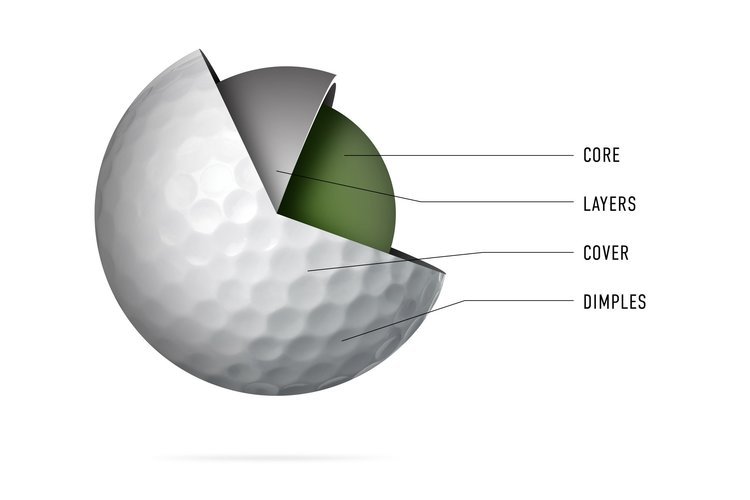
The cross-section of a golf ball shows it's made of layers, including the ball's core, cover, and dimples.

3. The core is crucial.

The core is often considered the ball’s engine, influencing not only its speed and distance, but its spin in the long and short game. The force used to strike the ball is transferred directly into the injection-molded rubber that is a ball’s core, where it is stored and released to propel the ball forward. For this reason, the core is often considered the ball’s engine, influencing not only its speed and distance, but its spin in the long and short game. In multi-layer construction, where another layer is positioned between the ball’s core and its cover, the inside layer is made of rubber thread compressed to varying densities.

4. A golf ball’s compression is a factor in speed and spin.

The ball’s compression is a reflection of how hard or soft the ball compresses against the club face when hit. While the influence of compression is a hotly debated topic among golf experts and equipment manufacturers, the general consensus is that a harder ball (with a higher numerical compression) compresses less on the hit, while a softer ball compresses more. Golfers with a faster swing speed are typically more apt to prefer a harder ball, but it’s more of a matter of personal preference for feel. Compression has an impact on general performance. For example, as a broad rule, if you have two golf balls that are identical with the exception compression, the higher compression ball will have more speed and more spin across the entire range of shots while the lower compression ball will have lower speed and lower spin. That being said, this relationship is not universally true. Some higher compression golf balls have lower speed and spin because of other components of their design.

5. The cover impacts the feel and the ball’s spin off of the club head.

The exterior surface of the golf ball is referred to as its cover and is constructed either of Surlyn (a thin, plastic resin created and trademarked by DuPont) or urethane (a slightly softer, slightly less durable synthetic compound). All else being equal, Surlyn can contribute to distance, but tends to inhibit spin. Urethane covers, while typically more expensive, have a tendency to deliver higher spin rates off irons and wedges, providing more control in the short game. For golf ball manufacturers, the cover is another crucial opportunity for innovation that impacts its overall performance.

A golf club next to a golf ball in the grass, waiting to be hit.

6. The ball’s dimples have a purpose.

The dimples on the surface of the golf ball play a surprisingly complex role in its flight, speed, lift, and spin. Compared to a smooth ball, the small indentations make golf balls more aerodynamic, manipulating the airflow around the ball to create a tighter vortex that effectively decreases the ball’s drag and increases its distance, speed, and lift. Like the other design and construction components, these dimples can be manipulated by manufacturers that increase and decrease their size, quantity, and pattern to impact the speed, flight, spin, and overall performance of the ball. They’re also an important consideration when it comes to weather and other playing conditions to provide consistency in how a golf ball performs in all types of conditions.

7. Manufacturers are always innovating.

Given the leaps and bounds of innovation across golf ball construction, materials, and performance over the last several decades, the industry’s focus on research and development should come as no surprise. Most manufacturers look toward TOUR players for feedback on prototyped and developing products, but investments in innovation run far deeper, including divisions and teams of engineers, technicians, chemists, aerodynamicists, and other scientists. R&D teams spend time working with golfers to understand their performance needs. With every innovation, consistency remains central, given the slightest deviation in quality can have a dramatic impact on a golfer’s game. It’s especially important for amateur golfers, who have a tendency to assume a flaw in their swing when they hit the ball the way they wanted to hit it, but it doesn’t perform as expected.

A golfer prepares to hit the golf ball off of a tee into the fairway.

Final Thoughts

In all, the right ball is unique to each individual golfer’s goals and preferences. Still, the surprisingly complex science behind the sport’s central component plays into every piece of a golfer’s game—from the way it feels off the tee to the moment it hits the cup. The golf ball is an important equipment decision that makes a huge difference for golfers at all skill levels—perhaps the most important of all.


Golfstatus Announces Partnership With Chek to Facilitate Fund Disbursement
 

LINCOLN, Neb., Sept. 6, 2023 /PRNewswire/ -- GolfStatus, the leading technology platform for charity golf tournament fundraisers, is pleased to announce a partnership with Chek, the fund disbursement platform transforming how social sector organizations send, spend, and manage their mission-critical funds. The partnership gives nonprofits and charities the tech tools to raise money through golf and then seamlessly allocate those donations directly to populations in need.

GolfStatus' golf event management and fundraising platform streamlines golf fundraisers and charity tournaments, saving organizers time and effort and helping raise more money. Chek will appear in GolfStatus' Marketplace, a one-stop shop of trusted vendors providing goods and services to golf tournament organizers. Chek's proprietary technology helps philanthropic organizations instantly and securely distribute funds to the populations they serve in the form of digital "Chek" cards, saving time and money. Through the use of customizable spending controls, Chek can also help ensure allocated funds are spent as intended, building donor trust and ultimately helping maximize impact.

"GolfStatus is all about helping nonprofits do more good," said Steve Mattern, Vice President of Operations at GolfStatus. "Chek shares that mission, and we're honored to work together to make organizations' workflows more efficient and their efforts more impactful."

"Chek and GolfStatus are two organizations that have an aligned mission to help nonprofits and those in need," said Nick Schedler, Co-Founder of Chek and the company's Chief Operating Officer and Chief Revenue Officer. "It's also no secret that golf raises more money for charity than any other sport out there. Forging the giving power of GolfStatus with Chek's revolutionary fund disbursement technology will no doubt drive unprecedented impact for the organizations we both serve."

Find out more about Chek and other GolfStatus Marketplace vendors by visiting https://golfstatus.com/marketplace/fund-disbursement-software-by-chek.

About GolfStatus
GolfStatus helps nonprofits leverage the giving power of golf to raise more dollars, engage supporters, and do more good. Its robust golf event management platform streamlines golf tournaments from start to finish to save time and enhance the overall event experience for golfers, sponsors, and golf facilities. GolfStatus combines powerful technology with practical golf fundraising resources and industry-leading support to make charity golf tournaments easy, approachable, and efficient for organizations of all types and sizes. Visit golfstatus.org.

About Chek
Chek is revolutionizing the way social sector organizations send, spend, and manage mission critical funds, transforming donors' giving experience in the process. Its proprietary, fund disbursement technology, with customizable spending controls, an easy-to-use app, digital wallet integrations, and the ability to securely and rapidly allocate funds, helps philanthropic organizations maximize their impact. By instantly distributing money via digital cards, ensuring donor dollars are spent as intended, and effortlessly recovering unused funds, Chek streamlines core processes, boosts efficiency, and cuts costs. And, with the platform's robust reporting and real-time visibility, Chek is integrating more trust and transparency into organizations' donor lifecycle, helping them grow and scale. Visit chekspend.com to learn more!

SOURCE PRNewswire


Press & NewsGuest User
GolfStatus Announces Avery’s Hope As 2023 Play It Forward Winner
 

Avery’s Hope, an all-volunteer, grassroots organization that provides financial assistance to rare, ultra rare, and undiagnosed pediatric GI patient families, has been selected as the winner of the 2023 Play It Forward giveaway.

The Play It Forward campaign was held in collaboration with GolfStatus’ giving partners at Dormie Network and Dormie Network Foundation and celebrates organizations using golf to do good. Entrants were asked to nominate a golf tournament fundraiser to receive a $10,000 donation and were entered to win a one-year Dormie Network membership plus $10,000 to spend at the Network’s exclusive golf clubs.

Avery’s Hope’s inaugural TopGolf fundraiser was held June 25, and highlights the inclusive approach of the organization’s support of families with pediatric GI illnesses. Co-founder and executive director, Caryl Harris, says, “This year we hosted at TopGolf to be more inclusive for patient families, children, and those who don’t golf. By doing so, this event attracted a number of families who wouldn’t be able to afford or otherwise support a traditional golf outing.”


A young boy wearing a red sweatshirt named Avery, who is the namesake of Avery's Hope.

Avery’s Hope is named in honor and celebration of the founders’ grandson, Avery Harris, who was born with microvillus inclusion disease. The rare, genetically-inherited disease is characterized by an inability of the intestines to absorb nutrients. Avery’s grandparents realized how many other kids and their families were suffering, not only with their child’s illness but with the financial burdens, and wanted to make a difference.


Avery’s Hope has formed partnerships with major national institutions specializing in rare pediatric GI care, including five major children’s hospitals, the National Organization for Rare Disorders, and Patients Rising Now Helpline. The group focuses on alleviating the financial burdens of out-of-pocket and insurance-denied expenses faced by families, which often delay treatment and diminish quality of life.

The $10,000 donation will immediately be put towards supporting families. “Patient assistance organizations don’t always receive the same amount of financial support as those who raise money for research. Avery’s Hope has chosen to help with the immediate needs of families,” says Caryl.

Almost 600 organizations and golf fundraisers were nominated for this year’s giveaway, and two other finalists also received a donated Dormie Network membership to be used for fundraising opportunities: Coventry Reserve and Hope Strengthens Foundation.


Ready to golf for good?

GolfStatus helps streamline and simplify golf tournaments to help organizations save time and raise more money. Through the Golf for Good program, 501(c) organizations and those holding golf events to benefit a charity can qualify for no-cost access to GolfStatus—including an event website, online registration, live scoring, and much more. Click the button below to find out more and get qualified!

 
Get qualified


7 Ways Technology Upgrades Your Nonprofit’s Golf Fundraiser
 

Golf has a ton of giving power. For nonprofits, a golf tournament is the chance to raise mission-critical dollars, engage supporters, build relationships, and ultimately, do more good. And while planning a tournament isn’t a small undertaking, the good news for nonprofit event planners is that the right technology can make it easier, more efficient, and more lucrative to organize a successful golf fundraiser.

So whether you’re planning your first golf tournament or your fiftieth, here are seven ways tournament management tech can upgrade and improve your golf fundraiser.


1. It Makes It Easier on Everybody

Golf tournaments come with a number of moving parts and specifics to handle that are much different than those that come with a gala or auction. Using tech tailored specifically to a golf event makes it simple to handle the golf details, like flighting, handicaps, tie-breakers, and live scoring. You’ll keep everything organized in one easily-accessible place, so you, your planning team, and even the golf facility staff are all on the same page and working with up-to-the-minute information and not bouncing between multiple platforms and spreadsheets.

Golf facilities love tech that makes it easier on them, too—they’ll spend less time in the back office creating cart signs, rules sheets, and alpha lists and more time out front assisting you and your tournament’s golfers.


2. You’ll Save Time, Resources & Effort

It starts with an event registration website with secure payment processing, where golfers, prospective sponsors, and supporters can learn more about your organization and event and commit to participating with just a few clicks. So instead of creating a costly promotional mailer, then asking supporters to fill out the form, track down a stamp, and mail it back, you simply share a link where folks can register online with a few simple, secure clicks.

Online registrations should automatically flow into the software’s backend, where you can instantly find golfer, sponsor, and payment information. That means no processing paper forms, checks, or receipts and no entering and re-entering information in different spreadsheets. What’s more, when it comes time to make team pairings and hole assignments, it can all be done right in the software. Your administrative burden is cut in half


3. Sponsors Get Better ROI

Sponsors get a ton of value out of the digital exposure provided by tournament management tech. Instead of being limited to signage on the golf course the day of the event, it’s amplified with the exposure throughout the platform before, during, and after the event. So every time someone visits your event site to register or just learn more about the tournament, sponsors get eyeballs on their brand.

Combine that with hole-by-hole exposure and push notifications in the live-scoring app, and businesses see even more value and ROI in supporting your tournament. Plus, sponsors can browse available packages, make a purchase, and upload logos and links right through the event website, eliminating time-consuming back and forth to collect assets and providing instant exposure.


4. You’ll Raise More Money

Any tournament management tech should come with tools that boost fundraising. At a minimum, you should be able to collect donations via the event website, but look for additional fundraising features like a donation tracker on the event site, multiple donation calls-to-action throughout the platform, the ability to round up and donate at checkout, exclusive sponsorships that can be sold at a premium, and fun add-ons that drive revenue (and bring fun and excitement to your charity golf tournament).

A colorful, informative banner at your golf fundraiser helps golfers understand your organization's work.

National Ag Science Center placed banners around the golf course to help golfers better understand their mission.


5. It Engages Golfers, Donors & Sponsors

Engagement—prior to, during the round, and following the tournament—is key to donor onboarding and stewardship. Instead of just sending golfers out on the course and not interacting with them again until after the round, look to technology to engage them in a variety of ways throughout the day. Live scoring is a great way to keep golfers engaged every time they check the current standings on the tournament’s live leaderboards (which also provides additional sponsor exposure and another opportunity for folks to make a donation).

Direct folks to the event website at the end of the tournament and challenge folks to make a donation, perhaps equal to that of the winning team or what their team shot. You can also leverage push notifications and email communications to share information and updates throughout the day. After the event, export your golf tournament donor data for inclusion into your donor CRM for additional follow up and stewardship.


6. You’ll Be Ready for Next Year

Rather than starting from scratch, you can simply copy your event in the golf tournament software platform, update the date and key details, and push it out to your audiences to save the date and keep it on their radar for next year. If you have a date set, include the link to your new event website in any post-tournament thank yous and follow-up communications to get a jump on promotion and sponsor sales.


7. You Don’t Have to Know About Golf

It doesn’t matter if you’ve never picked up a golf club, you hit the links a few times a week, or fall somewhere in between, you can plan a successful, lucrative golf fundraiser with the right tools and resources behind you. Your tech platform should come with a responsive, knowledgeable support team that’s there to coach you, answer questions, and troubleshoot issues for you and your event’s participants.


Golf for Good with GolfStatus

GolfStatus works with nonprofits and charities of all types and sizes to launch or level up their golf fundraisers. The robust platform streamlines the process from start to finish and is backed by an in-house support team available seven days a week.

Through the Golf for Good program, qualifying 501(c) organizations and others planning golf events that benefit a charity can use GolfStatus’ tournament management software at no cost, including an event website, online registration and secure payment processing, digital sponsor exposure, robust reporting, and more. Visit golfstatus.com/demo for more information or to get qualified.

 
Get Qualified


10 Tips for Choosing Software for Your Golf Fundraiser
 
Golf carts line up in front of the clubhouse at the start of a golf tournament fundraiser.

When it comes to fundraising events, there are plenty of event management platform options out there: CRMs, event-specific platforms, ticketing platforms, peer-to-peer platforms, and more. But how will these work for your golf fundraiser? Can they handle the specific nuances of a golf tournament? Will they make your life easier or require workarounds and adaptations to make it function the way you need it to?

The last thing you need is costly, complicated software that drains your time and resources instead of driving fundraising. As you evaluate software options for your golf event, here are some crucial questions to ask:


1. Will it help raise money?

If the goal of your golf tournament is to raise money, you’ll want a platform that comes with built-in tools that help facilitate fundraising, including the ability to collect donations (plus a way to set a donation goal and track your progress), the option for registrants to cover any fees, exclusive sponsorships and add-ons that drive revenue, and easy ways to receive your funds. It should also feature an attractive event website that serves as the home page for the tournament and presents your organization and sponsoring businesses in a professional light, with user flows that make it easy to complete transactions.


2. Is it easy to use?

When technology isn’t straightforward and easy to use and learn, your attention isn’t where it needs to be—attracting golfers, connecting with donors, selling sponsorships, and providing a great overall tournament experience. Tournament management software should be intuitive, so anyone on your staff or planning team can create an event in minutes and make changes, additions, and updates as necessary. If your organization holds multiple events, be sure the platform can easily duplicate events and has organization-level tools to standardize logos and branding.


3. Will it save time & effort?

Technology can certainly automate time-consuming tasks and manual labor, but poorly designed software, or tools that aren’t quite what you need, can quickly offset the time-saving benefits of technology with additional training, troubleshooting, and complicated workarounds. Choose a solution that’s both powerful enough to meet your needs and simple enough that you won’t spend hours training staff, trying to work out adaptations, and fixing problems. Look for features that ease common tournament planning pain points, like online registration, robust reporting, one-click hole assignments, live scoring, and sponsor onboarding. Any software solution should keep you organized by tracking golfer, sponsor, and donor information in the platform’s backend. What’s more, you should be able to easily export donor data for seamless inclusion in your nonprofit’s donor database.

Tournament management software should be able to provide an attractive event website for your charity golf tournament.

4. Does it help promote my tournament?

Experienced tournament organizers and event planners will tell you that every fundraising event you hold should come with an event website. When evaluating event management software, ensure that it can generate a clean, sleek, well-designed event website where players and sponsors can find more information, register a team or sponsor the event, and submit secure payment. With an event site, promotion becomes as easy as sharing a link in email campaigns, social media, your organization’s website, and even on printed pieces with a QR code. This way folks can commit to your tournament right when they hear about it, instead of filling out a paper registration form and finding a stamp to mail it back.


5. Does it make my event look professional?

Tournament software should enhance the overall look and feel of your event. The best software lends a professional experience to every aspect of your tournament and gives it instant credibility, which can be especially helpful for first-year events. Processes and materials that look outdated or unsightly can cheapen your event, which can influence the caliber of players and sponsors it attracts. The ultimate goal is to provide a professional experience from the moment someone hears about your tournament and visits your event site to when they submit their team’s score on the live scoring app.


6. Does it include live scoring?

A golf-specific feature—sometimes underrated and underused by tournament organizers—to look for in your tournament management software is live scoring. Teams input their scores on a mobile app, which syncs in real-time to live leaderboards that allows golfers to see hole-by-hole standings, helps organizers judge the round’s progress and keep the overall event moving smoothly, and expedites finalizing the tournament’s results because there’s no need for golf staff to hunt down paper scorecards. Look for a solution that offers professional, glitch-free live scoring with a leaderboard sponsorship that offers digital exposure that can be sold at a premium.

Golfers can view live leaderboard to see current standings, on their phones or on TVs in the clubhouse.


7. can i share access with my team & the golf facility?

Web-based platforms give tournament organizers, planning teams, and even golf course staff the freedom to access everything that goes into launching and organizing an event from anywhere. Be sure the software you’re considering allows user access permissions as needed so your team can easily collaborate with each other and the golf course using up-to-the-minute information.


8. how much does it cost?

With limited budgets, nonprofits need solutions that work well and don’t cost a fortune. Software that’s so expensive that it forces you to limit resources in other areas isn’t actually saving time or money. When choosing a tournament software platform, certainly consider baseline costs, if there’s a cost per user or for support, and look out for hidden fees, any upcharges, and tricky contracts. Many solutions offer extremely limited access at no cost and then charge substantially more for necessary features. Look for straightforward pricing, fees, and payout procedures.


9. what about the golf facility?

Golf staff at your host golf facility stand to benefit from tournament management software as much as you and your planning team do. You should be able to share access to the platform with golf professional staff, so they can assist with finalizing hole assignments, flighting, tie-breakers, and other golf-specific tasks in the days leading up to the event. Look for pre-formatted printouts, like scorecards, cart signs, and alpha lists, so golf staff can literally just hit “print” instead of having to create these pieces from scratch, saving them hours of time and allowing them to provide better service to you and your tournament’s golfers. Some golf facilities have an internal system in place they rely on to manage and execute outside events, but at your request, they should be willing to accommodate whatever platform you decide to use.


10. Will someone be available to help me?

Failure to provide adequate support is, unfortunately, common among software providers. Be sure to ask about the support you can expect to receive. Are support staff in-house or out-sourced? As a user, do you have immediate access to the support you need leading up to your event? During your event? After? Is support available seven days a week and what tools are available to assist your team and the golf facility during certain timeframes, such as in the evenings and on weekends when events are in full swing?

A responsive support team that will help answer software questions is a key part of tournament management software.


get qualified for tournament management software—at no cost

GolfStatus’ mission is to help nonprofits tap into golf’s given power by providing tools, resources, and support to plan and execute golf fundraisers. Through the Golf for Good program, nonprofits and those planning golf events to raise money for one can qualify to use GolfStatus’ tournament management software at no upfront cost. Get a professional event website, online registration and payment processing, live scoring, exclusive sponsorships and add-ons, and live support seven days a week to make your next golf event the best one yet. Click below to learn more and get qualified.

Get qualified
 
 
Product Alert: Tournament Management Software Gets An Upgrade
 

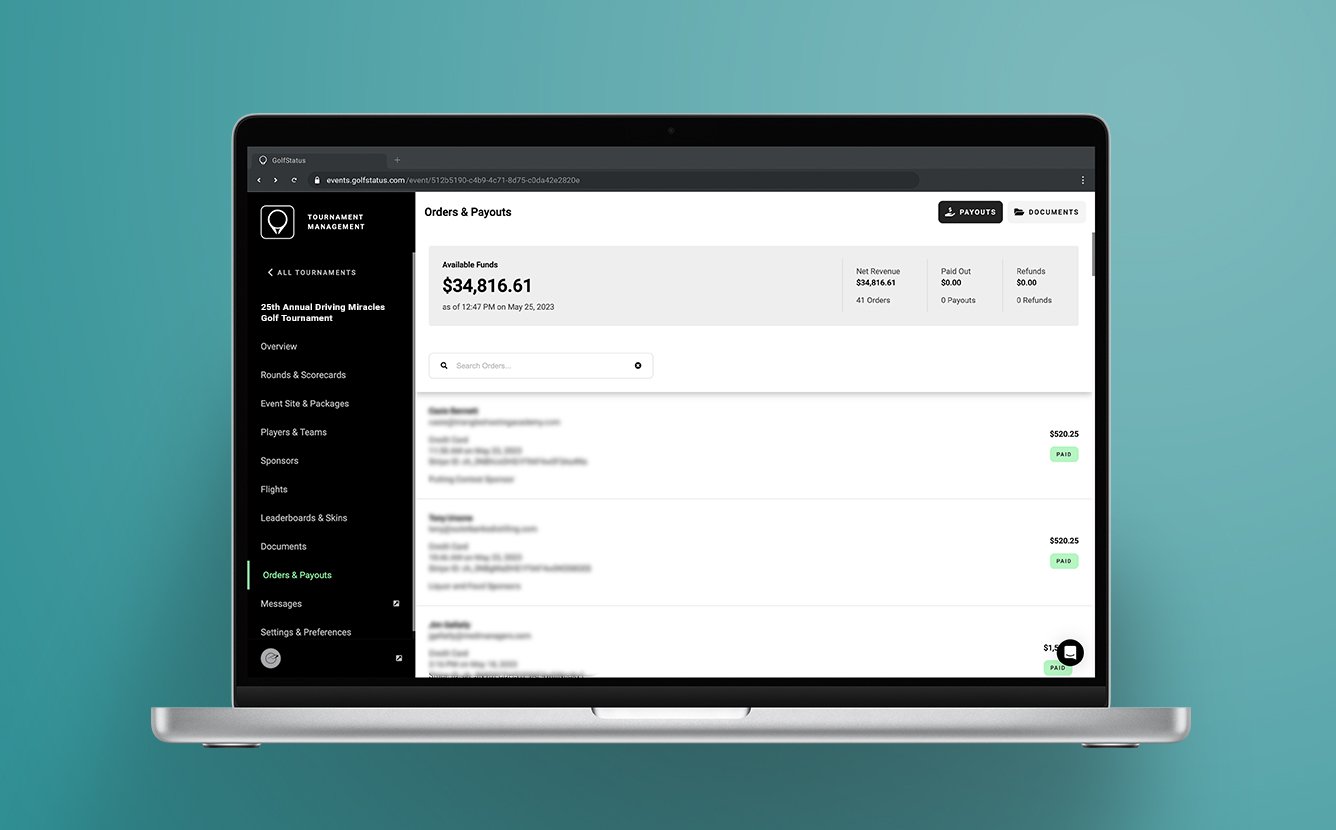
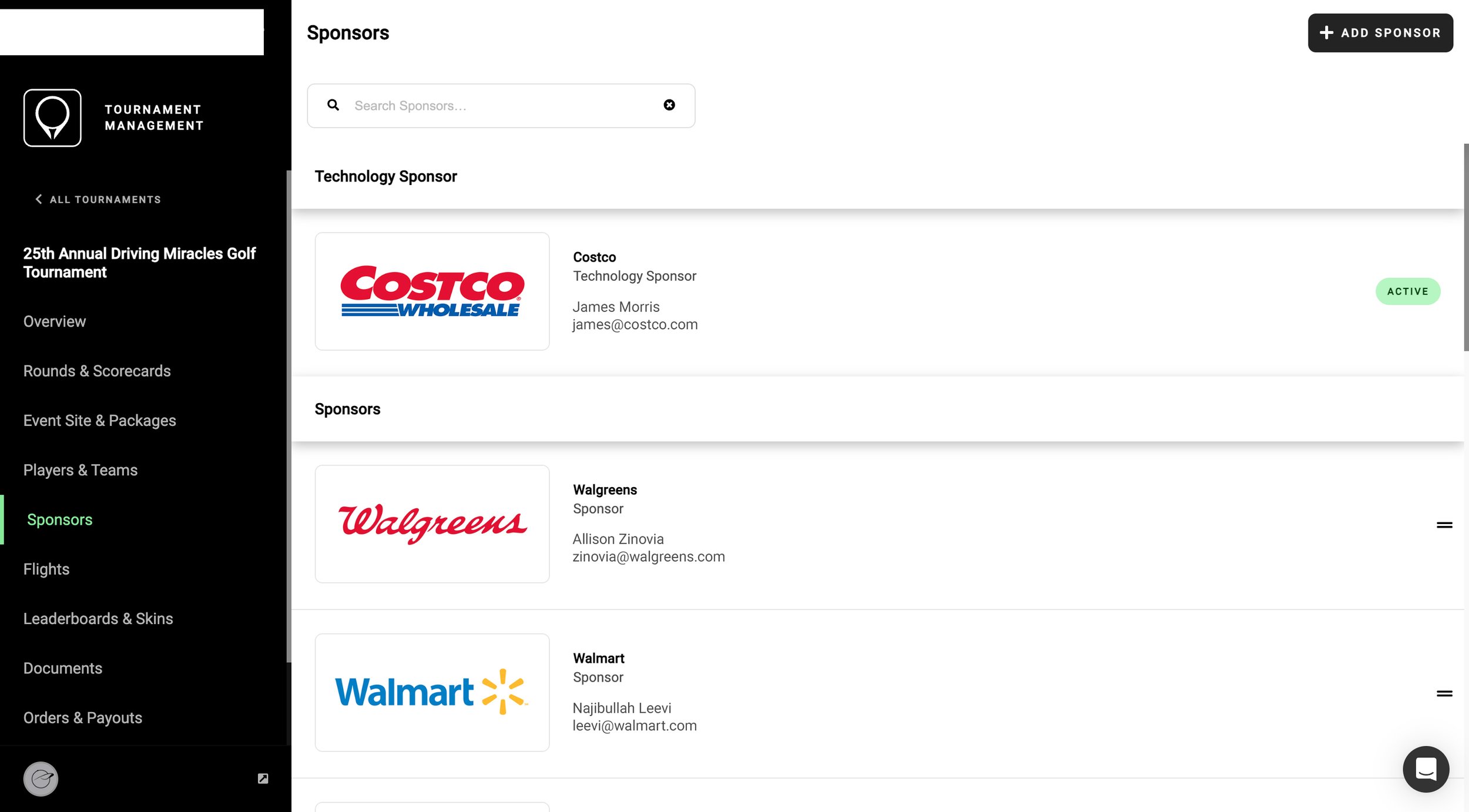
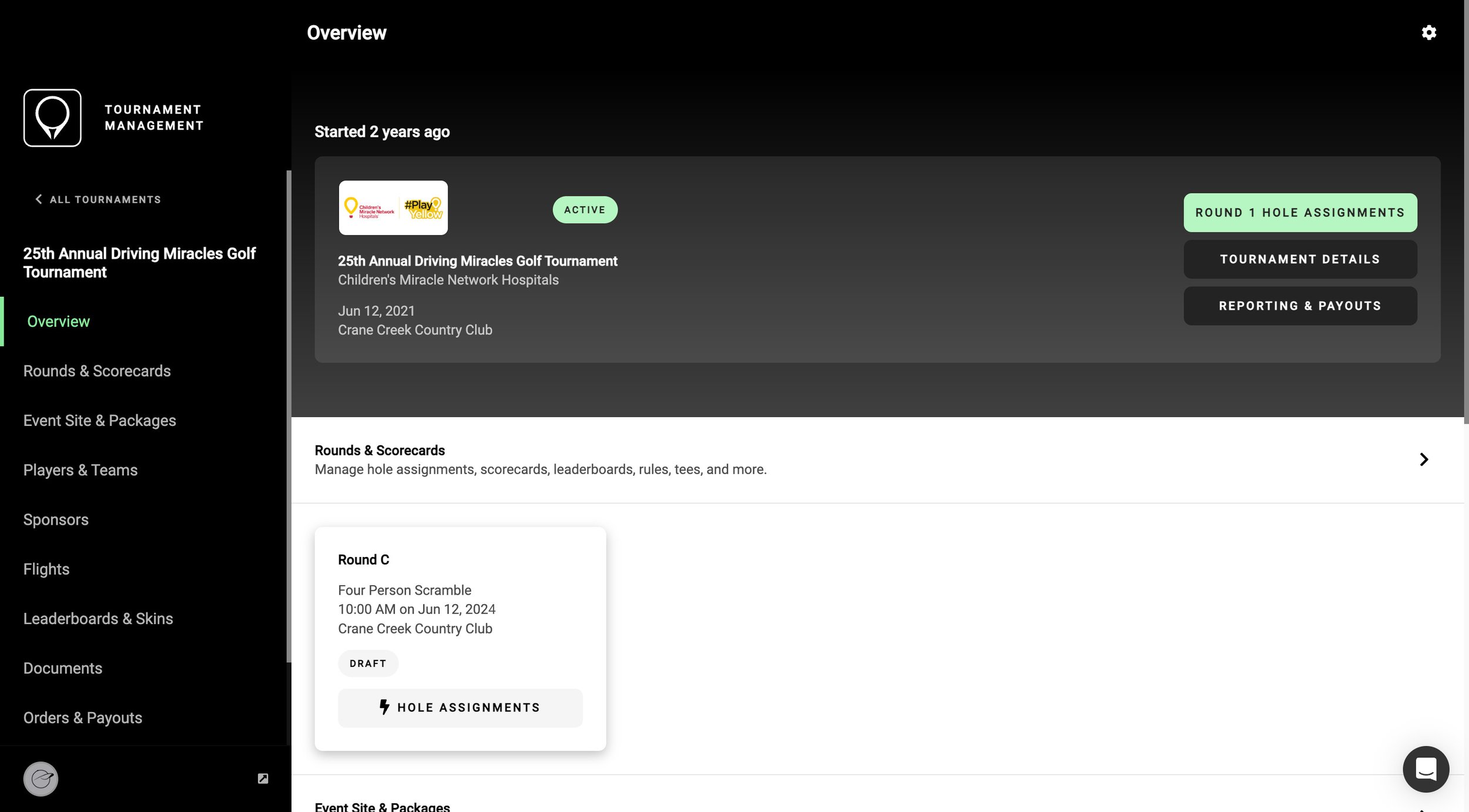
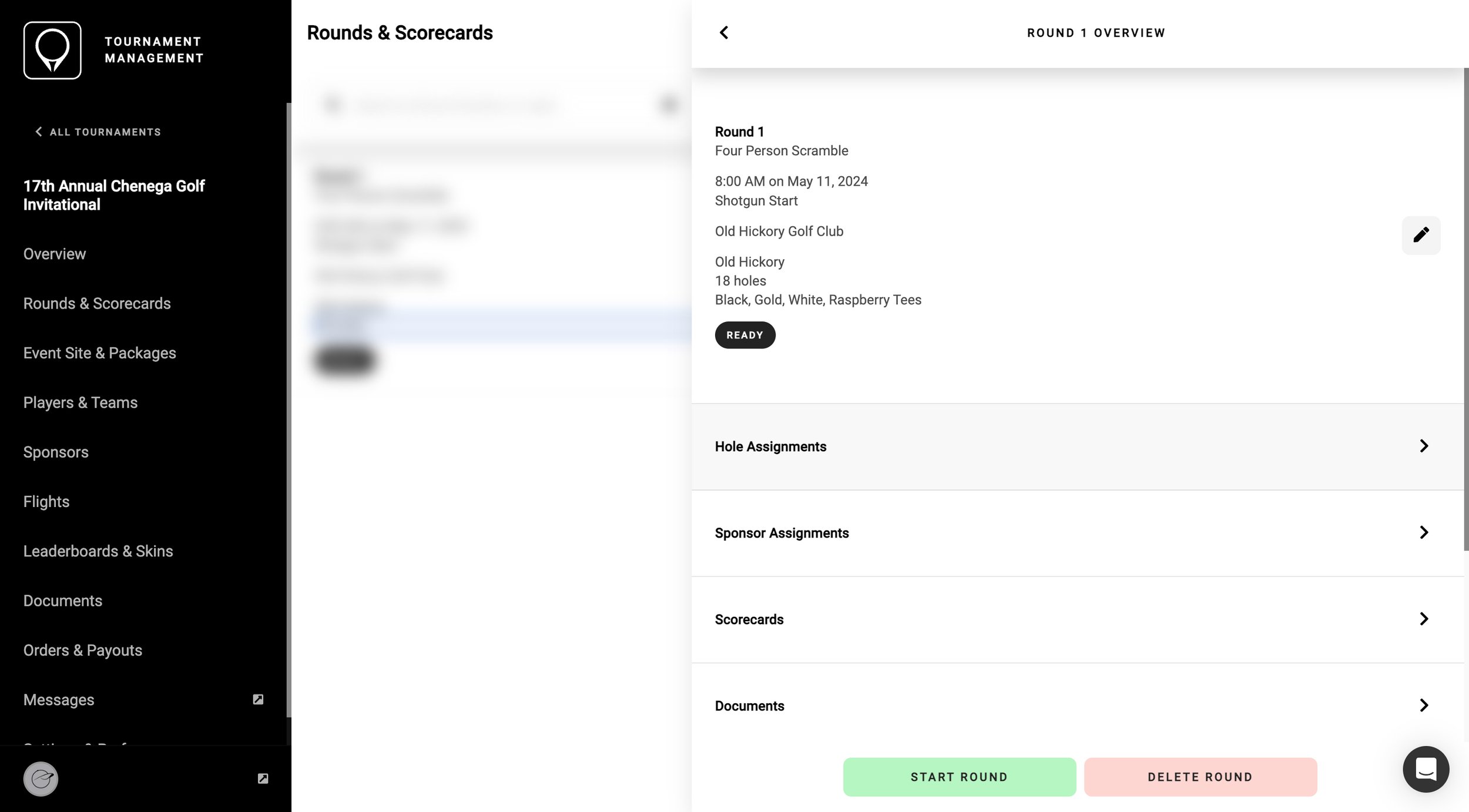
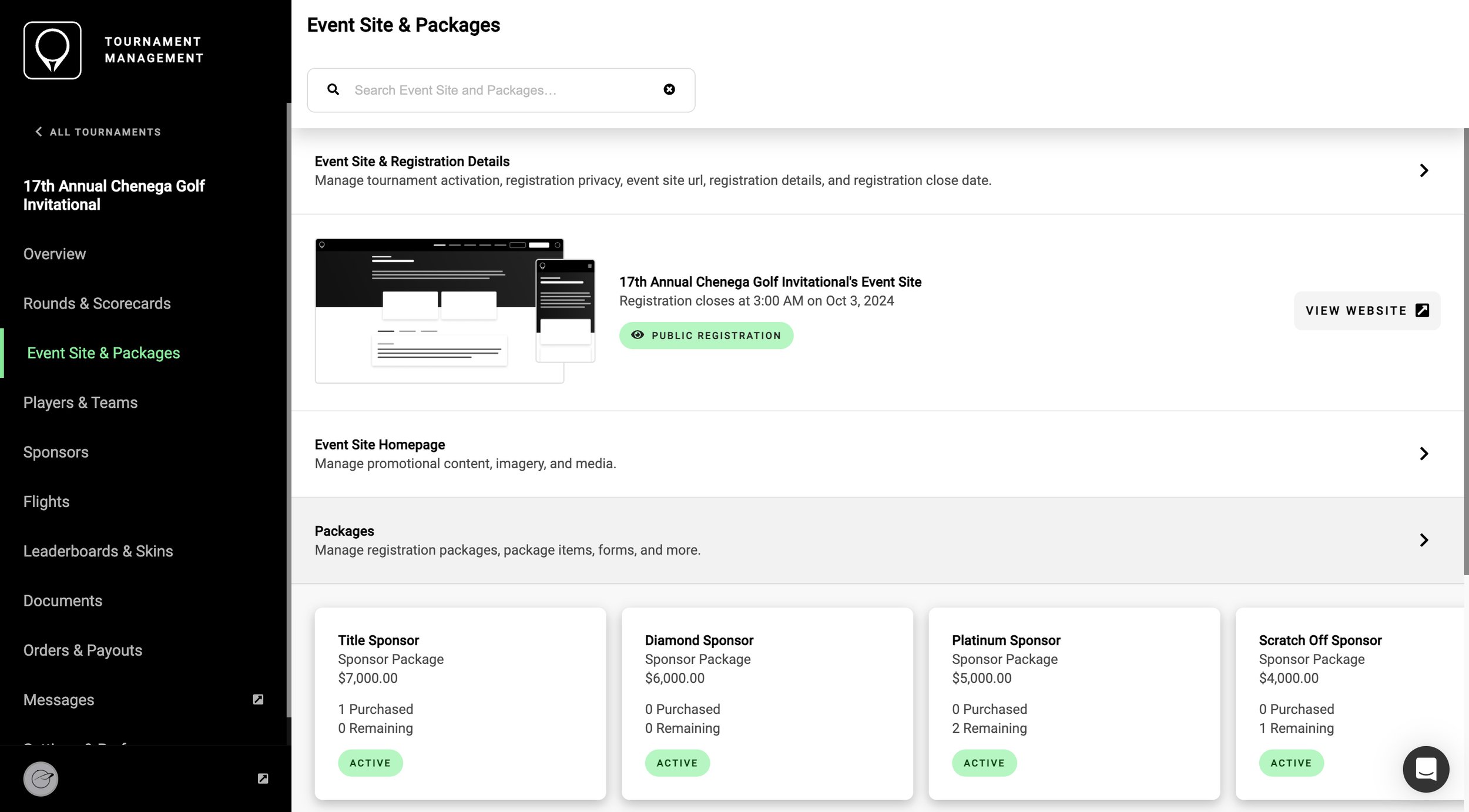
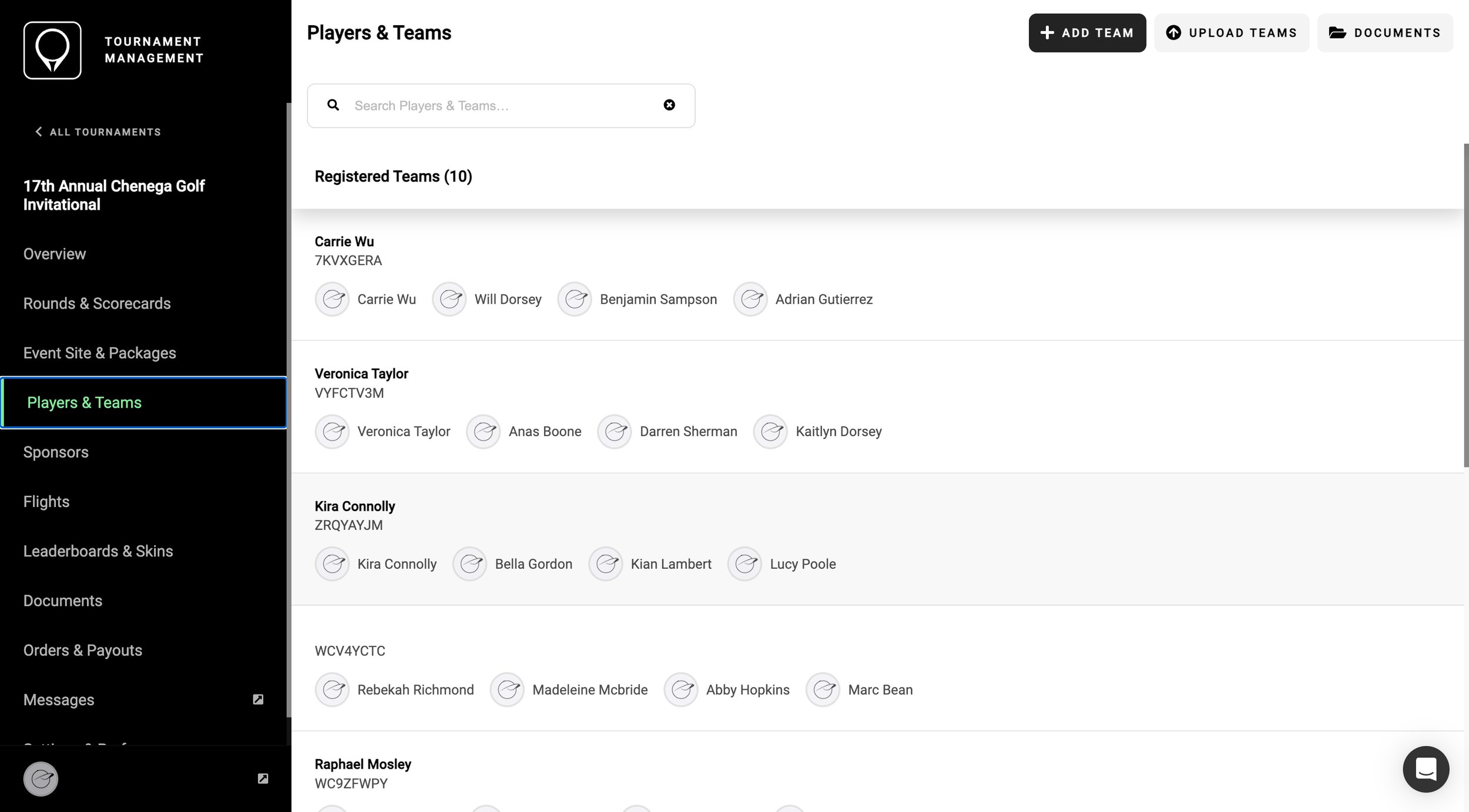
GolfStatus’ powerful tournament management software (TMS) has gotten an upgrade, with a refreshed, easily-navigable interface and additional features to make your next golf event the best one yet.

The software’s core functions remain the same, saving tournament organizers time and providing built-in tools to save more money. But the newest version of TMS has a number of notable improvements and new features to better streamline golf tournaments and fundraisers, including:

  • Intuitive organization and workflows. The refined layout of the software makes it easier to navigate between workflows. Prompts and alerts help users move from section to section quickly and seamlessly.

  • Work in TMS on any device! The new backend is completely responsive, so you can make edits to your event website, review registrations, check payments, and more, all from your phone, tablet, or computer.

  • Custom event site URLs. Improve SEO and branding with a custom URL for every tournament’s event website.

An event website with a custom URL improves branding and SEO for your golf fundraiser.
  • Improved image editing. There’s no need to hassle with graphic design programs or websites—now you can resize logos and images and make necessary edits right in TMS, saving you valuable time. Plus, you can customize the overlay on the event website’s hero image.

  • Now processing Canadian dollars! Canada, we’re here to make executing a lucrative golf tournament easier and more efficient. 

  • Simplified organization management. Manage user access and permissions and standardize settings, imagery, logos, and links across tournaments.

  • Improved skins games management. It’s now simpler to start a skins game and manage players and teams that want in on the action.

  • Additional paid features. Send sponsor invoices through the platform and set up discount codes for registrants. Tournaments can access these premium features for a fee.

All of this (with the exception of the paid features), plus GolfStatus’ professional event websites, live scoring and leaderboards, exclusive sponsorships, digital sponsor exposure, and more, is still available at no upfront cost for qualifying nonprofits and charity golf tournament organizers through GolfStatus’ Golf for Good program.

And like always, GolfStatus’s in-house support team is here with live support seven days a week to answer questions and troubleshoot issues.

The GolfStatus support team is here to answer questions and guide you along the way.
 

Ready to Find Out More? 

Get in touch with the GolfStatus team to find out how you can start saving time and raising more money with your golf tournament today. Whether you’ve got a tournament on the calendar or are just exploring the idea, GolfStatus can help. Click here to connect with our team and get qualified for the Golf for Good program.

Already a GolfStatus Client?

Get in touch with your Client Success representative to learn more about the updates and make the switch to the newest version of TMS!


Play It Forward Is Back for the Third Year!


For the third year, GolfStatus is teaming up with our giving partners at Dormie Network and Dormie Network Foundation for the Play It Forward campaign to celebrate nonprofits and causes who are using golf to do good.

Play It Forward gives individuals the chance to nominate a charity or nonprofit raising money through golf to receive a $10,000 donation to its golf fundraiser, and get the chance to win a one-year honorary membership to Dormie Network (a national network of private golf clubs) plus a $10,000 credit toward onsite golf and lodging.


Designed by famed golf course architect Tom Fazio, Dormie Network’s Victoria National Golf Club boasts gorgeous views amid challenging holes.


nominate your favorite golf fundraiser!

Here’s how to nominate a golf fundraiser for the $10,000 donation (and for you to be eligible for the Dormie Network membership prize):

  1. Fill out this form and tell us who you are, who’s organizing the golf fundraiser, and why you think they should receive a $10,000 donation.

  2. Follow GolfStatus on social media. Facebook Instagram Twitter LinkedIn

  3. Follow Dormie Network on social media. Facebook Instagram Twitter LinkedIn

The campaign launched May 29 and the nomination period closes July 4.

Winners will be announced on GolfStatus and Dormie Network’s social media, so follow both handles for news, updates, and announcements.

Submit a nomination
 

past winners

Play It Forward began in 2021, awarding $10,000 to the Cameron Steinberg Foundation and its inaugural golf fundraiser. The annual golf event has raised $100,000 for research into congenital heart disease and to help families affected by these defects.

In 2022, two nonprofits were selected for $10,000 donations: Make-A-Wish Foundation of Philadelphia, Delaware, and Susquehanna Valley and Sisters Across America. Make-A-Wish’s Pro-Am for Wishes raises money to grant life-changing wishes for children with critical illnesses. Sisters Across America provides support and mentoring for young minority women pursuing professional golfing careers and teaching juniors to grow the game, raising money through two annual golf fundraisers.


Golfstatus & Dormie Network Foundation Team Up for the Third Annual Play It Forward Campaign
 

LINCOLN, Neb., May 26, 2023 /PRNewswire/ -- GolfStatus, the leading technology platform for nonprofit and charity golf fundraisers, is teaming up with its giving partners at Dormie Network and Dormie Network Foundation for the Play It Forward campaign to give back to organizations that are using golf to drive impact.

Now in its third year, the campaign is a unique opportunity to "play" it forward. Individuals nominate a charity or nonprofit using golf to raise money to receive a $10,000 donation to its golf fundraiser, and get the chance to win a one-year honorary membership to Dormie Network, a national network of private golf clubs, plus a $10,000 credit toward onsite golf and lodging.

"Golf has deep ties to philanthropy and helps power nonprofits and charities addressing important causes in communities everywhere," said Brian Schenk, Chief Philanthropy Officer at Dormie Network Foundation. "Play It Forward celebrates these organizations using golf as a force for good."

Play It Forward began in 2021, awarding $10,000 to the Cameron Steinberg Foundation and its inaugural golf fundraiser. The annual golf event has raised $100,000 for research into congenital heart disease and to help families affected by these defects.

In 2022, two nonprofits were selected for $10,000 donations, Make-A-Wish Foundation of Philadelphia, Delaware, and Susquehanna Valley and Sisters Across America. Make-A-Wish's Pro-Am for Wishes raises money to grant life-changing wishes for children with critical illnesses. Sisters Across America provides support and mentoring for young minority women pursuing professional golfing careers and teaching juniors to grow the game, raising money through two annual golf fundraisers.

The giveaway launches May 29 and nominations will be accepted through July 4. Winners will be announced via press release and on GolfStatus' and Dormie Network's social media channels in August.

Visit golfstatus.org/playitforward for official rules and to submit a nomination.

About GolfStatus
GolfStatus helps nonprofits leverage the giving power of golf to raise more dollars, engage supporters, and do more good. Its robust golf event management platform streamlines golf tournaments from start to finish to save time and enhance the overall event experience for golfers, sponsors, and golf facilities. GolfStatus combines powerful technology with practical golf fundraising resources and industry-leading support to make charity golf tournaments easy, approachable, and efficient for organizations of all types and sizes. Learn more at golfstatus.org.

About Dormie Network and Dormie Network Foundation
Dormie Network is a national network of private destination golf clubs that includes ArborLinks in Nebraska City, Nebraska; Ballyhack Golf Club in Roanoke, Virginia; Briggs Ranch Golf Club in San Antonio, Texas; Dormie Club in West End, North Carolina; Hidden Creek Golf Club in Egg Harbor Township, New Jersey; Victoria National Golf Club in Newburgh, Indiana; and GrayBull Club in Maxwell, Nebraska, with a planned opening of 2024. Each offers a premier golf experience in a relaxing and accommodating environment ideal for business or leisure. The Dormie Network Foundation supports nonprofits through in-kind donations and direct cash grants, and seeks to build long-term relationships with its nonprofit partners to help them raise the bar on fundraising opportunities. Learn more at dormienetwork.com.

Media Contact:
Ashley Watson
[email protected]

SOURCE GolfStatus


Source: PRNewswire


10 Ideas to Create Cause Connection at Your Charity Golf Tournament
 

When golfers decide to play in a charity golf tournament, they often reach out to their friends, family members, neighbors, or colleagues to fill their team. This is good news for your organization—not only does it fill your tournament’s field, but your mission gets exposure to a brand new audience of potential new donors and supporters.

Take full advantage of this opportunity to introduce your organization to a captive audience at your golf event. Create a cause connection by helping golfers understand what your organization does, who it serves, and how their participation is a key part of fulfilling your mission. They may have come to golf, but when they see the tangible impacts of what the tournament is raising money for, it’s easier to convert them into donors.

Here are 10 ideas for your next golf fundraiser to connect golfers to your mission:


1. Add compelling photos and videos to your event website.

A picture is truly worth a thousand words, so take advantage of your event website’s customization features to add photos that illustrate your organization’s work and impact. If possible, add video too—anything from a simple slideshow of photos set to music, an impact story, or a polished marketing video are effective in telling your organization’s story visually.

Photos help tell your organization's story on your golf fundraiser's event website.

Help golfers connect to your cause with powerful images and videos on your event website.


2. Invite a guest speaker to share their experience.

Kick off the tournament with a speaker who has benefited from your nonprofit’s services. Or add a presenter to a luncheon, banquet, or awards ceremony. Hearing first-hand from a beneficiary drives home the impact of your work. For example, Riverside Ranch, a therapeutic horse riding program, invited parents of riders to speak at their golf tournament’s luncheon and share what the Ranch meant to their family.


3. Include promo materials in player gift bags and golf carts.

A one-page flier, brochure, annual report, or other collateral can help golfers understand the depth of your mission. Be sure to include QR code on any printed materials with a direct link to the donation page on your event website where folks can donate right from their phones! Drop these in player gift bags or leave them in golf carts for golfers to peruse at their leisure. If your golf facility has carts with video capabilities, inquire about showing a video or photo slideshow on the screens. RiseUp Malawi, which provides educational opportunities in the African country of Malawi, played a video with a welcome message from some of the children the organization serves. They also provided each golfer with a book about Malawi with handwritten notes from the kids and on-site staff.


4. Place signage and banners around the golf course.

These pieces should be placed strategically around the course for maximum visibility. High traffic areas such as registration, driving range, putting green, and inside the clubhouse (near the bar or front door are good choices) are all guaranteed to get golfers looking. You can also place smaller signage unobtrusively on the golf course with information about your organization, facts related to your cause, or ways to take action. QR codes are a great addition to these as well to solicit donations.

A colorful, informative banner at your golf fundraiser helps golfers understand your organization's work.

National Ag Science Center placed banners around the golf course to help golfers better understand their mission.


5. Highlight your organization’s beneficiaries.

Depending on the work your nonprofit does, you could invite beneficiaries to attend or participate in the event. Personal connections are incredibly powerful, so provide opportunities for them to engage with golfers and sponsors throughout the day. For instance, if your golf tournament benefits a school, teachers or administrators could greet golfers as they arrive or even be added to teams. This isn’t limited to human beneficiaries, either! For example, pet rescue organizations could have adoptable pets at the golf course and an accompanying adoption drive.


6. Take advantage of downtime.

Downtime is a great chance to engage with a captive audience! Whether folks are waiting on the tee box, to check in, for a turn on the driving range, or for final results to be announced, your organization’s staff, board members, beneficiaries, or even volunteers can mingle with golfers to chat and have a conversation about your mission. You could also strategically station these folks on various tee boxes throughout the golf course (perhaps on a par 5 that might take groups longer to play through) to talk with golfers as they play their round or rethink your format to add in more opportunities for face time with participants. For example, Breckenridge Outdoor Education Center, an organization that removes barriers to outdoor experiences for those with special needs, used tee times rather than a traditional shotgun start to give them a few minutes to visit with each group as they waited for their turn to tee off.


7. Hold an accompanying event.

If it makes sense for your organization, hold an event in conjunction with your golf fundraiser that drives home your mission. Outlook Enrichment, a nonprofit that serves the visually-impaired, holds a blind golfers clinic alongside its annual charity golf tournament. The clinic features instructors and volunteers helping visually-impaired golfers putt, chip, and play a few holes. Many organizations also hold events targeting non-golfers, such as golf lessons, a wine tasting, blanket-tying or meal-packing event.

A coach helps line up the golf shot of a visually-impaired player at a golf fundraiser.

A volunteer coach helps a participant line up their shot during Outlook Enrichment’s blind golfers clinic.


8. Send push notifications.

Your golf event management platform should be able to send push notifications to golfers via a mobile app for easy communication. These notifications can help connect golfers to your mission by including a link to your website, testimonials from beneficiaries or volunteers, or even solicit donations for a specific program or outreach effort. Keep the notifications short, impactful, and time them strategically.


9. Display photos or memorabilia on the course.

Golfers want to know what the tournament is raising money for—what better way than to display photos or related memorabilia on the golf course. For instance, the Pat Neal Memorial Golf Tournament raises money for brain cancer research in honor of the tournament’s namesake, Pat Neal. A photo of Pat was placed on the course and golfers were encouraged to sign the photo as a keepsake for Pat’s family.

Three golfers pose next to a photo of their dad at a memorial golf tournament fundraiser.

Pat Neal’s three children post with his picture on the golf course at his memorial golf tournament fundraiser.


10. Provide opportunities to take action.

The ultimate goal of helping golfers understand your mission is to have them take some sort of action, so give them the opportunity to do so. You could set up a donation station where folks can contribute, solicit volunteer sign ups, have a pop up shop to sell branded merchandise or products, or let folks start the process of adopting a pet.


Wrapping Up

First and foremost, technology is a major asset in creating cause connection. From your event website to push notifications to impact videos, leverage tech tools to be effective (and make it easier). Use tech to tell your organization’s story; engage with golfers before, during, and after the tournament; and ultimately, compel golfers and sponsors to further support it through a donation or future events. In doing so, you can demonstrate the impact your organization has on your community at large.


Get Qualified for No-Cost Event Technology

GolfStatus’ Golf for Good program gives back to nonprofits by providing access to its full golf event management and fundraising platform at no cost, so event planners can focus on building relationships, stewarding donors, and doing more good. Get qualified by clicking the button below!

 
Get Qualified